
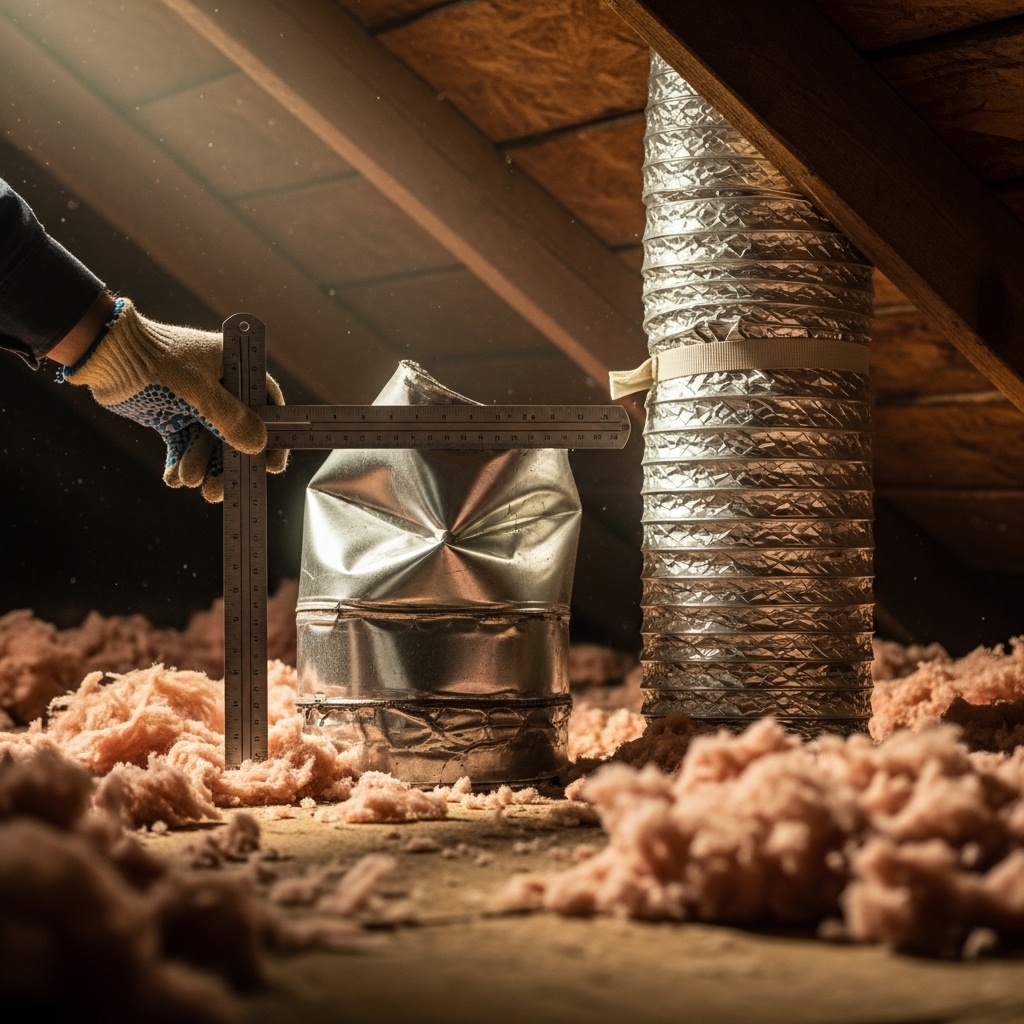
“Cost per foot” sounds like a tidy way to evaluate air duct repair, but anyone who has opened an attic hatch in Los Angeles knows the reality is more nuanced. Homes here span nearly a century of building styles, with ducts that zigzag around vaulted ceilings, squeeze through knee walls, and cross additions that turned one attic into three. In practice, the value you get from a repair is not about a single number per linear foot—it is about solving the actual problem: sealing the leaks that matter, restoring airflow to rooms that lag behind, and making sure your system can deliver comfort without straining. As a local who works duct systems from West LA to the Valley, I want to show you how to think about “per foot” in context so you can make smart decisions for your home. And if you are looking to start with an expert set of eyes, it is a perfect time to line up a focused visit for air duct repair so you can understand precisely what your home needs.
Why “per foot” is only a sliver of the story
Airflow does not care how many feet of duct you have in theory; it cares about friction, leakage, and path. A five-foot section with a crushed bend can starve a room more than a longer run in good shape. A short return path with gaps can dilute conditioned air with hot attic air, leaving your system chasing setpoints. Repairs that matter target the places where air is lost or throttled. That might be a collar that never received proper mastic, a boot that slipped from its register, or a flex run sagging between trusses. Counting feet alone cannot capture those failure points. What you are really paying for is diagnosis, access, and a fix that addresses cause, not just symptom.
Los Angeles homes pose distinct duct challenges
Consider the difference between a 1940s ranch in Mar Vista and a hillside home in Glassell Park. The ranch might have straightforward attic access but legacy transitions between metal trunk lines and newer flex runs. The hillside home could have attic compartments broken up by additions, forcing ducts to snake through tight bays. In some older homes, returns were framed into walls without a lined chase, which can leak along the seams. In newer construction, ducts may be routed through soffits to keep attics clear, shifting repair work to interior access points. In each case, a “per foot” measure tells you little without understanding how each foot behaves in context.
What a good evaluation covers
A solid inspection follows the air. We look at the plenum and air handler transitions, trace supply runs, and examine boots and registers. We check for kinks and compression where flex duct passes over framing. We test for obvious leakage and listen for air movement at joints. Crucially, we compare what we see with what you feel—rooms that run hot, vents that blow dust, returns that whistle. This pairing lets us identify defects that affect comfort the most. Sometimes a single repair, like reseating a return boot or replacing a crushed span, restores stability to an entire zone.
Materials and methods that outperform shortcuts
In LA’s heat, quick fixes fail fast. That is why collars and seams get mastic, not just tape. UL-rated foil tapes are used where appropriate, but the real workhorse for sealing is a proper mastic application, often combined with mesh on larger gaps. Flex duct replacements get the right diameter and length, with bends radiused to avoid crushing. Clamps grip the inner liner, not just the outer jacket, and straps support the run so it does not sag. Boots are secured to framing and sealed at the perimeter to prevent conditioned air from leaking into cavities. These methods are what you want to see regardless of how many “feet” are involved.
Where “per foot” can mislead
Two repairs with identical lengths can be worlds apart. Replacing a simple span between open trusses is straightforward; rebuilding a transition at the plenum with limited clearance, or resealing a return chase hidden behind a closet, requires more care and time. Counting linear footage without acknowledging access and complexity invites disappointment. When you evaluate proposals, look for descriptions tied to specifics: which joints are being sealed, which runs replaced, what transitions rebuilt, and how balance will be preserved across the system.
Balancing and the bigger picture
Even a well-executed local repair should fit into the wider system. Change one run without considering the rest and you can alter static pressure in ways that shift airflow elsewhere. That is why we confirm airflow at multiple registers after a repair. If a room remains stubborn, we look for secondary causes: a blocked filter, a return path that is undersized, or a branch that takes an unnecessarily tight bend. Addressing these details provides returns that no “per foot” model can quantify, because the value is measured in even comfort, quieter operation, and a system that cycles normally.
LA-specific logistics that matter
From street parking to attic temperature, logistics shape the day. We plan arrival windows around traffic, protect the spaces we pass through, and work efficiently in hot attics. For multi-unit buildings, we coordinate with HOAs, elevator schedules, and quiet hours. Thoughtful logistics prevent delays and ensure the work gets done right the first time. This is another reason why “per foot” alone does not predict the path; the context in which the work happens matters as much as the task list.
What to expect during and after the repair
At the start, we talk through your observations and set a plan for access. We photograph findings and explain why they matter. If a same-day repair is sensible, we proceed with materials on hand. Afterward, we verify temperature split, compare airflow at vents, and listen for any odd noises that signal restrictions. We restore insulation to place and clean up our work area. You should feel the difference quickly—more consistent temperatures, less dust, and a system that does not strain to catch up.
How to compare proposals intelligently
Request clarity rather than a single ratio. Ask which defects are being addressed and how. If a contractor references “per foot,” clarify what that includes: removing old material, new supports, sealing method, transition work, and any balancing checks at the end. You are looking for a narrative that describes problems and solutions, not just measurements. The right partner will welcome those questions and answer in straightforward terms.
When a larger plan makes sense
Sometimes a repair reveals design constraints that warrant a phased approach: improving a return, smoothing a difficult run, or addressing insulation around a trunk. It is common in LA for additions to create awkward duct paths. In those cases, we stabilize the immediate issues and outline options for future improvements that align with your priorities. A measured plan lets you address the most impactful work first and schedule everything else on your timeline.
If you are currently weighing repairs and want a grounded, practical perspective instead of a simplistic “per foot” metric, you are right to ask for a detailed evaluation. Have a professional walk the system, explain what is happening, and show you how each step improves comfort. When you are ready for that level of clarity, schedule a visit for professional air duct repair and make choices that truly fit your home.
FAQ
Is “cost per foot” ever a useful comparison?
It can provide a rough sense of scale for replacing long, accessible spans, but it is a poor predictor for repairs involving transitions, returns, or tight access. Look for proposals that explain the specific tasks and outcomes rather than relying on a single metric.
What are the most common repairs that improve comfort fast?
Resealing loose collars, fixing boot leaks at the ceiling, replacing crushed or torn flex sections, and adding proper supports to sagging runs all deliver noticeable gains quickly. These repairs target the points where air is lost or blocked.
Will repairs change how my system sounds?
Often, yes. Reducing leaks and smoothing duct paths can quiet whistling returns and reduce rush noise at registers, especially if kinks or sharp bends are replaced with gentler transitions that move air more efficiently.
Do I need to leave the house during the work?
Generally, no. Most work is confined to attics, crawlspaces, and mechanical closets. We simply ask for clear access to the attic hatch or return grill. You can be present for the walkthrough at the end to see what was done.
How do you verify the repair worked?
We compare temperatures and airflow at multiple vents, confirm the system’s temperature split, and recheck the sealed or replaced areas after the system has run. Your feedback about room comfort is part of the verification too.
What if my ducts are very old?
Older ducts can be repaired, but age may reveal broader opportunities. If the layout or condition limits performance, we will explain options that respect your goals and timing. Stabilizing key leaks now and planning upgrades later is a common approach.
Ready to take the next step
Forget the guesswork of “per foot” and focus on what makes your home comfortable: targeted fixes, durable materials, and a plan that respects LA’s realities. When you are ready to see real results, book trusted Los Angeles air duct repair and enjoy a home that feels right in every room.