
Los Angeles homes have stories to tell, and sometimes those stories are buried in the attic. Decades of retrofits, roof leaks, dusty storage, and even critter activity can leave insulation in rough shape. When it’s time to make a change, the path to comfort starts with safe, careful removal followed by a modern, well-detailed installation. In a dense city where homes sit close together and attics often share space with ductwork and electrical, you want a process that protects both people and property. Thoughtfully managed insulation installation begins with getting the old materials out the right way.
Not all attic cleanouts are created equal. Some attics simply contain outdated fiberglass that’s settled flat; others hide signs of moisture damage, droppings, or debris from past projects. A safe removal plan is built around what’s actually in your home. The goal is to reduce dust, avoid cross-contamination into living areas, and prepare the space so new insulation performs as intended. That preparation pays off in quieter rooms, steadier temperatures, and HVAC systems that no longer struggle against uncontrolled heat and airflow.
Assessment first: know what you’re dealing with
The first step is a thorough inspection. We look for evidence of roof leaks, staining around penetrations, and the condition of bath fan ducts and vent terminations. We also evaluate the presence of older materials that may require special handling. Some mid-century homes contain insulation types that aren’t compatible with modern approaches and should be removed. The inspection identifies rodent activity, broken or disconnected ducts, and electrical issues, all of which influence the scope of work.
Los Angeles attics run the gamut—from tight, low-slope spaces to high, trussed volumes over additions. Each shape affects airflow and access. With a clear map of the attic, we can plan safe pathways, stage equipment, and establish containment to protect your living spaces.
Containment, protection, and air management
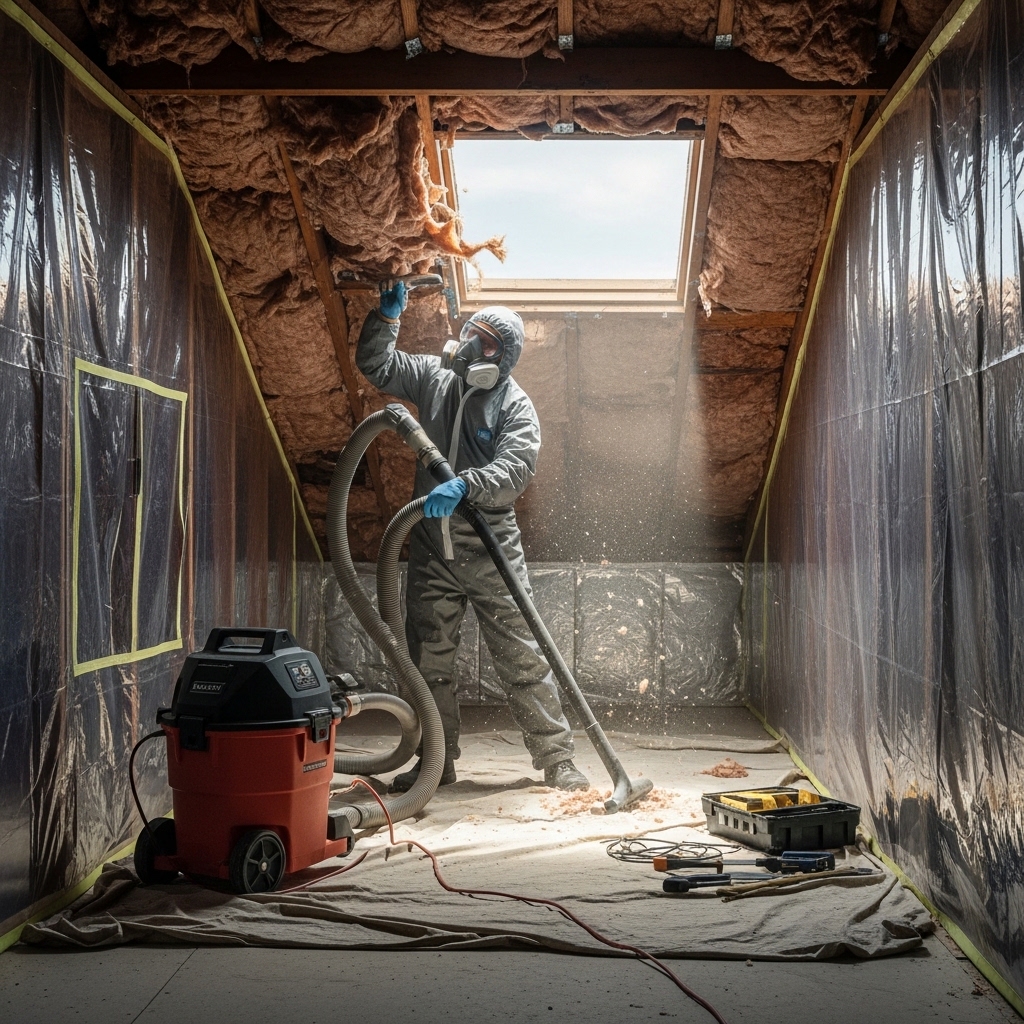
Before removal begins, the house is prepped. Access paths are covered, the attic hatch is sealed with zipper containment, and negative air filtration may be set up to capture fine dust. This keeps particulate from drifting into occupied rooms and protects finishes. In older homes, it also helps maintain the integrity of lath-and-plaster ceilings, which can be sensitive to vibration.
Bagging and removal proceed methodically, using specialized vacuums where appropriate to capture loose-fill materials. Any large debris from past projects is collected. If we find disconnected ducts or unsealed chases, we flag them so they can be addressed before new insulation goes in. The aim is a clean, safe attic that’s ready for improvements, not just an attic that looks tidier.
Sanitation and sealing before new insulation
If there has been pest activity, targeted sanitation can reduce lingering odors and discourage return visits. Just as crucial is air sealing. Attic floors typically contain many penetrations—plumbing stacks, electrical runs, top plate seams—that allow conditioned air to escape and dusty attic air to enter. Sealing these pathways with appropriate materials is as important as the insulation itself. It turns a leaky shell into a controlled one, which is how you achieve reliable comfort in our sun-driven climate.
At this stage, we also check bath fans and range hoods to verify they are ducted outside, not into the attic. Any repairs are made so moisture doesn’t build up and compromise the new insulation. Heat-producing fixtures are identified and protected with rated covers or clearances to maintain safety.
Choosing the right replacement insulation
With the attic prepped and sealed, the conversation turns to materials. Loose-fill cellulose and fiberglass are common choices for attics because they can be installed to uniform depths and reach around irregular framing. In some cases, spray foam is recommended for targeted areas or for creating a conditioned attic at the roofline. The material choice depends on your goals—thermal performance, sound reduction, or specific moisture management—and the constraints of your home’s structure.
In Los Angeles, we consider solar exposure, neighborhood noise, and the presence of ductwork in the attic. A home in the Valley with intense summer heat might prioritize higher R-values at the roofline, while a coastal home could benefit from targeted sealing and a focus on comfort consistency throughout the day. The right solution is the one that matches your home’s unique demands.
Protection of mechanicals and wiring
Insulation and mechanical systems need to coexist safely. During removal and installation, ductwork is inspected for leaks and insulation is carefully placed to avoid compressing or blocking returns and supplies. Electrical junction boxes remain accessible, and clearances are maintained around flues and recessed lights in accordance with their ratings. The point is to deliver performance without creating headaches for future maintenance.
What homeowners notice after a proper removal and install
The immediate change is in how the home feels. Rooms stabilize, the HVAC runs less frequently, and the house tends to stay cleaner because dusty attic air is no longer being drawn inside. Sound levels drop, especially in neighborhoods near freeways or under flight paths. Over time, you may notice the HVAC equipment experiencing less wear because it’s working in a more forgiving environment, particularly if ducts are now within a conditioned space or beneath a well-insulated attic floor.
Coordination and communication
Because safe removal and installation touch many parts of the house, communication with the homeowner is vital. You should know when containment is set, what areas will be accessed, and how long each phase is expected to take. Before we call a project complete, we walk the space with you—pointing out sealing work, insulation levels, and any recommended next steps such as adding a bath fan timer or addressing a minor roof leak.
Special considerations for older LA homes
Many older houses feature original plaster, vintage wiring, and roof assemblies that have seen several generations of materials. Removal must be gentle, and upgrades must respect the way the home dries and ventilates. For example, bringing an attic into the conditioned space with foam requires a plan for intentional ventilation. Dense-packing walls demands sensitivity to finishes and an understanding of how lath-and-plaster can be patched seamlessly. These details are what separate a quick fix from a lasting improvement.
FAQs
Q: Do I need to remove old insulation, or can I just add more? A: If the existing insulation is contaminated, wet, or severely degraded, removal is recommended so new materials can perform as designed. If the old material is dry and clean, topping up may be possible after air sealing.
Q: Is removal dusty or disruptive? A: With proper containment, filtration, and protected access routes, dust and disruption are minimized. The goal is to keep living spaces clean and to complete the work efficiently.
Q: Can I stay in the home during removal and installation? A: In most cases, yes. We coordinate schedules and set containment to keep spaces livable. For larger projects or those requiring special treatments, we’ll discuss the best plan.
Q: How long does the process take? A: Many attics can be cleared, sealed, and reinsulated within one to two days, depending on size, access, and any repairs needed.
Q: What if I suspect pest activity or odors? A: Targeted sanitation steps are included when needed, and sealing helps prevent reentry. If structural or exterior issues are contributing, we’ll flag them for follow-up.
Start fresh with a safer, smarter approach
If your attic tells a story of dust, drafts, or inconsistent temperatures, it’s time to reset the space with a careful plan. A clean removal, thorough sealing, and a right-sized installation will restore comfort and protect your home for years to come. Reach out to discuss your goals and schedule an assessment with a team experienced in Los Angeles homes, and discover how professional insulation installation can turn your attic from a problem area into a quiet, dependable part of your living environment.