
Attic Insulation in Camarillo: R-Value Standards and Summer Heat Block Strategies
Camarillo sits in a climate zone where summer attic temperatures can push well past 140°F on a clear afternoon. That heat doesn’t stay in the attic. It radiates through your ceiling, forces your air conditioner to run longer, and makes upstairs rooms stuffy no matter how low you set the thermostat. Getting the insulation right, specifically the correct R-value installed correctly, is the single most effective way to stop that cycle. This guide explains exactly what that means for Ventura County homes.
Why Camarillo’s Climate Makes Attic Insulation a Priority
The Ventura County Heat Profile
Camarillo sits in IECC Climate Zone 3B, a classification that reflects its combination of warm, dry summers and mild winters. Unlike coastal cities a few miles west, Camarillo’s inland position means afternoon temperatures regularly climb into the 90s from June through September. The marine layer that cools the coast often burns off before it reaches Camarillo neighborhoods, leaving rooftops exposed to intense solar radiation for the better part of the day.
Roofing materials absorb that radiation and transfer it into the attic cavity. Dark asphalt shingles, which cover the majority of homes in the area, can reach surface temperatures that far exceed the ambient air temperature. Without adequate insulation acting as a thermal barrier between the attic and the living space below, that stored heat moves steadily downward through your ceiling drywall.
How Heat Transfer Works in an Uninsulated or Under-Insulated Attic
Heat moves through three mechanisms: conduction, convection, and radiation. In an attic, all three are at work simultaneously. Conduction carries heat through solid materials like framing lumber and drywall. Convection moves hot air through gaps, bypasses, and poorly sealed penetrations. Radiation transfers heat as infrared energy from the hot roof deck toward the cooler ceiling below.
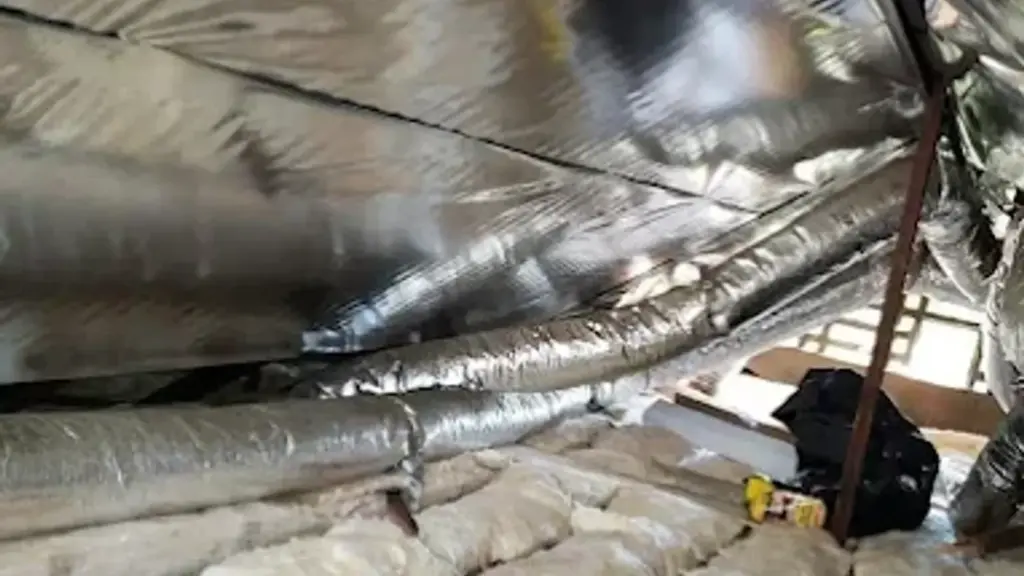
Insulation primarily addresses conduction and convection. Radiant barriers (reflective foil products installed on the underside of rafters or over existing insulation) address the radiation component. A thorough attic insulation installation in Camarillo addresses all three by combining the right insulation material with proper air sealing and, where appropriate, a radiant barrier layer.
The Cost of Getting It Wrong
An under-insulated attic doesn’t just affect comfort. Your HVAC system works harder to compensate, which shortens its service life and increases energy consumption month after month. Rooms near the roofline stay warmer than the rest of the house, creating uneven comfort that no thermostat setting can fully correct. Over time, excessive heat cycling can also accelerate deterioration of HVAC ductwork running through the attic, leading to air leaks that compound the problem further.
R-Value Standards for Zone 3B: What Camarillo Homes Actually Need
Understanding R-Value
R-value measures thermal resistance, specifically how well a material resists the flow of heat. A higher number means more resistance. R-value is additive, so two inches of a material with R-3 per inch delivers R-6 total. What matters for your attic is the total installed R-value across the entire insulated assembly, not just the product rating on the bag or roll.
For Climate Zone 3B, the U.S. Department of Energy recommends attic insulation in the range of R-30 to R-60 for existing homes, with R-38 being the commonly cited target for most Camarillo residences. New construction in California follows Title 24 energy code requirements, which set their own minimums. If your home was built before the mid-1990s and has never had insulation upgraded, there is a strong chance the current level falls well below that range.
How to Check Your Current R-Value
A rough field check is straightforward. In a blown-in or batt-insulated attic, measure the depth of the insulation at several points across the floor. Fiberglass batts typically deliver around R-2.9 to R-3.8 per inch depending on density. Blown cellulose runs approximately R-3.2 to R-3.7 per inch when settled. Blown fiberglass lands around R-2.2 to R-2.7 per inch settled.
Use those ranges to estimate your total. If you measure six inches of settled blown fiberglass, you likely have somewhere around R-13 to R-16, roughly half of what Zone 3B calls for. Keep in mind that settled insulation has lost some of its original R-value, and any areas with gaps, bypasses, or compressed material perform worse than the average depth suggests.
The R-Value Table: Common Depths and Approximate Performance
| Insulation Type | Approx. R per Inch | Depth for R-38 | Depth for R-49 |
|---|---|---|---|
| Blown Fiberglass | R-2.2 to R-2.7 | ~14 to 17 inches | ~18 to 22 inches |
| Blown Cellulose | R-3.2 to R-3.7 | ~10 to 12 inches | ~13 to 15 inches |
| Fiberglass Batts | R-2.9 to R-3.8 | ~10 to 13 inches | ~13 to 17 inches |
| Spray Foam (open-cell) | R-3.5 to R-3.9 | ~10 to 11 inches | ~13 to 14 inches |
| Spray Foam (closed-cell) | R-6.0 to R-7.0 | ~5.5 to 6.5 inches | ~7 to 8 inches |
Note: These are general industry ranges. Actual performance depends on installation density, settling, and air sealing quality. A professional assessment will give you the most accurate picture for your specific attic.
Insulation Materials: Matching the Right Product to a Camarillo Attic
Blown-In Cellulose: The Workhorse for Retrofit Projects
For existing Camarillo homes where attic floor insulation needs to be upgraded, blown cellulose is often the practical choice. It settles into irregular spaces around framing, wiring, and HVAC equipment, filling gaps that batts would leave. Its density also gives it good resistance to air movement through the insulation layer itself, which matters in an attic where convective heat transfer is a real factor.
Cellulose is made primarily from recycled paper fiber treated with borate compounds for fire and pest resistance. It performs well in the dry climate of Ventura County, where moisture accumulation in the attic is less of a concern than in humid regions. One practical consideration: cellulose does settle over time, so installers typically blow it in at a higher initial depth to account for that settling and hit the target R-value at the end of the settling period.
Blown Fiberglass: Lighter Weight, Good for Older Framing
Blown fiberglass has a lower R-value per inch than cellulose, which means you need more depth to reach the same total R-value. Its advantage is weight. Older homes with ceiling framing that may not support heavy loads sometimes benefit from fiberglass for that reason. It also resists moisture absorption, which can be a consideration if the attic has any history of roof leaks or condensation issues.
The key with blown fiberglass is installation density. Blown too loosely, it can settle significantly and lose effective R-value. A professional installation uses equipment calibrated to the manufacturer’s settled-density specifications to ensure the finished depth actually delivers the rated performance.
Spray Foam for Air Sealing and Encapsulated Attics
Spray polyurethane foam serves two functions: insulation and air barrier. In a Camarillo attic, it is most commonly used in two scenarios. First, to seal penetrations and bypasses before adding blown insulation on top. Second, for full encapsulated attic assemblies where the foam is applied to the underside of the roof deck rather than the attic floor, bringing the attic space inside the conditioned envelope of the house. The latter approach is particularly useful when HVAC equipment and ductwork run through the attic, since it eliminates the temperature differential those components would otherwise face.
Air Sealing: The Step Most Homeowners Miss
Why Insulation Alone Is Not Enough
Adding insulation without air sealing first is a common mistake. Every penetration through the ceiling plane, including recessed light cans, plumbing chases, attic hatches, top plates of interior walls, and HVAC boot connections, is a potential bypass where hot attic air can short-circuit the insulation layer entirely. Convective loops through these gaps can carry heat directly into the living space regardless of how thick the insulation above them is.
Before any new material goes in, a thorough air sealing pass using spray foam, caulk, or rigid foam board at major bypasses dramatically improves the real-world performance of the finished assembly. In many Camarillo homes built in the 1970s through 1990s, this step alone makes a noticeable difference in how quickly the house heats up on a hot afternoon.
Attic Hatches and Pull-Down Stairs
The attic hatch is often the single worst-performing component in the entire thermal envelope. Standard drywall hatches have essentially no insulation value and no weatherstripping. Pull-down stair assemblies are even worse because they sit in a large framed opening with gaps around the perimeter. An insulated hatch cover or a foam-lined stair cover box, installed as part of a complete attic upgrade, closes that gap and prevents the stack effect from pulling conditioned air out of the living space and into the attic.
Recessed Lighting and Top Plates
Older recessed light cans that penetrate the ceiling are notorious air leakage points. The gap between the can housing and the ceiling drywall, combined with the open top of the can itself, creates a direct path between the living space and the attic. Sealing these with airtight covers or replacing them with airtight LED fixtures before insulating is standard practice in a quality installation. Similarly, the top plates of interior walls often have gaps where wiring and pipes run through, and sealing those with spray foam before adding blown insulation prevents convective bypass at the wall-ceiling junction.
Radiant Barriers: Do They Make Sense for Camarillo Homes?
How Radiant Barriers Work
A radiant barrier is a reflective material, typically aluminum foil laminated to a substrate, installed in the attic to reflect infrared radiation rather than absorb it. When installed correctly on the underside of roof rafters with the reflective surface facing down toward an air gap, it can reduce the amount of radiant heat that reaches the attic floor and the insulation below.
Radiant barriers do not have an R-value in the traditional sense. They work by reflection, not resistance. Their effectiveness depends on maintaining a clean, dust-free reflective surface and an air gap on the facing side. In Camarillo’s climate, where solar gain is the dominant summer heat driver, a radiant barrier can be a useful complement to adequate mass insulation on the attic floor, but it is not a substitute for meeting the R-38 or higher target.
When a Radiant Barrier Adds Real Value
Homes with dark roofing materials, south- or west-facing roof slopes, and HVAC equipment located in the attic tend to see the most benefit from radiant barrier installation. If your air handler and ductwork run through an unconditioned attic space, reducing the attic air temperature through a combination of adequate floor insulation and a radiant barrier can meaningfully reduce the heat gain those components experience, improving overall system efficiency.
LA Attic Pro evaluates each Camarillo attic individually to determine whether a radiant barrier makes sense as part of the overall strategy, or whether the budget is better spent on additional insulation depth and air sealing.
Signs Your Camarillo Attic Insulation Is Underperforming
Comfort and Energy Clues
You don’t need a thermometer in the attic to suspect a problem. These are the patterns homeowners in Camarillo most commonly report before an inspection reveals inadequate insulation:
- Upper-floor rooms that are noticeably warmer than the rest of the house, particularly in the afternoon and evening hours.
- An air conditioner that runs almost continuously on warm days without fully reaching the set temperature.
- Energy bills that seem high relative to the size of the home and the number of occupants.
- A ceiling that feels warm to the touch on a hot afternoon.
- Drafts near recessed lights or the attic hatch even when windows and doors are closed.
Physical Signs During a Visual Inspection
If you can safely access your attic, a few visual checks give useful information. Insulation that is visibly thin, patchy, or compressed has lost much of its thermal resistance. Any areas where you can see the ceiling joists clearly above the insulation surface are almost certainly under-insulated. Damaged, stained, or displaced insulation around HVAC equipment or ductwork suggests both a moisture or pest history and a performance gap that needs attention.
Rodent activity is a separate but related concern. Rodents nest in insulation, compressing and contaminating it in ways that reduce both its R-value and its hygiene. If you find evidence of nesting, droppings, or entry points, professional insulation removal and replacement addresses both the performance issue and the sanitation concern together.
How a Professional Assessment Differs from a DIY Check
A professional attic inspection goes beyond measuring depth. It includes checking for air bypasses, evaluating ductwork condition, looking for signs of moisture intrusion or pest activity, assessing ventilation adequacy, and identifying any safety concerns like inadequate clearance around recessed fixtures. The result is a complete picture of what the attic needs, not just a single number.
What to Expect from a Professional Attic Insulation Installation in Camarillo
The Typical Process, Step by Step
A quality attic insulation installation follows a consistent sequence. First, the existing conditions are assessed and documented. Any old, damaged, or contaminated insulation is removed if necessary. Air sealing is completed at all penetrations, bypasses, and the attic hatch before new material goes in. The new insulation is then installed to the specified depth and density, with depth markers placed so the finished level can be verified. Finally, the work area is cleaned and the attic access is left in better condition than it was found.
For Camarillo homes with active HVAC equipment in the attic, ductwork is inspected as part of the process. Leaky or damaged ducts running through an unconditioned attic can undermine even excellent insulation, so addressing duct condition at the same time as insulation is both practical and cost-effective.
Timeline and Disruption
Most attic insulation jobs in a standard single-story Camarillo home are completed in a single day. Larger homes, homes requiring full insulation removal first, or projects that include duct work alongside insulation may take longer. The work is done entirely from the attic, so there is minimal disruption to the living space below beyond the noise of equipment.
What Affects the Scope of the Project
Several factors shape what a specific project involves: the current insulation level and condition, whether removal is needed, the presence and condition of ductwork, the number and type of air bypasses, attic accessibility, and the total square footage. A thorough assessment before any work begins ensures the proposal reflects actual conditions rather than assumptions.
Frequently Asked Questions
What R-value does my Camarillo home need?
Most existing Camarillo homes in IECC Climate Zone 3B should target R-38 at a minimum, with R-49 being a reasonable upgrade goal for maximum summer performance. New construction follows California Title 24 requirements, which your contractor can verify for your specific project.
How do I know if my current insulation needs to be removed before adding new material?
Removal is generally needed when existing insulation is contaminated by rodents, mold, or moisture, or when it has deteriorated to the point where adding on top would not achieve a reliable result. If the existing material is simply thin but otherwise clean and intact, blowing new insulation on top is typically the right approach.
Can I add insulation myself to save money?
Homeowners can rent blowing equipment and add blown insulation over existing material, but the results depend heavily on proper air sealing first, correct installation density, and even coverage. Skipping air sealing, which requires identifying and sealing bypasses that are not always obvious, is the most common reason DIY attic insulation projects underperform relative to expectations.
Does attic insulation help in winter as well as summer?
Yes. The same thermal resistance that keeps summer heat out keeps winter warmth inside. Camarillo winters are mild, but properly insulated attics still reduce heating loads on cool nights and help maintain even temperatures throughout the house year-round.
How long does attic insulation last?
Blown cellulose and fiberglass, when installed correctly and left undisturbed, can maintain reasonable performance for decades. The main factors that degrade performance over time are settling (which reduces effective depth), moisture intrusion, pest activity, and physical disturbance from HVAC maintenance or other attic work. Periodic inspections help catch any issues before they become significant.
Does LA Attic Pro serve all of Camarillo and the surrounding Ventura County area?
Yes. LA Attic Pro serves Camarillo and the broader Ventura County region, including surrounding communities. Contact us to confirm service availability for your specific address.
Conclusion
Camarillo’s summer heat is predictable, but the damage it does to your comfort and energy bills is not inevitable. The right R-value, properly installed with thorough air sealing, is the most reliable way to keep that heat where it belongs: outside your living space. If you have not had your attic assessed recently, or if you are noticing the signs of underperformance described above, now is the right time to act before the hottest part of the season arrives. Schedule your professional attic inspection with LA Attic Pro today and get a clear, honest picture of what your Camarillo home actually needs.