
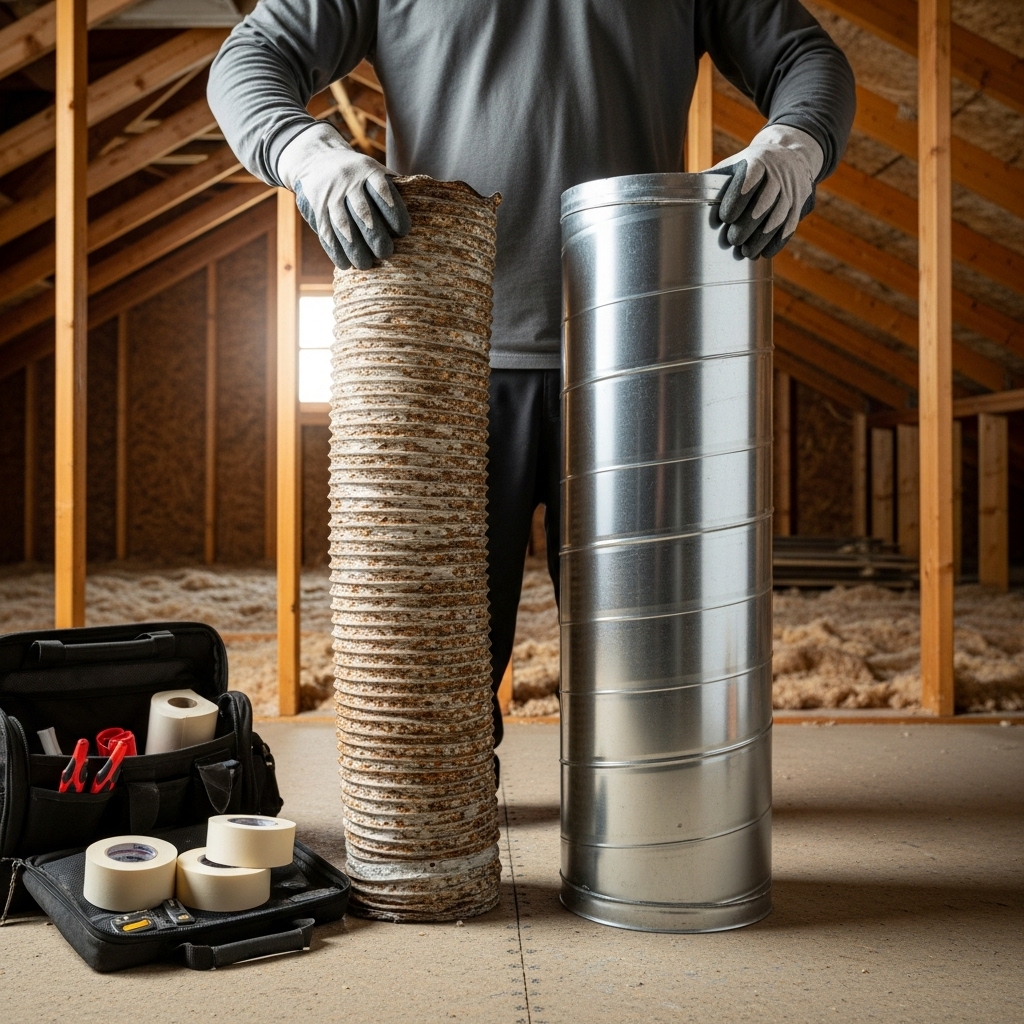
When you’re weighing air duct replacement against repair in Los Angeles, you’re really deciding between two strategies for comfort, efficiency, and peace of mind. Replacement can reset a troubled system, while targeted repair can solve specific problems with less disruption. The best path depends on the age and condition of your ducts, the layout of your home, and how well the current system matches your lifestyle. In our city—where microclimates range from breezy coastal mornings to hot Valley afternoons—this decision benefits from local expertise. Many homeowners begin with a professional consultation to understand what true, code-aligned air duct repair or replacement might involve for their specific home.
Start by considering the story your home tells. A 1920s bungalow with a maze-like attic presents different opportunities than a modern hillside house with tight framing. Some homes boast rigid metal trunks that remain structurally sound but need sealing and balancing. Others carry flexible ducts from earlier remodels that sag, kink, or have deteriorated jackets. Mixed systems are common, with sections swapped over decades. In each case, the question is whether the underlying material and routing are fundamentally viable. If yes, targeted repairs can deliver impressive gains. If not, replacement may unlock better performance and future-proof your comfort.
Diagnostics provide clarity. A licensed technician tests static pressure, checks airflow at supply registers, and inspects returns for restrictions. They’ll photograph seams, takeoffs, and supports, and note where bends are too tight or branches too long. The resulting map of the system reveals whether issues are isolated or pervasive. Is there a handful of significant leaks near the plenum, or do you see a pattern of failing connections across every run? Are supports spaced appropriately, or do long spans sag? Answers to these questions help steer you toward repair or replacement with confidence.
Repair shines when the bones are good. If ducts are generally sound but suffer from leaks at seams, crushed segments from attic storage, or a few poorly sized branches, a methodical repair plan can transform performance. Sealing with mastics and UL-rated tapes, restoring insulation continuity, correcting support spacing, and smoothing sharp bends are the moves that turn a noisy, uneven system into a calm, consistent one. Strategic changes to return air—adding a grille, resizing a chase, or improving cabinet pathways—often complete the picture, letting your equipment breathe and deliver comfort efficiently.
Replacement enters the conversation when materials are broadly compromised or the layout simply cannot meet the home’s needs. Think of ducts with widespread jacket deterioration, brittle liners, or a layout that snakes unnecessarily because of ad hoc additions across decades. If your home has changed significantly—say, a series of additions or a major interior reconfiguration—starting fresh can align the distribution network with the current floor plan. In these scenarios, a well-designed new system often employs rigid trunks for stability, with supported flex branches that reach rooms gracefully, all sealed and insulated to modern standards.
Los Angeles-specific conditions influence both choices. Attic temperatures soar in summer, demanding strong insulation continuity and secure fastening. Coastal air can challenge metal fittings with corrosion, while hillside framing forces clever routing and careful support. Local codes emphasize sealing and energy-wise design, and a licensed contractor understands when documentation and inspections are appropriate. Whether you choose repair or replacement, aligning the work with local expectations protects your investment and contributes to a quieter, more consistent home.
Return air deserves a spotlight. Many LA homes are starved for return pathways, especially after equipment or filtration changes that raised static pressure. On paper, your supply might look adequate; in practice, the blower is gasping. When weighing repair versus replacement, ask how return improvements fit into each plan. Sometimes a single added return in a key zone unlocks performance across the house. Other times, a new distribution design includes balanced returns that eliminate door slamming and whistling at grilles.
Comfort goals play a major role. If you’ve been living with rooms that swing wildly from morning to evening, address those specific spaces in the scope. A repair plan might resize the west-facing family room’s branch and improve the primary bedroom’s return. A replacement design might re-route trunks to shorten runs and reduce turns to those same rooms. In both paths, your lived experience guides the technical solution.
It’s natural to wonder about disruption. Repair often works within the existing framework, which can mean less invasive work and shorter timelines. Replacement usually involves broader access in attics or crawlspaces and, occasionally, opening small sections of interior finishes to reach soffits or chases. Reputable teams stage work carefully, protect surfaces, and keep communication flowing so you always know what’s happening and why. In condos or multifamily buildings, coordination with management and HOAs adds a layer of planning that licensed contractors handle routinely.
In some cases, hybrid solutions make sense. You might replace a compromised trunk to stabilize the system while repairing branches that are fundamentally solid. Or you may repair the supply side but redesign returns to end chronic pressure issues. This flexibility is one reason a thorough assessment is invaluable: it reveals where targeted effort produces the biggest gain, letting you prioritize smartly.
Indoor air quality often improves whether you repair or replace, as long as sealing is a priority. Ducts that leak in attics or crawlspaces can draw in dust and odors, which then circulate indoors. Sealing and insulation ensure that only conditioned air makes the journey to your rooms, and proper filtration—matched to your equipment—keeps particulates in check. If you’ve noticed a faint musty smell when the system starts, or dust halos near registers, sealing should be high on the agenda in either pathway.
Performance verification is a cornerstone of good work. Expect pre- and post-repair measurements: static pressure at the cabinet, airflow checks at registers, and visual proof of sealed seams and corrected supports. If you opt for replacement, ask for a layout that reflects room-by-room needs, including return placement and branch sizing. The ability to show how design decisions translate into comfort helps ensure the final result matches your expectations.
Los Angeles homes come with practical nuances. Low-slope roofs create tight attics; raised foundations bring crawlspace challenges. Homes with additions may hide ducts in soffits behind bathrooms or closets. A seasoned local team anticipates these obstacles and proposes solutions that minimize disruption while maximizing performance. Their familiarity with our housing stock—craftsman, Spanish revival, mid-century, contemporary—helps them balance aesthetics, access, and airflow.
Your decision also hinges on long-term plans. If you intend to stay for many years, investing in a comprehensive solution—whether a far-reaching repair or a full replacement—can pay off in daily comfort and steady operation. If you’re preparing a home for sale or planning a near-term move, a targeted repair that addresses obvious deficiencies can stabilize performance and make the space feel better right away. The right answer is the one that supports your timeline and goals while respecting the home’s structure.
As you compare options, lean on data. Ask for a clear summary of findings with photos, measurements, and a prioritized plan. Understanding where air is lost, where pressure spikes, and which rooms underperform will point you to the smarter path. Few decisions are as satisfying as the one you can feel: registers that quiet down, doors that stop slamming from pressure shifts, and rooms that finally settle into harmony with the rest of the house.
At the midway point of your evaluation, it can be helpful to see an example scope for each path. A repair scope might read: “Seal plenum and takeoffs, correct support spacing in attic branches, resize two west-facing branches, add return in primary bedroom, balance dampers.” A replacement scope might read: “Design new duct layout with rigid trunks, supported flex branches, balanced returns in three zones, all runs sealed and insulated to modern standards, with performance verification.” These roadmaps make the tradeoffs tangible and help you choose confidently.
In a city that expects a lot from its homes across long cooling seasons and daily temperature swings, having a duct system that truly serves the space is essential. Whether you repair or replace, the goals are the same: quiet operation, steady temperatures, and clean air moving efficiently where it’s needed. The path you choose should reflect your home’s condition, your comfort priorities, and how you plan to live in the space.
When you’re ready to move from uncertainty to clarity, start with a diagnostic-led consultation. Collaborate with a team that documents conditions, explains options, and tailors solutions to the realities of Los Angeles homes. For many, an initial conversation with local specialists in air duct repair opens the door to a confident decision that fits both the home and the household.
Frequently Asked Questions
How do I decide between repair and replacement?
Base the decision on diagnostics. If issues are isolated—leaks near the plenum, a few crushed segments, undersized branches—repair often delivers excellent results. If materials are broadly deteriorated or the layout can’t meet your needs, replacement may be the better route.
Will a repair be durable?
Yes, if done with proper materials and methods. Mastics, UL-rated tapes, correct support spacing, and insulation continuity make repairs durable. Verification measurements after work confirm performance gains and help keep results on track.
What role does return air play in this choice?
A major one. Many Los Angeles homes are return-limited, which raises static pressure and undercuts comfort. Any plan—repair or replacement—should include return improvements if testing shows restrictions.
Is this work disruptive to my daily life?
Professionals stage projects to protect finishes and minimize inconvenience. Repair tends to be less invasive, while replacement requires broader access. In both cases, clear communication keeps your routine predictable.
Can I combine repair and replacement?
Absolutely. Hybrid approaches—such as replacing a compromised trunk while repairing sound branches—often provide excellent value and performance, especially in homes with mixed materials and access constraints.
If you’re ready to choose a path that delivers steady comfort and reliable performance, schedule a comprehensive evaluation with a trusted local team. Begin today and map out a plan that fits your goals, your home, and your timeline with professional air duct repair. When you’re set to move forward, book your visit and enjoy the day-to-day calm of a system that finally matches the way you live.
Turn the decision into confidence by partnering with specialists who understand Los Angeles homes and design solutions that last. Reach out now and set your project in motion with data-driven, code-aligned air duct repair.