
When energy bills spike in Los Angeles, many homeowners instinctively blame their equipment. While aging HVAC units can contribute, the unsung culprit all too often is the duct system. Ducts are the circulatory system of your home’s comfort, carrying cooled or heated air to every room. If they leak, kink, or choke, your equipment has to work longer and harder to deliver the same results. In a city with microclimates as diverse as ours—from cool coastal mornings to searing Valley afternoons—this mismatch between demand and delivery can drive utility bills up and comfort down. That’s why many Angelenos start their efficiency journey by examining whether targeted air duct repair could cut waste while boosting everyday comfort.
To understand how ducts impact energy use, picture a long run winding through a hot attic. Every unsealed joint is a small escape hatch. Every sharp bend is a speed bump for airflow. Every sag becomes a pool where momentum slows, forcing the system to push harder. Air that should arrive at your registers with vigor instead trickles in, while conditioned air spills into unconditioned spaces. The equipment hears only one message: “Run longer.” That translates into elevated energy use, extended runtime, and uneven temperatures that frustrate families.
Los Angeles homes add an extra layer of complexity. Many have additions or converted spaces that were tied into the original duct system without redesign. The result is a patchwork distribution network that overfeeds some rooms and starves others. When you try to fix comfort by lowering the thermostat further, the system simply runs longer, compounding the waste. The smarter move is to look at the airways themselves. With a diagnostic-led repair, you can seal the leaks, smooth the pathways, and let the equipment work at a steady, efficient pace.
The benefits of this approach go beyond numbers on a bill. Comfortable rooms reduce the urge to overcorrect with extreme thermostat settings. Quieter registers and consistent airflow make the home feel calmer. And when ducts are sealed against dusty attics and crawlspaces, indoor air quality improves—a big plus in a metropolitan area where outdoor particulates and seasonal allergens fluctuate.
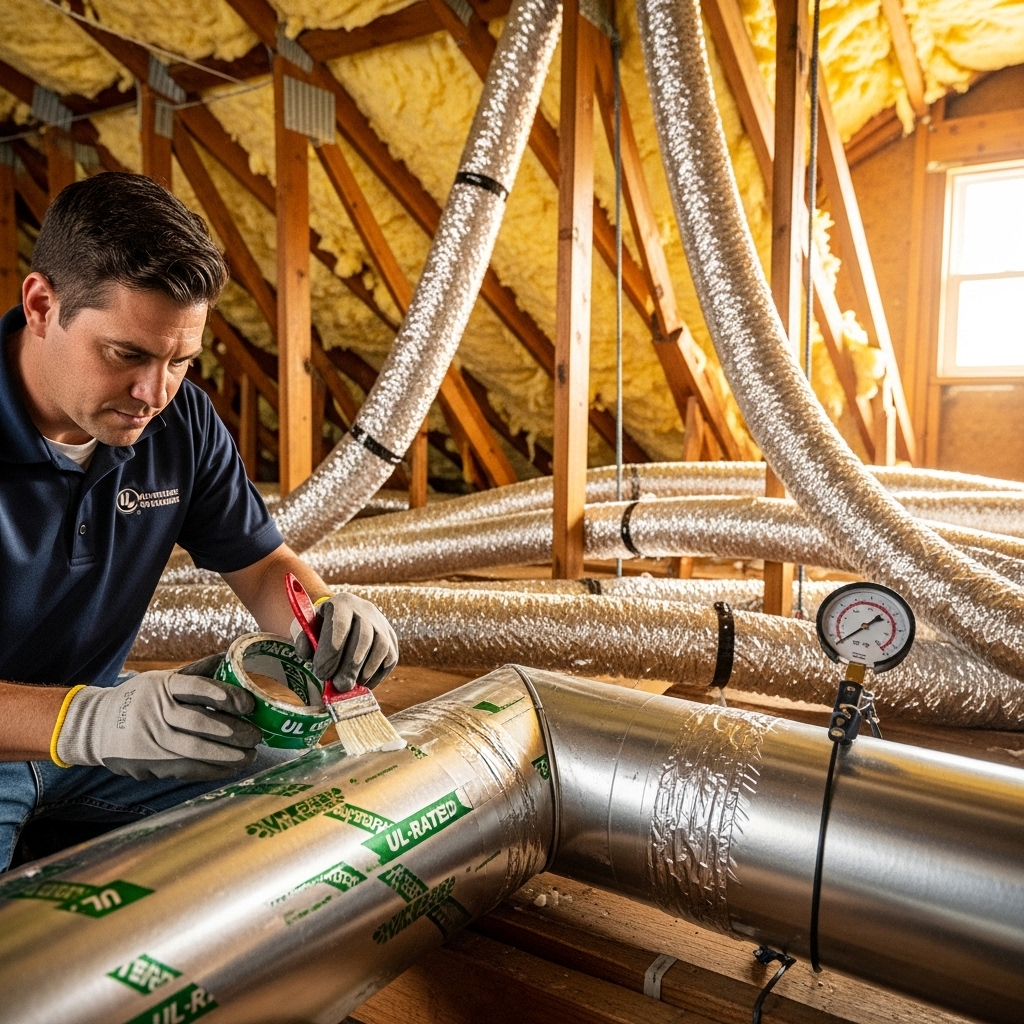
Diagnostic testing is the backbone of effective duct repair. A technician will often start by measuring static pressure and surveying airflow at key registers. They may use smoke or tracer tools to reveal unseen leaks, and they will examine supports, bends, and transitions for signs of restriction. The point is to construct a performance map of your system. Once you know where air is escaping or getting bottled up, the solution becomes clear: seal, support, resize, or reroute as needed to restore smooth, efficient delivery.
Sealing methods matter. Tapes not intended for ducts dry out and peel. Modern mastics and UL-rated tapes, applied properly, create a long-lasting seal at joints, takeoffs, and plenum transitions. Insulation is checked and corrected where compressed or missing, especially in hot attics where surface temperatures can soar. This pairing of sealing and insulating is essential in Los Angeles because the temperature difference between attic air and supply air can be dramatic during the summer, amplifying losses from even small leaks.
Balancing airflow is equally crucial. Think of your home as a network that must be tuned, not just patched. A licensed professional may adjust dampers, correct branch sizes, or add a well-placed return to relieve pressure. The payoff is immediate: registers deliver steady air, noise drops, and hot or cold spots fade. Because the equipment now meets demand more efficiently, it cycles normally rather than grinding on for hours.
Older homes in our area complicate matters with varied materials. Rigid metal ducts may be solid but leaky at seams, whereas older flexible ducts may have drooping spans or crushed turns. Your technician weighs the pros and cons of preserving what’s sound and replacing what isn’t. Sometimes a hybrid approach—rigid trunks with supported flex branches—provides the best balance of performance and practicality. The unifying principle is continuity: tight seals, smooth paths, consistent insulation.
Return air deserves special attention. Many LA systems are starved on the return side, especially after filter upgrades or equipment changes that increased static pressure. A choked return forces the blower to labor, raising energy use and sometimes creating a rushing noise at the grille. Correcting returns can substantially reduce runtime while making the home feel instantly more breathable. It’s a frequently overlooked lever for efficiency.
Consider also how everyday life interacts with your ducts. After a remodel, walls shift, room usage changes, and the original duct layout may no longer suit the home. A family that now works and studies from home might run the system at different hours than before, revealing weaknesses in distribution. Los Angeles homes that were designed for cross-ventilation but now rely more on cooling can show stress in the hottest weeks of the year. Repair plans that account for these patterns achieve better results because they serve the way you live now.
In multifamily buildings, the picture can be more complex. Ducts may travel through interstitial spaces, and access may be limited by shared walls and HOA rules. Still, the fundamentals hold: find the leaks, fix the bottlenecks, and confirm performance. Coordinating work windows, protecting common areas, and communicating with building management are part of a professional plan in dense neighborhoods.
A practical question many homeowners have is how long repairs take. For accessible systems with clear leakage points and a few restrictions, progress can be swift. When ducts are buried in insulation, trunks are pinched around beams, or returns must be reconfigured, the schedule extends. Good contractors set expectations early, protect finishes, and leave your home tidy each day. They’ll also walk you through before-and-after snapshots—static pressure readings, register flows, and photos of key transitions—so you can see and feel the difference.
Indoor air quality and energy use are tightly linked in duct repair. When leaks pull dusty attic or crawlspace air into the stream, you’re essentially conditioning air you never wanted in the first place. Sealing stops that. Pair it with appropriate filtration—matched to your system’s capabilities—and you reduce airborne particles, odors, and the sense of stuffiness that sometimes accompanies long runtime. This is especially valuable in households with allergies or respiratory sensitivities.
Let’s talk about the daily rhythm of Los Angeles living. Mornings can be cool; by late afternoon, inland neighborhoods can be significantly warmer. If your ducts are leaky, your system will fight this swing with long, loud cycles. If sealed and balanced, the home glides through those changes more gracefully. Register noise drops, doors stop slamming from pressure imbalances, and your thermostat settings feel more meaningful because the conditioned air reaches you without detours.
Over time, efficient ducts also protect your equipment. When static pressure is reasonable and air paths are smooth, motors and components aren’t pushed to their limits. That steadiness contributes to reliability. It’s one reason why proactive duct repair can be such a strong strategy for homeowners who want both lower bills and fewer headaches.
Midway through your improvement journey, you might wonder whether you need replacement instead of repair. The answer depends on condition and accessibility. If duct material is deteriorated throughout, if runs are radically undersized, or if the layout fundamentally clashes with your home’s needs, replacement may be the logical step. But many systems benefit enormously from targeted repairs—sealing, support corrections, return improvements, and gentle reroutes—that restore performance without a full overhaul. A diagnostic assessment is the surest way to determine the right path.
For households that host guests or run short-term rentals, reliable comfort translates into better experiences. Hot bedrooms or noisy registers near living areas create stress. By quieting the system and evening out temperatures, duct repair helps your home feel welcoming in every season. It also reduces the need to micromanage the thermostat when you have a full house, which can otherwise drive energy use up.
Communication remains central to success. A clear scope of work, updates as milestones are reached, and a final performance check build trust. You should expect to see which seams were sealed, where supports were added, and how airflow improved. That transparency gives you a baseline for future maintenance and reinforces the value of the work.
In short, when high energy bills send you searching for answers, don’t overlook the pathways that carry comfort to your rooms. A focused plan that tests, repairs, and balances ducts can deliver both immediate and lasting gains. The home feels calmer, cleaner, and more consistent, and your equipment breathes easier. It’s a smart move in a city where we demand a lot from our systems across diverse microclimates and extended cooling seasons.
If you’re ready to pinpoint where energy is slipping away and how to win it back, start with an assessment from a team that understands Los Angeles homes. Ask for measurements, photos, and a prioritized plan that fits your space and goals. Many residents find that partnering with experienced local specialists in air duct repair yields a clear path to improved comfort and lower energy use without unnecessary disruption.
Frequently Asked Questions
Can duct leakage really make a noticeable difference in my bills?
Yes. Even moderate leakage forces equipment to run longer to satisfy thermostat calls. Sealing and balancing reduce runtime, which helps rein in energy use while improving comfort at the registers.
How do technicians find leaks that I can’t see?
Professionals measure static pressure, check register flows, and use tracer methods to reveal hidden leaks. They also inspect supports, bends, and transitions for telltale signs like dust streaks, whistling, or temperature anomalies.
Is replacement always better than repair?
Not necessarily. If materials are broadly deteriorated or runs are poorly sized throughout, replacement may be warranted. Many systems, however, respond remarkably well to sealing, improved supports, return enhancements, and minor reroutes.
Will these repairs make my home quieter?
Often, yes. When airflow is smooth and pressure is reasonable, registers whistle less and doors are less likely to slam from pressure imbalances. Many homeowners report a noticeable drop in system noise after repairs.
How soon will I feel a difference?
In many cases, immediately. Even airflow and quieter registers are common post-repair outcomes. Over the next utility cycles, you should also see steadier, more predictable energy use.
When you’re prepared to bring your energy use back in line and make your home feel better, schedule a professional evaluation with a trusted local team. Start the conversation today and take practical steps toward a tighter, better-balanced system through expert air duct repair. If you’ve been living with long runtime and uneven rooms, now is the moment to act—book your visit, and enjoy smoother comfort with every cycle.
To take the next step confidently, connect with specialists who diagnose, document, and deliver results tailored to Los Angeles homes. Make your appointment now and experience consistent comfort, cleaner air, and calmer operation through proven, professional air duct repair.