
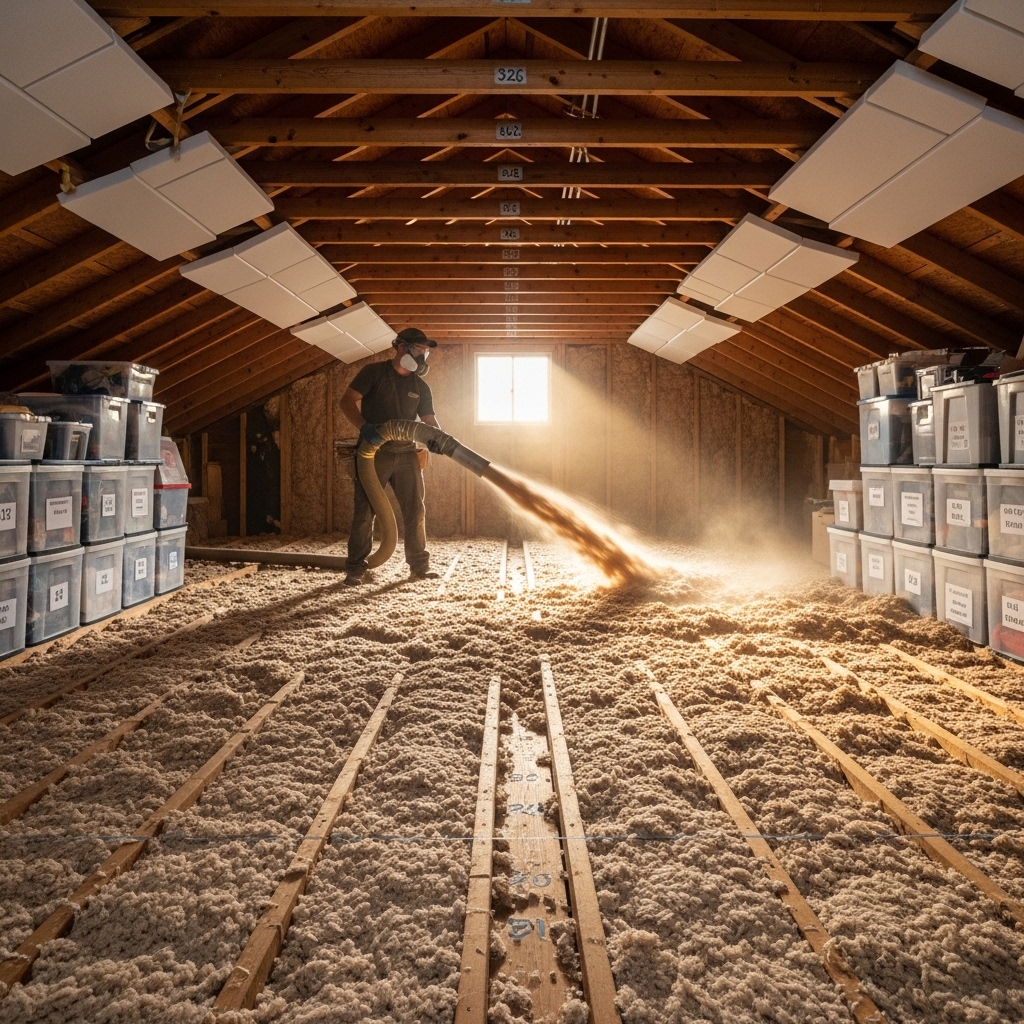
Across Los Angeles, from Spanish Revival cottages to mid-century ranch homes, blown-in cellulose insulation has earned a reputation for delivering reliable comfort with a light touch on existing finishes. Because cellulose flows into gaps and surrounds framing, it creates a dense, uniform layer that tames heat, quiets noise, and respects the quirks of older construction. If you’ve been searching for a solution that balances performance, sustainability, and minimal disruption, professional insulation installation with blown-in cellulose deserves a close look.
Cellulose is made primarily from recycled paper fiber treated for fire resistance and durability. Its density allows it to slow air movement within cavities, which helps real-world performance in a city where afternoon sun and warm nights challenge comfort. In attics, it blankets surfaces evenly. In walls, when dense-packed, it fills irregular cavities behind lath-and-plaster or drywall, improving both temperature stability and acoustics.
Why cellulose fits Los Angeles homes
Our climate is defined by long dry seasons, cool nights, and occasional bouts of wind and rain. In that setting, cellulose’s ability to conform to complex framing and reduce convective looping is a practical advantage. Many LA homes have been updated over time, leaving a patchwork of materials and penetrations in the attic. Cellulose weaves around these elements, helping to create a continuous thermal layer that works with air sealing to stabilize the house.
Another benefit is sound control. Whether you’re near a busy corridor, under a flight path, or simply craving more privacy between rooms, cellulose’s mass and fiber structure absorb noise, making interiors feel calmer. That’s a quality-of-life improvement that’s immediately apparent once the installation is complete.
Attic applications: coverage and consistency
In attic floors, cellulose is installed to a specified depth, with rulers and baffles ensuring consistent coverage. Before blowing begins, critical sealing work is done at top plates, chases, and penetrations to stop air movement. This pairing of air sealing and insulation is the foundation of comfort in an LA home where solar gain can be intense. When the attic is properly sealed and insulated, the living space below feels steadier, HVAC runs less, and dust infiltration is reduced.
For homes with ductwork in the attic, a well-insulated floor helps protect conditioned air from temperature swings. In certain projects, homeowners consider creating a conditioned attic by insulating at the roofline, but for many, a high-R attic floor with cellulose offers a cost-effective boost that integrates seamlessly with existing assemblies.
Dense-pack walls: gentle on finishes, strong on performance
One reason cellulose is favored in older Los Angeles homes is its compatibility with lath-and-plaster walls. Small access points are created in unobtrusive locations, and cavities are filled under measured pressure so the material knits together without voids. This process respects historic finishes while delivering a meaningful upgrade in comfort and noise control. It’s particularly useful in street-facing rooms, bedrooms near alleys, and home offices.
Dense-pack also helps reduce drafts by discouraging air movement within the cavity, which can be a hidden source of discomfort even in milder seasons. While no material alone replaces thoughtful air sealing at the shell, dense-pack complements that work by anchoring the thermal boundary where it belongs.
Moisture and durability considerations
In our predominantly dry climate, moisture drives are less aggressive than in colder regions, but they still matter. The key is to maintain drying pathways and avoid creating traps. Cellulose allows assemblies to dry when paired with appropriate interior finishes and exterior claddings. During planning, we evaluate flashing, roof conditions, and ventilation so the new insulation supports the home’s long-term health.
Properly installed cellulose is treated to resist pests and ignition, and its density can also slow the spread of smoke through concealed spaces. These attributes, combined with air sealing and good ventilation, contribute to a safer, calmer home environment.
Installation day: what to expect
Professional crews prepare the home by protecting floors and furnishings, setting up equipment, and confirming access. In attics, baffles are placed to maintain ventilation channels where required, and rulers are installed to verify depth. Sealing is completed before blowing begins, and technicians move methodically to ensure even coverage around framing, ductwork, and other obstacles. In walls, access points are carefully drilled, cavities are filled to target density, and patches are made flush for a clean finish ready for paint.
Communication continues throughout. You’ll know when to expect equipment noise, which rooms are being accessed, and how long each phase will take. At the end, the space is cleaned, and you’re briefed on what was installed and where, so you have a clear record for future reference.
Pairing cellulose with other improvements
Once the building shell is tightened and insulated, other systems tend to perform better. Ducts may deliver more consistent temperatures, and mechanical equipment often cycles less frequently. If window upgrades are on your horizon, you may find you can prioritize targeted replacements rather than a wholesale swap because the interior loads are already reduced. Shading strategies, from trees to exterior devices, also become more effective when the envelope holds steady.
In mid-project reviews, homeowners often notice how much quieter their homes have become—a welcome shift whether you’re near a school, a lively boulevard, or simply sensitive to noise. That acoustic calm is one of cellulose’s signature strengths and a major reason it’s recommended for bedrooms and media spaces.
FAQs
Q: Will dense-pack cellulose damage my plaster walls? A: When installed by experienced crews using controlled pressures and proper techniques, lath-and-plaster walls remain intact, and access points are patched to blend with existing finishes.
Q: Does cellulose settle over time? A: Properly installed attic cellulose is blown to a depth that accounts for minimal settling and includes depth markers for verification. Dense-pack wall cellulose is installed at a density that resists settling and maintains coverage.
Q: Is cellulose safe? A: Modern cellulose is treated for fire resistance and is widely used in residential applications. Installations follow safety protocols and maintain clearances around heat sources and fixtures.
Q: Can cellulose help with noise? A: Yes. Its fiber structure and density absorb airborne sound, which can make a noticeable difference in homes near busy streets or under flight paths.
Q: Should I choose cellulose or spray foam? A: It depends on your goals and assemblies. Cellulose offers excellent performance in attics and walls with minimal disruption, while spray foam can be ideal for sealing complex cavities or creating conditioned attics. A home assessment will determine the best fit.
Bring calm and comfort to your LA home
If your home runs hot in the afternoon and carries more street noise than you’d like, blown-in cellulose can make a remarkable difference without major renovation. Start with a simple assessment to evaluate your attic and walls, discuss your comfort goals, and plan a tidy installation that respects your finishes. When you’re ready to move forward, schedule with a local team and experience how expert insulation installation can transform the daily feel of your home—cooler, quieter, and consistently comfortable.