
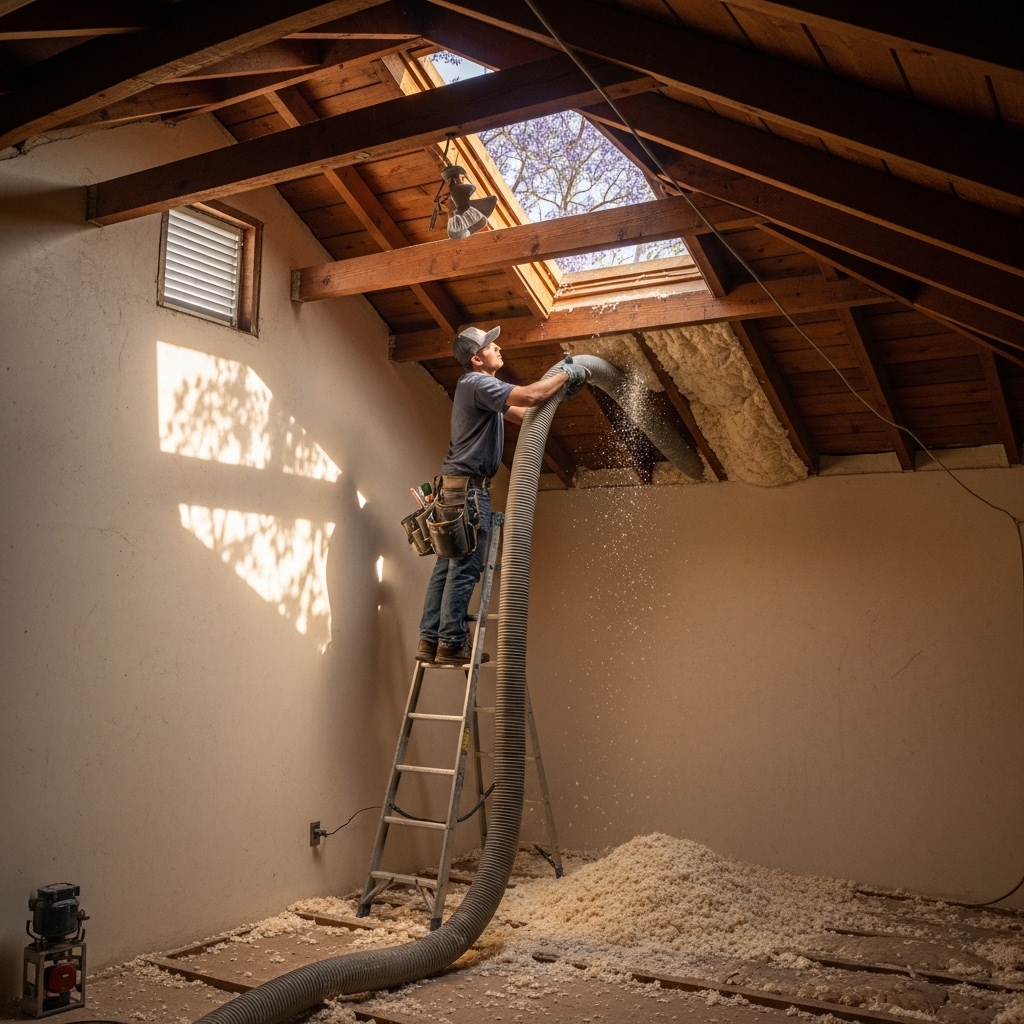
Step onto almost any historic block in Los Angeles and you can feel the character of the city in its architecture—craftsman bungalows shaded by jacarandas, Spanish Revival cottages glowing in the late-afternoon sun, postwar ranch homes tucked into the foothills. These homes are full of charm, but they also carry the quirks of an earlier building era. One of the most common is inadequate or missing insulation, which can leave interiors sweltering on Santa Ana days and drafty when the marine layer rolls in. If you’ve felt the seasonal swings more than you’d like, it may be time to explore professional insulation installation tailored to older homes in Los Angeles.
Updating insulation in an older house isn’t about erasing its history; it’s about preserving comfort, improving efficiency, and protecting the structure. The Mediterranean climate here brings long stretches of dry heat, cool nights, and a winter season punctuated by rain systems that can test a building’s envelope. Many pre-1970s homes were built with limited thermal resistance in the attic, little to no wall insulation, and assemblies that weren’t designed to control airflow the way modern construction does. That’s why a local approach—one that understands LA’s microclimates, stucco-and-plaster wall systems, and the way heat radiates through roof assemblies under intense sun—is essential.
Why older Los Angeles homes struggle with comfort
Walk into a 1920s bungalow and you’ll often find original lath-and-plaster walls, a vented attic with patchy insulation, and an assortment of retrofit decisions made over decades. In these assemblies, air can move freely through gaps at top plates, chases, and around recessed lights, effectively bypassing the limited insulation that’s already there. During peak summer heat, the roof deck can reach temperatures that radiate downward, turning second floors and attic-adjacent rooms into hotspots. In the winter, the reverse occurs—warm indoor air rises and escapes, drawing in cooler air at the lower level and creating drafts.
Most Angelenos assume we’re dealing solely with a cooling challenge, but air sealing is just as important as R-value in this climate. Without controlling air movement, even high-quality insulation won’t perform as designed. That’s why a comprehensive plan for an older home often starts with a careful evaluation of leakage pathways, coupled with strategies that respect the building’s materials and finishes.
Respecting historic details while improving performance
Owners of historic properties understandably worry about invasive work. The good news is that modern techniques can dramatically improve comfort with minimal disruption. In many Los Angeles neighborhoods, wall cavities behind plaster can be dense-packed with carefully selected materials that add thermal resistance and reduce sound transfer. Attics can be air sealed at key locations, then brought up to today’s performance standards with blown-in insulation that weaves around framing irregularities.
Just as importantly, local teams understand the quirks of stucco exteriors and clay tile roofs. For example, if your bungalow retains original knob-and-tube wiring, the plan must account for electrical safety prior to adding insulation. If your home relies on natural ventilation through attic vents, we balance insulation levels and baffle placement so that the roof assembly can continue to dry properly. The goal is to dial in comfort and efficiency without compromising the home’s envelope or its heritage.
Choosing the right materials for LA’s climate
There is no single “best” insulation for every older home. Instead, materials are matched to assemblies and goals. In many attics, loose-fill cellulose or fiberglass can be added over air-sealed surfaces to create a continuous thermal blanket. Cellulose offers excellent density and sound attenuation—useful when you live beneath a busy flight path or alongside a boulevard—while modern fiberglass provides consistent performance with minimal settling.
For wall cavities in lath-and-plaster construction, dense-pack cellulose is a common choice because it can conform to irregular spaces and reduce convective looping. In some cases, foam options may be considered for small, targeted areas—around complex penetrations or in short knee walls—to boost air control where it matters most. The material selection always comes after an assessment of moisture pathways and drying potential so that the final assembly remains safe over time.
The process: assessment to clean finish
Every successful project begins with a thorough walkthrough. We look for signs of heat gain or loss, inspect the attic and underfloor spaces, and note any mechanical or electrical elements that could be impacted by the work. We pay attention to how rooms feel at different times of day and how noise travels through the home. In Los Angeles, that often includes considering hillside lots, seismic retrofits, and the realities of additions built over the decades that may have mixed framing styles.
Air sealing is typically the first hands-on step. Gaps around plumbing stacks, chimney chases, top plates, and electrical penetrations are sealed with appropriate materials, and recessed lights may be upgraded or boxed with rated covers to maintain safety clearances. The attic hatch receives a proper insulated cover and weatherstripping. Once the shell is buttoned up, insulation is installed to the specified depth and density, with care taken to maintain ventilation where required.
For walls, small, strategic access points are made—often in inconspicuous locations—so the cavities can be dense-packed. When done by an experienced crew, these openings are neatly patched, and interior surfaces are left ready for paint. The result is a quiet, even-tempered interior that feels markedly different from the first day you moved in.
Ventilation and indoor air quality considerations
Older homes often “breathe” through uncontrolled leaks, which is not the same as healthy ventilation. Once a house is tightened and insulated, it can actually enjoy better indoor air quality, provided that ventilation is intentional. In Los Angeles, that might mean adding a simple, quiet bath fan on a timer, ensuring kitchen ventilation is ducted outdoors, or considering a balanced ventilation strategy during a larger remodel. The key is that your home’s fresh air comes from clean, controlled sources rather than dusty attic gaps or wall cracks.
Common concerns from owners of vintage homes
One concern we often hear is about moisture in walls. Our climate’s modest heating season and predominantly dry air make vapor drive less of a risk than in cold regions, but we still pay attention to assemblies. By pairing air sealing with appropriately permeable materials, walls can dry to the interior or exterior as designed. Another frequent question is whether insulation will change the character of the home. The answer is that done right, it’s invisible day to day—what you notice is a quieter, calmer interior and a home that holds temperature without constant thermostat fiddling.
Energy savings and comfort you can feel
From Echo Park to Mar Vista, we’ve seen owners surprised by the “feel” of their homes after a thoughtful insulation upgrade. Rooms that once roasted in the afternoon become usable again; mornings feel warmer even before the heat kicks on. HVAC equipment runs more smoothly and less frequently because it isn’t battling constant gain and loss. Windows and shading help, but it’s the upgraded shell—air sealing plus insulation—that provides the foundation for comfort in our sun-driven climate.
Midway through most projects, homeowners often start thinking about complementary improvements. That might include sealing ductwork, checking attic ventilation, or right-sizing aging HVAC systems. The beauty of a well-insulated envelope is that it makes every other upgrade more effective. If you’re mapping out a phased plan, it’s smart to start at the top with the attic and migrate to walls and floors as needed, keeping an eye on the overall performance goal. If you want a reference point as you plan, consider the benefits of professional attic insulation installation to anchor your approach.
Preserving value and reducing noise
Los Angeles is a city in motion: helicopters, leaf blowers, late-night traffic on the 101. Insulation does more than mediate temperature; it also calms the soundscape. Dense-pack wall assemblies and full-coverage attic insulation absorb and mute exterior noise, which is a quality-of-life upgrade that’s hard to quantify but immediately appreciated. Pair that with reduced thermal stress on finishes and mechanical equipment, and you’re quietly protecting the home’s long-term value while making it more enjoyable every day.
What to expect during installation day
Professional crews treat older homes with respect. Floors and furnishings are protected, access routes are planned, and dust control is prioritized. In attics, technicians work carefully around existing framing, wiring, and any stored items you may choose to relocate. Communication is key—before, during, and after—so you know exactly what has been sealed, where insulation was added, and how to maintain access to mechanical components. At the end, you should receive documentation of materials and levels, and a walkthrough to discuss any observations and next steps.
Seasonal realities in LA neighborhoods
From the coastal breezes in Santa Monica to the canyon microclimates in Los Feliz and the hotter inland valleys like Woodland Hills, weather patterns vary across the region. Those differences guide material choices and target R-values, especially in attics that take the brunt of solar gain. Homes shaded by mature trees or situated on north-facing slopes may experience different comfort issues than sun-soaked lots, and the plan will reflect those realities. Local expertise ensures your home is treated as a one-of-one, not a template.
FAQs
Q: Will insulating my older home trap moisture? A: Not when it’s done with attention to air sealing and drying pathways. Materials are chosen to allow safe drying toward the interior or exterior, and ventilation remains balanced so the house stays healthy.
Q: Can wall insulation be added without major demolition? A: Yes. Dense-pack methods allow careful installation through small access points, which are later patched. Interior finishes are preserved, and the results are both thermal and acoustic improvements.
Q: What about knob-and-tube wiring? A: If present, it must be evaluated before insulation is added. A professional will coordinate with a licensed electrician to ensure safe conditions and compliance with applicable codes.
Q: Do I need to replace my HVAC at the same time? A: Not necessarily. Many homeowners insulate first, then reassess HVAC performance. Often, existing systems run better and may even be downsized in a future upgrade.
Q: How long does installation take? A: Attic air sealing and insulation often finish in a day for typical homes, while wall dense-pack can add another day or two depending on size and access. Your team will set clear expectations based on your home.
Ready to make your older Los Angeles home feel new again?
If you’re tired of hot afternoons, chilly mornings, and the constant hum of outdoor noise, it’s time to consider a tailored plan for your home’s shell. Start with a conversation about your comfort goals, a careful look at your attic and walls, and a plan that honors your architecture while modernizing performance. Reach out today to schedule a friendly assessment and learn how professional insulation installation can transform the way your home feels—quiet, consistent, and ready for every season in Los Angeles.