
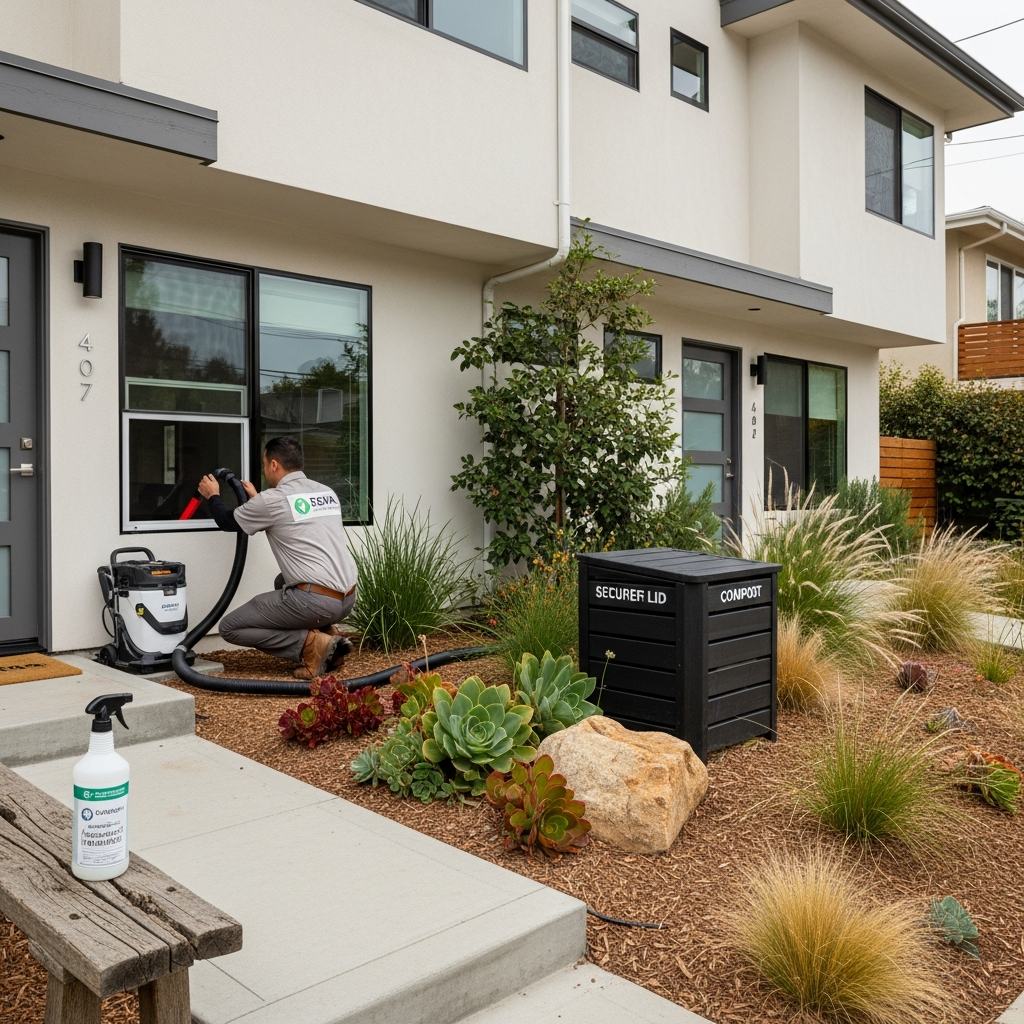
In Los Angeles, sustainability is not a trend so much as a lifestyle we refine with every drought cycle, every wildfire season, and every neighborhood effort to plant trees and compost. When rodents have intruded, the cleanup that follows can align with those values without sacrificing effectiveness. Eco-friendly rodent sanitation is about smart choices: capturing contaminants instead of spreading them, selecting products that work with minimal impact, and leaving behind a home that feels clean, neutral, and safe for people, pets, and the local environment we share.
From Mar Vista bungalows with native plant front yards to Silver Lake duplexes shaded by jacarandas, we can apply greener practices that fit LA’s architectures and microclimates. The goal is to remove droppings, urine residues, and nests while protecting indoor air quality and minimizing waste. A thoughtful plan marries method and material: HEPA-based capture, targeted disinfectants with responsible profiles, and disposal protocols that keep contaminants contained without unnecessary volume in the waste stream.
Principles of greener sanitation
The first principle is source control. Removing contaminated materials completely is more sustainable than trying to cover them with strong fragrances or repeated surface applications. Bag at the source, move carefully to avoid re-aerosolizing particles, and use sealed pathways out of the home. The second principle is capture. HEPA filtration on vacuums and air scrubbers traps fine particulates that otherwise circulate through living spaces and out into the neighborhood air. The third principle is compatibility: choose products that are effective for the likely organisms present and that are suitable for the surfaces you are treating, reducing the need for repeat applications.
In practice, this looks like a measured, quiet workflow. Crews dampen lightly where necessary to weigh down dust, remove bulk material with minimal disturbance, HEPA vacuum joists and ducts, and then spot-treat framing and surfaces. Ventilation is managed so that fresh air speeds drying without pushing dust into occupied areas. What you notice as a homeowner is a lack of strong odors, a sense of air that feels simply neutral, and a workspace that looks more like careful housekeeping than construction.
Product selection with people and pets in mind
Green does not mean weak. The best eco-friendly sanitation relies on products with proven efficacy used at appropriate dilutions and contact times. Low-odor, low-residue formulations keep homes livable during the process. In spaces where children crawl or pets explore, the benefit is immediate: fewer harsh scents, less lingering film on surfaces, and cleaning that targets the source rather than blanketing the room with chemicals. For porous materials, removal remains the greenest choice—taking away the reservoir rather than saturating it repeatedly.
Because Los Angeles homes often mix old and new finishes—vintage rafters and modern ductwork—the gentler product path also preserves materials. Avoiding corrosive agents extends the life of metals and respects wood grain, which supports sustainability by reducing the need for repairs or replacements later.
Waste handling that honors our environment
Eco-friendly sanitation pays attention to what leaves the site. Contaminated materials are bagged appropriately and routed for disposal according to local requirements. Clean materials are protected from cross-contamination to avoid unnecessary waste. Pathways are planned to minimize trips through living areas, and equipment is kept clean to prevent residue from leaving with the crew. The net effect is less overall waste and more confidence that what needed to go has gone, and what could stay has stayed clean.
Some homeowners ask about recycling insulation. In most rodent-contaminated scenarios, disposal is the safest and most responsible course because residues are not practical to remove to a standard appropriate for reuse. The green lens focuses instead on targeted removal, right-sizing replacement, and ensuring that the building envelope performs better after the work—reducing energy use and improving comfort.
Water-wise methods for a drought-aware city
Los Angeles understands the value of water. Sanitation methods can be designed to minimize water use by favoring capture and careful wiping over heavy washing. When damping is helpful to prevent dust, it is applied sparingly and strategically. Drying is led by ventilation and time rather than by saturating spaces that then demand aggressive dehumidification. The result is a cleaner environment with a modest water footprint, aligned with how we already live—short showers, drought-tolerant landscaping, and mindful irrigation.
Air quality: the quiet success metric
In a city where wildfire smoke occasionally settles over neighborhoods, indoor air quality is not abstract. Eco-friendly sanitation prioritizes HEPA filtration and containment to prevent contaminated dust from circulating. During work, air scrubbers keep adjacent rooms comfortable. Afterward, what lingers is not perfume but neutrality. For households with newborns, elders, or anyone sensitive to smells, that neutrality is a daily relief. It also supports the environment outside your door by reducing the chance that dust escapes into the neighborhood air.
Middle-of-the-project checkpoints for greener outcomes
Greener work is careful work. Midway through, teams pause to confirm that bagging and containment are holding, that ventilation is adequate, and that product use matches the plan—no over-application, no shortcuts. This is the point where small adjustments yield big gains: moving an air scrubber to a better location, sealing an extra seam on a barrier, or shifting the order of rooms to reduce tracking. It is also the right time to remind homeowners about habits that extend results: sealing pet food, managing countertop fruit, and coordinating yard waste so exterior attractants do not invite new problems. This is how eco-conscious rodent sanitation becomes part of a home’s ongoing rhythm.
Outdoors matters: sustainable yard practices
Many LA rodent incursions start outside. Greener sanitation therefore looks beyond walls to the landscape. Drought-tolerant plantings can be arranged to reduce dense ground cover near foundations. Compost setups are managed to be rodent-resistant with tight lids and appropriate placement. Fallen fruit is collected promptly, and storage sheds are kept tidy with sealed bins. These outdoor habits reduce the need for future indoor cleanups, saving resources and supporting neighborhood ecology—songbirds, pollinators, and the urban wildlife that share our city.
Old homes, new standards
Historic houses benefit from eco-friendly methods that respect materials. Gentle cleaners, controlled ventilation, and selective removal protect plaster, vintage rafters, and delicate vents while achieving the same sanitation benchmarks. For mid-century homes with long, low attic runs, careful HEPA vacuuming and targeted treatment avoid overuse of products and keep the architectural lines—inside and out—undisturbed. In newer builds with advanced HVAC, coordinating sanitation with system settings ensures good airflow and quick return to baseline comfort.
Community benefits and equity
Eco-friendly approaches scale well for multifamily buildings and community spaces. Because methods aim to minimize fumes and dust, sensitive populations benefit. Transparent communication about products and processes builds trust, and documentation shows how greener choices achieved healthy results. In a city that values both innovation and inclusion, these choices feel right: practical, considerate, and effective.
Frequently asked questions
Does eco-friendly mean less effective?
No. The heart of green sanitation is source removal and HEPA capture, which are highly effective. Products are selected for efficacy with lower odor and residue profiles. The combination delivers clean, healthy spaces without unnecessary impact.
Will my home still smell clean without strong fragrances?
Yes. The goal is neutrality, not perfume. When contaminated materials are removed and surfaces are properly treated and dried, the air reads as clean because the source of the odor is gone, not because it is masked.
Can I stay home during eco-friendly sanitation?
In most cases, yes. Low-odor products, containment, and HEPA filtration keep living spaces comfortable. Families with very young children or highly sensitive individuals sometimes choose a brief outing during the most active phases.
What about pets?
Eco-friendly methods consider pets at every step. Crews coordinate access so doors are not propped open, avoid strong fragrances, and ensure treated areas are dry before animals return. The result is less stress for everyone, including dogs and cats that notice even subtle changes.
Is there a greener way to handle contaminated insulation?
The greenest approach is targeted removal of only what is contaminated, followed by right-sized replacement that improves energy performance. Attempting to salvage heavily soiled material is not practical or healthy. The bigger environmental win comes from a tighter, better-performing envelope after the work.
If you want your Los Angeles home to feel peaceful, odor-free, and responsibly cared for, choose a team that treats sustainability as a standard, not a slogan. With careful methods, thoughtful products, and documented results, eco-friendly rodent sanitation will help your space breathe easier while aligning with the values that define how we live in this city.