
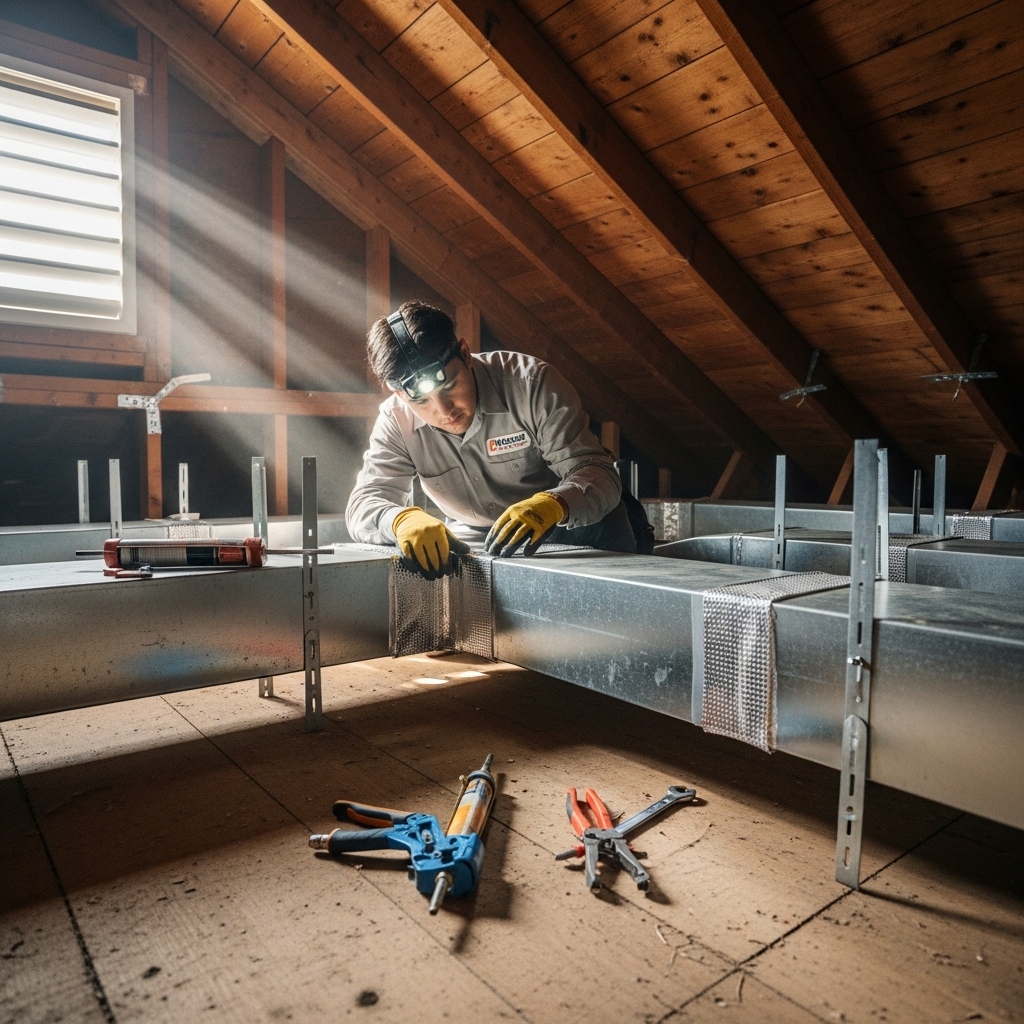
When you live and breathe Los Angeles air, you learn to read the city’s rhythms in the way your home feels on a warm evening or a breezy coastal morning. As a local technician who has spent years crawling through attics from Highland Park to Playa del Rey, I can tell you that the story of comfort in a Los Angeles home is written inside the ductwork. If your rooms cool unevenly, if the AC seems to groan on longer than it should, or if a faint rattle rides the air like distant traffic on the 405, your ducts might be trying to tell you something. That is why finding reliable air duct repair near you in Los Angeles is less about a quick fix and more about restoring the flow of daily life—quiet, efficient, and clean.
Los Angeles is a patchwork of microclimates and architectural eras, and every one of them leaves a fingerprint on your HVAC system. In a Craftsman bungalow shaded by jacarandas, you may find original metal trunks that have served faithfully for decades but now leak at seams dried by summer heat. In a sleek hillside home with expansive windows, flexible duct branches may run long, winding routes to reach rooms with views, gathering debris and sagging over time. Even in newer condos downtown, tight mechanical chases can hide pinched or poorly supported sections that choke airflow. These local realities shape how we approach each repair, because the same solution that works in a Northridge ranch may not suit a Venice duplex steps from the ocean.
Why timely repairs matter in Los Angeles homes
The LA climate puts steady pressure on duct systems. Summer heat baking the roof deck can push attic temperatures far above what most materials endure comfortably. Seasonal winds can drive dust and outdoor particles into the smallest cracks and gaps. And during late summer and early fall, when air quality suffers from regional smoke or dryness, even minor leaks may draw in irritants that settle into your living spaces. Timely repairs are about breaking that chain. They limit the heat and particle load on your system, protect indoor air, and keep the living room and bedroom temperatures aligned so your thermostat isn’t fighting a losing battle. When you address issues early, you also protect your blower motor and compressor from the unnecessary long cycles that wear equipment faster than any heatwave.
Common duct issues we see across the city
After countless inspections from Mar Vista to Glendale, certain patterns emerge. Aging mastic at collar joints dries and flakes, turning once-solid seals into whispering leaks. Flex duct routed too tightly around beams kinks like a garden hose, starving downstream rooms of airflow. Unsupported spans sag, creating low points where dust settles and air tumbles turbulently. In older homes retrofitted with central air, rectangular sheet metal trunks sometimes develop separation at slip-and-drive connections, especially where attic movement is pronounced. We also see return plenums with gaps that pull in hot attic air, forcing systems to condition what should never have entered the airstream. Each of these faults reduces system efficiency and comfort, but taken together, they can transform a once-balanced home into a patchwork of hot and cold zones.
Beyond the obvious performance consequences, there is a quieter cost in the background noise of daily life. A loose takeoff can produce a faint metallic hum at just the right fan speed. A long, uninsulated run across a garage ceiling can add a hollow whoosh to an otherwise peaceful evening. And because Los Angeles homes often sit close to neighbors, the calm of an interior retreat matters. Repairs that tighten, straighten, and insulate ductwork help restore that hush, letting the sounds of the city stay outside where they belong.
How diagnosis works in real Los Angeles attics and crawlspaces
Effective diagnosis begins before we ever climb a ladder. We listen to how your home feels over the course of a day: where the warmth lingers, when the AC kicks on, which room picks up a draft in the afternoon. Then we pair that story with the physical realities of your system. In a sunbaked attic, we trace trunks with a thermal camera and smoke puffer, watching for telltale wisps from seams. We measure static pressure to see if your air handler is working harder than necessary. In tight crawlspaces under hillside homes, we gently pressurize runs and feel for the cool slip of escaping air. A thorough assessment isn’t a checklist; it’s a conversation between how the home behaves and what the instruments reveal, and it always leads us to the right repair—sealant here, support there, rerouting where necessary.
Materials and methods that hold up in our climate
Los Angeles summers and Santa Ana winds demand materials that stay stable when the attic is hot and dry. That is why we favor high-quality UL-rated mastic at joints and collars, applied generously and reinforced with mesh on wider gaps. Where flexible duct is appropriate, we ensure tensile strength and proper insulation value, with smooth radii that maintain laminar flow rather than sharp turns that create friction. For metal ducts, we tighten S-cleats and drive slips, seal longitudinal seams, and add screws strategically to support connections without creating unnecessary turbulence. We also pay attention to insulation jackets, ensuring the vapor barrier is continuous so that thermal performance doesn’t degrade over time. These details sound small, but they are the difference between a repair that holds for one season and a solution that feels strong two summers from now.
Comfort, indoor air quality, and the feel of the home
Many people call for repair because one room never seems to match the rest, but comfort is more than a number on the thermostat. It’s the relief you feel walking into a home that smells neutral, breathes quietly, and brings the same calm to a bedroom in Silver Lake as to a kitchen in West Adams. Sealing leaks at the return side matters because even tiny gaps can draw in attic odors and particulates. Smoothing kinks matters because turbulence holds dust in place and reduces filtration effectiveness. Insulating exposed runs matters because temperature loss along the way changes how air feels at the supply register. When we finish, you notice it in the small ways: sleeping better, slower dust buildup on tabletops, and a satisfying stillness to the air.
Over the years, I’ve also seen how repairs change people’s routines. In homes near busy corridors like La Cienega or Sepulveda, residents sometimes keep windows closed more often. With tight, well-sealed ducts and clean returns, indoor air becomes the refuge it should be, with fewer reasons to crack a window for freshness. In canyon homes that collect grit during dry spells, properly sealed systems keep that grit where it belongs—outside the airstream, out of your lungs, and off your shelves.
What to expect during a local service visit
When we arrive, we start with a walkthrough to understand your experience. We ask how rooms feel in the morning versus the afternoon, what you hear from the system when it starts, and where you’ve noticed dust or drafts. Then we move to the attic or crawlspace, photographing key findings for clarity and transparency. We set up protective coverings where needed and keep your living space tidy. Most repairs—like resealing, supporting, or replacing short sections—fit within a standard visit. More complex rerouting or trunk reconstruction might span a little longer, and we plan with you so the disruption is minimal. By the time we leave, you’ll know exactly what we found and why the selected solutions make sense for your home, your neighborhood, and your routines.
Midway through many projects, homeowners ask how preventive steps can keep things steady. Our answer is straightforward: small inspections before the hottest weeks pay dividends. That’s also where services like targeted air duct repair make the difference between living with minor frustrations and restoring the smooth, balanced flow your system was designed to deliver.
Neighborhood nuances: LA is not one-size-fits-all
In the Valley, duct insulation suffers under long stretches of blazing heat, and the fix often begins with upgrading jackets and checking for UV wear near gable vents. On the Westside, where salt air can find its way into everything, metal components sometimes show early signs of corrosion at screws and seams, and careful resealing prevents further deterioration. In the hills above Hollywood, we negotiate tight framing and unusual architecture, planning routes that avoid sharp bends and using hangers that hold steady when the ground shifts subtly during a rainstorm. Downtown lofts, with their exposed aesthetics, demand clean, deliberate work that looks as good as it performs. In each case, knowing the locality changes the approach, and the result is a repair that respects both the function of your system and the character of your home.
Renovations, additions, and getting ductwork right the first time
Many Los Angeles homeowners are in some stage of remodeling—opening a kitchen, adding a primary suite, or converting a garage into a studio. These changes challenge existing duct layouts, and the temptation is to splice a new branch onto an old trunk. Sometimes that works fine, but not always. We evaluate the total airflow requirements, register placement, and available pathways so that additions don’t starve existing rooms. We think about return air, not just supplies, because a home with inadequate return becomes noisy and inefficient. By addressing ductwork as a system rather than a set of parts, a renovation can feel cohesive from day one, avoiding the “new room is perfect, old room is stuffy” trap that so many households fall into after a quick add-on.
Seasonal timing and the LA calendar
The best time to repair ducts is before the summer crest and before the first cool nights drive everyone to their thermostats. In spring, attics are more forgiving, and adjustments can be made calmly. In late fall, after the hottest months, it’s easier to assess how the system behaved and plan reinforcement for next year. During wildfire season, sealing the return side and ensuring filter fitment takes on heightened urgency, as even small imperfections let outside particles ride the airflow into the home. Whatever the season, a steady, local approach ensures your system rises to meet the weather rather than reacting a step behind.
From inspection to finish: a narrative of a typical Los Angeles repair
Consider a Mid-City duplex where the back bedroom lingered warm every afternoon. We found a long flex run arcing across the attic, sagging between sparse supports. The solution was not simply to tighten it, but to reroute it over a better line, preserve a wide radius at each turn, and add hangers so the duct held its shape. We sealed the collar at the plenum, reinforced a register boot that had loosened at the ceiling, and checked the return for gaps. The effect was immediate: the bedroom matched the hallway within a degree, the system cycled off sooner, and the faint background rush softened to a low, steady whisper. Multiply that experience across homes in Atwater and Westchester, and you can see how small, careful steps restore balance citywide.
Indoor air, filtration, and the role of tight ducts
Filtration only works with the air that passes through it. Leaky returns, loose boots, and compromised plenums invite unfiltered air to bypass the filter entirely. When we tighten those pathways, filters suddenly perform as designed. That means fewer particulates inside, less dust on furniture, and a kinder environment for those sensitive to seasonal irritants. It also means your system’s coil stays cleaner, preserving efficiency and steady performance through long summers. In Los Angeles, where outdoor air can fluctuate from crisp to hazy within a short drive, giving your indoor air a reliable path through good filtration is a concrete, daily quality-of-life upgrade.
Planning for tomorrow: maintenance as a gentle habit
After a thorough repair, maintenance becomes simpler. Visual checks for hanger tension, quick feel tests at known joints, and attention to filter fitment catch small issues before they grow. Homeowners can learn these cues in minutes, and we’re always happy to demonstrate. Once a year, a professional look into attics and returns helps ensure that insulation jackets remain intact and that renovations or service work in the attic haven’t pressed ducts out of alignment. In a city that moves fast, there is comfort in making home operations as steady as the sunrise, and duct maintenance is a part of that ritual.
FAQ: Local answers for Los Angeles homeowners
How do I know if my ducts need attention? Uneven room temperatures, longer run times, more dust than usual, and new sounds from vents are reliable clues. If a room near the sun feels fine in the morning but grows warm by afternoon, or if the thermostat seems to call for cooling longer than it did last year, a focused inspection is worthwhile.
Will repairs help with indoor air during wildfire season? Yes. Tightening returns and sealing gaps reduce the unfiltered air that can slip into the system. Combined with well-fitted filtration, you can keep indoor spaces calmer during those days when outdoor air feels unstable.
Is duct repair messy? A careful crew protects floors and furnishings, and most sealing and support work happens in the attic or crawlspace. You may hear gentle movement above for a short while, but the living space stays tidy, and cleanup is part of the process.
How long does a typical repair take? Many issues resolve within a standard visit, while more involved rerouting or trunk work can take longer. The key is a clear plan matched to what your home needs, not a rushed timetable.
Do older Los Angeles homes require different methods? Often, yes. Original framing, plaster ceilings, and limited access points ask for delicate routing and materials that respect the structure. The goal is to improve performance without altering the character that makes older homes so beloved.
Can pets or pests affect my ductwork? In some areas, minor pest activity leaves traces in insulation or around duct boots. A good inspection includes sealing entry points and ensuring that returns are tight, so you’re not drawing unwanted air from wall cavities or attics.
What about new additions or ADUs? Added rooms change airflow needs. Planning supply and return routes early ensures the new space blends seamlessly with the original home, maintaining balance across every register.
Your next step
If your Los Angeles home has been sending small signals—rooms out of sync, air that never quite settles, a whisper from a vent that wasn’t there last year—now is a good moment to listen. A focused visit can restore the calm and consistency you remember, and bring a little more quiet into your days and nights. When you’re ready to bring balance back to your home, reach out for trusted local help and explore expert air duct repair performed with care, clarity, and a neighbor’s understanding of how this city truly breathes.