
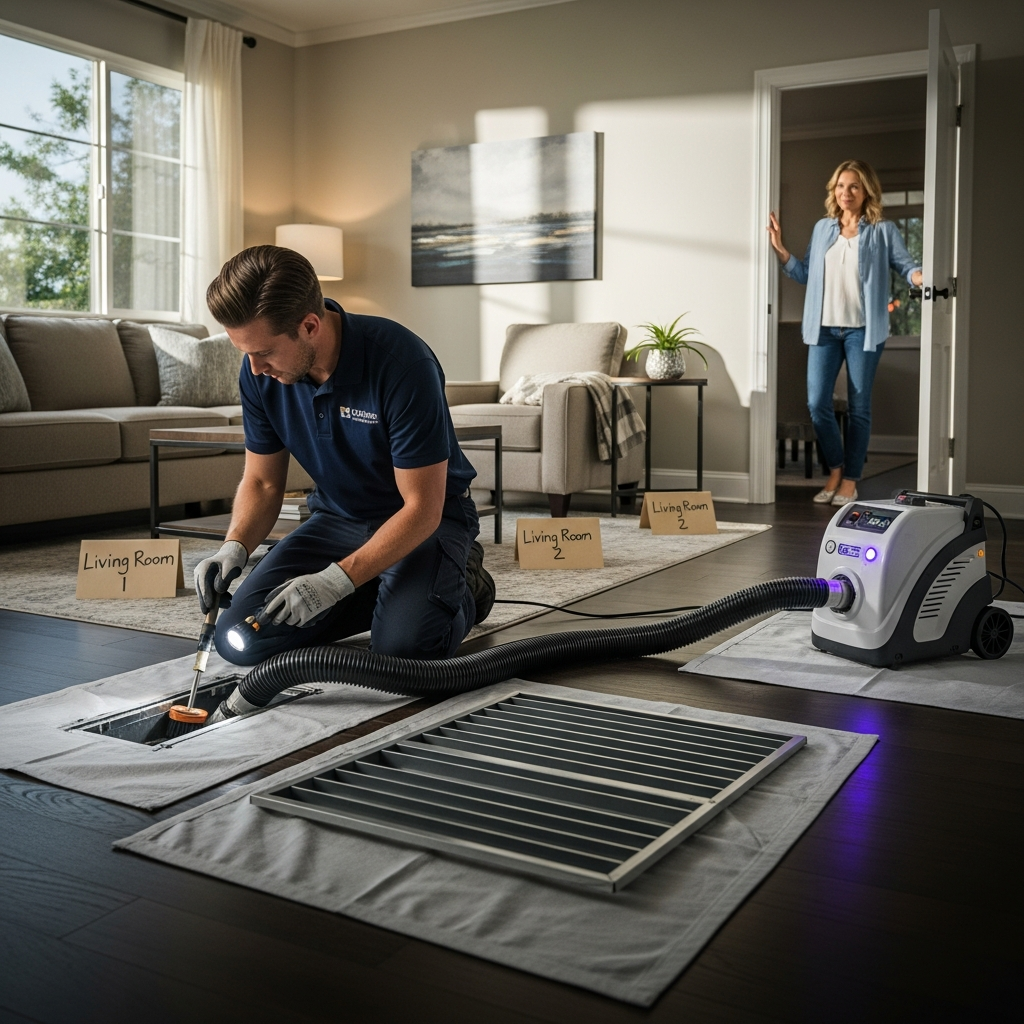
Living in Los Angeles means balancing an active lifestyle with a climate that keeps our HVAC systems running for much of the year. Between warm valley afternoons, cool marine-layer mornings along the coast, and the occasional wildfire season that sends fine particulates drifting across neighborhoods, homeowners quickly understand how much indoor air quality matters. When people start thinking about the financial side of getting their ductwork refreshed, they often ask how to evaluate the overall investment without getting lost in confusing offers. As a local who has seen a wide spread of homes from pre-war bungalows to sleek hillside builds, I want to help you understand what truly shapes the picture so you can make a confident, informed decision. Early on, it helps to ground the conversation in what a thorough air duct cleaning actually includes, how Los Angeles homes differ from each other, and why the scope of work matters as much as any line item on a proposal.
Understanding the financial conversation without numbers
Because houses in Los Angeles vary so much—from cozy Spanish cottages in Highland Park to expansive contemporary homes in the Hollywood Hills—the range of effort involved in revitalizing ductwork can be wide. Instead of fixating on a single figure, it’s more useful to think in terms of the project’s scope. How many supply and return openings are there? Is there a single central air handler tucked neatly in a hallway closet, or do you have multiple systems serving different levels of the home? Are there attic crawl spaces that require careful ladder access, or is everything within a roomy mechanical area? These questions shape the time, tools, and team required, and they are much more revealing than a quick glance at a promotional postcard.
In Los Angeles, outdoor conditions regularly influence indoor realities. Onshore winds can carry salt air into coastal neighborhoods, contributing to fine residue. The foothills and canyon communities sometimes experience wildfire smoke that lingers invisibly long after skies clear. Renovations—common in older homes—may leave drywall dust and sawdust in unexpected pathways. Pets, home cooking habits, and lifestyle create their own patterns. Aligning the project scope with these lived-in details is the most reliable way to decide what level of service will bring a real improvement to comfort and cleanliness.
The layout and character of your home
One reason people in Los Angeles struggle to compare proposals is that our local architecture refuses to be one-size-fits-all. A sunny Santa Monica bungalow might have a short, simple trunk line with a handful of registers, while a split-level in Studio City could hide a maze of runs that snake around joists and through finished ceilings. Some valley homes rely on attic-mounted air handlers, which means thoughtful preparation, protective coverings over walkways, and careful movement of hoses and negative-pressure equipment into tight spaces. Downtown lofts introduce their own twist with exposed spiral duct runs that are easy to see but still require professional handling to clean completely without scratching or denting the metal.
Accessibility is a major influence on the workflow. If a return is tucked behind built-ins or the air handler sits on a high platform, it may take more time to set up safely and protect finishes. Homes with additions—very common when families expand—might have ducts of mixed ages and materials. A seasoned local technician will spot flex duct that needs gentle handling, older metal runs that benefit from agitation tools matched to gauge, and transition points where lint and dust love to settle. By focusing on these layout realities, you gain a clearer picture of why two homes with the same number of rooms can require very different approaches.
Contamination level and what you can’t see
Los Angeles air can be deceptively beautiful. Blue skies don’t always reveal what’s moving through them. When our region goes through a dusty Santa Ana event or a nearby hillside experiences brush clearing, a faint layer of particulates can make its way indoors through foot traffic, open windows, and every time a door swings wide for deliveries and guests. Over time, that accumulation finds its way to the return, where the HVAC system does its best to intercept it. If filters are overdue for replacement, more material can bypass into the ductwork, settling in elbows, trunk lines, and takeoffs. The intensity of that buildup is another factor that shapes how extensive the cleaning should be to deliver a true reset for your indoor air.
Homes with beloved pets, smokers in the household, or heavy cooking routines can all see quicker accumulation. Renovation debris is particularly sneaky; even when contractors drape and seal, traces of drywall dust have a way of drifting. A thorough job acknowledges what’s probably present and chooses agitation, negative air, and capture techniques matched to the job’s reality. It’s not just about the visible vents—it’s about the entire path your air takes, from return to supply, and the equipment’s interior surfaces themselves.
Why scope matters more than a quick headline
When neighbors compare experiences, the biggest differences usually come down to scope. Did the team protect floors and furnishings meticulously? Were registers removed so that edges and cavities could be reached rather than just brushed at the surface? Was the air handler cabinet opened and cleaned responsibly? Were before-and-after photos provided for key sections? A complete project leaves you with confidence that what you breathe is truly refreshed, not just reassured. The more complete the scope, the more noticeable the difference in comfort and cleanliness afterward.
In the middle of planning, it helps to reconnect with the purpose. A well-executed air duct cleaning can ease allergy triggers, reduce that fine layer of dust that reappears too quickly on shelves, and help the system operate more smoothly. Those are outcomes you live with every day—benefits that continue well beyond the service appointment. The discussion should therefore center on how to achieve those outcomes in your particular home, rather than squeezing the exercise into a template that doesn’t fit your layout or lifestyle.
Seasonal timing in Los Angeles
Our region’s mild winters and hot summers create natural windows for home maintenance. Early spring—just after the winter holidays—and late fall—before heaters click on consistently—are popular. But there’s a strong argument for planning when it’s right for your family rather than chasing a crowded calendar. If you’ve recently completed a remodel, welcomed a new pet, or noticed more dust than usual after a high-wind event, those are all good triggers to schedule. Many Angelenos also prefer morning appointments to beat afternoon traffic and allow time to air out spaces if needed. What matters is choosing a moment when the team can work methodically without rushing, and you can enjoy the reset immediately afterward.
What to expect on service day
Professional crews arrive with protective coverings, negative-air machines, hoses, agitation tools, and often a friendly walkthrough of the day’s plan. You’ll see registers carefully removed, components inspected, and flooring protected along common paths. Good teams narrate what they’re doing as they go, invite you to take a peek at notable sections, and document progress with photos you can keep for your records. They’ll isolate areas to maintain suction where it counts, and they’ll tidy up diligently once complete. If they discover an access panel that should be improved for future maintenance, or an air filter that’s undersized for your system, they’ll explain options without pressure.
Expect respectful handling of your home’s unique details. That might mean two trips up to an attic to adjust vacuum placement or a few extra minutes securing a ladder in a tight hallway near framed artwork. It’s in these careful touches—the unhurried attention to your home’s character—that the quality of the day’s work is most clearly felt.
LA neighborhoods and how they shape considerations
Every part of the city leaves its fingerprint on HVAC systems. On the Westside, marine air and open windows on breezy evenings invite micro-particles that slowly settle in returns. In the San Fernando Valley, long, hot afternoons mean systems cycle more frequently through summer, pulling more air—and by extension, more dust—through the network. In hillside communities with steeper driveways and limited street parking, crews plan for access well ahead of arrival. Classic homes near Hancock Park may have beautiful, older framing that requires gentle routing of hoses and extra protection at transitions. Downtown lofts bring easy physical access to ducts but demand a careful finish because everything is exposed to view.
Understanding this neighborhood nuance lets you evaluate proposals from a position of knowledge. When a company notes, for example, that your attic-mounted air handler is set back behind a low truss and will need extra time to reach safely, you can appreciate that it’s not upselling but awareness. And when they recognize that your open-plan Venice living room sees more airborne salt and sand than a closed-up home inland, you’ll see why their scope includes a thorough return-side refresh that targets those particles specifically.
Quality, equipment, and training
The tools behind a thoughtful project aren’t flashy, but they are specialized. Negative-air machines maintain consistent suction so loosened debris is pulled in the right direction and captured by HEPA filtration. Agitation devices—whips, brushes, and air skippers—are matched to duct materials so surfaces are disturbed enough to release buildup without tearing the inner lining of flex duct or scuffing metal. Technicians who train consistently know how to navigate a variety of materials, connector types, and system ages without leaving a mark behind. They also know what not to do: for instance, blasting at fragile areas or skipping return-side cleaning in favor of a quicker pass on supply vents only.
It’s not just the equipment either. The best outcomes come from teams that treat your home like a unique puzzle, not a checklist. They ask questions about pets, allergies, recent painting or sanding projects, and even your weekly housekeeping rhythm. That human context helps them tailor how they set up, what they prioritize, and how they finish—both in cleaning and in communication—so you know exactly what was addressed and why.
Misconceptions and marketing noise
Los Angeles homeowners are well acquainted with glossy flyers and pop-up ads that promise miraculous results in minutes. But indoor air quality is more like thoughtful gardening than a quick car wash. It rewards steady attention to fundamentals and respect for the living environment of your home. Beware of offers that seem to shrink the entire undertaking down to a single, vague line of work. When a proposal glosses over how the return will be handled, how the air handler will be addressed, or how the team will protect your home, it’s leaving out exactly the things that determine whether you’ll feel a meaningful difference afterward.
Another misconception is that registers alone tell the story. While a shiny grille is satisfying to see, the quiet triumphs happen inside the network: elbows, trunk lines, plenums, and the cabinet where a film can subtly affect both airflow and cleanliness. Commit to a complete path, and the rest follows.
Health, comfort, and peace of mind
When you focus on outcomes, the bigger picture comes into view. Many Angelenos report that their homes feel calmer after a complete duct refresh—the subtle sense that rooms maintain a fresher smell and surfaces gather less dust between regular cleanings. For households managing allergies or sensitivities, the payoff can be even clearer. With Los Angeles’ mix of pollen, urban particulates, and seasonal wildfire smoke, every bit you can do to support your indoor environment is worth considering.
There’s also a quiet satisfaction in knowing your HVAC system can work without pushing against a layer of settled dust. Smooth airflow helps the system reach target temperatures without lingering, and that steadiness shows up in day-to-day comfort. It’s an investment in the space you return to at the end of every commute and every sun-filled weekend.
Choosing a local professional
Trust starts with clear communication. Look for a provider who asks good questions about your home, explains how they will protect it, and details a scope that follows the full path of your air. Ask for photos of representative sections before and after. Clarify how they’ll handle the return and the interior of the air handler cabinet. Confirm insurance and training, and pay attention to how they treat your time during the scheduling and arrival process. In a city as big as L.A., that care says a lot about how they’ll treat your home once inside.
When you’re ready to refresh your indoor air, choose a partner who sees beyond the marketing blur to the contours of your actual home. You should finish the experience with a clearer mind, cleaner surfaces, and the comfort of a system that can breathe as easily as you do on a perfect morning along the Strand.
FAQ: Your questions, answered
How often should a typical Los Angeles home schedule duct cleaning? Frequency depends on lifestyle and surroundings. Homes near busy roads, households with shedding pets, and families recovering from renovation dust usually benefit from more frequent attention than quiet, low-traffic spaces. Think in terms of the air you actually breathe and the dust you see settling, rather than a rigid calendar.
Will cleaning disrupt my day? A professional crew works methodically and protects walkways, furnishings, and finishes. While equipment noise is part of the process, it’s a daytime rhythm rather than a construction site. Most homeowners go about their day in other rooms, step out for errands, or set up a temporary workspace away from the active zone.
Is it necessary to clean the return if supply vents look fine? Absolutely. The return is the gateway through which your home’s air re-enters the system. Overlooking it leaves a major part of the airflow path untouched. A complete service treats return, trunk, branches, and the cabinet interior so that air travels a refreshed route end to end.
What about older ductwork in vintage homes? Older metal runs and connectors can be cared for safely with the right agitation tools and a gentle hand. Experienced technicians understand material limits and work to clean thoroughly while preserving integrity. If they find a section that needs repair, they’ll explain options and provide documentation.
Does Los Angeles’ wildfire season really affect indoor systems? It can, especially if windows are opened frequently during smoke events or if filters aren’t upgraded during those periods. Even after the sky looks clear, fine particulates may linger in returns and elbows. Cleaning after a season like that can help restore a sense of calm and freshness indoors.
Should I be present during the appointment? It’s helpful to be home at the start for the walkthrough and again at the end to review photos and results. Many residents step out during the middle stages, returning for the final review and to ask any last questions before the team wraps up.
Will there be any lingering smell or residue afterward? A responsible crew uses capture and containment to remove loosened material. Once equipment is packed up and the area is tidied, the space should feel clean and neutral—sometimes lighter and fresher, depending on what was removed.
Can duct cleaning help with dust that keeps returning to furniture? Many homeowners notice a difference on surfaces after a thorough service, especially when the return and air handler are addressed. Pairing the reset with good filtration and routine housekeeping completes the picture.
Ready to breathe easier in Los Angeles?
If you’ve been wondering how to bring a meaningful improvement to your home’s air without getting lost in marketing noise, now is the perfect moment to act. Choose a provider who respects your time, your architecture, and your goals, and expect clear communication that follows the full path of your air. When you’re ready to take the next step, schedule a professional air duct cleaning and feel the difference in the days that follow—quieter airflow, calmer rooms, and a fresher start every time you walk through the door.