
Attic Insulation in Los Angeles: A Homeowner’s Guide to Cost, Materials, and Hiring the Right Contractor
Los Angeles homes lose a surprising amount of conditioned air through the attic, and the region’s wide temperature swings between inland valleys and coastal neighborhoods make proper insulation more than a comfort upgrade. Whether you’re replacing aging fiberglass batts or starting from scratch after a rodent infestation, knowing what actually drives installation cost, which materials suit Southern California’s climate, and what separates a thorough contractor from a rushed one will save you money and headaches. This guide covers all three.
Why Attic Insulation Matters More in Los Angeles Than You Might Expect
The SoCal Climate Is Harder on Attics Than It Looks
People assume Los Angeles is mild, so insulation must be optional. The reality is more nuanced. Inland areas like the San Fernando Valley regularly hit triple digits in summer, pushing attic temperatures well above 150°F. That superheated air radiates downward through the ceiling plane, forcing air conditioners to run longer and harder. Coastal zones face a different problem: marine layer humidity can slowly degrade poorly installed insulation over years, reducing its thermal resistance without any visible sign from below.
California’s Title 24 energy code sets minimum R-value requirements for attic insulation, and those requirements are higher than many homeowners realize. For most of the greater Los Angeles area, the code calls for R-38 or better in the attic floor. Many older homes, especially those built before the 1980s, fall far short of that benchmark. A proper attic insulation service starts with measuring what you actually have.
Air Sealing Is the Step Most Homeowners Miss
Here’s something that surprises many LA homeowners: adding new insulation on top of existing insulation without sealing air leaks first can underperform by a wide margin. Insulation works by trapping still air within its fibers or cells. Gaps around recessed lights, plumbing chases, top plates, and attic hatches allow conditioned air to bypass the insulation layer entirely. A contractor who skips air sealing is essentially installing new material over a leaking foundation.
LA Attic Pro addresses air sealing as part of the installation process, not as an afterthought. Sealing those penetrations before laying new material is what allows the R-value on the label to translate into real-world energy performance.
The Main Insulation Materials Used in Los Angeles Attics
Blown-In Fiberglass
Blown-in fiberglass is one of the most common choices for attic floors in Southern California. Installers use a blower machine to distribute loose fiberglass fill across the attic floor, achieving consistent depth even in hard-to-reach corners. It resists moisture reasonably well, doesn’t settle as dramatically as some older materials, and is non-combustible. The R-value per inch typically falls between R-2.2 and R-2.7, so reaching Title 24’s R-38 target requires roughly 14 to 17 inches of depth.
Blown-In Cellulose
Cellulose is made from recycled paper fiber treated with borate compounds for fire and pest resistance. It achieves a slightly higher R-value per inch than fiberglass (around R-3.2 to R-3.8), which means you can hit the same thermal target with a shallower depth. Cellulose also does a better job of filling irregular cavities and blocking air movement within the insulation layer itself. One honest caveat: cellulose can absorb moisture if the attic has ventilation problems, so a good contractor will assess ventilation before recommending it.
Spray Foam (Closed-Cell and Open-Cell)
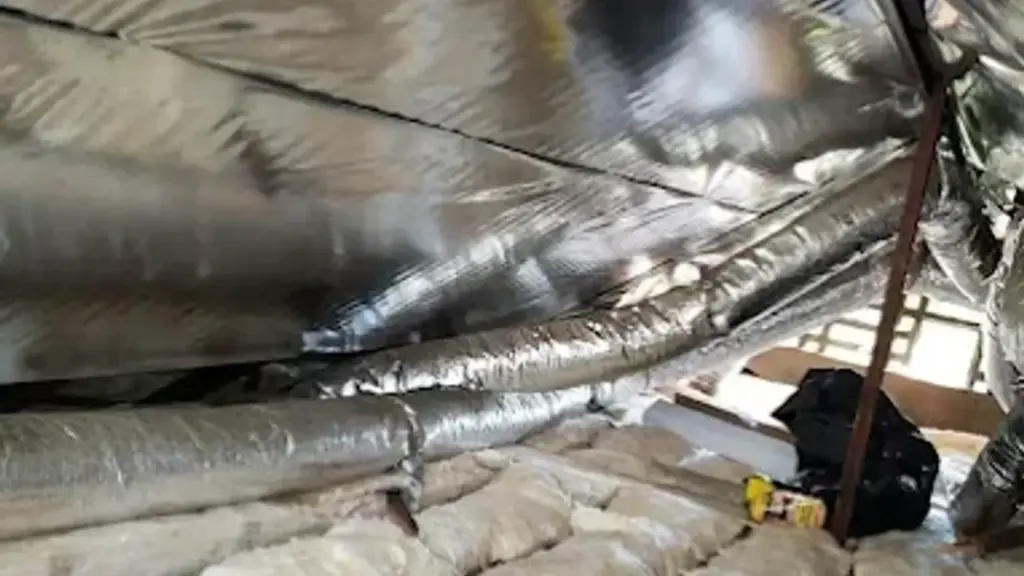
Spray foam is applied to the underside of the roof deck rather than the attic floor, creating a conditioned or semi-conditioned attic space. Closed-cell spray foam delivers the highest R-value per inch (around R-6 to R-7) and also acts as an air and vapor barrier. Open-cell foam is less dense, vapor-permeable, and more affordable, but still provides excellent air sealing. Spray foam is particularly relevant in Los Angeles homes where HVAC ducts run through the attic: bringing the duct system inside the thermal envelope can dramatically reduce duct losses. It’s a more involved installation and typically carries a higher upfront investment, but the long-term performance can justify it for the right home.
What Actually Drives Attic Insulation Cost in Los Angeles
Square Footage and Existing Conditions
The most obvious cost driver is attic floor area. A 1,200-square-foot single-story home and a 2,800-square-foot two-story with a complex roofline are simply different scopes of work. Beyond size, existing conditions matter enormously. If the attic has old, contaminated insulation from rodent activity or moisture damage, that material needs to be removed and the space sanitized before new insulation goes in. Insulation removal adds labor and disposal costs, but skipping it and layering new material over compromised old material is a shortcut that causes problems down the road.
Material Choice and Target R-Value
Reaching R-38 costs more than reaching R-19, and spray foam costs more per square foot than blown-in fiberglass at equivalent R-values. The material you choose should reflect your home’s specific conditions, not just the lowest upfront number. A contractor who recommends the cheapest option without assessing your attic’s ventilation, existing depth, and air leak profile isn’t giving you a complete picture.
Access, Ventilation, and Add-On Work
Attics with limited access hatches, low clearance, or obstructions like HVAC equipment take more labor time. Homes that need ventilation upgrades (baffles, soffit vents, ridge vents) before new insulation can be properly installed add scope. Some LA homes also need duct work addressed at the same time, either attic duct replacement or repairs, before the insulation layer goes in. Bundling related work into a single project often makes logistical sense.
Comparing Common Attic Insulation Materials at a Glance
| Material | R-Value per Inch | Air Sealing | Moisture Resistance | Best Application |
|---|---|---|---|---|
| Blown-In Fiberglass | R-2.2 to R-2.7 | Low (needs separate sealing) | Good | Attic floor, retrofit |
| Blown-In Cellulose | R-3.2 to R-3.8 | Moderate | Moderate (ventilation-dependent) | Attic floor, retrofit |
| Open-Cell Spray Foam | R-3.5 to R-4.0 | Excellent | Moderate (vapor-permeable) | Roof deck, conditioned attic |
| Closed-Cell Spray Foam | R-6.0 to R-7.0 | Excellent | Excellent | Roof deck, high-performance builds |
A Counterintuitive Truth About R-Value: More Isn’t Always the Answer
Diminishing Returns Above Code Minimum
The relationship between R-value and energy savings isn’t linear. Going from R-11 to R-38 produces a dramatic reduction in heat transfer. Going from R-38 to R-60 produces a much smaller incremental gain. For most Los Angeles homes, hitting the Title 24 minimum of R-38 with proper air sealing delivers the bulk of available savings. Chasing R-60 in a coastal LA home with mild winters may not pencil out in any reasonable timeframe.
That said, homes in hotter inland zones, or homes with HVAC systems that work overtime, may genuinely benefit from higher R-values or from spray foam on the roof deck. The right answer depends on a real attic assessment, not a rule of thumb.
Ventilation and the Insulation System
Insulation and attic ventilation work together. A poorly ventilated attic traps heat and moisture regardless of how much insulation you add. California’s residential code generally follows a 1:150 ratio of net free vent area to attic floor area (or 1:300 with balanced ridge-and-soffit ventilation). Before any installation, a qualified contractor should verify that existing ventilation meets those benchmarks. Installing baffles at the eaves to maintain airflow channels above blown-in insulation is standard practice, not an upsell.
How to Vet an Attic Insulation Contractor in the Los Angeles Area
Licensing, Insurance, and Written Scope
California requires contractors performing insulation work to hold a valid C-2 (Insulation and Acoustical) or B (General Building) license from the Contractors State License Board (CSLB). Verifying a license takes about two minutes on the CSLB website. Beyond licensing, ask for proof of general liability and workers’ compensation insurance. If a worker is injured in your attic and the contractor lacks coverage, the liability can fall on the homeowner.
A written scope of work should specify the material, the target R-value, the square footage being covered, whether air sealing is included, and what happens to existing insulation. Vague proposals make it easy to cut corners after the job starts.
What a Thorough Pre-Installation Assessment Looks Like
A reputable attic insulation contractor doesn’t quote the job from the driveway. They go into the attic, measure existing insulation depth at multiple points, check for moisture or pest damage, identify air leak locations, evaluate ventilation, and note any HVAC equipment or ductwork that affects the plan. That assessment shapes the recommendation. If a contractor quotes you immediately without inspecting the attic, treat that as a red flag worth investigating further.
LA Attic Pro conducts a detailed attic assessment before recommending any material or scope. The goal is to match the solution to the actual conditions in your specific home, not to default to whatever is fastest to install.
Red Flags to Watch For
- No mention of air sealing. Insulation without air sealing leaves significant performance on the table.
- Pressure to decide immediately. A legitimate contractor gives you time to review the proposal.
- No written contract. Verbal agreements offer no protection if the scope changes.
- Skipping the attic inspection. Remote quotes based only on square footage miss critical site-specific factors.
- Unlicensed or uninsured crew. Always verify CSLB status before signing anything.
The Installation Process: What to Expect Step by Step
Preparation and Removal (If Needed)
If existing insulation is contaminated, compressed below useful R-value, or wet, it comes out first. Removal involves a commercial vacuum system that pulls material through a hose to a disposal bag outside the home. The attic is then inspected for rodent droppings, structural issues, or moisture damage before any new work begins. If rodent activity is present, sanitation and exclusion work should happen before new insulation goes in, not after. Laying fresh material over an active pest problem is a waste of money.
Air Sealing
Before any insulation is blown in, penetrations get sealed. Common locations include top plates at interior walls, recessed light cans (which should be covered with airtight boxes or replaced with IC-rated, airtight fixtures), plumbing and electrical chases, and the attic hatch itself. Foam and caulk are the typical materials. This step can take as long as the insulation installation itself, but it’s where a significant portion of the real-world performance improvement comes from.
Insulation Installation and Verification
Blown-in material is installed using depth markers placed across the attic floor so the installer can verify uniform coverage. After installation, the contractor should measure depth at multiple points and document that the target R-value has been achieved. For attic insulation installation jobs that require a Title 24 Certificate of Compliance, the contractor completes the CF1R and CF2R forms. Ask for copies for your records, especially if you’re planning to sell the home or apply for utility rebates.
Utility Rebates and Title 24 Compliance in Los Angeles
SoCal Edison and SoCalGas Incentives
Southern California Edison and Southern California Gas both offer rebate programs for qualifying insulation upgrades. Eligibility typically requires meeting or exceeding a minimum R-value, using a participating contractor, and submitting documentation after installation. Rebate amounts and program availability change periodically, so verify current offerings directly with your utility before the project starts. Your contractor should be familiar with the documentation requirements; if they’re not, that’s worth noting.
Title 24 and Permit Requirements
Whether a permit is required for attic insulation in Los Angeles depends on the scope of work and local jurisdiction. Adding insulation to an existing attic typically doesn’t trigger a permit in most LA-area cities, but work that involves structural changes, new ventilation penetrations, or spray foam on the roof deck may. Requirements vary by city and county, so confirm with your local building department or ask your contractor to clarify before work begins. A contractor who tells you permits are never needed for any insulation job, without checking, is oversimplifying.
Frequently Asked Questions
How do I know if my attic insulation needs to be replaced?
Signs include visible compression or thinning of existing material, pest damage or droppings mixed into the insulation, moisture staining, or an attic that measured below R-19 on inspection. If your energy bills have risen without a clear cause, low or degraded insulation is worth investigating.
How long does an attic insulation installation typically take?
For a standard single-story Los Angeles home, a blown-in installation including air sealing usually takes one full day. Larger homes, homes requiring insulation removal first, or projects involving spray foam may take two days or more.
Can I add new insulation on top of existing insulation?
Sometimes, yes. If the existing insulation is dry, free of pest contamination, and structurally intact, topping it up to reach the target R-value is a reasonable approach. If it’s damaged or contaminated, removal first is the right call. A contractor who inspects the attic can tell you which situation you’re in.
What R-value does Los Angeles require for attic insulation?
California’s Title 24 energy code generally requires R-38 for attic insulation in most of the greater Los Angeles climate zones, though specific requirements can vary by climate zone designation. Your contractor should identify your home’s climate zone and confirm the applicable minimum.
Does attic insulation help with cooling as well as heating?
Yes. In Los Angeles, the cooling benefit is often the more significant one. Proper insulation reduces the rate at which summer heat radiates through the ceiling into living spaces, which reduces the load on your air conditioning system and may help lower energy bills during peak summer months.
Is spray foam worth the extra investment for a Los Angeles home?
It depends on your specific situation. Homes with HVAC ducts running through an unconditioned attic are strong candidates, because bringing the duct system inside the thermal envelope with roof-deck spray foam can reduce duct losses substantially. Homes where ducts run through conditioned space may see less incremental benefit from spray foam versus high-quality blown-in with thorough air sealing. An honest contractor will walk you through both scenarios.
Conclusion
Evaluating attic insulation in Los Angeles comes down to three things: understanding what your home actually needs (not just what’s cheapest or fastest), choosing a material that fits your climate zone and attic conditions, and hiring a licensed contractor who treats the assessment as seriously as the installation. LA Attic Pro serves homeowners across the greater Los Angeles area with thorough inspections, proper air sealing, and material recommendations grounded in your home’s real conditions. Ready to find out what your attic actually needs? Schedule your attic insulation assessment with LA Attic Pro and get a clear, no-pressure picture of your options.