
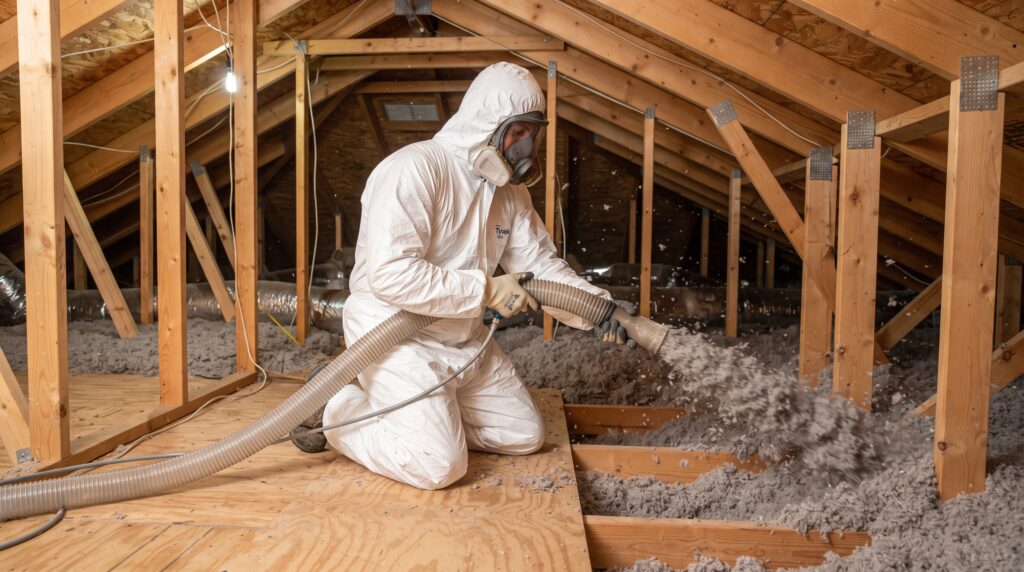
Maintaining comfortable indoor temperatures can be challenging when your attic insulation is insufficient, damaged, or unevenly installed. Professional Attic Insulation helps reduce heat transfer between your attic and living spaces, supporting more consistent temperatures throughout your home. Expert Attic Insulation services evaluate existing conditions and provide insulation solutions designed around your home’s structure and comfort needs.
Insulation performance depends on more than the material itself. Coverage, installation quality, air sealing, ventilation, and the condition of existing insulation can all influence how effectively your attic manages heat transfer.
Create More Consistent Indoor Temperatures
Attic Insulation helps slow the movement of heat between the roof space and the rooms below. Properly installed insulation can help reduce temperature fluctuations and support a more consistent indoor environment.
This can be particularly helpful in homes where certain rooms become noticeably warmer or cooler than others.
Improve Insulation Performance
Gaps, compressed insulation, and insufficient coverage can reduce the effectiveness of an attic insulation system. Professional evaluation helps identify areas where existing insulation may need improvement or replacement.
Addressing these conditions can create a more consistent insulation layer and improve the attic’s thermal performance.
Support HVAC Efficiency
When heat transfer through the attic is reduced, heating and cooling equipment may not need to work as hard to maintain the desired temperature. Better Attic Insulation can therefore support overall HVAC efficiency.
Actual energy performance varies depending on the home’s construction, air sealing, ventilation, windows, HVAC equipment, and existing insulation.
Choose the Right Solution for Your Home
Different homes require different insulation approaches. Fiberglass, cellulose, and spray foam each have distinct characteristics and installation requirements.
A professional assessment can help determine which insulation type, coverage level, and installation method are appropriate for your attic.
Frequently Asked Questions
How does Attic Insulation improve indoor comfort?
Attic Insulation slows heat transfer between the attic and living areas, which can help reduce temperature fluctuations and support more consistent indoor conditions.
What can reduce insulation performance?
Gaps, compressed materials, insufficient coverage, moisture, improper installation, and other attic conditions can affect insulation performance.
Can better insulation help my HVAC system?
Proper insulation can reduce heat transfer and may help heating and cooling systems maintain desired temperatures more efficiently.
How do I know if my attic needs better insulation?
Uneven indoor temperatures, visible gaps or damaged insulation, an under-insulated attic, or noticeable heat transfer may indicate that an assessment is appropriate.
Better Attic Insulation performance can help improve indoor comfort by reducing unwanted heat transfer and supporting more consistent temperatures throughout your home. With a professional assessment, appropriate insulation materials, and proper installation, your attic can provide a stronger thermal barrier and support efficient home performance. Explore Attic Insulation solutions tailored to your home’s needs.