
Los Angeles commerce runs on precision and momentum. Whether it’s a restaurant on Sunset, a soundstage in the Valley, a boutique in Venice, or a medical-adjacent office near Westwood, operations rely on clean, predictable environments. When rodents intrude, the challenge is twofold: stop the activity, then restore the space so teams can focus on work, not worries. Commercial rodent sanitation is that crucial second step, turning disarray back into routine with methods that prioritize safety, documentation, and minimal downtime. After years working across LA’s diverse sectors, I’ve learned that success rests on understanding each facility’s purpose and rhythms as much as on the mechanics of cleaning.
The commercial lens is different from residential work. Access pathways expand, shared systems multiply, and stakeholder expectations rise. A receiving bay can be a contamination gateway, suspended ceilings hide travel routes, and mechanical mezzanines become overlooked reservoirs. A full plan begins with an inspection that integrates pest control findings with a sanitation roadmap. It accounts for ventilation flows, waste disposal logistics, and the sequence that will allow areas to return to use quickly without cutting corners. Early in that process, we often remind teams that comprehensive rodent sanitation is not just appearance care—it is air-quality care, employee comfort care, and brand protection.
The cadence of a commercial sanitation plan
Every commercial project starts by mapping the facility’s critical zones. Kitchens, prep lines, storage, dish areas, and waste rooms in restaurants; racks, dock doors, and break areas in warehouses; dressing rooms, catwalks, and flex spaces on sets; server closets and telecom chases in offices. Each node has a unique contamination risk and recovery pathway. We build a schedule that staggers work to keep operations moving, often after-hours, with clear handoffs to management after every phase.
Documentation that stands up to scrutiny
In business settings, documentation isn’t an add-on; it’s integral. Before-and-after photos, treatment logs, disinfectant and equipment specifications, and a concise summary of findings provide the record that stakeholders expect. For venues with internal audits or third-party quality checks, transparent reporting affirms that sanitation met the intent of company policies and local health expectations. This record is also a valuable tool for training staff on prevention and maintenance once the reset is complete.
Methods designed for occupied buildings
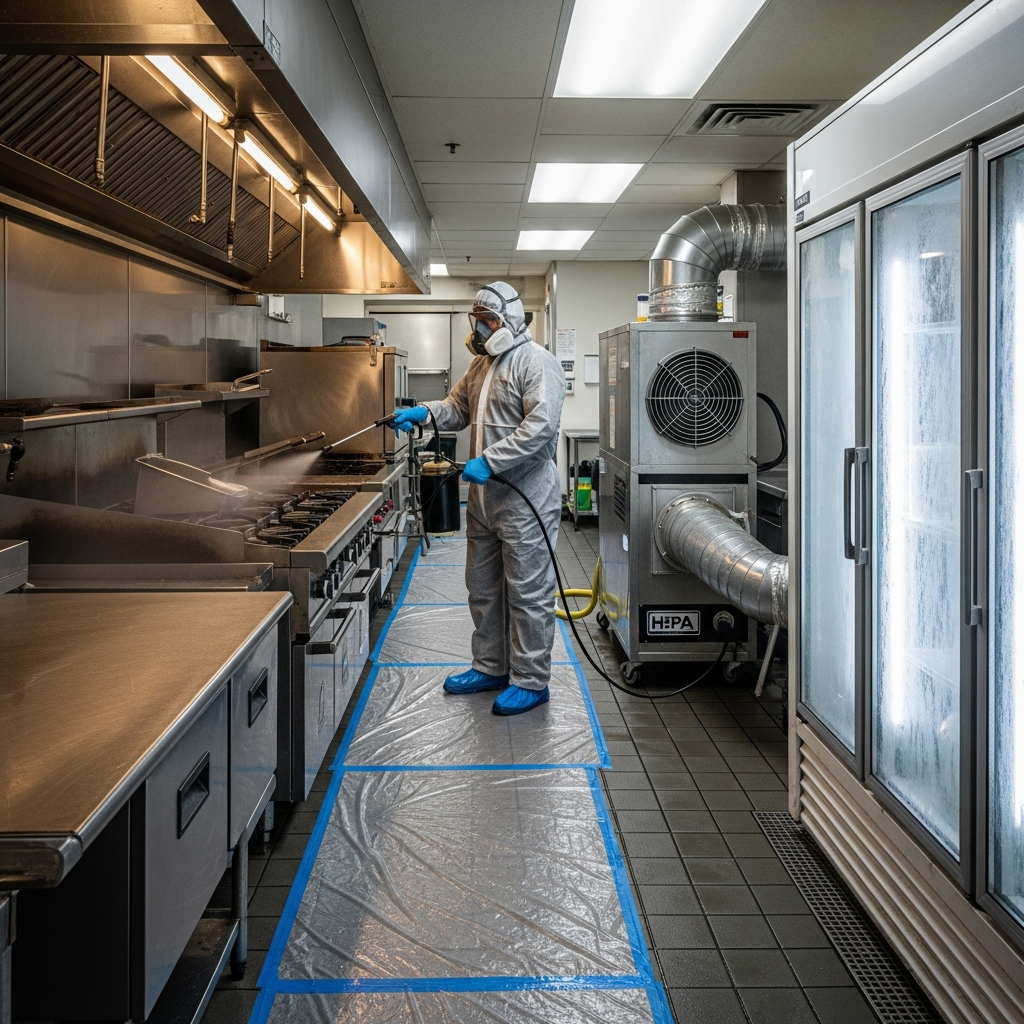
Commercial sanitation prioritizes containment and control. We protect finished floors and fixtures, isolate work areas, operate HEPA-filtered equipment, and maintain airflow that pulls away from active business zones. Where necessary, we create negative-pressure areas to prevent fine particulates from migrating. We coordinate debris routes out of public view and sanitize touchpoints along the way. The goal is simple: a clean result with minimal disruption and zero drama.
Kitchens, food-adjacent spaces, and odor control
Food environments call for an extra measure of diligence. After source removal, a hospital-grade disinfection step targets residues, followed by targeted odor neutralization. Grease traps, undersides of lines, and seldom-moved equipment receive special attention. We partner with facility teams to time deep cleans around inspections or menu cycles, and we share practical aftercare guidance that keeps the reset intact—clean bins, sealed drains where appropriate, and vigilant receiving practices at dock doors.
Warehouses, studios, and large footprints
Scale changes the playbook. In warehouses and studios, contamination can follow long runs of conduit and settle in catwalks, rigging bays, or high shelving. We deploy lifts and lighting, plan safe access, and coordinate with onsite teams to stage areas. For soundstages, silence and timing are everything; we work around call sheets, striking a balance between thorough sanitation and production schedules. The result is a space that not only looks ready but breathes clean—an important difference that employees and clients appreciate.
Offices, retail, and customer experience
In customer-facing spaces, appearance, aroma, and acoustics matter. We stage material removal after-hours, protect displays and furnishings, and ensure that by the next open, the environment feels settled and fresh. Back-of-house areas are cleaned with the same rigor; supply closets, ceiling plenums, and utility chases get careful attention to remove hidden reservoirs that could otherwise feed intermittent odors or intermittent sightings.
People-first safety and communication
Communication defines a commercial project’s success. We brief facility managers on the plan, update them as milestones are hit, and adapt to the real-world curveballs that LA operations throw our way—rush events, VIP visits, deadline shifts. Safety briefings, signage, and clear boundaries keep teams comfortable. Employees know where we are, what’s happening, and when areas will be ready, minimizing anxiety and maximizing productivity.
Integration with maintenance and pest management
Sanitation doesn’t stand alone. It anchors an integrated approach where exclusion and monitoring keep the environment stable. We frequently collaborate with pest management providers to sequence sealing and monitoring after contamination removal and surface treatment. In older buildings or those with complex utilities, we may recommend sealing accessible penetrations once the surfaces are clean. This synergy prevents re-entry and keeps air quality where it belongs—clean, neutral, and unremarkable.
Midway through many projects, leadership asks how soon areas can return to use. Because our methods prioritize containment, airflow management, and precise sequencing, we can often restore zones progressively. Kitchens come back online once surfaces have been treated and cured, offices reopen after filtration cycles complete, and retail floors resume with a fresh, odor-free feel. At each handoff, we confirm readiness and share the simple steps that protect the reset. That’s where experienced commercial rodent sanitation pays dividends—in speed without sacrificing thoroughness.
Aftercare that keeps standards high
Post-sanitation, we partner with teams to instill habits that maintain the result: disciplined bin management, tidy break areas, sealed bulk foods, and routine inspections of roof and dock transitions. We also suggest filter replacement schedules and small facility adjustments—like brush seals on doors or improved lighting in overlooked corners—that reinforce the work we’ve done. These practices are simple but have outsized impact in busy, high-traffic environments.
A citywide perspective with neighborhood-level nuance
From Culver City production spaces to Pasadena offices, from Santa Monica retail to Vernon warehouses, Los Angeles facilities present a spectrum of challenges and opportunities. We bring a citywide playbook tuned with neighborhood nuance—parking realities, weather patterns, building ages, and the pace of business around each site. That context helps us predict what a space will need, stage our work to fit its calendar, and finish with the kind of polish that satisfies leadership and staff alike.
Frequently Asked Questions
Can sanitation occur outside of business hours?
Yes. We frequently schedule after-hours or phased work to keep operations running. We align with managers on noise sensitivity, access, and return-to-service timing.
What kind of documentation will we receive?
You’ll receive a clear record of areas serviced, materials removed, treatments applied, and before-and-after photos. This documentation supports internal audits and provides a reference for maintenance and training.
How do you prevent odors from returning?
We focus on source removal first, then disinfect and apply targeted odor neutralizers. In porous or heavily stained areas, an encapsulant may be used to lock away residual odors for the long term.
Will sanitation interrupt our staff or customers?
We plan containment, staging, and timing to minimize impact. For customer-facing areas, we typically work after close and verify that air quality and appearance meet expectations before reopening.
Do you coordinate with our pest control provider?
Absolutely. Sanitation is most effective when integrated with exclusion and monitoring. We coordinate sequencing so each step reinforces the next and the facility returns to a stable baseline.
If your operation needs a clean, confident reset supported by documentation and scheduled with respect for your calendar, let’s build a plan that fits your facility. We’ll map the work, communicate at each step, and return spaces to service smoothly. Connect with a local team that understands LA’s commercial tempo—schedule expert rodent sanitation for your business today.