
Air Duct Cleaning in Ventura County: What Homeowners Need to Know
Your HVAC system moves air through every room in your home, but most homeowners never think about the ducts carrying that air until something goes wrong. Over time, those ducts collect dust, debris, pet dander, and other contaminants that reduce airflow and force your system to work harder. If you live in Ventura County, where dry summers and dusty conditions are part of daily life, understanding when and why to clean your ductwork can save you money on energy bills and help your HVAC equipment last longer.
What Happens Inside Your Ducts Over Time
The Slow Buildup You Can’t See
Duct interiors are out of sight, so the buildup inside them is easy to ignore. Supply ducts push conditioned air out; return ducts pull room air back to the air handler. Both sides accumulate debris, but return ducts often collect more because they draw air across filters that aren’t always perfectly sealed. Dust settles on duct walls, registers, and on the coils and blower components downstream. Over several years, that layer thickens enough to restrict airflow.
In Ventura County homes, attic-mounted ductwork faces an additional challenge: attic temperatures can swing dramatically between seasons. That thermal stress causes duct joints to expand and contract, sometimes opening small gaps where unconditioned attic air, insulation fibers, or rodent debris can enter the system.
Signs Your Ductwork Needs Attention
There are several concrete indicators that a cleaning or inspection is overdue:
- Visible dust releasing from registers when the system starts up, especially after it has been idle for a while.
- Uneven airflow between rooms at the same distance from the air handler, which can point to blockages or collapsed flex duct sections.
- A musty or stale odor when the HVAC runs, suggesting accumulated organic material inside the system.
- Evidence of rodent activity in the attic, including droppings near registers or damaged duct insulation. Rodents frequently nest inside flex duct runs.
- Filters clogging faster than usual, which often means the ducts upstream of the filter are shedding debris into the airstream.
- A recent renovation that generated drywall dust, insulation fibers, or construction debris near open registers.
None of these symptoms require you to open the ductwork yourself. A qualified technician can inspect the system with a camera and airflow measurements before recommending any work.
How Duct Condition Affects HVAC Efficiency
A restricted duct system makes your air handler work harder to move the same volume of air. The blower motor runs longer, consumes more electricity, and wears faster. Leaky ducts compound the problem: conditioned air escapes into the attic before it reaches the living space, and hot attic air infiltrates the return side, raising the load on the system. Addressing both issues together, cleaning and sealing, produces better results than either step alone.
The Professional Duct Cleaning Process, Step by Step
Inspection Before Any Work Begins
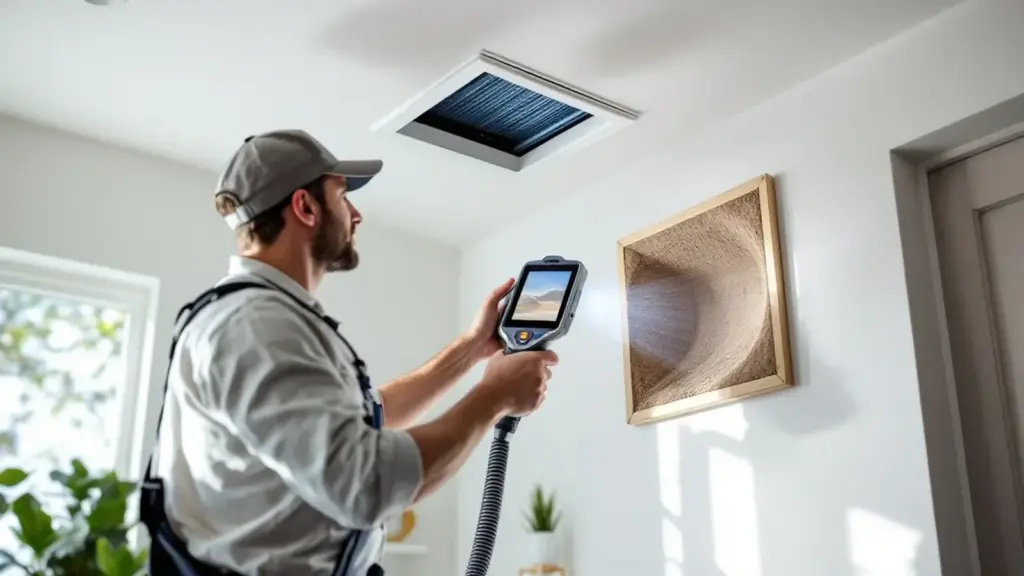
A responsible duct cleaning job starts with a thorough inspection. Technicians use flexible camera systems to look inside supply and return trunks, checking for visible debris accumulation, damaged liner material, disconnected joints, and signs of pest intrusion. This step determines whether cleaning alone is sufficient or whether repairs or full duct replacement are needed first. Cleaning a duct that has a torn inner liner or a disconnected section will not solve the underlying problem.
LA Attic Pro technicians serving Ventura County routinely find that attic duct systems, particularly older flex duct installations, have issues that go beyond surface dust. Identifying those issues upfront means the homeowner gets an honest scope of work rather than a surprise mid-job.
Negative Pressure Cleaning and Agitation
The industry-standard method involves connecting a high-powered vacuum collection unit to the duct system to create negative pressure, then using agitation tools, compressed air whips, or rotary brushes, to dislodge debris from duct walls. The negative pressure keeps loosened material from escaping into the living space; everything travels through the duct toward the collection unit.
Technicians work systematically: supply branches first, then trunk lines, then the return side. Registers and grilles are removed, cleaned separately, and reinstalled. The air handler cabinet, blower compartment, and evaporator coil housing are also inspected and cleaned as part of a complete service, since debris that bypasses the filter accumulates directly on those components.
If you want to learn more about how this service connects to the broader health of your attic system, explore LA Attic Pro’s full range of attic and HVAC services to see how duct work fits alongside insulation and rodent proofing.
Post-Cleaning Verification
After cleaning, a technician should verify airflow at each register with a flow hood or anemometer, confirm that all access panels are resealed, and do a final camera pass on any sections that showed heavy buildup. If sanitizing treatment is applied to address mold or odor, the product and application method should be disclosed to the homeowner before use. A written summary of findings, including any sections that need repair, gives you a record to reference when scheduling follow-up work.
Duct Cleaning vs. Duct Repair vs. Full Replacement
Not every duct problem is a cleaning problem. Understanding the difference helps you have a more informed conversation with your technician and avoid paying for a service that won’t fix the root cause.
| Condition | Recommended Action | Why |
|---|---|---|
| Dust and debris accumulation, intact ducts | Cleaning | Restores airflow; no structural issues present |
| Small disconnected joint or minor liner tear | Repair + cleaning | Sealing the gap prevents re-contamination from attic air |
| Rodent nesting inside duct runs | Cleaning + sanitizing + rodent proofing | Debris removal alone doesn’t prevent re-entry |
| Severely collapsed or kinked flex duct | Replacement | Collapsed sections can’t be cleaned back to functional shape |
| System older than 20-25 years with multiple issues | Full replacement | Cumulative deterioration makes piecemeal repair uneconomical |
LA Attic Pro handles both air duct repair and replacement in addition to cleaning, so if an inspection turns up more than surface debris, the same crew can address the full scope of the problem without bringing in a second contractor.
Cleaning Alone Won’t Fix a Leaky Duct System
Here is something many homeowners don’t expect to hear: a freshly cleaned duct system can still perform poorly if it leaks conditioned air into the attic. Duct leakage is one of the most common sources of energy waste in Ventura County homes, particularly in houses built before the early 2000s when duct sealing standards were less rigorous.
How Attic Conditions Worsen Duct Leakage
Attic temperatures in Ventura County regularly exceed 130 degrees Fahrenheit during summer afternoons. When supply ducts run through that space and have even small gaps at joints, the pressure differential between the inside of the duct and the surrounding attic forces conditioned air out before it reaches the register. On the return side, that same pressure differential pulls superheated attic air into the system, raising the temperature of the air the handler has to condition. The result is a system that runs longer cycles and still doesn’t cool the house evenly.
Combining Cleaning with Air Sealing
The most effective approach pairs duct cleaning with a thorough inspection for leaks, followed by mastic sealant or approved metal tape applied at joints and connections. This combination addresses both the contamination problem and the efficiency problem at the same time. If your attic also has inadequate or degraded insulation, addressing that layer adds another level of protection by reducing the temperature differential the ducts have to fight against.
What to Ask Before Scheduling Service
Before committing to a cleaning appointment, ask the technician these specific questions:
- Will you do a camera inspection before and after the cleaning?
- Does the service include the air handler cabinet and blower compartment, or only the duct runs?
- How do you handle sections with rodent debris or potential mold?
- Will you check for duct leakage and note any joints that need sealing?
- What is your process for protecting the living space from debris during the job?
Clear answers to these questions separate a thorough, professional job from a surface-level service that won’t produce lasting results.
How Often Should Ventura County Homeowners Clean Their Ducts?
General Frequency Guidelines
There is no single universal schedule that applies to every home. The National Air Duct Cleaners Association (NADCA) recommends inspection every three to five years for most residential systems, with cleaning performed when inspection findings warrant it. That interval shortens under certain conditions: homes with pets that shed heavily, households with smokers, properties that have undergone recent renovation work, or any home that has had a confirmed rodent intrusion in the attic.
Ventura County-Specific Factors
Local conditions matter. Ventura County’s mix of coastal humidity near the shore and dry inland heat means that different neighborhoods face different duct challenges. Homes closer to the coast may see more moisture-related issues inside ductwork; inland homes in areas like Simi Valley or Camarillo tend to deal more with dust and debris accumulation. If your home has a tile or flat roof with an unconditioned attic space, that attic environment puts additional stress on duct systems compared to homes with conditioned crawl spaces or well-sealed attic assemblies.
After Rodent Activity: Clean Sooner, Not Later
Rodent intrusion in the attic is one situation where waiting for a routine inspection interval is the wrong call. Rodents nest in flex duct insulation, chew through duct liners, and leave droppings that contaminate the airstream. Once the entry points are sealed through a proper rodent-proofing service, the ductwork should be inspected and cleaned promptly. Leaving contaminated sections in place after sealing the attic means the HVAC system continues to circulate that debris through the home every time it runs.
Preparing Your Home for a Duct Cleaning Appointment
What You Can Do Before the Technician Arrives
A few simple steps make the job go more smoothly. Clear a path to the air handler, typically located in a utility closet, garage, or attic access area. Move any furniture or stored items that block register access in each room. If you have pets, plan to keep them in a separate area of the house during the service, both for their comfort and to keep pet hair out of the work area. Have a list of any rooms where you’ve noticed airflow problems or unusual odors, so the technician knows where to focus extra attention.
What to Expect on the Day
A thorough cleaning for a typical Ventura County single-family home takes between two and four hours, depending on the number of supply and return registers, the length of the duct runs, and whether any additional repairs are needed. Technicians will place protective coverings over registers while working on adjacent sections to contain debris. You should expect some noise from the vacuum collection equipment. After the job, the technician should walk you through the findings and show you before-and-after camera footage if available.
Filter Replacement After Cleaning
Install a fresh filter immediately after the duct cleaning is complete. The cleaning process dislodges material that has been settled for years; some fine particles will migrate toward the filter during the first few operating cycles. Starting with a clean filter captures that material before it recirculates. Check the filter again two to four weeks after the service and replace it if it has loaded up faster than usual.
Frequently Asked Questions
How do I know if my ducts actually need cleaning or if I’m being oversold?
Ask for a camera inspection before any work is quoted. Visible debris accumulation, pest evidence, or damaged duct liner material shown on camera gives you objective justification for the service. If a technician can’t or won’t show you the inside of your ducts before recommending cleaning, that’s a reason to ask more questions.
Can duct cleaning help reduce dust on furniture and surfaces?
It can contribute to a reduction, particularly if the ducts are releasing debris into the airstream. However, household dust comes from many sources, including occupants, pets, and outdoor air infiltration. Duct cleaning addresses one part of the picture; regular filter changes and good air sealing address others.
Is there a difference between cleaning supply ducts and return ducts?
Both sides need attention, but return ducts typically accumulate more debris because they draw unfiltered room air back to the handler. Supply ducts carry air that has already passed through the filter, so they tend to be cleaner, though they can still accumulate debris over time, especially if the filter has ever been bypassed or improperly seated.
What happens if rodents have been living in my duct system?
Rodent-contaminated ductwork requires more than standard cleaning. The affected sections need to be sanitized, damaged liner material replaced, and the attic sealed against re-entry. LA Attic Pro offers rodent proofing and sanitation services that address the full scope of a rodent intrusion, not just the surface cleanup.
Does duct cleaning disturb my attic insulation?
Properly performed duct cleaning should not disturb your insulation. Technicians access the duct system through registers and the air handler cabinet, not by tearing through insulation. If the inspection reveals that duct joints in the attic need sealing or repair, that work may require careful movement through the attic space, but a professional crew will restore disturbed insulation as part of the job.
How long after cleaning before I notice a difference in airflow?
Most homeowners notice improved airflow at registers within the first few operating cycles after a thorough cleaning and any necessary repairs. If airflow issues persist after cleaning, the cause is likely a mechanical problem with the HVAC equipment, a duct design issue, or leakage that needs to be addressed separately.
Conclusion
Clean, well-sealed ductwork is one of the most direct ways to get more out of your HVAC system and maintain better air quality throughout your Ventura County home. The process is straightforward when handled by a qualified technician, and the results, better airflow, reduced strain on equipment, and fewer airborne contaminants, are measurable. If your system is overdue for an inspection or you’ve noticed any of the warning signs covered in this guide, the right next step is a professional assessment.
LA Attic Pro serves homeowners throughout Ventura County with thorough inspections, cleaning, and any repairs the system needs. Schedule your air duct cleaning with LA Attic Pro today and get a clear picture of what’s happening inside your duct system before the next cooling season begins.