
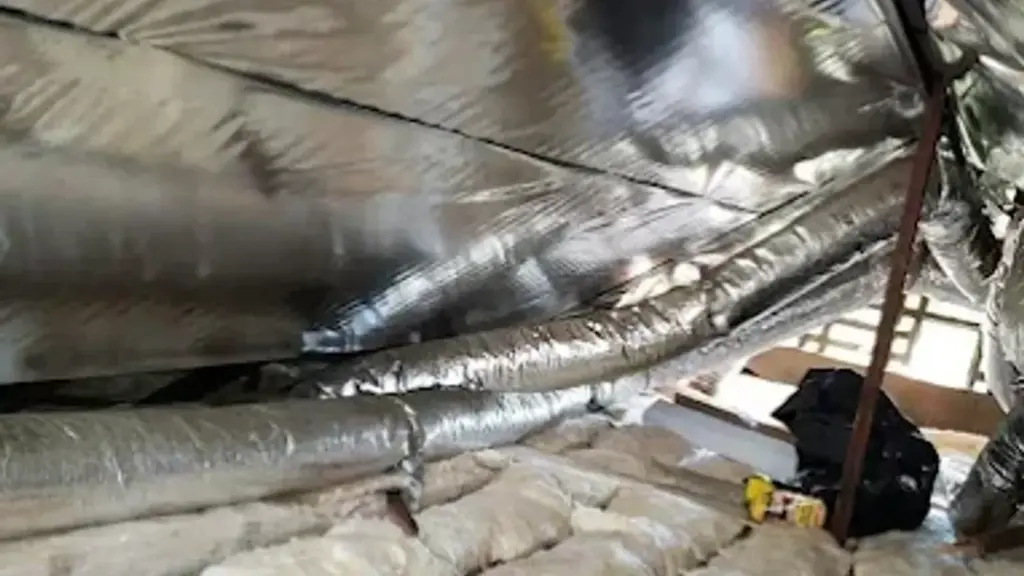
The Complete Guide to Attic Duct Replacement and Insulation Upgrades in Camarillo
Your attic does more work than most homeowners realize. Hidden above the ceiling, it houses the ductwork that delivers conditioned air to every room and the insulation that keeps that air from leaking into the scorching Camarillo summer heat. When either system starts to fail, your HVAC works harder, your bills climb, and your comfort suffers. This guide explains how the two systems interact, how to know when replacement is the right call, and what the process actually looks like from start to finish.
Why Attic Ductwork and Insulation Fail Together
The Camarillo Climate Factor
Camarillo sits in a marine-influenced climate that most people assume is mild year-round. It mostly is, but attic temperatures tell a different story. On a warm inland afternoon, an unshaded attic can reach temperatures well above the outdoor air. Flexible duct material, especially older fiberglass-wrapped flex duct installed before the mid-2000s, was not designed to handle decades of that thermal cycling. The inner liner becomes brittle, the insulation jacket compresses, and the mylar outer wrap develops small tears. None of this is visible from below.
How Degraded Insulation Accelerates Duct Wear
Blown-in fiberglass and cellulose insulation settle over time. A Camarillo home that had an adequate R-value when it was built may now have insulation that has compressed to half its original depth near the eaves, exactly where duct runs often terminate. When the insulation around and above a duct thins out, that duct is exposed to more extreme temperature swings. The outer jacket degrades faster, and any small gap at a connection point gets pulled wider with each heating and cooling cycle. The two systems age each other.
The Hidden Cost of Doing One Without the Other
Replacing ducts without addressing degraded insulation leaves new ductwork exposed to the same hostile attic environment that destroyed the old runs. Conversely, adding fresh insulation over leaky ducts buries the problem rather than solving it. Contractors who specialize in attic systems, like the team at LA Attic Pro, typically assess both during the same visit because the labor overlap is significant. Pulling a crew into the attic twice costs more than combining the work into one coordinated project.
Signs Your Attic Ducts Need to Be Replaced (Not Just Repaired)
Age and Material Type
Flexible duct systems installed before roughly 2005 often used materials that are now well past their rated service life. If your home still has the original ductwork from a 1980s or 1990s build, the question is not whether it has degraded but by how much. Sheet metal trunk lines can last considerably longer, but the flexible branch runs and the boots where ducts connect to registers are common failure points regardless of the main trunk material. An inspection will reveal whether targeted repairs can extend the system’s life or whether a full air duct replacement makes more sense economically.
Performance Red Flags to Watch For
Several symptoms point specifically to duct failure rather than equipment failure:
- Uneven room temperatures: One bedroom is always colder or warmer than the rest of the house, even after the HVAC runs a full cycle.
- Weak airflow at registers: You hold your hand over a supply vent and feel almost nothing, even though the system is running.
- Dusty rooms shortly after cleaning: Leaky return ducts pull air (and particles) from the attic cavity rather than from the living space.
- HVAC running longer than usual: The system struggles to reach setpoint because conditioned air is escaping before it reaches the rooms.
- Higher-than-expected utility bills: Energy loss through duct leakage is a well-documented efficiency drain in homes with older systems.
Any one of these symptoms warrants an inspection. Multiple symptoms together make a strong case for air duct replacement.
What a Professional Inspection Actually Checks
A thorough duct inspection goes beyond a visual scan. A qualified technician will check connection points at the air handler, at each junction box, and at every boot. They will look for collapsed flex duct sections (which restrict airflow even when the duct itself is intact), disconnected runs that dump conditioned air directly into the attic, and signs of pest activity that has compromised the duct jacket. In Camarillo homes, rodent intrusion is a real issue, and damaged ductwork is one of the most common consequences.
What Attic Duct Replacement Actually Involves
The Removal Phase
Old ductwork does not simply get pulled out in one piece. Flex duct is typically cut into manageable sections and removed through the attic access. If existing insulation is being replaced at the same time, the crew will often remove the insulation first to give clear access to all duct runs. This sequencing matters because trying to route new duct through deep insulation without a clear view of the layout leads to improper support and sagging runs later.
New Duct Layout and Materials
Modern replacement systems use insulated flexible duct rated to current energy codes, with an R-value on the duct jacket itself (typically R-6 or R-8 for attic applications in California’s climate zones). The layout is an opportunity to correct any design deficiencies in the original system, such as runs that were too long, had too many bends, or used undersized branch diameters. Properly sized and supported new ducts make a measurable difference in airflow balance across the home. All connections are sealed with mastic sealant or UL-listed foil tape, not standard duct tape, which dries out and fails within a few years.
Testing Before the Job Is Closed Out
A professional installation does not end when the last duct is connected. Airflow should be verified at each register, and the system should be run through a full heating and cooling cycle to confirm that temperatures are balancing across rooms. Any new insulation installed over the duct system should be checked for depth and coverage, particularly at the eaves where settling is most likely to occur over time.
Insulation Upgrades: What Camarillo Homeowners Should Know
Current California Code Requirements and Practical R-Values
California’s Title 24 energy code sets minimum insulation requirements that have increased over successive code cycles. Many existing Camarillo homes, particularly those built before 2010, fall below current standards. The practical target for attic insulation in Ventura County’s climate zone is generally in the R-38 to R-60 range, depending on the specific application and the home’s construction. Requirements vary by project type, so checking with a licensed contractor or your local building department is the right step before setting a target R-value. What matters practically is that more depth means less heat transfer, which means your HVAC system runs shorter cycles and your living spaces stay more comfortable.
Blown-In vs. Batt Insulation for Attic Applications
| Feature | Blown-In (Fiberglass or Cellulose) | Batt Insulation |
|---|---|---|
| Coverage around obstructions | Excellent, fills irregular spaces | Gaps common around wiring, pipes |
| Installation speed in existing attic | Fast, minimal disruption | Slower, requires hand-fitting each piece |
| Settling over time | Some settling expected; depth added to compensate | Minimal settling if properly installed |
| Best application | Retrofit over existing floor joists | New construction, open wall cavities |
| Pest resistance | Cellulose uses borate treatment; fiberglass is inorganic | Varies by facing material |
For most Camarillo retrofit projects, blown-in insulation is the practical choice. It fills around existing duct supports, junction boxes, and ceiling joists without leaving the gaps that batts commonly develop when hand-cut around irregular framing.
The Rodent-Proofing Connection
LA Attic Pro handles rodent proofing and sanitation alongside insulation work, and there is a good reason for that. Attics that have had rodent activity often have insulation that is contaminated and compressed from nesting. Installing new insulation over contaminated material is not effective and can create ongoing air quality concerns in the living space below. The correct sequence is: remove contaminated insulation, sanitize the attic floor, seal entry points, then install fresh insulation. If that work is being done anyway, combining it with a duct replacement project is the most efficient approach.
Combining Both Projects: The Practical Argument
Labor and Access Overlap
Getting into an attic is not trivial work. It requires moving insulation, navigating around framing, and working in a confined, often hot space. When a crew is already in the attic for duct replacement, adding insulation removal and reinstallation to the same project eliminates a second mobilization. Homeowners who have combined both projects consistently report that the total cost is lower than scheduling them separately, and the disruption to the household is significantly reduced.
Energy Performance as a System
New ducts with adequate duct jacket R-value, surrounded by properly installed attic insulation at the right depth, function as a system rather than as two separate components. The ducts stay closer to the temperature of the air inside them because they are not being baked by attic heat. The HVAC equipment runs fewer cycles to maintain setpoint. Over the life of the system, that reduced runtime translates to less wear on the equipment itself. It is a compounding benefit that starts on day one.
Timing Relative to HVAC Equipment Replacement
One common mistake is replacing an aging air conditioner or furnace without addressing the duct system it connects to. A new, high-efficiency HVAC unit pushing conditioned air through leaky, undersized, or poorly routed ducts will never perform to its rated efficiency. If your HVAC equipment is approaching the end of its service life, coordinating a duct replacement and insulation upgrade at the same time positions the new equipment to actually deliver the efficiency it is rated for. Discuss the timing with your HVAC contractor and your attic specialist together if possible.
Choosing the Right Attic Insulation Contractor in Camarillo
What to Look for in a Proposal
A thorough proposal for combined duct and insulation work should specify the duct material and its R-value rating, the method and material for sealing all connections, the insulation type and target R-value, and whether existing insulation removal is included. Vague proposals that describe work in general terms make it difficult to compare quotes or hold a contractor accountable to a specific scope. Ask for these details in writing before any work begins.
Questions Worth Asking Before You Hire
Before signing with any attic insulation contractor in Camarillo, consider asking:
- Will you inspect the existing duct system before providing a quote, or are you quoting based on square footage alone?
- How do you handle duct connections at the air handler and at each register boot?
- What sealant do you use at duct connections, and why?
- Will you verify airflow at each register after installation?
- Is insulation removal included, or is that a separate line item?
- Are you licensed and insured to perform this work in California?
A contractor who answers these questions clearly and specifically is demonstrating the kind of process discipline that leads to good outcomes. Hesitation or vague answers on any of these points is worth noting.
LA Attic Pro’s Approach in Ventura County
LA Attic Pro serves Camarillo and the broader Ventura County area with a scope that covers the full attic system: insulation removal and installation, air duct repair and attic duct replacement, attic cleaning, and rodent proofing. Working with a single contractor who understands how these systems interact means the work is sequenced correctly and nothing falls through the cracks between trades. If you are weighing whether to address your ductwork and insulation together or separately, an in-attic assessment is the right starting point.
Frequently Asked Questions
How long does attic duct replacement take for a typical Camarillo home?
Most single-story homes in the 1,500 to 2,500 square foot range can have their duct system replaced in one to two days. Larger homes or those with complex layouts may take longer. Combining duct replacement with insulation removal and reinstallation typically adds one to two days to the total project timeline.
Can I add insulation over my existing insulation, or does the old material need to come out first?
It depends on the condition of the existing insulation. If it is clean, dry, and free of contamination, adding new blown-in material on top is often acceptable. If there is evidence of rodent activity, moisture damage, or significant compression, removal is the right call before new material goes in. A visual inspection will make this clear.
Will replacing my ducts actually lower my energy bills?
Duct leakage is a documented source of energy loss in homes with older systems. Replacing leaky ducts with properly sealed new ones reduces the conditioned air that escapes into the attic before reaching living spaces. Most homeowners notice improved comfort and shorter HVAC run times after replacement, which typically corresponds to lower energy use. The degree of improvement depends on how severe the original leakage was.
Is a permit required for duct replacement in Camarillo?
Permit requirements for duct work vary by municipality and project scope. In California, mechanical permits are often required for full duct system replacements. Your contractor should be familiar with local requirements and should pull any necessary permits before work begins. If a contractor suggests skipping permits, that is a red flag worth taking seriously.
How do I know if my attic insulation is at the right depth?
The simplest check is to look at your attic floor joists. If the insulation is level with or below the top of the joists, you almost certainly have less than the recommended depth for Camarillo’s climate zone. Insulation should sit well above the joists to reach adequate R-values. A contractor can measure the actual depth and compare it to current recommendations for your specific home.
What is the difference between duct repair and full replacement?
Duct repair addresses specific problem areas, such as a disconnected joint, a crushed flex section, or a leaking boot connection. Full replacement removes the entire existing duct system and installs new runs from the air handler to every register. Repair makes sense when the overall system is in good condition and the problem is isolated. Replacement is the better investment when the system is aging, has widespread leakage, or has layout deficiencies that repairs cannot fix.
Conclusion
Aging ductwork and thinning insulation are two of the most common and most fixable sources of energy loss and comfort problems in Camarillo homes. Addressing them together, with a contractor who understands how the two systems interact, produces better results than treating them as separate problems. If your home has older ducts, uneven room temperatures, or insulation that has never been updated, an attic assessment is the logical first step. Schedule your attic duct replacement and insulation assessment with LA Attic Pro and find out exactly what your attic needs to perform the way it should.