
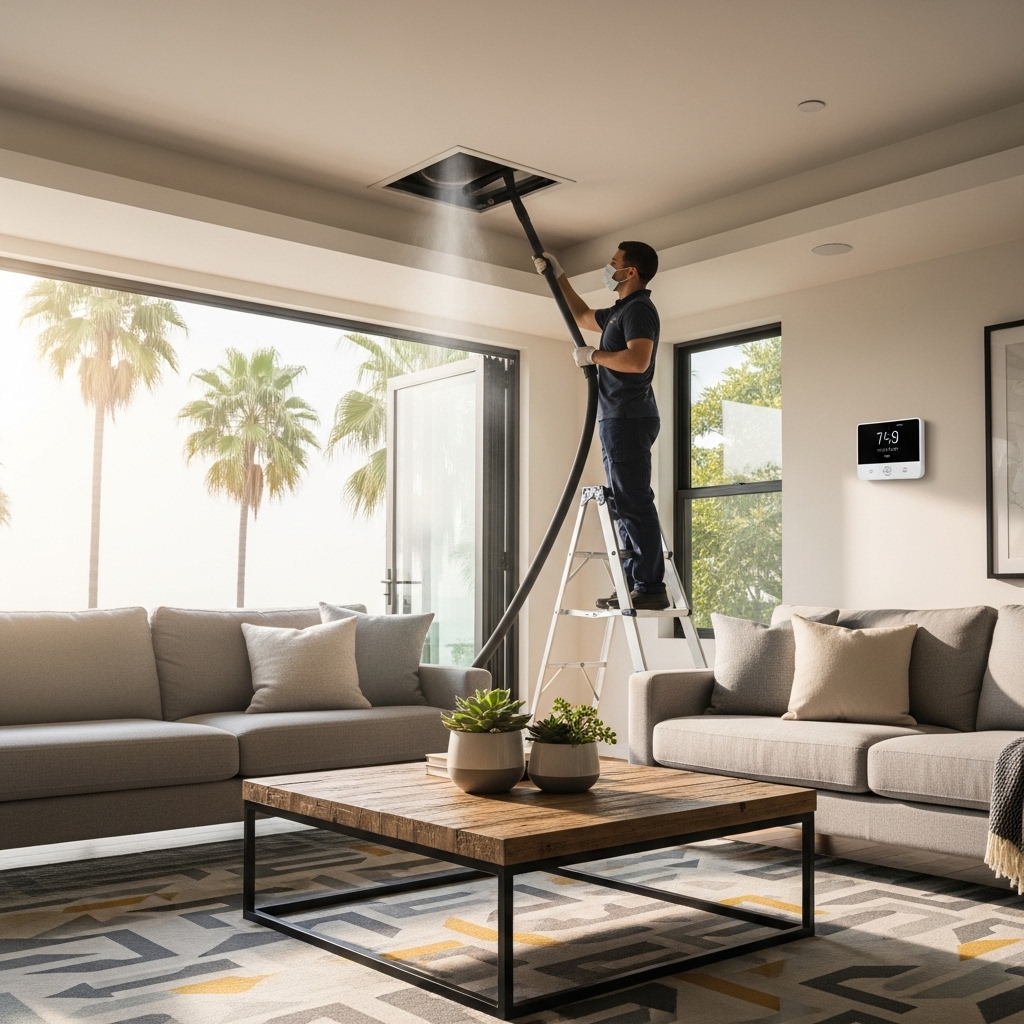
In Los Angeles, the air you breathe inside your home tells a story about the neighborhood you live in, the climate swings from foggy mornings to dry, gusty afternoons, and how well your house is sealed against the elements. As a local who has worked in and around homes from the beach communities to the foothills for years, I’ve learned that the benefits of clean air ducts are rarely just about dust. They’re about making a home feel genuinely comfortable during a Santa Ana wind event, about waking up without itchy eyes after a week of wildfire haze, and about gaining the subtle but meaningful efficiencies that keep a home cool on a ninety-degree September day without the HVAC straining. Early in the conversation about indoor air quality here, it’s vital to understand how intertwined our unique environment is with the health of your ducts, your equipment, and ultimately, your day-to-day comfort.
Because our region blends coastal moisture with inland heat and the occasional smoky spell, buildup inside ductwork tends to be a layered mix of fine particulates, pollen, dander, and humidity-affected residue that behaves differently than in many other cities. This is why Los Angeles homes see outsized advantages from periodic, professional attention. Residents who invest in air duct cleaning notice tangible improvements in how their homes smell in the morning, how evenly air moves to far bedrooms, and how consistently the thermostat keeps its promises throughout the day. That sense of steadiness—air that doesn’t feel heavy or stale, vents that don’t whistle with resistance—adds up to a home where you can relax more easily and keep windows closed during the roughest outdoor air days without feeling trapped.
How Los Angeles Conditions Change Your Duct Story
We talk a lot about microclimates in LA, and for good reason. A home along the Westside corridor can draw in a gentle marine layer before lunch and feel bone-dry by sunset if inland winds pick up. In the Valley, the day might begin mild and end with triple-digit heat and visible particulates hanging low in the sky. Mountains and canyons add another wrinkle, funneling wind in ways that find small seams in older ductwork. Over months and years, these shifts coax debris to settle in the ducts, especially at elbows and junctions. That sediment can then reduce airflow, nudging your system to run longer, and as it does, those particulates slowly return to rooms with each cycle, dulling surfaces and collecting in the places you don’t notice until the next time sunbeams catch the air at just the right angle.
When homeowners here talk about allergies, it’s rarely one thing; it’s many, arriving in waves across the seasons. Spring pollen from jacarandas blends with fall ragweed, while summer dust rises off dry ground and construction sites. If your ducts are due for cleaning, those allergens can take up residence just past the vent covers, where they’re repeatedly stirred each time the system starts. Removing that reservoir is one of the most immediate and noticeable benefits. Clients often describe the subtle relief as a calmer feeling in their breathing, the absence of that tickle in the nose, and a marked reduction in light dusting needs on tabletops and shelves.
The Quiet Efficiency Gain You Can Feel
Energy savings are often hidden in plain sight. If clean, open duct pathways let air move freely, the blower fan doesn’t have to work as hard, and the system can reach a set temperature more quickly. While it’s tempting to think of duct cleaning purely as a cleanliness project, around Los Angeles it frequently becomes a performance recovery. Homes with complex runs—common in hillside properties—can be particularly sensitive to modest restrictions, and clearing those can produce a more balanced feel from room to room. Even without measuring tools, you can often sense it: doors no longer thump when the system kicks on because pressure equalizes more gently, and vents that once whispered now move air with a confident quiet.
Efficiency also relates to how your equipment ages. An HVAC system that isn’t constantly overcoming resistance tends to run cooler and with less strain on motors and bearings. In our climate, where cooling can run many months of the year and heating still puts in respectable hours on winter nights, that reduced strain can influence how long components last between repairs. While no single benefit is a magic bullet, together they shape a home that runs smoother, with fewer spikes in energy use during late afternoon peaks.
Odors, Moisture, and the Subtle Comforts of Clean Ducts
One of the most underrated improvements after a thorough cleaning is odor reduction. Los Angeles homes pick up a variety of scents—salt and sea from coastal breezes, urban aromas from the street, and occasionally the faint char of distant brush fires. When ducts are holding onto dust and film, those odors can cling and persist, giving the home a muted funk that’s hard to identify until it’s gone. Clean ducts, combined with new filters and attention to return grilles, restore a neutral baseline. From there, it’s easier to notice and appreciate the pleasant smells you want in your home, like a simmering pot or fresh cut flowers, without competing background tones.
Moisture is another local dynamic worth acknowledging. Even if we’re drier than many cities, microbursts of humidity arrive with marine influence and storms. That moisture can settle, combining with dust to form a thin tacky layer. Over time it becomes a sticky magnet for more debris. Proper cleaning breaks that cycle, and when paired with addressing small air leaks in returns and around closet air handlers, it sustains a cleaner environment far longer than a surface-level tidy ever could.
Life With Pets and People: Real-World Benefits
Plenty of us share our homes with dogs who shed with the seasons or cats who claim the sunniest patch of carpet. Human life contributes too—cooking aerosols, lint from laundry, and everyday foot traffic that sends settled dust back into motion. I’ve seen a Ventura Boulevard condo transform after the ducts were cleared of long-standing pet dander; the owners didn’t realize how much of their afternoon sneezing was coming from the vents. In another case, a family near Griffith Park noticed their child’s nightly coughing ease within days of service. These are not guaranteed outcomes, and everyone’s sensitivities vary, but they illustrate the way your ducts can amplify or mute what’s already inside the home.
Families with busy schedules often appreciate a lighter cleaning routine after duct service. When ducts stop reintroducing fine dust during each cycle, you’re not constantly chasing a moving target on shelves and floors. This doesn’t eliminate the need for regular housekeeping, but the intervals can stretch and the results tend to hold longer, especially in bedrooms where people want clean, quiet air most of all.
Old Homes, New Builds, and Everything In Between
Los Angeles housing is a patchwork. Spanish-style bungalows with decades of history sit near newer infill developments and meticulously remodeled mid-century gems. Each presents its own duct personality. Older homes may have patched runs and surprising detours added during expansions, while new homes might have construction dust lingering from the final punch list. In either case, a thoughtful cleaning removes accumulated grit and resets the system to a healthier baseline. In remodeled properties, I’ve found drywall powder and sawdust lodged at takeoffs long after the paint was dry. Clearing those nodes can restore airflow to rooms that never quite felt right post-renovation.
Another point worth mentioning is attic and crawlspace integrity. Even minor gaps allow unconditioned, particle-laden air to seep into returns. Sealing and insulating, in tandem with cleaning, offers a one-two punch that keeps your ducts cleaner for longer. If your home backs to a busy street or sits within a dust-prone canyon, balanced ventilation strategies can help maintain pressure inside the home, reducing the tendency for outside air to intrude through the path of least resistance.
What You Can Expect During a Professional Service
While every company has its own approach, the essential idea is containment, agitation, and capture. Registers come off, protective covers go on furnishings, and access points are created if needed to allow equipment to reach deep runs. Brushes or air whips dislodge buildup, and negative pressure equipment draws particles into filtration rather than redistributing them into living spaces. The technician should move methodically, explaining findings—like heavy accumulation near a return or signs of past moisture—and addressing them in sequence. Homeowners appreciate when before-and-after photos show what was removed, not as a scare tactic but as a record of progress that makes the benefits feel concrete.
Filter strategy matters just as much after the service. The right filter for your system should balance capture efficiency with airflow needs. In Los Angeles, where particulate loads can swing wildly during wildfire events, a slightly higher capture rating can make a profound difference for sensitive individuals, but it should never be so restrictive that it starves the system. A good professional will discuss this balance, offering a plan that suits your household and equipment.
Mid-City to Malibu: The Middle-Mile Benefits Add Up
Neighborhoods across the county each contribute their own twist to indoor air. In the city’s core, multi-family living can introduce shared pollutants from neighboring activities; near the ocean, salt can promote corrosion on exposed components; in hillside areas, fine dust erodes from dry, brushy slopes. The middle-mile benefits of cleaning—those cumulative, everyday improvements—often show up as the way a home settles into a calmer rhythm. Thermostat setbacks behave as expected. Bedrooms cool off evenly at night even if the kitchen is still warm from dinner. For many of my clients, the first time they realize how much has changed is when a heatwave rolls in and their living room simply feels less oppressive. That is the practical heart of air duct cleaning here in Los Angeles: life feels balanced during the extremes.
It’s also worth talking about the mental comfort that comes from knowing your home’s unseen pathways are in good order. People pour attention into countertops, floors, and the parts of the home that greet the eye, but peace of mind often grows from the systems you don’t see. A clean, well-sealed duct network isn’t glamorous, yet it contributes to the overall sense that your home is supporting you quietly and reliably, not working against you with musty air and inconsistent temperatures.
Health Considerations and Sensitive Households
When anyone in the home is dealing with asthma, allergies, or respiratory recovery, the importance of clean ducts becomes more than a convenience. In LA, poor outdoor air days happen, and on those days, the ability to retreat into a home that feels fresh can be uplifting. Duct cleaning is not a cure-all, but paired with thoughtful filtration, regular maintenance on the HVAC equipment, and habits like removing shoes at the door, it can create a healthier baseline that benefits everyone. I’ve seen households that once hesitated to host gatherings during summer finally feel comfortable inviting friends over, confident that their indoor environment won’t leave guests sniffling.
For homes with infants or older adults, fewer airborne irritants can contribute to better rest and less nighttime congestion. That improvement is subtle, measured in uninterrupted hours and gentler mornings rather than in dramatic before-and-after images. As a neighbor and a professional, I’ve always believed these quiet shifts are where the true benefits reside.
Seasonal Timing and Long-Term Rhythm
In our climate, there isn’t a single perfect month for cleaning, but many homeowners prefer to schedule service ahead of high-demand seasons—spring before cooling and fall before heating. That approach ensures the system begins each season unburdened by the last one’s dust. It’s also a chance to catch small issues—like a loose connection or an insulation gap—before they grow into annoyances. Over the years, building a rhythm around these touchpoints sets your home up for steadier comfort and fewer surprises, which is especially useful if you travel frequently or manage multiple properties throughout the city.
FAQs
Note: For compliance with the allowed tags, the questions below are formatted as headings and answers as paragraphs, without lists.
How often should Los Angeles homeowners consider duct cleaning?
There is no one-size-fits-all schedule, but many local homes benefit from service every two to four years, with timing adjusted for pets, smoking, recent renovations, or proximity to high-traffic roads and wildfire-prone areas. If you notice musty odors when the system starts, uneven airflow, or visible dust at registers that returns quickly after cleaning, those are good indicators that your ducts are ready for attention.
Will duct cleaning help with wildfire smoke that drifted into my home?
It can help by removing residue that settled during smoke events and by resetting the system so it isn’t reintroducing fine particulates each time it runs. Pairing cleaning with appropriate filtration, sealing gaps in returns, and using your system’s fan strategically to recirculate through filters during smoky periods can further improve results.
Is duct cleaning messy or disruptive?
When done properly, it should be orderly and contained. Surfaces near vents are protected, equipment captures debris under negative pressure, and technicians move room by room. You can expect some background noise and doors opening and closing as access is gained, but a professional team will leave the space tidy and provide a clear summary of what they found and addressed.
Will cleaning my ducts reduce my energy bill?
Cleaning can reduce the resistance your blower faces and help air move more freely, which often shortens run time to reach set temperatures. The result is typically improved comfort and a more predictable system, and in many homes that correlates with lower energy use, especially during heatwaves when every bit of efficiency counts.
Should I upgrade my filter after cleaning?
Often, yes, but it should be matched to your equipment’s capabilities. A higher-efficiency filter can capture more fine particulates, which is helpful in Los Angeles, yet the filter must still allow adequate airflow. Your technician can recommend options that offer better capture without over-restricting the system.
Can I clean my ducts myself?
Basic maintenance like changing filters and vacuuming register grills is well within a homeowner’s reach. Deep cleaning, however, requires specialized equipment and techniques to ensure debris is dislodged and captured rather than released into the living space. Professional service also includes a trained eye for issues like disconnected runs, insulation gaps, or signs of past moisture that a DIY approach might miss.
What about older homes with fragile ducts?
Careful methods can accommodate delicate or older ductwork. A reputable technician will assess materials and connections first, then choose tools and pressures that remove accumulation without causing harm. In some cases, minor repairs or sealing are recommended to protect the improvements and maintain cleaner ducts over time.
Ready to breathe easier in your Los Angeles home?
If you’ve noticed stubborn dust, uneven temperatures, or that hint of a stale scent when the system cycles on, this is a good moment to reset your home’s air pathways. A thoughtful, locally informed approach to duct cleaning can restore comfort, help your equipment run with less strain, and create a calmer baseline for daily life. When you’re ready to take the next step, reach out to a trusted local professional for air duct cleaning and feel the difference in every room.