
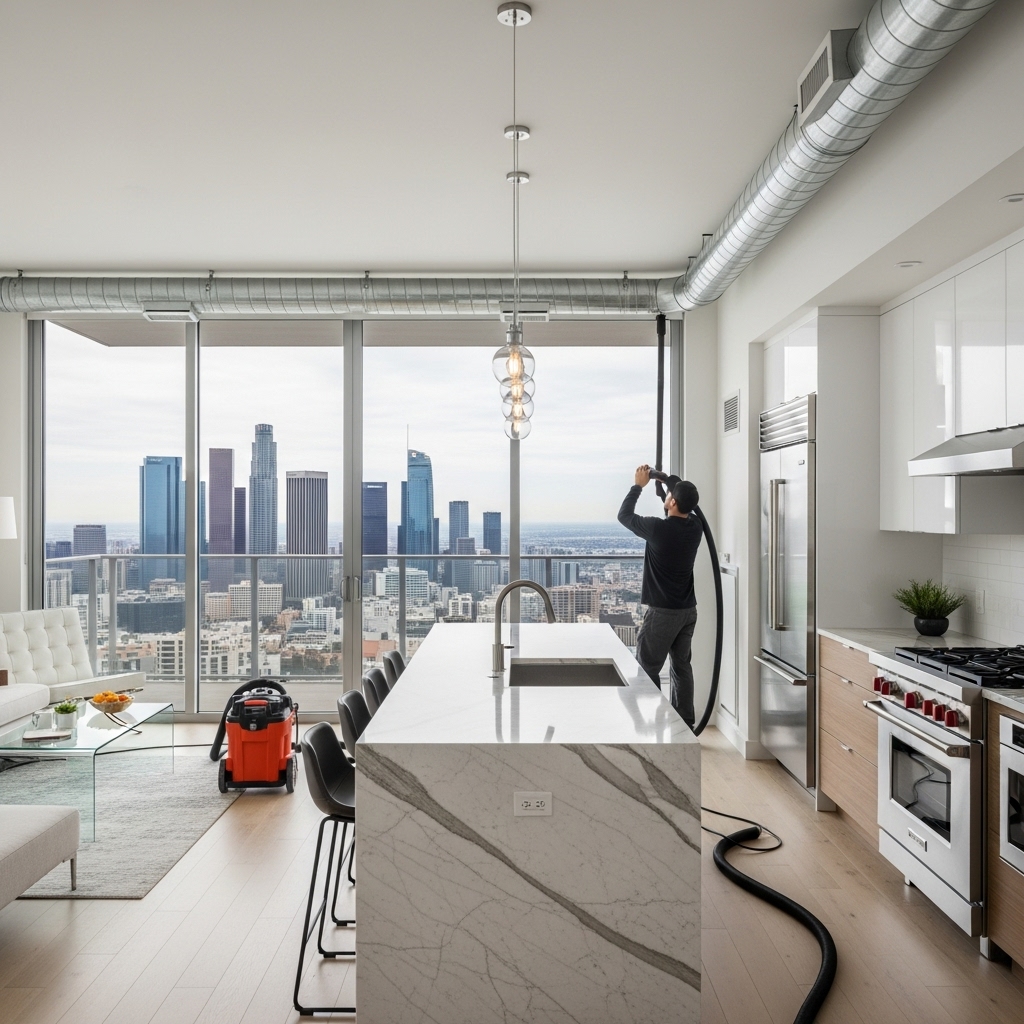
Condo living in Los Angeles is a study in balance. You enjoy proximity to work, culture, and the coastline, yet your building’s systems and neighbors shape much of your indoor environment. Air duct cleaning and maintenance in condos is about more than tidy vents—it’s about coordinating with HOA requirements, respecting building schedules, and protecting the delicate equilibrium of shared spaces while restoring clean, consistent airflow inside your own home. As a local who has worked in high-rises downtown, mid-rise buildings in West LA, and garden-style complexes in the Valley, I’ve seen how a tailored approach helps condo residents breathe easier without disrupting the building’s rhythm.
Condos pose distinct challenges compared to single-family homes. Duct runs may be shorter but more convoluted, tucked into chases behind bathrooms and kitchens. Returns often sit inside compact closets, sometimes adjacent to laundry, where lint and humidity can speed accumulation. In older buildings, modifications over the years can leave mismatched sections and minor leaks. The practical aim of maintenance is to clear debris, verify connections, and create the calm, neutral baseline that helps your home feel fresh when the hallways are busy or the city’s air outside isn’t at its best. For many residents, a well-timed air duct cleaning is the difference between living with background stuffiness and enjoying a space that welcomes you home.
Understanding Your Building’s System
Every condo community is its own ecosystem. Some have centralized systems that deliver conditioned air with individual zone control; others have fully independent units for each residence. In both cases, ducts inside your walls carry the lived experience of the building—construction dust from long-ago renovations, lint from in-unit dryers, and fine particulates that slip in when doors open onto busy corridors. Knowing whether your unit’s ducts connect to shared shafts or terminate within your footprint shapes how maintenance proceeds. It also determines the best times for service, especially if equipment noise needs to be scheduled around quiet hours.
HOA guidelines matter. Many associations require advance notice, certificates of insurance, and adherence to specific elevator and parking protocols. A professional familiar with LA condos will navigate these requirements smoothly, protecting common areas, using floor coverings, and coordinating access so your neighbors experience minimal disturbance. It’s the kind of invisible work that makes everything else go right.
Common Sources of Build-Up in Condos
While condos can be newer than single-family homes, they aren’t immune to the forces that load ducts with residue. Cooking is a big contributor—open kitchens broadcast fine oils and aerosols that settle in nearby returns. Laundry closets leak lint and humidity if door sweeps and seals aren’t perfect. Pets add fur and dander, especially when units have balconies that invite in breezes along with dust. In coastal areas, moisture helps particles cling together, creating a film that holds onto odors from hallways and neighboring units. Clearing this mix restores a clean baseline and stops the low-level recirculation that makes rooms feel dull.
Another condo-specific factor is air movement through door gaps and vents when the building’s stack effect is strong. On warm days, air rises through shafts and stairwells, pulling corridor air under unit doors. If your return filter doesn’t seal well, that corridor air can bypass filtration and ride straight into your ducts. During maintenance, we focus on closing those small loopholes—proper filter fit, snug return grilles, and any small sealing improvements permitted by the HOA—to reduce infiltration and keep ducts cleaner between services.
Noise, Odor, and the Pursuit of Quiet Comfort
Condo residents notice noise and odors more readily because spaces are intimately connected. Hissing at a vent or a hum at the return can telegraph through the unit. Musty or cooking odors can seem to linger, especially if neighbors are active cooks or if a floor-wide remodel just wrapped up. Cleaning the ducts helps by removing the coated layer that harbors smells, while verifying that connections are secure tamps down vibration and pressure fluctuations. The outcome is a system that fades into the background, letting the sounds of your home—music, conversation, quiet—take center stage.
Odor control is often the first improvement residents remark upon after service. Without the stale film inside the ducts, a home returns to neutral far more easily. You notice the scent of fresh linens, not a persistent hallway note. Simple changes like ensuring the return closet closes tightly and the filter frame is true protect that neutrality, especially during busy evenings when the building’s airflow shifts with opening and closing doors.
Scheduling and Access: The Condo Reality
Maintenance in a shared building means moving with intention. Professionals coordinate with the HOA, reserve elevator time if needed, lay protection in common hallways, and plan access to avoid peak quiet hours. Inside your unit, registers are removed, furnishings are protected, and equipment is staged to preserve negative pressure so debris doesn’t escape into living areas. It’s a choreography designed to be efficient and courteous, ending with a home that looks the same as it did when the team arrived, only with air that feels lighter and vents that breathe without strain.
For residents who work from home, scheduling can be tailored to limit disruption. A clear timeline, a walkthrough of the steps, and photos that document what was removed and repaired provide transparency and peace of mind. When done well, maintenance feels less like an intrusion and more like a reset you can feel immediately.
Filter Strategy in a Multi-Unit Environment
Because condos can be more exposed to corridor air and neighboring activities, filter choices matter. You want a filter that captures fine particles without choking the system, and you want it to fit perfectly so air doesn’t bypass around the edges. After cleaning, a filter schedule aligned to your lifestyle—pets, cooking frequency, windows open or closed—keeps the ducts cleaner, longer. Many residents appreciate a small supply of replacement filters on hand so a change doesn’t get deferred simply because the right size isn’t available that day.
Education is part of the best maintenance plans. Knowing how to seat a filter correctly, how to check that the return door latches tightly, and when to call for help if you hear new noises gives you control over your indoor environment without asking you to become an HVAC expert.
Midyear Check-Ins and the Value of Consistency
The most successful condo maintenance programs in LA treat duct care as part of a rhythm. After an initial reset, midyear check-ins ensure that any small issues—like a loose grille or a filter frame that has warped—are addressed before they invite more dust. Residents who adopt this cadence notice that dusting takes less effort and rooms maintain their set temperatures without the seesaw effect that comes from restricted airflow. The building feels calmer, and your home becomes a place of steady comfort despite the city’s energy outside.
From Downtown Towers to Beachside Mid-Rises: Local Insights
In downtown high-rises, the main challenge is often stack-effect infiltration and the sheer frequency of door openings. On the Westside, coastal moisture adds a gentle stickiness that holds onto particles longer than you’d expect. In Valley garden complexes, summer dust can surge after landscaping or windy days. The solution set is similar—cleaning, sealing, filter discipline—but the emphasis shifts by neighborhood. That’s why working with a team that understands Los Angeles condos specifically pays off. They’ll spot patterns quickly and prioritize fixes that matter most in your building type.
FAQs
Do condos really need duct cleaning as often as houses?
They often benefit from a similar cadence because cooking, laundry, and daily living still generate particles that settle in ducts. In multi-unit buildings, corridor air and remodel activity can add to the load. A two-to-four-year interval works for many condos, adjusted for pets, cooking habits, and local conditions.
Will cleaning help with odors from the hallway or neighboring units?
It can, by removing the film that holds onto those smells and by ensuring returns and filter frames are well sealed. While no service can stop odors entering under doors entirely, a clean, tight system won’t recirculate them once they’re inside.
Is the process disruptive to neighbors?
Professionals schedule within HOA guidelines, protect common areas, and manage noise thoughtfully. Communication with building management and adherence to quiet hours keep the process respectful. Inside your unit, containment prevents dust from spreading.
What about dryer vents and kitchen exhaust?
Those systems are related but separate. Dryer vent cleaning is especially important in condos due to longer runs and bends; it improves safety and performance. Kitchen exhaust maintenance helps reduce cooking aerosols that might otherwise drift toward returns. Coordinating these services can maximize results.
How do I know if there are leaks or gaps in my condo ducts?
Signs include visible dust at seams, whistling near registers, or rooms that lag behind. A technician can perform a visual inspection and simple pressure checks to identify likely points of leakage and recommend repairs that fit HOA rules.
Can I schedule cleaning if I work from home?
Absolutely. A clear plan and considerate sequencing minimize disruption. Many residents choose mid-morning or mid-afternoon windows when building activity is lower and sunlight glare isn’t at its peak, making the day feel smoother.
Ready to refresh your condo’s air?
If your unit feels a touch stale, if dust returns faster than seems fair, or if neighbors’ cooking odors linger longer than you’d like, it may be time for a reset. Thoughtful, building-aware service will restore balance without ruffling the building’s routine. Reach out for professional air duct cleaning and feel the quiet confidence of a condo that breathes well again.