
Local insight on air duct repair near you
When you live in Los Angeles, air moves differently through your home than it does almost anywhere else. The marine layer rolls in and retreats, valley temperatures soar and then cool under clear nighttime skies, and inland breezes mingle with the faint scent of eucalyptus and sage. Your heating and cooling system quietly responds to all of that, drawing, pushing, and balancing air so your rooms feel comfortable no matter what the day brings. But when the ducts that carry that air develop leaks, dents, or disconnections, comfort slips, energy bills creep upward, and indoor air quality falters. That is why local homeowners often search for trusted help with air duct repair right in their own neighborhoods, looking for professionals who understand the quirks of Los Angeles construction and climate.
Over the years, I have seen how the city’s variety of homes creates equally varied duct challenges. In hillside houses perched above Silver Lake and Echo Park, ducts sometimes snake through tight crawlspaces where a single loose joint can undermine airflow to an entire floor. In classic Spanish-style bungalows in Mid City, long runs through low attics can be susceptible to radiant heat, making insulation and sealing especially critical. Meanwhile, in post-war ranch homes found throughout the Valley, aging flex duct may sag between trusses, causing kinks and accumulating dust. Each house tells a story of its era, and the ductwork reflects that narrative with a mix of materials, pathways, and previous repairs that require careful assessment.
When someone asks me about finding air duct repair near them in Los Angeles, I recommend starting with a methodical evaluation. A good technician does more than glance at exposed runs; they listen to how the system starts, track pressure differences, and look for clues in the rooms themselves. A family room that is always warmer than the adjacent kitchen could indicate a collapsed section, while a bedroom that collects dust despite frequent cleaning may signal an intake leak pulling particles from the attic. Even a gentle whistle from a supply vent can point to a poorly fitted boot. The key is to give the ducts the same attention you would give the furnace or the outdoor condenser, because the ducts are the highway that connects every component.
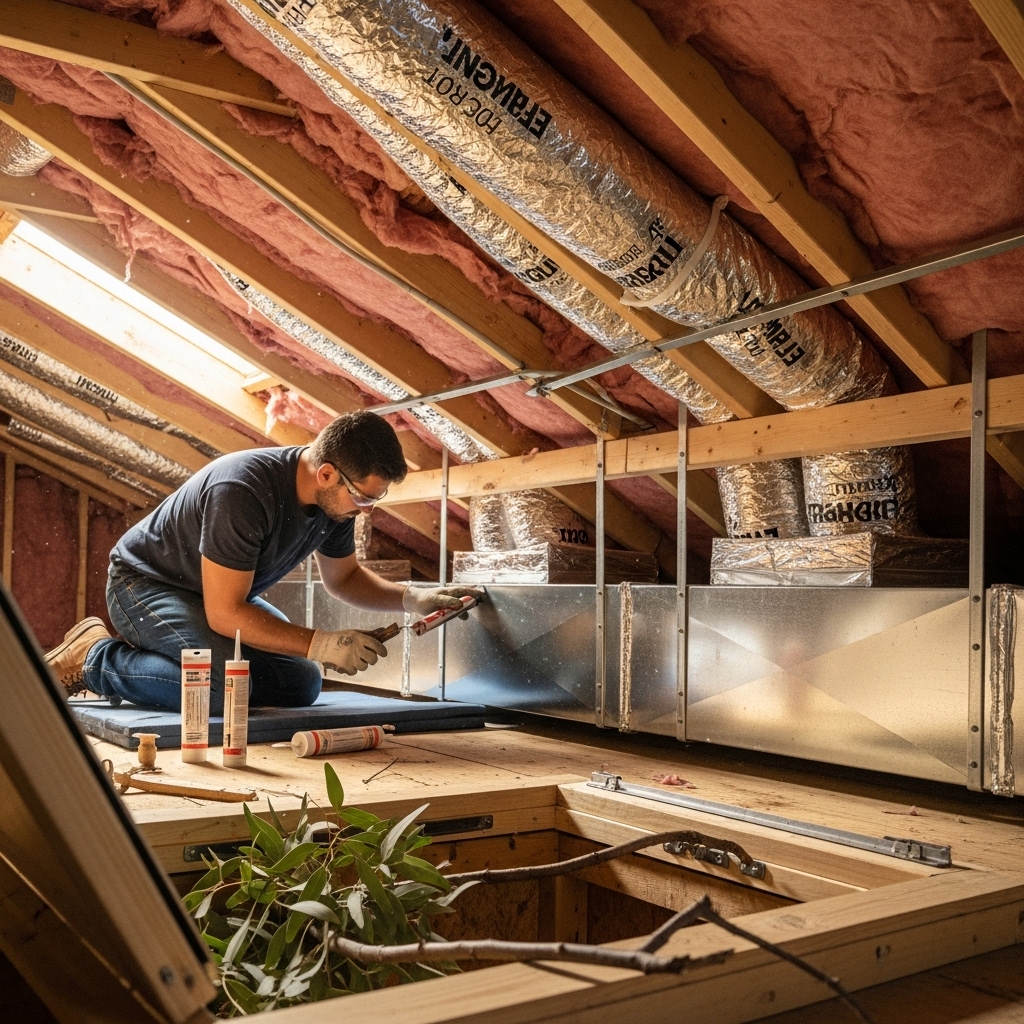
The repair process typically begins with accessible joints and transitions. These areas, where duct meets plenum or where a takeoff feeds a branch, often loosen over time due to vibrations and the thermal expansion and contraction that naturally occur with day-night temperature swings. A thorough repair uses mastic or approved sealant at seams, reinforced by mesh where spans widen. Rigid connections may get additional mechanical fasteners to ensure they hold under pressure. Flex runs are re-tensioned and strapped to support them at proper intervals so the internal spiral maintains its shape and the airflow remains laminar rather than turbulent.
Material selection matters in Los Angeles because our microclimates vary. Near the coast, the mild air may tempt homeowners to leave attics under-insulated, while in the Valley a poorly insulated duct can pick up significant heat before it ever reaches a supply register. During a repair, a wise approach pairs sealing with insulation upgrades where needed. By addressing both, you reduce conductive losses and stop infiltration at the same time. The result is not just more consistent room temperatures but also less strain on the system, which translates to quieter operation and longer equipment life.
Of course, access can be the challenge that shapes every decision. In some classic Los Angeles homes, attics are shallow and the space between joists is cluttered with old knob-and-tube wiring or unexpected framing that limits movement. A skilled technician adapts to these conditions, using inspection mirrors or small video scopes to follow duct paths when a full crawl is impossible. In basements and crawlspaces, moisture and dust must be managed carefully so the work area stays clean and safe. The goal is to correct problems without causing new ones, preserving the integrity of finishes and minimizing disruptions to daily life.
The conversation about air duct repair is not just about comfort, though that is what most homeowners notice first. It is also about health. A leaky return can draw in attic fibers and outdoor pollutants, introducing irritants that circulate through your living spaces. Even when you do not see visible dust, the system may carry microscopic particles that aggravate allergies. Sealing returns and ensuring filters sit flush in their housings are small steps that deliver big benefits. In Los Angeles, where seasonal allergens mix with urban particulates, clean, well-sealed ductwork is a powerful ally for indoor air quality.
Another common question is how repair differs from replacement. The answer lies in the condition and layout of the existing system. If the ductwork is fundamentally sound—properly sized, with thoughtful routing and a reasonable number of turns—then targeted repairs can restore performance. If the original layout was compromised from the start, with overly long runs and insufficient trunks, then a redesign may be warranted. Many Los Angeles homes have seen piecemeal additions over the years, creating patchwork airflow that does not serve current living patterns. A good evaluation will tell you whether you are dealing with small leaks or systemic inefficiencies that deserve a broader solution.
Because Los Angeles spans such a wide geography, choosing a truly local professional has advantages beyond convenience. Crews who routinely work in Westside bungalows know how to move through tight attics without disturbing delicate plaster. Teams serving the Valley understand summer attic heat and plan work windows early in the morning to keep materials pliable and sealants curing properly. And technicians in the foothill communities anticipate wildlife disruptions, like insulation displaced by raccoons or ducts compressed by nesting. This local knowledge shows up in the quality and durability of the repair.
Homeowners sometimes ask if there is anything they can do before a repair visit to make the process smoother. Simple steps help a lot. Clearing access to return grilles and supply registers lets the technician measure airspeed and temperature difference without obstacles. If you know of specific rooms that behave oddly—too warm, too cold, or constantly dusty—note them so the evaluation starts with real-world priorities. And if the home has undergone recent renovations, mentioning where walls moved or ceilings were opened gives context about places where ducts might have been shifted or kinked.
One of the most satisfying outcomes of a well-executed repair is how the house feels afterward. The difference can be subtle but unmistakable: the air seems quieter, rooms balance without fiddling with the thermostat, and the system cycles with a confidence you can sense but not necessarily hear. In a climate like ours, where the HVAC system runs many days of the year, even modest improvements ripple outward, reducing wear on blowers and helping filters do their jobs more effectively.
Midway through a project, I like to pause and measure. Verifying improvements with static pressure readings and temperature splits ensures that the work we are doing is making a real difference. It is also the moment to double-check that sealants are curing and supports are properly spaced. If you are evaluating options, this is a good time to ask questions about future maintenance and to discuss whether additional upgrades, like return relocations or better registers, would complement the repairs already completed. And for those still exploring, it is wise to learn what comprehensive air duct repair entails so you can compare proposals on the same basis.
Once the immediate issues are handled, attention turns to longevity. Los Angeles homes benefit from seasonal checkups, especially after the first heat wave or the first cool snap. Walking the attic to confirm that straps are tight, insulation remains intact, and mastic shows no signs of cracking keeps small problems from turning into larger ones. It is a habit like brushing your teeth—small maintenance that protects bigger investments.
There is also a design dimension to consider. The way air moves through your home affects more than temperature; it influences how cooking smells migrate, how quickly bathrooms clear after showers, and how evenly humidity distributes during wet winter weeks. Thoughtful duct repair can subtly reshape that experience, improving return placement or smoothing a rough transition so air flows more naturally. In older Los Angeles homes with unique layouts, this often means more comfort without sacrificing historic details or making dramatic changes to the living space.
In multifamily buildings and accessory dwelling units, duct repair plays an important role in neighborly harmony too. Shared walls and closely spaced mechanical rooms can amplify noise, so part of the repair plan might include measures that quiet vibration and soften the sound of air. Small adjustments to supports and bends can make a surprising difference in perceived sound, particularly late at night when everything else is quiet.
Frequently asked questions
Q: How do I know if my ducts need repair rather than replacement? A: If the duct layout is modern, with reasonable run lengths and a trunk-and-branch design that matches the home’s size, targeted repairs can be very effective. When the system is undersized, excessively convoluted, or visibly degraded across many runs, a replacement or redesign may be the better route.
Q: Will duct repair improve air quality? A: Yes, sealing returns and supply leaks reduces the entry of dust and attic particles. Combined with a properly fitting filter and regular filter changes, the home often feels fresher and stays cleaner between cleanings.
Q: How long does a typical repair take in Los Angeles homes? A: Timelines vary with access and the number of issues discovered. Many homes see meaningful improvements within a day, while complex layouts, limited access, or extensive sealing needs can extend the schedule. Clear access and a defined scope help keep things efficient.
Q: What should I expect during the evaluation? A: Expect a careful walk-through of accessible spaces, measurements of static pressure and airflow where appropriate, and visual verification of leaks, disconnections, or crushed sections. Good providers explain findings in plain language and connect each recommendation to a clear outcome.
Q: Are there signs unique to Los Angeles that point to duct trouble? A: Our warm attics and cool evenings can expand and contract materials, loosening joints over time. Dust drawn from older attics is another clue, as is uneven comfort between floors in hillside homes where runs vary dramatically in length.
Q: Can I combine duct repair with other upgrades? A: Absolutely. Many homeowners coordinate attic insulation improvements, air sealing at the ceiling plane, or register upgrades at the same time. This bundling minimizes disruption and often delivers a noticeable improvement in comfort.
Talk to a local air duct specialist today
If your Los Angeles home feels drafty in one room and stuffy in another, or if you suspect your system is working harder than it should, this is the moment to get expert eyes on your ductwork. A thoughtful evaluation and well-executed repair can transform the way your home breathes, making every day feel calmer and more comfortable. Reach out to a trusted local team for air duct repair, ask your questions, and learn what is possible for your specific home. The right repair is not just a fix; it is a lasting improvement to the place you live.