
Understanding cost per vent without talking numbers
When homeowners in Los Angeles ask about air duct repair cost per vent, what they are really seeking is clarity. They want to understand how a professional estimates the work, how the home’s layout affects the scope, and which decisions give the best value without compromising comfort or air quality. While I will not discuss prices, I can map the logic behind the estimates so you can interpret proposals with confidence and choose the approach that suits your home and priorities.
Start with the meaning of “per vent.” In most conversations, a vent refers to the point where conditioned air enters a room, often called a supply register. Some homes also have multiple returns, and while they are not typically counted as “vents” in casual conversation, returns are crucial to system balance and may be included in repair planning. The per-vent perspective is useful because it forces a granular look at the system. Instead of imagining the ductwork as one monolithic item, you consider each branch, each transition, and the unique path that air follows to each space.
Los Angeles homes present a wide spectrum of scenarios. In a compact Spanish-style bungalow, you may have a handful of supply vents with short runs that are relatively easy to access in a low attic. In a hillside property or a two-story Craftsman, reaching a single vent can require navigating complex pathways, contending with tight framing, or working through a crawlspace with limited headroom. Accessibility often becomes the silent variable behind the per-vent calculation, not because anyone is adding complexity for its own sake, but because time, safety, and quality depend on how easily a technician can do the job right.
Another driver behind per-vent thinking is the condition of existing materials. Older flex duct may be brittle, kinked, or incorrectly supported, while metal trunks can have unsealed seams or improvised transitions added during past remodels. A proper repair or upgrade does not simply patch a visible gap; it restores the branch so that air moves smoothly from the plenum, through the takeoff, into the run, and out the boot with minimal turbulence. That can involve re-strapping sagging sections, replacing crushed portions, tightening collars, sealing all connections with suitable mastic, and confirming that the boot-to-drywall joint is airtight.
Vent location matters too. A center-of-room ceiling register accessed through an open attic is one thing; a high wall register above a stair landing is another. Even small architectural choices—a lowered hallway ceiling, decorative beams, or a vaulted great room—change how the duct reaches the space and how easily a technician can reach the surfaces that need sealing. In Los Angeles, where style variety is a defining feature, these details recur often. Thinking in terms of per vent makes it easier to anticipate the difference between a straightforward branch and a more intricate path.
Then there is the question of system design. Many Los Angeles homes evolved over time. An original one-story house might have gained a back addition decades later, then saw a garage conversion become a studio. Airflow design sometimes struggled to keep up, leading to long runs to distant rooms or branches tapped into a trunk that was never sized for the added load. In the context of per-vent repair, that history may prompt adjustments or even a partial redesign. You might see recommendations to reroute a branch to shorten the path, to reduce the number of turns, or to increase the diameter for a long run so the room receives the air it needs without excessive static pressure.
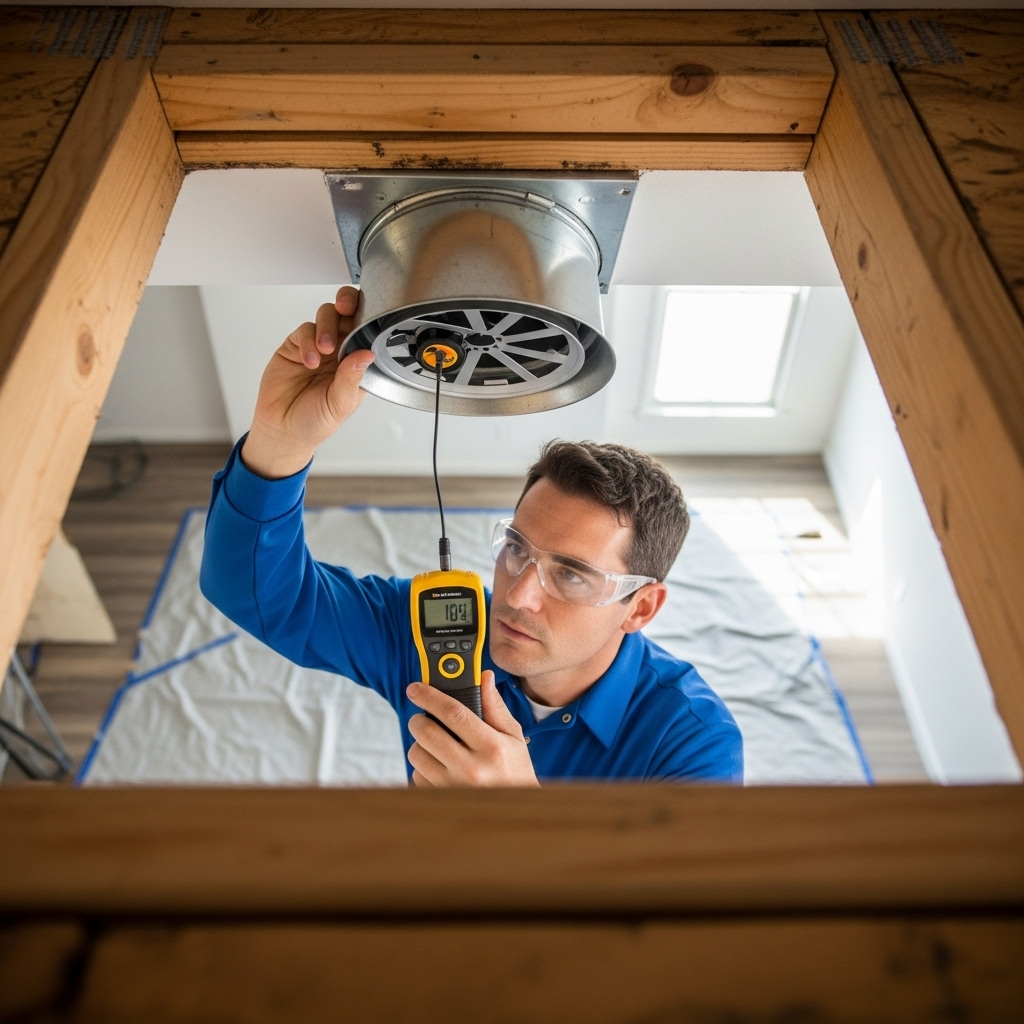
Evaluations that inform per-vent decisions combine observation with measurement. A technician may use static pressure readings, temperature checks at registers, and simple flow assessments to compare what each vent delivers relative to the others. The results guide priorities. A vent serving a frequently used space that underperforms likely rises to the top of the list. Another vent may show adequate delivery but still leak into the attic along the way, calling for sealing and support improvements. Having this map of performance helps ensure that effort goes where it produces the greatest improvement.
An often-overlooked element is the return pathway. Even if your question focuses on per vent for supplies, the return’s location and condition influence the entire system. A starved return can make certain rooms feel neglected even if their branches are in great shape. During a repair project, providers may recommend enhancing the return to balance the system and safeguard air quality. These conversations belong in any honest per-vent discussion because the goal is whole-home comfort, not just pristine branches.
Homeowners naturally ask whether repairing multiple vents together is more efficient than addressing them one by one. The answer is generally yes, because access preparation, protective coverings, and setup time are shared across tasks. When an attic hatch is already open, lighting set, and a path cleared, moving from one branch to the next becomes smoother. That said, a thoughtful plan respects budgets and schedules, sequencing work in a way that delivers noticeable improvements early while leaving room for future phases if needed.
Context matters outside the ducts as well. Attic conditions can make or break the effectiveness of the repair. Proper insulation around duct runs helps maintain temperature, and adequate ventilation in the roof assembly can moderate peak attic heat. While those elements may not be counted in a per-vent tally, integrating them into the overall strategy safeguards the value of the repairs. In some Los Angeles neighborhoods, wildlife or seasonal dust requires additional attention to protect the work and keep returns clean.
Communication is the thread running through all of this. A detailed proposal will identify which vents are included, describe the specific work planned for each, and note any dependencies such as access modifications or recommended support improvements. It should also explain how results will be verified—through readings, visual confirmation, or both. With that information, you can compare providers on an apples-to-apples basis and recognize when one plan is simply more thorough.
At the halfway point of any project, I like to reassess. This is when unexpected conditions reveal themselves. Maybe a branch routed behind a chase is tighter than expected, or a boot was set in a way that resists a clean seal. Mid-project measurements guide adjustments and ensure that the final outcome aligns with the plan. And for those still in the research phase, learning what comprehensive air duct repair typically includes will help you anticipate the steps involved in bringing each vent up to standard.
After the work, the most satisfying proof is how the home feels. Rooms equalize, the system sounds calmer, and the thermostat becomes more of a confirmation than a constant control. You may notice that surfaces stay cleaner longer and that certain rooms, once avoided during hot afternoons, become comfortable again. These are the real dividends of getting the per-vent details right.
Frequently asked questions
Q: What defines a “vent” in a per-vent conversation? A: Typically it is a supply register delivering conditioned air to a room. Returns are sometimes considered separately, but they frequently appear in the scope because of their influence on system performance.
Q: Why do some vents take more work than others? A: Access, run length, number of turns, and existing material condition all shape the effort. A short, straight branch in an open attic is far simpler than a long run threaded through framing changes from older remodels.
Q: Can I prioritize a subset of vents? A: Absolutely. Most providers can phase work, starting with rooms that matter most to your daily routines or that show the clearest performance issues. Phasing can be a sensible approach in complex homes.
Q: Will per-vent repairs help noise levels? A: Often yes. Smoother airflow and sealed joints reduce whistling and hiss. Properly supported runs also vibrate less, which helps late-night quiet.
Q: How are results verified? A: Through static pressure readings, temperature checks at registers, visual confirmation of seals and supports, and, most importantly, by how well rooms stabilize in real use across different times of day.
Q: What if the evaluation reveals a design flaw? A: A well-rounded plan can mix per-vent fixes with selective rerouting or trunk adjustments to address underlying constraints, ensuring the end result feels coherent and comfortable.
Speak with a local expert about your vents
If you are looking at your home vent by vent and wondering where to begin, a focused evaluation will bring clarity. Discuss the path to restoring each branch, agree on priorities, and set expectations for verification so you know the work truly delivers. When you are ready to move forward, reach out for professional air duct repair and transform the way air moves through your Los Angeles home, one vent at a time.