
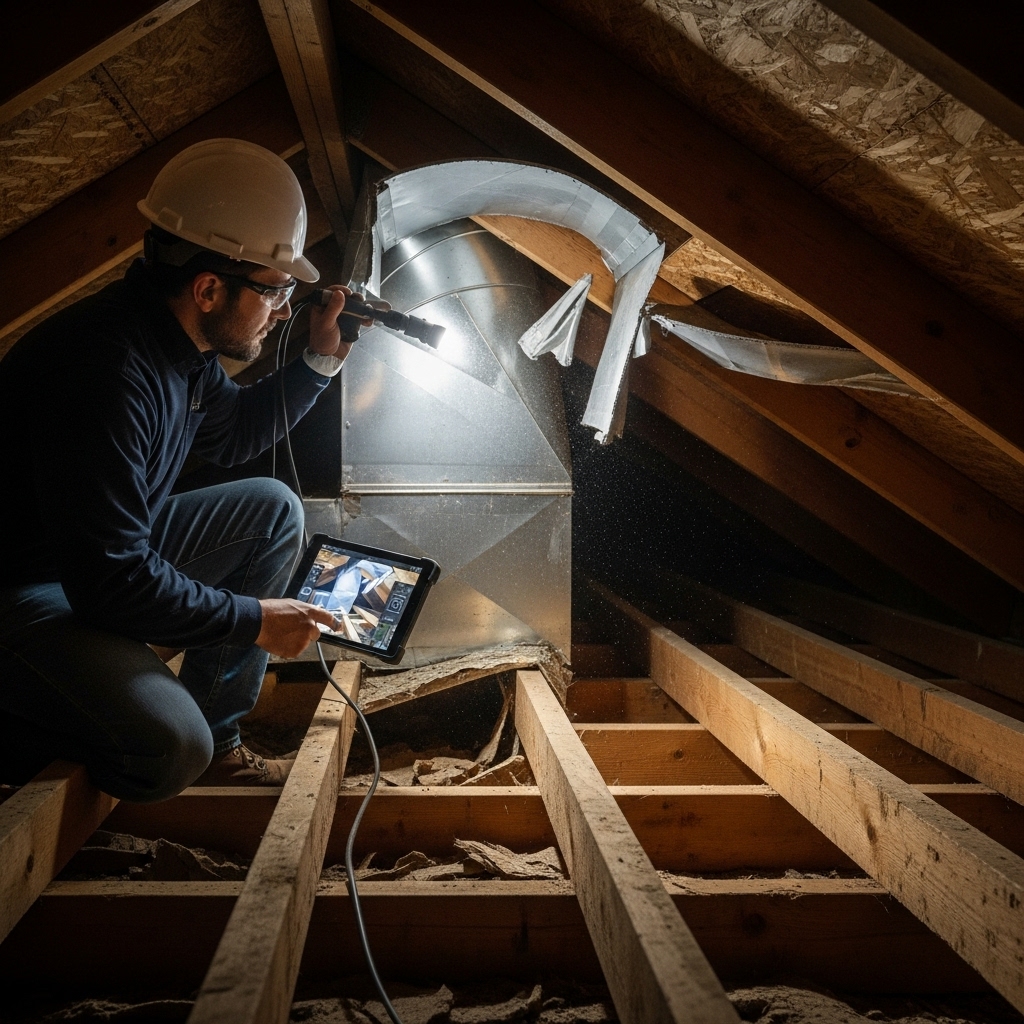
Seeing is believing: air duct repair with cameras
In Los Angeles, where homes span a century of styles and construction methods, getting a clear picture of your ductwork can be the difference between guesswork and precision. Camera inspection has reshaped how we diagnose and repair ducts, giving homeowners visual proof of what is happening inside the pathways that carry conditioned air. When you can see a separated joint, a crushed section, or debris lodged in a bend, decisions become easier, and solutions become more targeted. The result is fewer surprises, stronger repairs, and a system that runs the way it should.
The first advantage of bringing cameras into the process is accuracy. Even a careful technician can only assess what they can reach and feel. Cameras—small, flexible, and designed for low-light spaces—extend that reach, slipping through access points and following the route that air actually travels. They reveal more than dramatic failures; they show subtle problems like minor offset joints that create turbulence or signs of past moisture that may have loosened adhesives. In a city like Los Angeles, where ducts may cross between additions from different decades, those insights are invaluable.
Homeowners appreciate the transparency. During a camera-assisted evaluation, you see what the technician sees. Recordings or still images document the condition before work begins, and the same views can be captured after repair to verify the fix. This visual record helps prioritize work and fosters trust. When a recommendation is grounded in images, the conversation shifts from abstract diagnosis to a shared understanding of cause and effect.
Camera inspection also speeds up the process. With a plan grounded in images, crews move directly to problem areas. Access paths are chosen more efficiently, and materials are staged for the repairs that matter most. For example, if a camera reveals a separated collar at a takeoff, the team knows to bring the right collar, strap, sealant, and tools to address that exact location. This minimizes time in attics or crawlspaces and reduces the chance of collateral disturbance to insulation or finishes.
In many Los Angeles neighborhoods, ductwork must contend with tight spaces. Low-slope roofs in mid-century homes create shallow attics, while hillside houses often rely on crawlspaces threaded with plumbing and electrical runs. Cameras thrive in these environments. Their small heads and flexible cables slip through openings that are too tight for a person, tracing the duct path and revealing what the human eye cannot see directly. This is particularly helpful when planning repairs that would otherwise require cutting open finishes.
What do technicians look for with the camera? Disconnections and gaps are top priorities, but the list is broader. They watch for crushed flex duct, sharp bends that kink airflow, missing or deteriorated internal liners, debris or construction material left behind after past renovations, and signs of pests. They also observe condensation patterns that can hint at insulation gaps or poor routing near unconditioned surfaces. By spotting these details, the repair plan becomes both more comprehensive and more precise.
Of course, cameras are tools, not ends in themselves. Their power lies in how they inform a systematic repair. Once issues are located, technicians clean contact surfaces, rebuild compromised connections, reinforce joints with mesh and mastic where needed, and restore proper support spacing so the duct maintains its shape under operating pressures. When the camera returns for a post-repair pass, it confirms that seams are continuous and transitions are smooth, reducing turbulence and leakage.
There is a comfort dimension to all this as well. Homeowners sometimes describe ducts as mysterious, a hidden network that matters but rarely sees the light of day. Cameras turn that mystery into a familiar map. When a resident watches on a tablet as a camera travels from the air handler to a particular room, they understand why that room may have struggled and how the repair is going to change the situation. That understanding helps set realistic expectations and builds confidence in the outcome.
Another benefit of camera inspection is documenting the baseline for future work. If a home is being remodeled, or if the HVAC system may be upgraded later, having a clear record of the duct conditions saves time and prevents redundant efforts. This is especially helpful in Los Angeles where projects are sometimes phased over months or years. The images anchor conversations and help crews pick up where work left off without re-discovering the same pathways.
There is a middle point during many projects when the camera becomes the star. After initial sealing and support corrections, a second pass reveals whether any overlooked issues remain. Perhaps a section of flex shows internal spiral separation, or a boot’s internal edge catches lint in a way that hints at turbulence. Catching these details mid-project results in a cleaner finish and a stronger overall repair. For homeowners exploring options, understanding how comprehensive air duct repair integrates camera verification can help differentiate thorough proposals from cursory ones.
In multi-unit buildings and accessory dwellings, cameras help navigate shared chases and tight mechanical rooms where space is at a premium. They reduce guesswork and keep disturbance to a minimum, which neighbors appreciate. In historic Los Angeles homes, cameras also protect architectural finishes by reducing the need for exploratory openings. The less you disrupt, the faster a home returns to normal and the more intact its original character remains.
As with any technology, the value of camera inspection depends on the hands that use it. Training matters. A seasoned technician interprets what they see, distinguishing between superficial scuffs and true failures, and knowing when a small misalignment will cause meaningful performance issues. They also know how to stage lighting and camera angles to see behind collars and around bends. The difference shows up in the clarity of the plan and the quality of the results.
Frequently asked questions
Q: Do all repairs require a camera inspection? A: Not always, but cameras add value in tight spaces, complex layouts, or when past work is unknown. They are especially helpful for confirming results after sealing and re-supporting runs.
Q: Will a camera inspection damage my ducts? A: No. The equipment is designed to be gentle. Technicians use soft, flexible cables and smooth camera heads that glide along the duct interior without scraping or tearing.
Q: Can I see the footage? A: Yes. Most providers share live views during the inspection and can provide images afterward. This transparency helps you understand recommendations and track improvements.
Q: Does camera use slow the project down? A: It usually speeds the project up by directing effort to the right places the first time. It also reduces the need for exploratory openings, which shortens overall timelines.
Q: What problems are most often discovered with cameras? A: Common findings include separated or loose collars, crushed flex sections, sharp bends, debris from past work, and signs of air leakage at boots and transitions.
Q: How is success verified after repairs? A: Through a combination of post-repair camera passes, pressure readings, and temperature checks at registers. The goal is visual confirmation plus measured improvement.
See your ducts the way a pro does
If you want real clarity before committing to work, consider an evaluation that pairs experienced technicians with camera inspection. You will gain the confidence that comes from seeing exactly what is happening inside your ducts and how targeted repairs will make a difference. When you are ready, schedule professional air duct repair and bring the same transparency to the improvements in your Los Angeles home.