
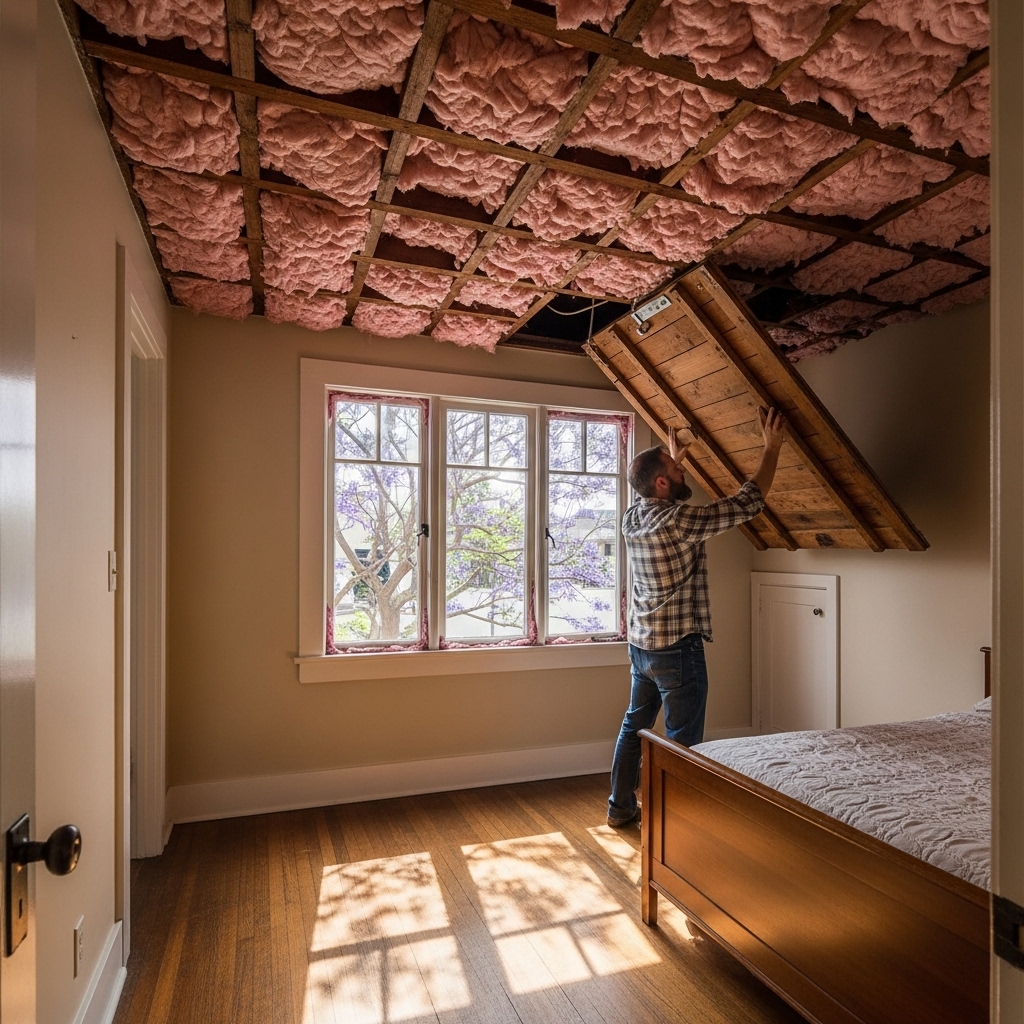
Walk the streets of Los Angeles and you can read the city’s architectural history in the rooflines. Craftsman bungalows shaded by jacaranda trees, Spanish Revival cottages with clay tiles and archways, Mid-Century gems tucked into hillsides, and modest postwar ranches lined up on quiet Valley blocks. Many of these homes were built long before energy codes emphasized thermal performance, and their character can mask a simple truth: what happens in the attic has everything to do with how comfortable, quiet, and healthy the inside of an older home feels. When summer heat settles over LA, thoughtful upgrades like attic insulation pay dividends every hour of the day without changing a single visible detail of your home’s beloved style.
In older structures, the ceiling plane often includes gaps and penetrations that freely connect living space to the attic above. Plaster-to-drywall transitions, old chimney chases, unboxed soffits, and original light fixtures create a patchwork of leakage. Insulation is not just about adding fluff; it is about establishing a reliable thermal and air boundary where the house needs it most. Installing the right insulation and sealing the evident pathways creates a calmer interior that resists the daily heat pulse Los Angeles neighborhoods experience through late spring and summer.
The legacy of minimal or missing insulation
Across the city you will find attics with a scattering of low, dusty batts, or a thin layer of old blown-in material that has settled unevenly. In many pre-1980s homes, insulation was an afterthought or absent entirely. That sparse coverage allows the attic to behave like a radiator positioned above your head. By midafternoon, heat collects in the space and conducts through the ceiling, warming rooms even as air conditioners struggle. Upgrades make an immediate difference because the attic is the most critical interface between the outside and your living areas during hot weather. Bringing coverage up to a modern standard removes the weakest link in the envelope without disturbing the home’s vintage finishes.
Los Angeles microclimates amplify the need. The Valley bakes beneath long, bright days while coastal neighborhoods see cooler air and the occasional damp marine layer. Older roofs with dark shingles or tile can drive attic temperatures even higher, and uninsulated ducts that run through that hot environment lose their cool before air reaches the rooms that need it most. A thoughtful approach that looks at both the insulation layer and the air pathways around it can turn a home that fights heat all day into one that stays serene even when the sun is relentless.
Respecting character while improving performance
Owners of historic and older homes often worry that energy upgrades will compromise original details. The attic is uniquely forgiving in this regard. The improvements happen out of sight, above the ceiling plane, and the visible character remains intact. Craftsman woodwork, plaster cove ceilings, hand-set tile, and steel casement windows can remain untouched while the house gains a significant bump in comfort and performance. By concentrating on the attic floor and sealing carefully around the openings you never see, you get a home that feels new without looking new.
Protecting that character sometimes means sequencing work to keep the attic accessible. If you are planning electrical or HVAC upgrades, aligning those with insulation can reduce rework. Professionals familiar with LA’s housing stock know how to navigate attics with low headroom, shallow eaves, and odd transitions between additions. They bring small but important touches—baffles at the eaves so insulation does not block ventilation, dams around the attic hatch, and attention to the tops of interior walls where leaks are common—that make the whole system perform as intended.
The comfort impact you will notice immediately
In older homes especially, the comfort improvements can feel dramatic. Bedrooms that used to bake by late afternoon stay usable without dragging in extra fans. Kitchens hold their cool even while you cook. The house recovers faster after the front door has stayed open while you bring in groceries or kids run in and out. Many owners talk about a new sense of calm, where air does not feel restless or stratified and where the ceiling no longer radiates heat onto your skin. The shift shows up in quieter evenings and better sleep, especially during the peak of Los Angeles summer.
Comfort also means consistency. Older construction can produce hot and cool rooms as the sun moves and winds shift. By tightening the ceiling plane and setting a consistent thermal blanket above it, the home feels more even across the day. You use fewer workarounds—fewer spare window units, fewer closed-off rooms, fewer battles over a single thermostat that can never satisfy every corner of the house. Instead, the indoor environment becomes predictable and gentle, which is exactly what you want in a home that has already earned a lifetime of memories.
Air quality, dust, and the unseen pathways
One of the less visible benefits in older homes is cleaner indoor air. Each small gap between living space and the attic is a route for dusty, superheated air to slip inside and ride convection currents down walls and through fixtures. On hot days, that flow is strongest just when you want it least. Sealing and insulating together dam that tide. The result is a house that smells fresher in the afternoon, collects less dust on furniture, and keeps wildfire smoke at bay more effectively when seasonal haze drifts into the basin. You will not see the sealed cracks and covered chases, but you will feel the difference.
There is a special consideration with older wiring. Some vintage homes still have remnants of knob-and-tube circuits or connections that were never brought up to modern standards. This is exactly where a professional’s eye matters. An attic assessment should identify any electrical updates needed before insulation is installed, and clearances around fixtures should be respected. That level of care turns a simple upgrade into a lasting one that is safe, tidy, and stable for decades.
Working with additions and complicated rooflines
Los Angeles homes frequently grow in stages: a back bedroom in the fifties, a family room in the seventies, a vaulted ceiling added later. Every change leaves a footprint in the attic. You may find skipped sheathing in one section, different joist sizes in another, or a knee wall that opens to a narrow void. Effective insulation work acknowledges this patchwork and stitches it together so the thermal boundary is continuous. The odd nooks are dammed and covered, knee walls get backs, and small chases are sealed so air does not sneak through them to find the path of least resistance into your living space.
Even flat-roofed portions common in Mid-Century homes can be addressed with appropriate strategies. While access is tighter, experienced crews know how to evaluate options that respect the architecture while improving thermal performance. The essential idea remains constant: create a coherent boundary at the top of the conditioned space so your home stops losing the comfort you pay to create.
Performance without changing the look
Preservation-minded owners appreciate that attic work is invisible in daily life. Your home’s street presence remains unaltered, and interior trim, tiled niches, and handmade details continue to shine. Yet your house behaves like a more modern building where it matters most. For many owners who love older homes, that is the ideal: a sanctuary that reflects the best of Los Angeles design while feeling effortless through a Valley heatwave or a week of bright, dry Santa Anas.
When you choose to improve attic insulation in an older home, you also tend to reveal and resolve issues the house has been tolerating quietly. Misrouted bath fans, loose duct connections, and minor roof leaks show up in the preparation phase and can be corrected. You end up with an attic that is cleaner and a home that breathes intentionally, which prevents small annoyances from turning into larger repairs later. It is the kind of maintenance-forward approach that keeps beloved properties feeling sound and well cared for.
What to expect from an attic upgrade
The process begins with an assessment that looks at both energy performance and safety. Access points are protected, old or contaminated insulation is removed if necessary, and air leaks are sealed at the top plates, around light fixtures, and along utility penetrations. Baffles are installed at eaves to protect ventilation, dams are built to keep insulation in place at hatches, and then new insulation is blown or laid to the target depth. The work is typically completed in a day for most homes, and the before-and-after difference can be felt the very same night when you step into bedrooms that finally hold their cool.
After installation, you will notice that the attic itself is a calmer environment. That matters for any equipment located up there—furnaces, air handlers, or simply duct runs that no longer sweat through summer extremes. It also makes future service easier and less urgent since parts are not baked in prolonged high temperatures. In the bigger picture, you have taken a major step in aligning your older home with contemporary performance expectations while keeping every inch of its charm intact.
FAQ
Q: How do I know if my older home needs more insulation? A: Peek at the attic hatch. If you see thin or patchy coverage, exposed joists, or dusty batts slumped between them, you likely need an upgrade. Hot ceilings by late afternoon and temperature swings between rooms are also strong clues.
Q: Will insulating the attic change my home’s historic character? A: No. All work happens above the ceiling plane and out of sight. Your trims, plaster, and architectural details remain exactly as they are while your home becomes more comfortable and consistent.
Q: Do I need to update wiring before adding insulation? A: If there is knob-and-tube or questionable splices, it is prudent to have an electrician evaluate and address them first. A professional insulation crew will identify concerns during assessment and coordinate as needed.
Q: Which material is best for older Los Angeles homes? A: Blown-in cellulose and fiberglass are both excellent options. The right choice depends on your attic’s layout, desired R-value, and whether you are supplementing existing material or starting fresh after removal.
Q: Will insulation make my home stuffy? A: Properly installed insulation reduces uncontrolled attic air from entering living spaces while preserving roof ventilation. Most homeowners experience fresher-feeling rooms and fewer dust issues after the upgrade.
Q: How disruptive is the process? A: Access is protected, and the work is typically completed in a day. Aside from brief noise from equipment, disruption is minimal, and your home is left clean with the attic hatch sealed and weatherstripped.
Bring quiet comfort back to your classic LA home
Your home has already stood the test of time. Now it deserves the kind of comfort and calm that makes summer living easy. With the right plan, you can preserve every inch of architectural character while transforming the way the house handles heat, dust, and daily life. Start with a straightforward assessment and a conversation about attic insulation, and set your older Los Angeles home up for decades of quieter rooms, steadier temperatures, and easier evenings.