
Ask any inspector who has worked the length of Los Angeles, from the canyons of Brentwood to the flats of the San Fernando Valley, and you will hear a similar refrain: homes rarely fail because of one giant flaw. Instead, they invite trouble through a dozen small, ordinary details that together add up to a welcoming path. Understanding those common issues is how you stop the problem before it starts. This is especially true with rodents, whose agility, persistence, and curiosity can make short work of a neglected gap or a weakened screen. Los Angeles homes are diverse in age and style, yet the patterns repeat with such regularity that a focused walkthrough can reveal most vulnerabilities in under an hour. Building your awareness now sets you up for the kind of lasting protection that defines smart homeownership.
Let us begin at the ground, where concrete and stucco meet along the weep screed. That thin horizontal strip is designed to manage moisture, but time and movement leave hairline spaces just large enough to explore. If landscape mulch butts up against the wall, that seam becomes shaded and soft—a favored route. Move a few inches higher and utility penetrations appear: gas meters, water spigots, and cable lines. Homeowners often assume the original caulk remains intact, but UV and thermal cycling slowly break adhesion. A gap you cannot see at arm’s length is a gap that matters to a determined mouse or rat.
Garage Doors and Side Entries
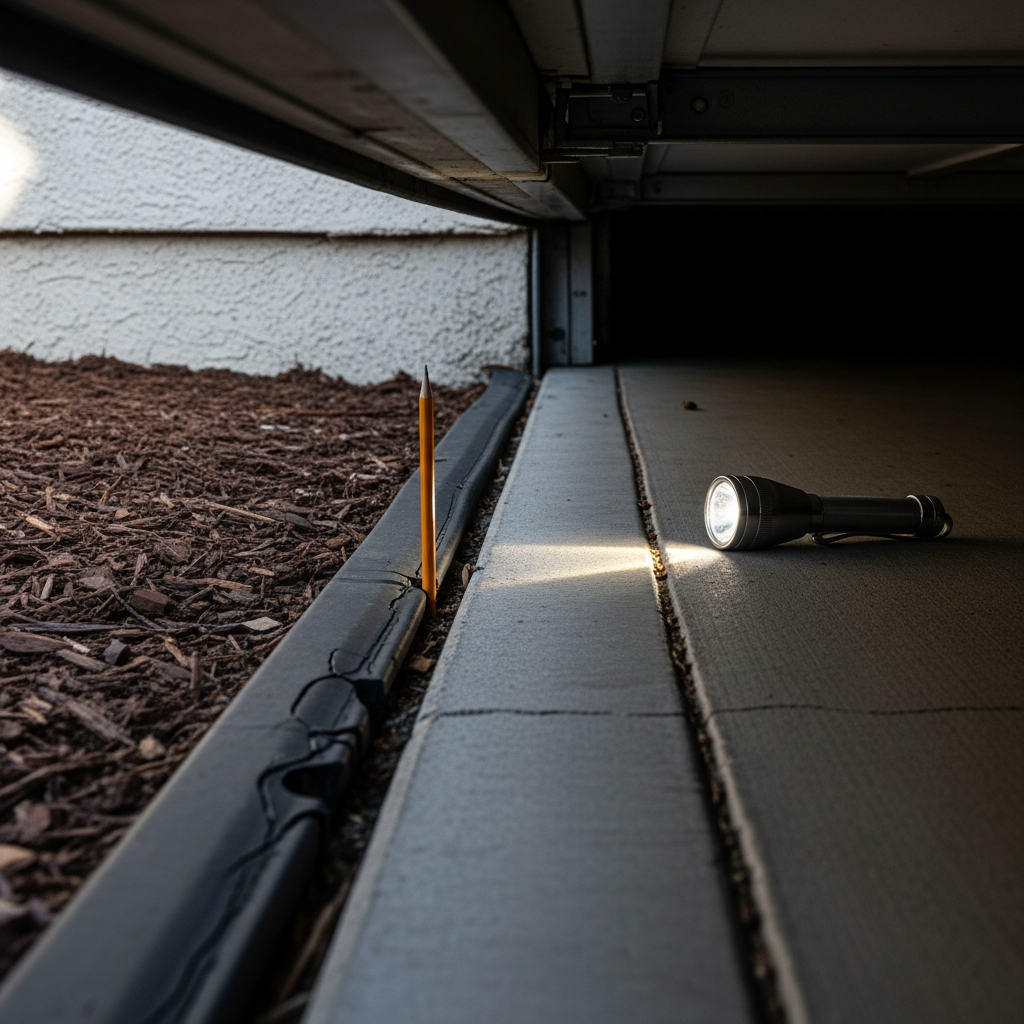
Garages are the Swiss Army knives of Los Angeles living. We work out in them, store surfboards and skis, and stack holiday decor to the rafters. The tradeoff is that garage doors and side entries see heavy use and suffer constant wear. Bottom seals compress and crack, and door tracks settle ever so slightly, creating crescent-shaped slivers of daylight in the corners. Side doors swell in damp weather and recede in heat, loosening latches and creating gaps under thresholds. It is common to find evidence of activity within a few feet of pet food bins, storage shelves with paper goods, or laundry areas that radiate warmth. If there is a point of least resistance, it is often here.
Consider the interface between the garage and the home’s interior. In many houses, an interior door leads directly to the kitchen or a hallway. If the garage becomes a safe staging area for wildlife, the step into the home is a short one. Weatherstripping that looked adequate two summers ago may now be flattened or torn. The threshold can bow just enough to create a channel. These are unglamorous details, but they are decisive.
Attic Vents, Rooflines, and Flashing
The attic is where small issues become big ones. Gable vents with worn mesh, roof jacks with cracked seals, and gaps at the drip edge create a constellation of tiny opportunities. In older Spanish-tile roofs, the natural curves at eaves must be closed with properly shaped bird stops; when they are missing or deteriorated, the openings act like funnel mouths that invite exploration. In ranch homes with asphalt shingles, attention should turn to roof-to-wall transitions where flashing meets stucco. Caulk, when used as the sole defense, is rarely enough over time. Rodents will test it, and sun will harden it.
Another frequent oversight lies in the attic access itself. Pull-down ladders or hatches often lack tight seals. If you can feel draft around the perimeter or see dust trails that appear from the attic side to the living space, you are looking at both an energy leakage and a potential pathway for contaminants. Add the heat of a typical Valley summer, and the attic becomes a greenhouse that motivates activity at dusk and dawn when temperatures fall to survivable levels.
HVAC and Plumbing Penetrations
The routes that keep our homes comfortable are the same ones that can invite visitors. Refrigerant lines running to condensers, flexible ducts passing through plenums, and condensate drains exiting near grade all pierce the envelope. Over time, mastic dries and tape lifts. Gaps around sleeves become test lanes. The same is true in kitchens and bathrooms, where sink and appliance lines dive into cabinetry. The foam or caulk installed by a previous owner may look intact from a casual glance, but a close inspection reveals separation at the edges or a hollow center that flakes when pressed.
Plumbing vents and B-vents deserve careful inspection at the roof. Their flashings are meant to hug the penetrations tightly, shedding water and air. When they crack or lift, they leave crescent openings on the uphill side. Pair that with wind pressure and you create a condition that practically begs for entry attempts. Keeping these flashings secure with the correct fittings and, when necessary, custom collars or screens, prevents a small repair from becoming a recurring headache.
Landscaping, Fences, and Travel Lanes
Our generous growing season makes Los Angeles lush where water is available, and that greenery creates pathways. Ivy allowed to reach the eaves, dense shrubs hugging the stucco, and fences with gaps beneath them build elegant boulevards for wildlife. A narrow side yard shaded most of the day becomes a favorite, especially when it hosts a tucked-away hose bib that leaks just enough to moisten soil. Stack this with a green bin pushed tight to the wall and you have a textbook attractant cluster. None of these features are mistakes by themselves, but together they present a persuasive case to explore further.
Allies and outbuildings also play a role. Detached garages or ADUs present additional rooflines and penetrations. Utility corridors behind older neighborhoods may channel activity predictably. If you can map how you would approach your own home if you were small, hungry, and cautious, you will see how to interrupt the journey long before it reaches the interior.
Storage Habits and Indoor Cues
Inside the home, ordinary habits can obscure early warnings. Boxes stacked on garage floors make dark pockets where nesting material accumulates out of sight. Pantries with open bags or loosely sealed containers broadcast scents beyond their shelves. Pet dishes left out after dark offer calories at exactly the time when wildlife roams. Even the laundry room, with its warm, vibrating machines, can attract attention, especially if the exterior vent louvers stick in the open position. These cues are not about blame; they are about small, controllable choices that shift the odds in your favor.
Scents linger. If you clean a space and still notice a persistent odor, track it to its source. Cabinet kick plates, voids behind appliances, and the corners where baseboards meet can hide evidence that the eye misses on a quick pass. A flashlight held at a shallow angle will reveal smudges and trails you might overlook otherwise.
Solving the Puzzle Methodically
Addressing common issues in Los Angeles homes starts with a calm, methodical approach. Begin outside and move clockwise, noting every transition and penetration. Then step inside and follow the same path at the baseboard line, around doors, and into cabinets. In the attic, move safely along joists and focus first on eaves, vents, and any area where light is visible. Listen to the house at night, and do not dismiss faint patterns as imagination. Each observation adds to a picture that guides the most effective fixes.
When you find a vulnerability, pair the right material with the right technique. Fasten mesh securely into framing. Use sealants that remain flexible under UV. Add bird stops where tile curves create holes, and ensure flashing is integrated properly rather than relied on as an afterthought. This is patient work, but it is work that pays back with a quieter, cleaner home.
From Awareness to Action
What turns awareness into durable results is consistency. The story of Los Angeles homes is the story of small changes: a slightly looser screen here, a shifted threshold there, a new cable line added by a contractor who did not seal the hole. Meet these changes with a schedule you can keep. After a windstorm, check the roofline from the ground. After the first rain, inspect the weep screed and vents for erosion. At the start of each season, reorganize storage to cut down on soft nesting material and to make evidence easy to spot. Exclusion done once is a project; exclusion sustained is a practice.
For many homeowners, that practice begins with dedicated, professional rodent proofing that sets a high standard, followed by a maintenance plan they can manage month to month. Together, those steps short-circuit the cycle of panic, trap, and repeat that so many fall into. Instead, your home becomes a steady, well-tended place where systems support each other—energy efficiency improves, air quality stabilizes, and nightly quiet returns.
Midway Reality Check: Are We Missing Anything?
Halfway through a typical home review, I pause and ask whether we have looked at the strange corners. The crawl space vents hidden behind hedges. The attic hatch framed by decorative trim that hides a gap. The garage wall where a conduit runs down to an outlet for a freezer. This pause realigns attention toward blind spots. It also creates space to acknowledge habits that may be undermining your effort, like storing pet food in thin bags on the floor or leaving the sliding door ajar for late-night breezes. The midpoint is where good intentions either set or drift.
If a revisit shows improvement but not resolution, do not assume the plan failed. It may be that one stubborn point—often a roof penetration or a misaligned door—needs a different approach or a custom part. This is where a second set of eyes can help, and where a renewed focus on core techniques makes the difference. Keep applying the fundamentals, and they will hold.
Frequently Asked Questions
Q: What are the most common entry points in Los Angeles homes? A: Gaps at garage door corners, utility penetrations, attic vents with worn mesh, and roof tile openings near eaves are repeatedly at the top of the list.
Q: How can I tell if a gap is big enough to matter? A: If you can insert the tip of a pencil, assume it matters. Rodents compress and contort, and they only need a moment to exploit a small weakness.
Q: Do new homes have the same problems as older ones? A: They can. New work sometimes leaves temporary seals or incomplete finishes around penetrations. Settling in the first year can open lines you thought were closed.
Q: Will trimming vegetation really help? A: Yes. It removes ladders to the roof, exposes hidden seams to light and inspection, and improves airflow that keeps damp, shaded zones from becoming attractive.
Q: Are traps enough once I close the big gaps? A: Traps can help confirm success, but they do not replace exclusion. The goal is a home where activity never gains a foothold, not a home that catches what gets in.
Q: How often should I check roof features? A: After wind events and at the change of seasons. A quick visual from the ground can reveal displaced parts, and a scheduled inspection catches subtle shifts.
Q: Do smells indicate hidden issues? A: Persistent, localized odors often accompany activity. Track them patiently; they can lead you to a cabinet void, an appliance corner, or a hatch that does not seal fully.
Q: What if my neighbor’s property attracts wildlife? A: Share information and coordinate efforts. Align trash handling and sealing practices. Many neighborhoods see rapid improvement when a few adjacent homes act together.
Q: Can I do this kind of work myself? A: Much of it, yes. The careful eye and steady hand of a homeowner go a long way. Call in help for high roof work, electrical adjacency, or custom metal screening.
Q: How will I know the fixes have worked? A: Quiet nights, clean inspection points, and the absence of new evidence tell the story. Keep photo records to compare across months; the results will be clear.
If you are ready to move from concern to confidence, begin with a comprehensive assessment of the usual suspects and then commit to the fixes that last. If you want a partner to pinpoint stubborn issues and close them out decisively, schedule a visit focused on precise, lasting rodent proofing. With the right attention, Los Angeles homes become remarkably resilient places to live, work, and rest.