
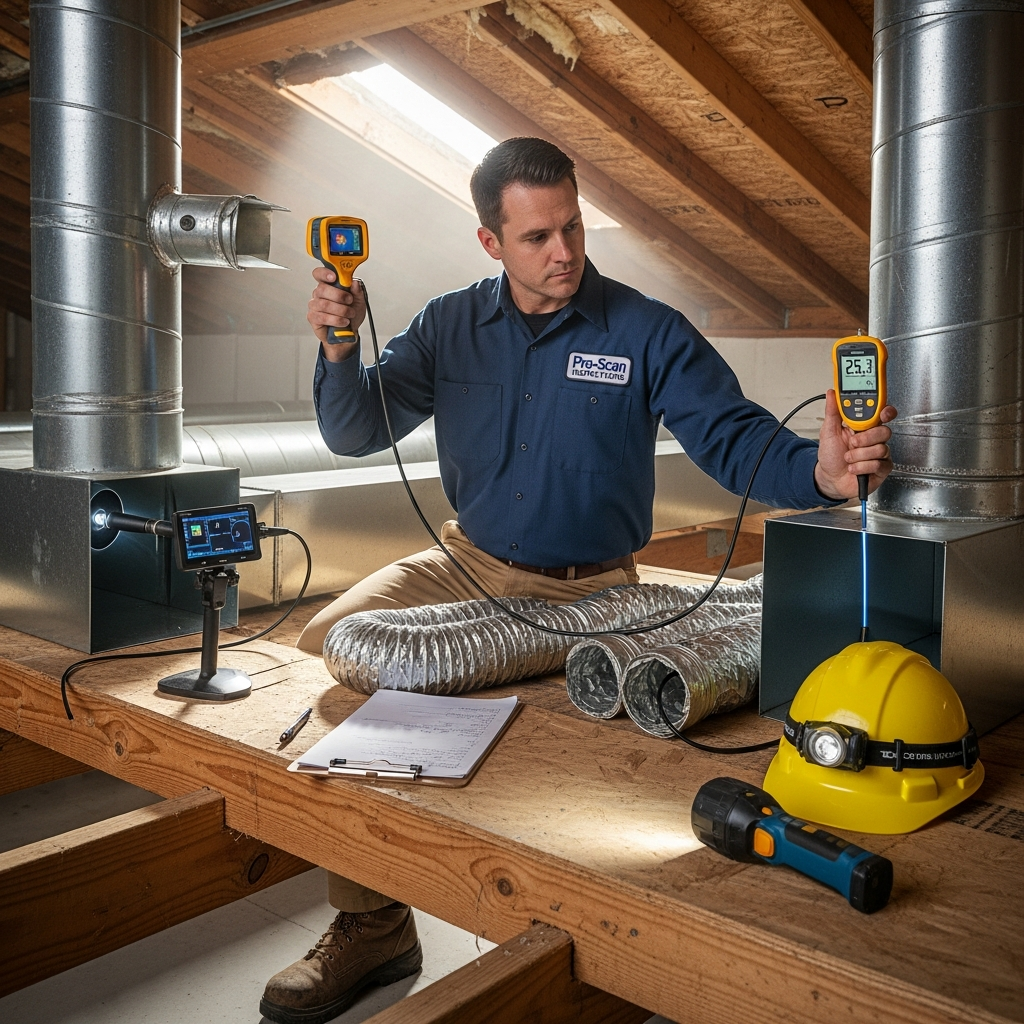
Before any sawdust falls or a single register is removed, a smart air duct replacement project in Los Angeles begins with inspection. Our city’s homes are as varied as our neighborhoods, from low-slope mid-century roofs in the Valley to hillside cottages perched above canyon roads. Each style hides ducts in different places, and each presents its own obstacles. A thorough inspection respects these realities, revealing where air escapes, where airflow slows, and how the system can be reshaped to serve you better. For many homeowners, the first step toward air duct replacement is understanding what the inspection will uncover and how those findings translate into a better, quieter home.
Inspection is not just about pointing to old, dusty ducts and recommending new ones. It is a methodical process designed to map your home’s air highways. In a city where coastal fog meets desert heat, your ducts navigate changing temperatures, complex additions, and years of quick fixes. The right inspection sees past the patchwork to the underlying patterns. With that map in hand, replacement turns from guesswork into a plan you can trust.
What a comprehensive inspection includes
The best inspections begin at the thermostat and end at the farthest grille. A technician will ask you which rooms misbehave, how the system sounds at different times of day, and whether certain seasons make problems worse. Then the hands-on review starts: registers are removed to look for dust streaks that signal leaks, connections are examined for failed tapes, and runs are traced to understand length, bends, and support.
Measurements anchor the process. Static pressure readings tell the inspector how hard your system is working to move air. High static hints at bottlenecks—kinked flex, undersized returns, or choked filters. Low static with poor room performance can indicate leaks that let air escape before it reaches its destination. Temperature readings at supply grilles reveal whether air is losing its condition along the way, a common sign of uninsulated or poorly insulated stretches.
Camera scopes and the truth inside the ducts
In older Los Angeles homes, ducts often wander behind additions or through tight framing. A small camera inserted into strategic points lets an inspector see beyond what a flashlight can catch. Inside, the story becomes clear: crushed inner liners, debris at a sloppy bend, or tape failures that let attic dust pour in. This view helps separate what can be repaired from what truly needs replacement. It also builds trust, because you can see what the inspector sees—an honest picture of what air has been traveling through for years.
Scopes also reveal opportunities. If a long run is half-empty because air takes a shortcut through a nearby leak, a redesigned path with fewer bends can deliver air faster and quieter. In that sense, inspection becomes design. The visual evidence guides choices that are hard to argue with once you witness them on screen.
Leakage testing and verification planning
California’s emphasis on efficient, tight duct systems means testing is part of both diagnosis and sign-off. During inspection, your contractor may perform a preliminary leakage test to estimate how much conditioned air escapes into attics or crawlspaces. This is often done with a calibrated fan and pressure measurements at strategic points. Think of it as blood pressure for your duct system; it tells you how leaky the pathways are and where attention is likely needed.
Planning for verification early smooths the end of the project. The inspector notes where test ports will be needed, how a third-party verifier can access trunks and returns, and whether any chases or panels should be added for future service. By designing the replacement with testing in mind, you avoid last-minute scrambling to reach a hidden junction or install a missing access point when the crew is ready to wrap.
Understanding Los Angeles-specific constraints
Our region’s microclimates and architectural quirks shape inspections. In the Valley, attic temperatures soar, so inspectors look closely at insulation levels and how heat might age new seals over time. In beachside neighborhoods, salt-laden air can corrode metal fittings, so material choices and protective coatings take on extra importance. Hillside homes frequently have segmented crawlspaces and narrow attic paths; here, inspectors assess whether compact fittings, short direct runs, or alternate chases are the smarter route.
Older homes tell their own tales. A craftsperson’s bungalow with a 1920s frame may have duct chases added in the 1960s, then rerouted during a 1980s kitchen remodel. Inspectors trace those generations, marking where routes can be simplified and where returns have been starved for decades. The goal is not just to replace, but to respect the house while helping it work better for the life you live now.
From findings to a clear scope of work
After the attic and crawlspace tours, an inspector turns notes and measurements into a plan. You should expect a straightforward explanation that connects your lived experience—hot back bedrooms, a noisy hallway return, a living room that chills too quickly—to the duct realities discovered. The scope will describe new routes, sizes, insulation levels, and sealing methods, as well as any added returns or filter cabinets that support cleaner air and easier maintenance.
Clarity about sequencing helps daily life during installation. A thoughtful plan explains which rooms will be affected on which days, where crews will enter and exit, and how the system will be restored each evening. This is not just logistics; it is part of a stress-free project. When you understand the path, living through the work becomes simpler.
The role of airflow balancing and commissioning
Inspection lays the foundation for accurate balancing after installation. Balancing means setting dampers and registers so each room receives its fair share of air. Commissioning adds the final verification—measuring static pressure, supply temperatures, and sometimes airflow at grilles to confirm the system behaves as designed. Skipping these steps is one of the most common reasons a new duct system disappoints. Good inspectors plan for them from the start, noting where damper access will be easiest and how test equipment can connect without acrobatics.
For two-story homes, inspectors pay special attention to stairwells and landings, which can become climate zones of their own. A balanced plan prevents hot air from pooling upstairs or cool air from lingering downstairs. The benefit is simple: when the thermostat changes, the whole home responds as a single, agreeable space.
Safety checks you should expect
While ducts carry air, they pass appliances and structural elements that deserve respect. Inspectors verify clearances to water heaters and furnaces, check that combustion air is not compromised by duct placement, and ensure that returns are located to avoid drawing from garages or other pollutant-prone zones. In homes with attached garages, attention to air sealing around penetrations matters; it prevents exhaust fumes from entering living areas through pressure imbalances.
Electrical and fire safety join the list. Ducts should not compress wiring, sit against hot flues, or block attic ventilation pathways. A good inspection treats these as non-negotiables, aligning comfort upgrades with the broader health of the house.
How inspection informs materials and methods
Every home suggests its own best materials. An inspection that finds long, straight runs may lean toward rigid ducts with smooth interiors for minimal friction. Tight, winding paths may favor high-quality insulated flex with careful support. The inspector will also note where higher R-value insulation is warranted, such as attics that see extreme heat. Sealing strategies—mastic, UL-rated tapes, and proper boots—follow logically from what the inspection reveals about existing failures.
Filter access is part of materials planning too. If your current setup makes filters a chore to change, the inspection is the moment to propose a cabinet or location that turns a hassle into a habit. Good materials are only as effective as the maintenance they encourage.
Living with the results of a thoughtful inspection
When inspection leads the project, the benefits are felt immediately and age well. You will hear less as air moves more gracefully. Rooms will agree with each other more often, removing the constant fiddling with the thermostat. Morning air will feel clearer, with less of the dust haze that comes from leaky connections. And when the Santa Ana winds blow, your home will feel like a refuge, thanks to sealed paths and a filter setup that works with the system rather than against it.
Perhaps most importantly, a strong inspection gives you a shared language with your contractor. Instead of vague promises, you have measurements, images, and a plan tied to your home’s specifics. That clarity reduces surprises, smooths verification at the end, and sets expectations you can count on.
Frequently asked questions
How long does a thorough inspection take? The time varies by home size and access, but expect a few hours for a comprehensive review that includes measurements, visual checks in the attic and crawlspace, and discussions about your comfort goals. Rushing this stage often leads to design oversights later.
Do I need to be home during the inspection? Being present is helpful. Your experience—when certain rooms feel off, how noise changes through the day, or which seasons are worst—guides the investigation. A walkthrough together also ensures the inspector notes access points and areas that matter most to you.
What if my ducts look fine from the outside? Many problems hide inside. Kinked liners, internal tears, and failing connections are rarely visible at a glance. Camera scopes and pressure measurements reveal realities that a quick look cannot. That is why a methodical inspection is so valuable.
Will inspection findings affect the project cost? Findings shape scope. While the inspection itself identifies issues and opportunities, the plan it produces determines the work involved. The benefit of a detailed inspection is accuracy—no surprises from missed problems, and no unnecessary work from guesswork.
How does testing at the end relate to inspection at the start? They are bookends. Inspection creates a map and hypotheses about what will work best; post-installation testing confirms those ideas delivered. Planning test access during inspection makes final verification quick and drama-free.
Can inspection address wildfire smoke concerns? Yes. Inspectors note opportunities to seal returns and supplies more completely and recommend filter cabinets that support higher-efficiency filters compatible with your equipment. Together, those steps reduce the infiltration of smoky air through the HVAC pathway.
What if my home has limited attic or crawlspace access? That is common in Los Angeles. Inspectors document constraints and propose routing that respects them—short, direct runs, compact transitions, or alternate chases. The aim is to improve performance without invasive alterations to your home’s character.
Move forward with clarity and confidence
A careful inspection is the compass that points every decision in the right direction. If your home has rooms that refuse to cooperate, noisy returns, or air that never feels quite clean, start with a visit that maps what you cannot see. When you are ready to explore options, schedule an assessment, or learn more about modern approaches, begin with trusted information on Los Angeles air duct replacement and take the first step toward a calmer, cleaner, better-balanced home.