
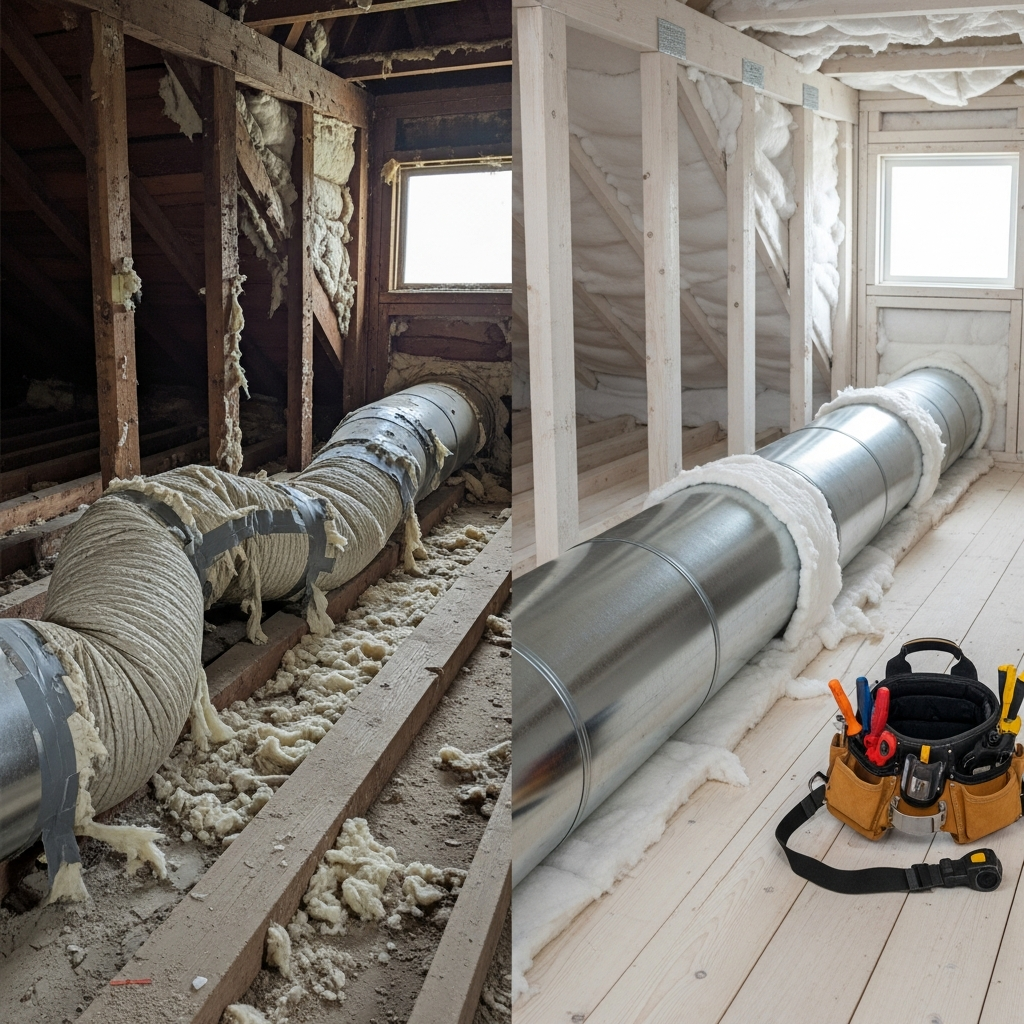
In Los Angeles, every home tells a story about additions, remodels, and the way families actually live. Those stories are often written in the attic and crawlspace, where ductwork twists to meet changes that happened long after the original plans were drawn. When the time comes to replace ducts, local realities—from attic heat to tight hillside construction—shape the challenges you will face. Understanding the most common issues helps you ask better questions, set the right expectations, and end up with a system that finally treats every room fairly. For many Angelenos, researching air duct replacement starts with frustration over hot and cold spots, but it quickly expands into a bigger conversation about design, access, and long-term reliability.
Because Los Angeles spans coastal fog to inland heat, a solution that works in Santa Monica may fail in Woodland Hills if the ducts are not sized and insulated appropriately. Those microclimates combine with our unique building timelines—garage conversions, ADUs, and decades of small tweaks—to create duct systems that feel more improvised than engineered. When you approach replacement with eyes open to the common pitfalls, you give your home the best chance at quiet, even comfort across the seasons.
Undersized returns and the myth of more supply
One of the most frequent problems in older Los Angeles homes is a starved return. Homeowners often focus on supply registers, adding more grills or asking for stronger airflow, but if the return cannot bring enough air back, the system gasps. Undersized returns increase noise, reduce efficiency, and leave rooms uneven. During replacement, adding or enlarging returns—especially in spaces that were enclosed or repurposed over the years—unlocks performance the equipment always had but could not show. The house breathes more naturally, doors stop slamming from pressure differences, and temperatures settle across rooms that used to argue with the thermostat.
Return placement matters too. A return tucked into a corner or sharing space with a closet can recirculate stale or dusty air. When installers rethink location during replacement, they prioritize clear pathways and accessible filter cabinets. The daily benefit is simple: cleaner air that moves calmly, and filters you can change without contortions.
Crushed, kinked, or wandering flex ducts
Flex duct has its place, but like any building material, it must be used with care. In tight attics under low-slope roofs common to Los Angeles, flex often gets pinched as it bends around framing or is laid over trusses where it slowly sags. Each kink or sag becomes a speed bump, raising static pressure and starving distant rooms. During replacement, a good plan shortens runs, uses gentle, supported curves, and transitions to rigid where long straight paths make more sense. The payoff is both audible and tangible: airflow loses its hiss, and far rooms finally receive the air they have been owed for years.
Another flex-related issue is extra length. Installers sometimes leave loops, thinking future adjustments will be easier, but those coils become places where dust settles and velocity drops. Trimming to fit and supporting at correct intervals eliminates these slow zones so air keeps its energy from the plenum to the grille.
Leaky connections, old tapes, and the attic dust problem
Attics in the Valley and foothills can bake in summer, punishing tapes and mastics that were never meant for such swings. Over time, connections loosen and leaks multiply. You can often spot this problem by the dark, dusty halos around vents—air escaping at the joint pulls attic dust and leaves a ring. Replacement is an opportunity to seal with modern UL-rated tapes and mastic, then insulate thoroughly to preserve the temperature of conditioned air. The effect is immediate: cleaner vent faces, less dirt settling on furniture, and a cooler feel that appears faster when the system kicks on.
These leaks are not just a cleanliness issue. They represent comfort and equipment life. When air escapes into attic voids, your system runs longer and hotter, which ages components prematurely. Tight, well-insulated replacement ducts ease that strain, allowing equipment to hum along instead of sprint.
Confusing additions and mismatched equipment
Los Angeles homes evolve. A back porch becomes a den, a garage becomes a studio, and somewhere along the line, a new furnace or air handler gets installed without recalculating duct sizes. The result is often a mismatch: powerful equipment pushing into restrictive, old ducts, or modest equipment asked to feed oversized, leaky lines. During replacement, professionals measure the actual loads of each space and the static pressure the equipment can tolerate. Right-sizing is not glamorous, but it is the backbone of even comfort and quiet operation.
In multi-story homes, mismatches show up as stairwell climates of their own. Hot landings and chilly ground floors point to poorly balanced trunks or long runs that were never given priority. Replacement allows for strategic zoning or, at the very least, thoughtful balancing that gives each floor a fair share without noise.
Access constraints in hillside and mid-century homes
Hillside construction presents a unique challenge. Crawlspaces can be segmented, steep, or barely navigable. Attics may run shallow where the roof hugs the framing. In these conditions, poor routing invites kinks, while rushed repairs over the years create a patchwork of materials. Replacement must begin with a realistic access plan: careful mapping, temporary panels where finishes allow, and a sequence that prevents installers from painting themselves into a corner. The best crews know when to switch to compact fittings, when to reroute through a closet chase, and how to keep ducts supported despite gravity and geometry.
Mid-century homes, abundant from Westchester to the Valley, often feature low-slope roofs with little attic volume. Here, ducts live in tight conditions that amplify heat. Replacement with higher R-value insulation and short, direct paths is crucial. Even small design changes—moving a junction a few feet to avoid a triple-bend—pay dividends in lower noise and quicker comfort.
Moisture, odors, and what your nose already knows
Musty or sharp metallic odors during system operation frequently trace back to ducts. Crawlspace humidity after winter rains, combined with dusty returns, creates a scent that lingers. Replacement helps by removing absorbent old materials, sealing new connections, and rethinking return placement so fresh air circulates better. While ducts are not deodorizers, they do set the stage for clean, neutral air when designed and maintained properly.
Odors also reveal hidden leaks. If you catch whiffs of attic insulation or notice that certain rooms smell like the adjacent garage, the system is likely pulling air from unintended places. New, sealed ducts cut off those pathways, so the only air moving into your rooms is the air meant to be there.
Code, testing, and the California reality
California’s energy code and verification processes expect duct systems to meet leakage limits and performance standards. In practice, that often means coordination with a third-party tester after replacement. Homeowners sometimes encounter delays or repeat visits when test ports were not planned, access is tight, or balancing was treated as an afterthought. A smooth project anticipates these steps, positioning ducts so test equipment can connect easily, providing room near the air handler for manometer taps, and confirming that leakage and static pressure targets are realistic for the home’s layout.
Local experience matters, especially with homes that have undergone unpermitted changes decades earlier. A seasoned crew recognizes the signs and adjusts design so that verification goes smoothly—no last-minute scrambling to find a hidden junction or a return box buried under shelving.
Expectations, communication, and living through the work
Even a well-run replacement is a dance through your home. Early starts beat attic heat, protective coverings shield floors, and each day closes with spaces left tidy. The common issue here is not the work itself, but misaligned expectations. Clear conversations about timelines, quiet hours, and how rooms will function each evening keep stress low. The best measure of a good team is how easily you and your family continue life around the project, not just the technical beauty hidden in the attic.
Once the system is on, listen to your home. The soundscape should soften. Air should arrive without a rush, and rooms should agree with each other more often than not. If something feels off, say so quickly. Small adjustments to dampers or register orientation in the first week can fine-tune a system you will enjoy for years.
Frequently asked questions
Why do returns cause so many problems? Returns are the lungs of your HVAC. When they are undersized or poorly located, the system strains, noise increases, and rooms get starved of supply air. Right-sizing and strategic placement during replacement restore balance and let your equipment perform as designed.
How can I tell if flex ducts are hurting performance? Signs include hissing at registers, rooms that never match setpoint, and visible sags or sharp bends in the attic. A camera inspection and static pressure measurements confirm whether flex routing or condition is to blame. Replacement with supported, gently curved runs removes those bottlenecks.
Are leaky ducts really that common? Yes. Temperature extremes in Los Angeles attics break down old tapes and connections, and small openings multiply over time. Dusty rings at grilles, streaks on insulation, and inconsistent comfort point to leakage. Sealed, mastic-joined replacement ducts eliminate these losses and keep air where it belongs.
What about homes with unpermitted additions? Experienced installers have seen it all. They will evaluate the space’s load, provide returns and supplies suited to current use, and create access points for future service. Replacement is often the first time the duct system truly acknowledges how you live in the home today.
Will replacement help with wildfire smoke? Sealed ducts reduce the unfiltered air that can slip in from attics and crawlspaces. With an appropriate filter cabinet and filters compatible with your equipment, your home can maintain cleaner air during smoky days, though doors and windows should also remain closed when outdoor air quality is poor.
How long does testing take after installation? Verification typically occurs the same day or shortly after installation wraps. The tester will measure leakage, static pressure, and airflow at key points. Planning for easy access to trunks and returns helps keep this stage quick and uneventful.
What should I expect to feel immediately after replacement? Most homeowners notice quieter operation, steadier temperatures, and a cleaner scent in the air. Doors close more gently due to improved pressure balance, and once-neglected rooms become comfortable parts of daily life again.
Ready to solve the problems you can feel?
If your home has been hinting at duct troubles—hissing vents, stubborn hot rooms, or air that never feels quite clean—there is a path to better comfort. A well-planned replacement addresses design, sealing, and access so performance improves in ways you feel every day. When you are ready to explore solutions or schedule an in-home assessment, start with a local resource for air duct replacement in Los Angeles and take the first step toward a quieter, cleaner, more balanced home.