
When neighbors across Los Angeles ask what goes into the investment behind air duct repair, they’re really asking how to make good decisions for their homes without guesswork. As someone who has spent years in LA attics—from the baking summer heat of Sherman Oaks to the cool marine layers in Santa Monica—I can say that understanding the full picture starts with the story your home tells: where the air slows down, where it escapes, and what it takes to bring balance back. This guide explains the major factors that shape an estimate in our city, the steps that add real value, and how to weigh timing and scope. If you’ve been hunting for clear guidance and reliable air duct repair near you, you’ll find that clarity begins with a careful look at what your home actually needs.
Los Angeles homes span a century of styles and systems. Some have original metal trunks from the mid-century era, straight and strong but sometimes gapped at seams. Others rely on flexible duct runs woven through tight attics, quick to route but easy to constrict with a bend too sharp. There are hillside properties where access alone is its own challenge, and downtown lofts where the aesthetic calls for visible ductwork that must perform and look pristine. Each of these conditions informs the scope of work, and therefore the overall investment. So, rather than chasing a single number, wise planning starts with identifying the true constraints and opportunities inside your particular home.
The role of access and architecture
It might sound mundane, but access often shapes the project. In older bungalows, attics can be low and tight, which limits how tools and materials move and sometimes stretches timelines. In newer builds with thoughtful mechanical chases, inspection points can be generous and straightforward. Hillside homes add another dimension with split-level framing, where runs traverse multiple planes and require careful routing to preserve smooth airflow. Multi-story townhomes may concentrate returns on the lower level, creating imbalances upstairs that call for strategic adjustments. The takeaway is simple: the more direct the access and the more cooperative the framing, the easier it is to address issues with minimal disruption.
Condition of existing ductwork
Before considering replacements or reroutes, a thorough assessment shows what can be saved and what should be reworked. In many Los Angeles attics, the core issues are dried mastic at connections, poorly supported spans, kinks in flexible sections, and uninsulated or under-insulated runs. If the underlying materials remain strong, targeted sealing and support can restore excellent performance. Where metal ducts have shifted or returns draw from unintended cavities, reinforcement and sealing deliver outsized gains. Conversely, when ducts are undersized for the home or strangled by too many tight turns, a more comprehensive redesign may be appropriate. The point is not to do more—it’s to do what matters most.
Scope decisions that pay off
There are moments when small, strategic steps make a big difference. Sealing the return side to stop unfiltered air from entering boosts indoor air quality instantly. Correcting a major kink in a branch run can restore a quiet, even flow to a bedroom that’s always lagged behind. Upgrading insulation jackets on attic runs exposed to summer heat keeps supply air closer to the target temperature, which steadies comfort and reduces system strain. These targeted moves usually deliver the best return on your home comfort, and they set the foundation for any future upgrades you may be considering.
The value of diagnostics
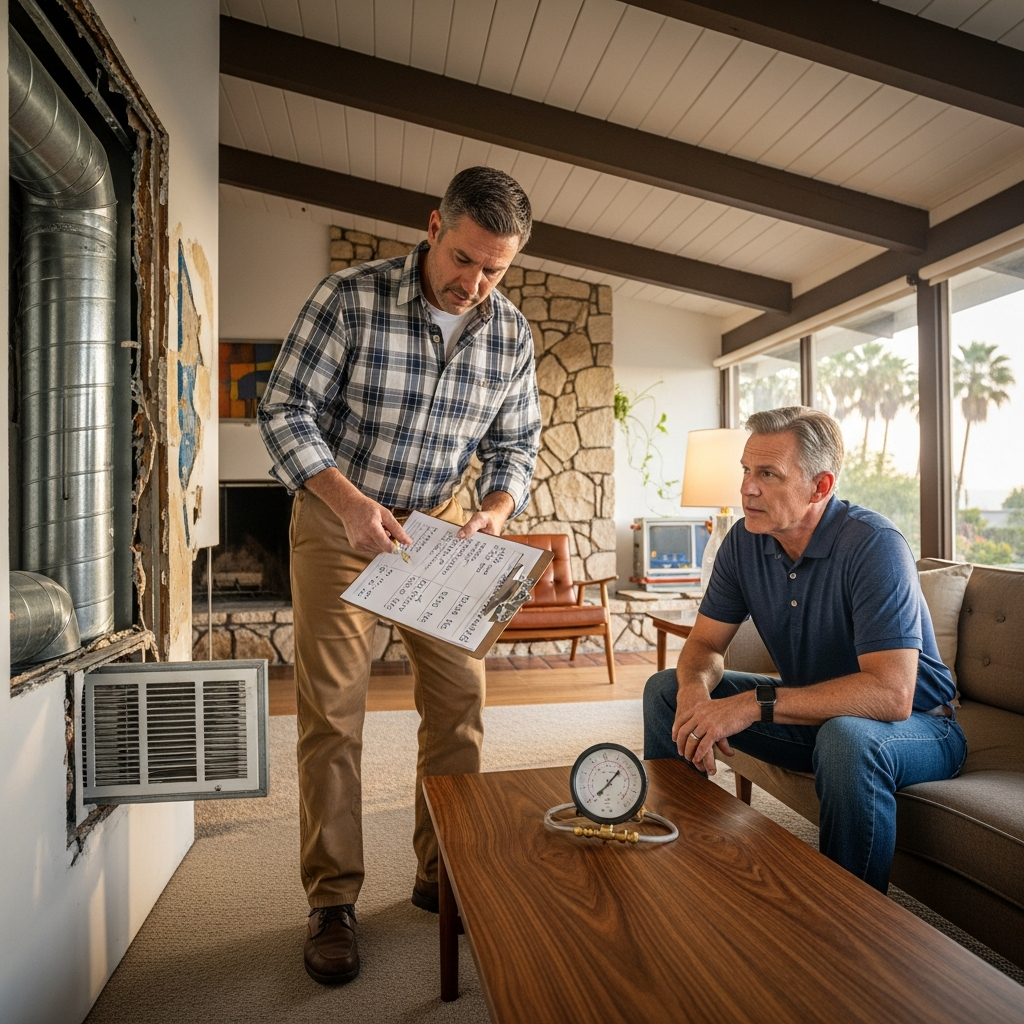
A conscientious contractor treats diagnostics as the compass that guides every decision. Static pressure readings reveal whether your blower is straining. Thermal imaging pinpoints where cooled or heated air is lost along a route. Smoke puffers illuminate tiny leaks you might never otherwise find. In Los Angeles, where the attic environment can swing from cool to scorching in a single day, a good diagnostic snapshot ensures that fixes directly address what the data shows. It’s tempting to guess at solutions, but real measurements cut through uncertainty and let you invest where it counts.
Materials that stand up to LA conditions
In our region, materials must endure heat, dryness, and occasional bursts of wind-driven dust. Quality mastic, carefully applied and reinforced where gaps are wide, remains the gold standard for sealing. For flexible ducts, we look for strong inner cores, robust wire helices, and insulation that maintains its loft rather than collapsing over time. With metal ducts, we secure and seal longitudinal seams and joints with methods that handle attic movement without cracking. And we pay attention to register boots and transitions, where subtle leaks and rattles frequently originate. Choosing the right materials isn’t about brand loyalty; it’s about consistent performance under Los Angeles skies.
Balancing comfort and air quality
Many homeowners think first about temperature, but the air itself—its stillness, clarity, and smell—matters just as much. Tight ducts support filtration, which in turn reduces dust on surfaces and helps those sensitive to seasonal irritants. Sealed returns prevent attic odors from hitching a ride into living spaces. Even sound plays a role: smoother routes create quieter, more pleasant airflow. When you evaluate repair options, consider these sensory outcomes alongside the basics, because they add up to a home that feels truly restful.
Timing your project around the LA calendar
If you’ve lived here for a while, you know that summer arrives early in certain neighborhoods and lingers late in others. Planning a repair ahead of the hottest weeks provides breathing room for everyone involved, and you’ll notice the benefits immediately when the thermostat climbs. Likewise, early fall can be a smart window, when the memory of summer’s behavior is still fresh and the system can be tuned to face cooler evenings without surprises. Good timing smooths the process and helps you feel the results when you need them most.
Case snapshots from real homes
Consider a Valley home where a family room never seemed to catch up to the rest of the house. Diagnostics revealed a kinked branch stuffed between rafters to save space. By rerouting that section with a generous radius and proper support, the room’s temperature settled into line and the system ran more calmly. In a coastal duplex, salt air had encouraged early hardware corrosion around screws at a plenum collar. Cleaning, resealing, and reinforcing those points removed a faint humming sound and tightened performance. A hillside property presented a different challenge: a return plenum with gaps that pulled in musty crawlspace air. The fix transformed how the home smelled after a day with windows closed.
What influences the estimate
In plain terms, the investment reflects three big elements: access, condition, and scope. Access guides how easily technicians can move and work. Condition determines whether targeted sealing and support will do the job or if redesign is wiser. Scope sets the number of joints, supports, and routes to address. Add the quality of materials and the time dedicated to diagnostics, and you have a clear picture of why one project may be simpler while another asks for more attention. The best plans are transparent about each of these points so you can decide what aligns with your goals for comfort and indoor air.
The middle-mile: why partial fixes sometimes disappoint
In pursuit of speed, it can be tempting to address only the most visible flaw—a loose boot here, a noisy elbow there. But air systems are interconnected. A beautifully sealed collar won’t overcome a strangled run downstream, and perfectly supported flex won’t help if return air is bypassing the filter. When you review options, look for a plan that treats your ductwork as a complete pathway, from return grille to supply register. That holistic view is what turns incremental work into a transformation you can feel.
As you weigh options, remember that the right partner will explain each recommendation in clear language and welcome your questions. If you want a quick resource for understanding the process, explore local expertise focused on practical, effective air duct repair that respects the quirks of LA homes and the pace of LA life.
Longevity and maintenance
A well-executed repair sets you up for easier maintenance. Annual visual checks to confirm supports are snug, insulation jackets are intact, and seals remain sound can catch small shifts before they grow. Changes in how rooms feel, subtle new sounds, or more frequent filter changes are early clues to investigate. By treating your ductwork as a part of the home that deserves a moment of attention each year, you protect both comfort and equipment over the long run.
Expectations during a service visit
Clarity and care define a good visit. Technicians should walk the home with you, ask how it behaves at different times of day, and lay out a plan for accessing attic or crawl spaces with minimal disruption. Photos of findings help you see what they see. Protective coverings and tidy work habits keep your living space comfortable throughout. At the end, you should understand not just what was done, but why it mattered for the way your home breathes and cools.
Environmental realities unique to Los Angeles
Our city’s weather and terrain shape the demands on your system. Prolonged heat loads in attics require insulation that doesn’t slump. Periodic winds drive dust that tests seals and filter fitment. In certain seasons, regional smoke can challenge indoor air quality, making tight ductwork even more essential. The urban fabric itself—traffic, construction, and density—adds a layer of fine particulates that a well-sealed, well-filtered system keeps at bay. Any conversation about repairs in LA should acknowledge these conditions and plan accordingly.
Signs you’re ready to take action
When a bedroom lags every afternoon, when dusting becomes a more frequent chore, or when the gentle hum of airflow shifts into a sharper note, your ducts are signaling. If new additions or remodels have changed room dynamics, or if a summer pushed your system harder than expected, consider a diagnostic visit. The earlier you address imbalances, the easier they are to correct without larger interventions later.
FAQ: Answers for Los Angeles homeowners
What are the biggest variables that shape an estimate? Access to the ductwork, the condition of existing runs and connections, and the scope of sealing, support, or rerouting typically define the project. Diagnostics and material quality complete the picture.
Can targeted repairs deliver a big improvement? Absolutely. Sealing returns, correcting major kinks, and reinforcing weak connections often change the feel of a home dramatically, with steadier temperatures and cleaner indoor air.
Will duct repairs reduce background noise? Smoother airflow and tighter connections quiet the system. Many homeowners notice the shift from a faint rattle to a calm, steady whisper once problem areas are addressed.
Do Los Angeles homes need special materials? They need materials that handle heat and dryness, plus installation methods that account for attic movement and seasonal dust. Quality mastic, proper supports, and robust insulation are core components.
How disruptive is the process? With careful planning, most work happens in attics or crawlspaces, and the living area remains tidy. Crews should protect floors and surfaces and communicate clearly about timing and access.
Will repairs help during wildfire season? Yes. Tightening ductwork and ensuring good return sealing helps your filtration perform at its best, reducing the amount of outdoor particulates that can slip into the system.
What if I plan to remodel soon? Address urgent issues now to stabilize comfort, and coordinate with your remodeling plans so the final layout supports balanced airflow and adequate return.
Ready when you are
If your Los Angeles home has been nudging you with subtle signals—uneven rooms, longer run times, a shift in the system’s tone—it may be time to bring everything back into balance. A focused visit turns guesswork into understanding, and careful work turns understanding into comfort you can feel. When you’re ready to move forward, lean on local experts who make thoughtful air duct repair feel effortless, so your home breathes easy through the seasons ahead.