
What Really Shapes Air Duct Replacement Cost in Los Angeles
When homeowners in Los Angeles ask about air duct replacement cost, they are usually seeking clarity in a landscape full of variables. As a local who has walked attics from Highland Park to the South Bay and crawled under bungalows in Mid City and Mar Vista, I can tell you that no two homes are identical, and the path to a healthy, efficient duct system depends on a mosaic of factors. Early in any conversation, I encourage clients to think in terms of value, comfort, health, and compliance rather than a single number. The city’s diverse building stock, microclimates, and code requirements all shape the investment. If you are starting your research and want a grounded, real-world perspective, consider how air duct replacement in Los Angeles fits into your home’s age, layout, and daily lifestyle before fixating on any single figure.
Across Los Angeles County, you will find Craftsman cottages with labyrinthine crawlspaces, hillside moderns with tight mechanical closets, and mid-century ranches that were retrofitted with central air decades after they were built. Each configuration adds nuance to labor, materials, and design. Then there’s climate to consider: summer heat soaring in the Valley, salty breezes near the coast, and autumns punctuated by wildfire smoke. Add Title 24 energy standards, LADBS inspection practices, and the reality of high attic temperatures, and it becomes clear why an experienced eye matters more than an online calculator.
Home Age and Architecture: Why It Matters
Los Angeles homes tell their stories through framing and finishes. In 1920s Spanish-style homes, ducts were often added much later, routed through tight chases or shallow attics. Many original return paths are undersized, even when the supply runs look acceptable. In postwar tract homes, the attic may be spacious but filled with recessed lighting and added insulation that limit maneuverability. Contemporary renovations introduce their own puzzles, like open ceilings and exposed beams that demand careful routing to maintain aesthetics while achieving proper airflow.
Older homes also bring legacy materials into play. Duct board sections may have delaminated with age, or older flexible ducts can be kinked, crushed, or poorly supported. I have also seen taped seams on metal trunks that long ago lost their seal, leaving conditioned air pouring into the attic. Architecture influences not just how ducts can be laid out but also which materials will perform best for decades to come.
Access, Attics, and Crawlspaces
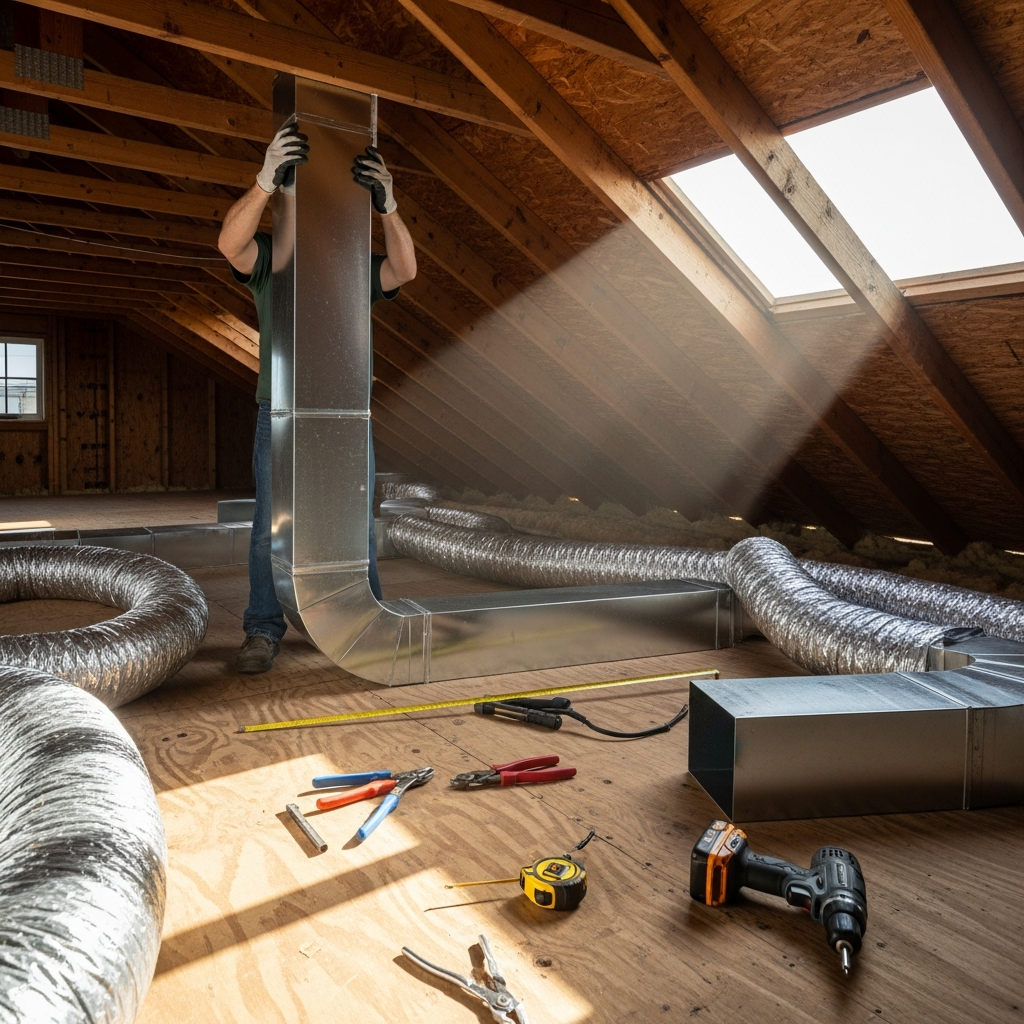
Nothing influences labor on a duct project more than access. Low-clearance attics common in neighborhoods like Eagle Rock or El Sereno require crawling rather than walking. In crawlspaces in Culver City or Jefferson Park, the distance from the ground to the subfloor can dictate the tooling and crew size needed to move materials safely. Access points also drive setup time: a clean, direct path for removal of old ductwork and delivery of new runs minimizes disruption and reduces the chance of cosmetic damage inside the home.
Ventilation and temperature in the workspace matter too. Attics in the San Fernando Valley can reach extreme heat by late morning, which affects daily scheduling and pacing. Crews often start early to complete the hottest tasks first, and proper safety planning ensures consistent workmanship throughout the day.
Materials and Performance Choices
When people ask what drives the total project investment, material selection is high on the list. Flexible ducts, rigid metal ducts, and duct board all have roles depending on home design, acoustical goals, and long-term serviceability. Metal trunks with well-designed takeoffs can improve static pressure and balance. High-quality insulation jackets reduce conductive losses in attics, while inner liners and supports affect airflow and noise. Sealants and tapes used at joints and boots are far from trivial—they determine whether your air is actually delivered to rooms or lost to unconditioned spaces.
Performance is not just about air coming out of a register; it is about the system’s ability to breathe. That means returns sized for the blower, supply runs sized for room loads, and elbows and wyes that minimize turbulence. Mid-project design tweaks are common when a contractor discovers structural elements that were not visible during the initial walkthrough. The best crews adapt layout on the fly while maintaining the pressure targets discussed during planning. This is also where a mid-project check-in helps, especially if you are adding zoning, upgrading filtration, or coordinating with other trades. If you are exploring options, having a professional evaluate your air duct replacement midway through planning can align materials and design with your comfort goals before anything is installed.
Scope: Whole-House vs. Partial Replacement
Some homeowners only need to address a problem wing of the house, like a sunroom or a finished garage conversion that never quite reached the set temperature. In other cases, the existing trunks are serviceable, but the branches and boots are not. A thoughtful evaluation distinguishes between what is failing and what can be preserved without compromising performance. Whole-house replacement is common when there are systemic issues: undersized returns, pervasive leakage, or poor routing that causes chronic comfort imbalance. Partial projects are suitable when the core of the network is strong and changes can be surgically targeted to yield measurable gains.
Scope also encompasses accessories and integrations. If you plan to upgrade to a higher-efficiency blower, adopt advanced filtration, or add purification components, those decisions influence duct sizing and layout. It is better to make these choices upfront so the duct system is tailored to your mechanical equipment, not the other way around.
Code, Permits, and Inspections in Los Angeles
Air duct replacement in Los Angeles is more than a mechanical swap; it is a building systems project that touches energy and indoor air quality codes. Title 24 sets performance expectations, and permits are often required, particularly if you are modifying the system layout, moving returns, or working in multifamily buildings. LADBS inspectors look for secure attachments, proper insulation, air sealing, support spacing, and compliance documentation like duct leakage testing results. Working with a contractor who is comfortable with local permit processes keeps your project on schedule and ensures that the finished system stands up to both inspection and daily living.
Inspection readiness is built into the job from the start. That means installing supports at correct intervals, sealing longitudinal seams and takeoffs properly, and protecting ducts from compression under insulation. It also means documenting the work clearly with diagrams and test results so any questions at final inspection are easy to answer.
Scheduling, Logistics, and Neighbor Realities
Los Angeles has its own rhythm. Parking restrictions on narrow streets in Venice or Echo Park, HOA rules in condo communities near Koreatown, and delivery windows in the Westside can affect day-to-day logistics. Good planning includes staging materials to avoid neighborhood disruptions, protecting floors and hallways, and coordinating with occupants who work from home. Clear communication about daily start times, noise levels, and how rooms will be accessed reduces stress and keeps the project moving smoothly.
For homeowners balancing renovations with school drop-offs and work calls, a contractor who respects your schedule and keeps an honest timeline is invaluable. Duct projects often involve periods of no airflow when the old system is being removed; thoughtful teams minimize those windows and plan temporary comfort strategies during hot afternoons.
What a Clear, Professional Estimate Should Include
A reliable estimate for air duct replacement in Los Angeles reads like a story of your home. It outlines the current conditions observed during inspection, the design intent for supply and return sizing, the materials proposed, and the sequence of work. It specifies insulation ratings, sealing methods, and support practices. It explains whether old ducts will be removed, how access paths will be protected, and how registers will be labeled and balanced. It also describes testing—like duct leakage measurements—so you understand how performance will be validated.
Perhaps most importantly, a transparent proposal separates must-haves from nice-to-haves. If you are weighing upgrades like improved filtration or additional returns, the proposal should clarify how each choice will affect comfort, noise, and energy use, so you can make informed decisions aligned with your goals.
Common Pitfalls to Avoid
One frequent mistake is replacing like-for-like without reassessing design. Many LA homes inherited duct systems from earlier remodels that were never optimized. Simply swapping materials keeps old imbalances intact. Another pitfall is underestimating the importance of returns; undersized or poorly located returns starve the blower, increase noise, and reduce comfort. Homeowners also underestimate the impact of attic insulation on duct performance. Even a well-sealed system can lose efficiency if it runs through a heat-soaked attic with insufficient insulation or ventilation.
Finally, do not skip post-install balancing. Adjusting dampers and verifying room airflow turns a decent job into an outstanding one. Comfort is achieved when design intent meets final tuning.
Project Timeline: What to Expect
After an initial walkthrough that includes photos and measurements, a designer or lead technician maps the duct layout with attention to joists, chases, and equipment placement. Materials are ordered, labeled, and staged. On day one, the crew protects floors, sets up containment where needed, and begins removing old ducts. New trunks and branches are dry-fitted before being permanently supported and sealed. Boots are squared to drywall, and registers are aligned with room finishes.
During the build, the crew continually checks static pressure and confirms that planned sizes match field conditions. After everything is sealed and insulated, testing verifies leakage rates and airflow. The final phase includes balancing, thermostat verification, and a homeowner walk-through that reviews new register labeling, damper positions, and any maintenance notes. Documentation is provided for permits and future service.
Aftercare, Longevity, and Warranties
A duct system is only as good as its first year of operation and the decades that follow. Homeowners should understand how to keep filter changes current and when to request a tune-up. If you notice a room drifting off target temperatures or hear new noise, a prompt check can prevent small issues from becoming systemic. Crews that photograph the finished network and label dampers help you or any future technician understand the design intent, making future adjustments straightforward.
Warranty terms vary by material and workmanship policies, but look for clear language regarding support, fastener spacing, and sealants. A well-built system should remain tight and quiet, even after seasons of attic expansion and contraction.
Signs You May Need Replacement Instead of Repair
Consider full or partial replacement when multiple rooms are chronically uncomfortable, when returns are audibly whistling, or when dust accumulates quickly despite good filtration. Evidence of rodents, pervasive odors from the attic or crawlspace, or visible kinks and crushed sections also point to systemic issues. For many Los Angeles homeowners, the wake-up call comes during wildfire season when smoke finds its way into the home through gaps; new, sealed ducts with appropriate filtration make a noticeable difference in air quality.
Another indicator is short cycling or high blower noise that persists even after the HVAC unit has been serviced. Ductwork is often the silent partner in your comfort, and when it lacks the capacity to match your equipment, symptoms show up as noise, drafts, or hot-cold swings.
Choosing the Right Local Professional
Look for teams that ask about how you use your space day to day. If you entertain often, if bedrooms are over a garage, or if you have a home studio with sound needs, these details inform layout decisions. In Los Angeles, knowledge of local framing styles, retrofits, and neighborhood quirks is not a luxury; it is critical to doing the job once and doing it right. A professional who invites you to see photos of past work in similar homes and who is transparent about permitting sets you up for a smooth project.
During consultations, ask how they verify sizing. You want to hear about load considerations, static pressure targets, and balancing strategies. The right team will speak in specifics: support spacing, sealing methods, and inspection readiness—not vague generalities.
Breathing Better in a Changing Climate
Los Angeles summers are hotter than they used to be, and wildfire smoke seasons have grown more common. A well-designed duct system helps your home adapt. Proper returns prevent negative pressure that draws in hot, smoky air through gaps. High-integrity sealing ensures that all conditioned air reaches you, not the attic. When paired with appropriate filtration, new ducts can noticeably reduce allergy symptoms and odors, which many families appreciate during those high-pollen spring weeks.
Comfort is not just a thermostat number; it is the calm of consistent, quiet airflow. That is the promise of a duct system tuned to your home and lifestyle.
FAQ
How long does air duct replacement typically take in Los Angeles homes?
Most single-family homes can be completed within a few working days once materials are staged, though schedules vary with attic access, design complexity, and inspection timing. A thorough team will build time for balancing and testing, not just installation, so the finished system performs as intended.
Will I need to leave my home during the project?
You can usually remain at home, but some rooms may be inaccessible during portions of the day. Crews coordinate with you about noise, temporary temperature changes, and access, ensuring you can plan work calls or quiet time accordingly.
Do permits apply to duct replacement in Los Angeles?
Permits are commonly required, especially when modifying layout or working in multifamily buildings. Experienced contractors manage LADBS paperwork, schedule inspections, and provide the performance documentation inspectors expect to see.
How do I know if my ducts are undersized?
Signs include noticeable noise at returns, rooms that never reach the set temperature, and a system that seems to work harder than it should. A professional evaluation will examine static pressure, register velocities, and layout to determine whether sizing is at fault.
Will new ducts improve indoor air quality?
Yes, when designed with proper sealing, returns, and filtration. Replacing leaky or contaminated ducts reduces infiltration from attics and crawlspaces and helps filtration capture more particulates, an important benefit during wildfire season.
What materials are best for quiet operation?
Quiet systems balance duct sizing, gentle fittings, and well-supported flexible runs or lined metal where appropriate. Eliminating kinks, sharp turns, and loose liners reduces turbulence and noise.
Do I need to replace registers and grilles too?
Not always, but many homes benefit from updated registers that are properly sized and aligned with the new layout. This is often when whistling and drafts are solved for good.
How will the crew protect my home?
Expect floor protection, careful handling of old materials, and planned pathways for moving ducts in and out. Good crews communicate daily about areas of work and cleanup, leaving the space tidy each evening.
What happens after installation?
The team will test for leakage, balance room airflow, review thermostat operation, and walk you through damper positions and filter schedules. Documentation provided at the end helps with future maintenance and, if needed, resale questions.
If you are weighing your options and want a project that respects your home, your schedule, and our city’s codes, now is a great moment to talk with a local expert. Reach out to discuss a plan tailored to your space, and schedule your air duct replacement with a team that treats comfort and craftsmanship as nonnegotiables.