
Attic Insulation Quotes in Los Angeles: Why the Number on Paper Tells Only Half the Story
Most homeowners shopping for attic insulation in Los Angeles fixate on the bottom line. That instinct is understandable, but a quote is only as useful as the inspection behind it. A low number from a contractor who never set foot in your attic is not a bargain, it is a guess. This guide breaks down every factor that shapes a legitimate estimate, so you can compare bids with confidence and get the result your home actually needs.
Why Los Angeles Attics Are Not All the Same
Climate Zones Within a Single County
Los Angeles County spans multiple climate zones. A home in the San Fernando Valley bakes under triple-digit summer heat, while a property in Camarillo or the Conejo Valley deals with marine layer, humidity swings, and cooler nights. Those differences matter because California’s Title 24 energy code sets different minimum R-values depending on your climate zone. A contractor quoting a flat rate without knowing your zone may be sizing the job to the wrong standard entirely.
Attic Configuration Varies Enormously
Tract homes built in the 1960s and 1970s across the greater Los Angeles area often have shallow, low-pitch attics with cramped knee walls and minimal clearance. Newer construction in Ventura County may have open cathedral sections or complex hip roofs with multiple valleys. Each configuration changes how much labor is involved, how accessible the far corners are, and whether specialty equipment is needed to reach every square foot. Square footage alone does not capture these realities.
Existing Conditions That Change Everything
Before any new insulation goes in, a thorough contractor inspects what is already there. Old fiberglass batts that have settled, compressed, or absorbed moisture deliver a fraction of their rated R-value. Cellulose that has shifted toward the eaves leaves the center of the attic floor exposed. Rodent activity, pest debris, or prior water intrusion can require full removal before new material is installed. If an estimate does not account for these conditions, the scope is incomplete and the number is unreliable.
The Six Factors That Drive Attic Insulation Pricing
1. Square Footage and Depth Required
The most straightforward driver is how much area needs to be covered and to what depth. California’s Title 24 requirements for most Los Angeles and Ventura County climate zones call for R-38 or higher in attic assemblies, which translates to a specific installed depth depending on the material chosen. More depth means more material and more time. A proper estimate measures the actual attic floor area, accounts for obstructions like HVAC equipment and ductwork, and calculates the volume of material needed to hit the required R-value.
2. Insulation Material Selection
Three materials dominate residential attic insulation in Southern California, and each carries a different installed cost and performance profile.
- Blown-in fiberglass: Lightweight, non-combustible, and resistant to moisture absorption. It settles minimally over time and works well in the dry Los Angeles climate.
- Blown-in cellulose: Made from recycled paper treated with borate fire retardant. It fills irregular cavities well and has a higher density that can slow air movement, though it is more sensitive to moisture than fiberglass.
- Spray foam (open- or closed-cell): Applied to the underside of roof decking in unvented attic assemblies or used to seal specific penetrations. It carries the highest installed cost but doubles as an air barrier, which is particularly valuable in older Los Angeles homes with many penetrations.
A contractor who offers only one material without explaining the trade-offs may not be matching the solution to your specific attic and climate zone.
3. Air Sealing, The Step Most Quotes Skip
This is where many low bids fall apart. Insulation slows heat transfer by trapping still air. But if conditioned air is escaping through gaps around recessed lights, plumbing chases, top plates, and attic hatches, the insulation above those gaps is doing very little. Air sealing those penetrations before installation is a separate labor step that adds time and material cost, but skipping it can significantly reduce the real-world energy performance of even a deep, correctly specified insulation layer.
LA Attic Pro includes air sealing assessment in every attic inspection. When you request an attic insulation estimate, the technician documents penetrations and discusses whether sealing is recommended before installation begins.
4. Removal of Existing Material
If your current insulation is contaminated, damaged, or simply inadequate to serve as a base layer, it needs to come out before new material goes in. Removal involves a truck-mounted vacuum system, labor to bag and haul debris, and disposal fees. It adds meaningful cost to the project, but it is often the difference between a job that performs well and one that traps old problems under new material.
A thorough estimate line-items removal separately so you can see exactly what you are paying for. If a quote bundles everything into a single number with no breakdown, ask for the detail.
5. Attic Access and Worksite Conditions
A standard pull-down stair with good clearance is straightforward. A small scuttle hole in a closet ceiling, a low-slope attic with less than 30 inches of clearance, or a space shared with large HVAC equipment all slow the work. Contractors factor access difficulty into labor time. If an estimator never goes up into the attic, they cannot accurately price the access challenge.
6. Ductwork Condition in the Attic
Many Los Angeles homes run HVAC ducts through the attic. Leaky or uninsulated ducts in an unconditioned attic space can offset much of the benefit of new insulation above them. A complete estimate notes duct condition and whether duct sealing or replacement should be addressed at the same time. LA Attic Pro also offers air duct replacement and repair services, so the attic can be addressed as a system rather than in disconnected pieces.
What a Legitimate Estimate Should Include
Not every quote is created equal. Here is a comparison of what separates a thorough estimate from a surface-level bid.
| Element | Thorough Estimate | Incomplete Bid |
|---|---|---|
| Attic inspection | In-person, with photos | Phone or online only |
| Existing conditions noted | Yes, material type, depth, damage | Assumed or ignored |
| R-value specified | Target R-value stated, tied to climate zone | Vague or missing |
| Material identified | Type and brand specified | Generic “insulation” |
| Air sealing addressed | Assessed and quoted separately if needed | Not mentioned |
| Removal line item | Itemized if applicable | Bundled or omitted |
| Square footage measured | Measured on-site | Estimated from permit records |
| Ductwork noted | Condition documented | Not evaluated |
The Camarillo and Ventura County Angle: Local Conditions Matter
Marine Influence on Material Choice
Camarillo and the surrounding Ventura County communities sit close enough to the coast that morning fog and humidity cycles are a real consideration. Cellulose, while excellent in many applications, can be more susceptible to moisture-related settling in consistently damp environments. Fiberglass blown-in or a hybrid approach with foam air sealing at penetrations is often a better long-term fit for homes in these communities. A contractor familiar with the Camarillo micro-climate will factor this into their recommendation rather than defaulting to whatever material they happen to stock.
Older Housing Stock in Ventura County
Many homes in the Camarillo, Thousand Oaks, and Simi Valley corridors were built in the 1970s and 1980s. That era’s insulation standards were significantly lower than current Title 24 requirements. It is common for these attics to have R-11 or R-19 batts that were once code-compliant but now fall well short. When a contractor inspects one of these homes, they should be documenting the existing depth, calculating the gap to current standards, and specifying how much additional material is needed to bring the attic up to par.
Rodent Activity Complicates the Scope
Ventura County’s mix of open space and residential development means rodent intrusion is a frequent finding during attic inspections. Rats and mice nest in insulation, compress it, and leave behind contamination that makes the existing material a liability rather than an asset. A complete attic insulation quote in this region should include an honest assessment of whether rodent damage is present and whether rodent proofing needs to happen before or alongside insulation installation. Skipping this step and insulating over contaminated material is a short-term fix that typically resurfaces as a larger problem.
How to Compare Two Quotes Side by Side
Look at Scope, Not Just Total
When you have two estimates in hand, resist the urge to compare only the final numbers. Instead, line up what each quote actually includes. Does one specify R-49 blown fiberglass with air sealing, while the other quotes R-30 batts with no mention of air sealing? Those are not comparable bids for the same job. The lower number may be for a materially inferior scope.
Ask About the Inspection Process
A simple question reveals a lot: “Did someone physically go into my attic before writing this estimate?” If the answer is no, the quote is based on assumptions. Attic conditions in Los Angeles and Ventura County vary enough that assumptions lead to surprises, either for the homeowner when the scope expands mid-job, or for the contractor who underpriced the work and cuts corners to recover margin.
Verify the R-Value Commitment
Ask each contractor to confirm in writing what R-value the finished installation will achieve. California’s energy code is specific, and your jurisdiction may have its own requirements layered on top. A contractor who cannot or will not commit to a finished R-value in the estimate is not giving you a meaningful guarantee of performance.
Understand the Warranty Structure
Insulation material manufacturers offer product warranties, but the installation workmanship warranty comes from the contractor. Ask how long the workmanship warranty runs and what it covers. Settled material that falls short of the quoted R-value within a year of installation is a workmanship issue, not a product defect. Knowing who stands behind the finished depth matters.
Signs That an Estimate Is Worth Taking Seriously
The Contractor Brings a Flashlight and Goes Up
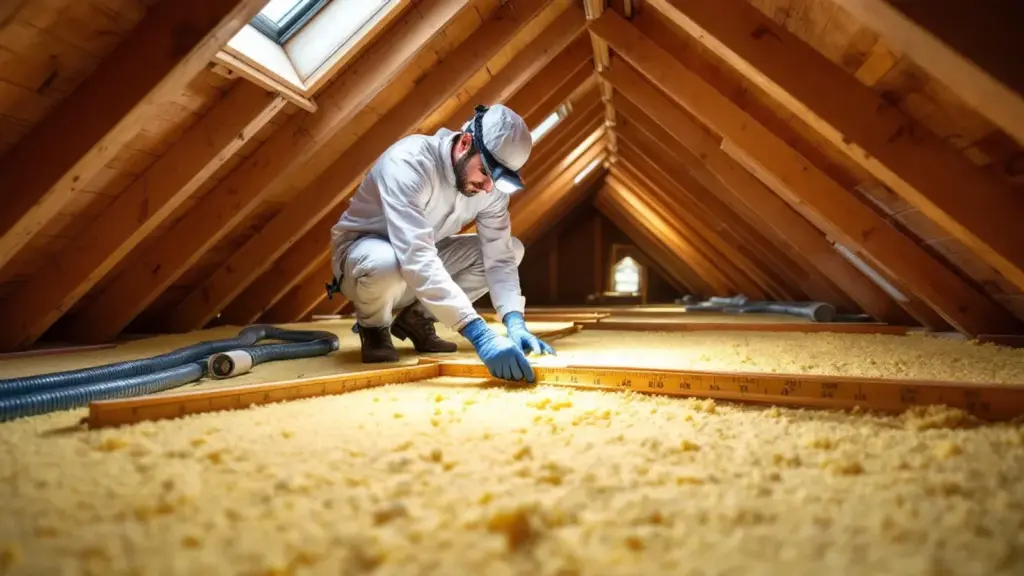
This sounds obvious, but it is the single most reliable filter. An estimator who inspects the attic in person, photographs the existing conditions, and measures the floor area is doing the minimum necessary to write an accurate quote. One who estimates from the driveway or over the phone is not.
They Discuss Your HVAC System
Attic insulation and your HVAC system are connected. A contractor who asks about your system’s age, whether you have noticed uneven temperatures between rooms, or whether the ducts run through the attic is thinking about your home as a system. That context shapes the recommendation. An estimator who never mentions your HVAC may be focused only on the insulation sale without considering whether it will actually solve your comfort problem.
They Are Honest About What They Cannot Determine Without Removal
Sometimes the full condition of an attic is not visible until existing material is removed. A trustworthy contractor acknowledges this and explains how they handle scope changes discovered mid-job. Surprises happen. The question is whether the contractor communicates them honestly or absorbs them silently and cuts the quality of the work to stay on budget.
Frequently Asked Questions
How long does an attic insulation inspection typically take?
A thorough in-person inspection of a standard single-family attic usually takes between 30 and 60 minutes. More complex attics with multiple sections, heavy equipment, or suspected rodent damage may take longer. The inspection should result in documented findings, not just a number.
Do I need a permit for attic insulation in Los Angeles or Camarillo?
Permit requirements vary by jurisdiction and scope of work. In many cases, adding blown-in insulation to an existing attic does not require a permit, but work that involves structural changes, new HVAC equipment, or certain spray foam applications may. Check with your local building department or ask your contractor, requirements vary by area and a licensed professional should be able to clarify what applies to your specific project.
What R-value does California require for attic insulation?
California’s Title 24 energy code specifies minimum R-values by climate zone. Most of the Los Angeles basin and Ventura County fall in zones that require R-38 or R-49 for attic assemblies in new construction or major renovations. Your contractor should identify your specific climate zone and quote to that standard, not a lower one.
Can I add new insulation on top of old insulation?
Sometimes, yes. If the existing material is dry, undamaged, free of pest contamination, and provides a stable base, adding new blown-in material on top can be a cost-effective approach. If the existing material is compressed, wet, or contaminated, removal is the better path. An in-person inspection is the only reliable way to make that call.
How do I know if my current insulation is performing adequately?
Common indicators of underperforming attic insulation include rooms that are noticeably hotter than others in summer, HVAC systems that run for long cycles without reaching the thermostat setpoint, and energy bills that seem disproportionately high for the home’s size. A depth measurement during inspection will confirm whether the existing material meets current standards.
Does attic insulation affect my HVAC equipment?
Indirectly, yes. A well-insulated attic reduces the thermal load on your HVAC system, which means the equipment runs fewer cycles to maintain a set temperature. Over time, reduced runtime can extend equipment life and reduce maintenance frequency. If your ducts also run through the attic, addressing duct leakage at the same time as insulation tends to produce the most noticeable improvement in comfort and efficiency.
The Bottom Line for Los Angeles and Camarillo Homeowners
A low quote that skips the inspection, ignores existing conditions, or leaves air sealing out of scope is not saving you money. It is deferring a problem. The homeowners who get the most from their insulation investment are the ones who asked the right questions before the job started, compared bids on scope rather than just price, and chose a contractor who treated the attic as a system rather than a simple square-footage calculation.
LA Attic Pro serves homeowners throughout Los Angeles and Ventura County, including Camarillo, with in-person attic inspections that document conditions before a single number is written. Every estimate reflects what the attic actually needs, not what is easiest to quote.
Ready to see what your attic is actually doing? Schedule your attic insulation inspection with LA Attic Pro and get an estimate built on real findings, not assumptions.