
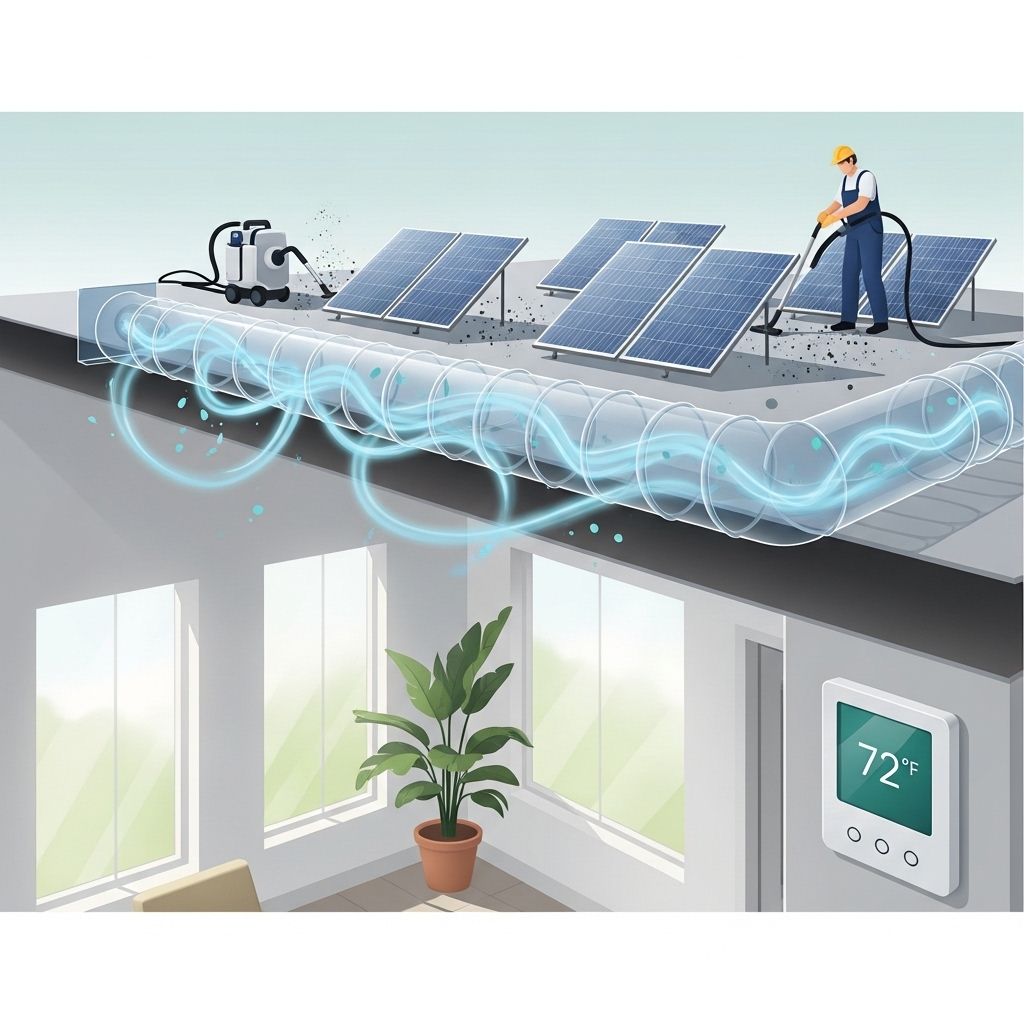
Talking about the environment in Los Angeles is never simple. We live in a sprawling basin where microclimates collide, where ocean breezes brush up against freeways and canyons, and where wildfire seasons can redraw the air map overnight. When we consider the environmental impact of air duct cleaning in this setting, it helps to zoom out. The question isn’t only whether the process is green in isolation. It’s how that process influences energy use, equipment longevity, indoor air quality, and the choices we make about materials and disposal. In other words, it’s a story of ripple effects—and in LA, those ripples matter because small improvements multiplied across millions of square feet of conditioned space add up to meaningful change.
At its simplest, the environmental argument for duct cleaning is about restoring airflow. When ducts are coated with debris, the system works harder and longer to accomplish the same conditioning. That extra effort translates into higher energy consumption, particularly during peak demand days when the grid is most stressed. Clearing obstructions reduces the time the system runs and helps it operate within design parameters, which lowers the energy needed to maintain comfort. The savings per home may appear modest, but aggregated across neighborhoods, the effect becomes substantial. This is a classic example of a local, household-scale action that ladders up to citywide benefits.
Yet we should also consider the process itself. Responsible professionals use equipment designed to capture and contain dust without releasing it into living spaces or the outdoors. HEPA-grade filtration in negative-pressure machines, careful sealing of registers, and tidy work practices keep particulates from escaping. In Los Angeles, where outdoor air quality can swing quickly, preventing re-entrainment of dust isn’t merely a housekeeping concern—it’s part of minimizing environmental burden. The dust removed from ducts is waste that deserves responsible handling, typically sealed and disposed of according to local guidelines rather than casually dumped or shaken out.
Energy Efficiency: The Immediate Environmental Win
Energy efficiency lives in the details. Clean ducts reduce static pressure, which in turn lets blower motors run at lower loads. On variable-speed systems, that can mean spending more hours at low, efficient speeds rather than ramping up to overcome resistance. For single-stage systems, it often means shorter cycles with fewer hot or cold spots that send homeowners reaching for the thermostat. In both cases, the reduction in runtime saves electricity, and any reduction on peak days is particularly valuable for the grid and the environment.
There’s also a secondary benefit: thermostats become more trustworthy when ducts are clean, because the system behaves predictably. Predictability helps homeowners commit to energy-saving set points rather than overriding them out of frustration. Over a summer, this behavioral stability can yield significant savings that aren’t always captured in equipment specs but show up in real-world consumption.
Equipment Longevity and Waste Reduction
When systems don’t struggle against restricted ducts, components experience less heat and stress. Motors, bearings, and coils operate within their intended ranges, which can reduce the frequency of repairs and replacements. From an environmental standpoint, this matters because manufacturing, transporting, and disposing of HVAC components carries a footprint. Extending the interval between replacements reduces material demand and waste generation. In Los Angeles, where air conditioning sees heavy use for much of the year, the cumulative effect across thousands of homes is nontrivial.
Longevity also intersects with performance. A system that’s allowed to breathe easily can maintain efficiency closer to its rated levels over time. The result is a shallower decline in performance as equipment ages, delaying the moment when homeowners feel compelled to upgrade primarily to recapture lost efficiency. Keeping equipment viable longer, without sacrificing comfort, is an environmental win wrapped inside a practical one.
Air Quality, Health, and Community Benefits
We often divide environmental and health conversations, but in practice they overlap. Cleaner indoor air reduces the demand for supplemental devices, heavy fragrances, or frequent deep cleanings that themselves have environmental costs in the form of chemicals and disposable materials. When ducts are free of residue, homes return to a neutral baseline that supports wellbeing without additional products. For sensitive individuals, the reduction of irritants can translate into fewer doctor visits or medications, which again has indirect environmental implications in manufacturing and logistics.
Beyond the home, the community benefits when many residents make small improvements that reduce energy draw and limit particulate release. LA’s air, especially during wildfire season or inversion-heavy days, is a shared resource under stress. Duct cleaning won’t change regional air chemistry, but it can ensure that the dust inside homes remains contained during maintenance, and that systems aren’t accelerating indoor-outdoor exchanges by running longer and harder than necessary.
Materials, Methods, and Choosing Greener Options
Environmental impact depends on how the work is done. Methodical containment is the baseline. From there, choices about cleaning tools, protective coverings, and even the transportation of equipment influence the footprint. Reusable drop cloths, careful selection of low-VOC products when any sealing is necessary, and an emphasis on mechanical agitation rather than chemical additives align the work with sustainability goals. In Los Angeles, where many households seek to reduce their chemical exposure, asking your provider about their approach is both reasonable and wise.
Disposal practices are another hinge point. Collected dust and debris should be secured and disposed of responsibly, not released outdoors. If filters are changed as part of the service, old filters need proper containment. While these steps may seem small, they reflect a mindset that respects the environment at every stage of the process, which is exactly the mindset we need across the city as we move toward cleaner air and more efficient homes.
Water Use and Cleaning Agents
Most duct cleaning relies on dry methods, which is preferable from a water-use standpoint. When moisture is necessary—for example, to address a specific issue identified during inspection—it should be applied sparingly and with attention to drying, to avoid creating conditions inside ducts that could harbor odors. Choosing cleaning agents, if any are used, with low environmental impact and minimal VOC content keeps the home’s air quality aligned with the larger goal of health and sustainability.
For homeowners who are particularly sensitive or environmentally focused, it’s reasonable to request a materials list in advance. Transparency fosters trust and lets you make informed decisions that reflect your values without compromising the efficacy of the cleaning itself.
The Wildfire Variable
Wildfires are now a regular part of our seasonal planning. During smoky periods, particulates can infiltrate homes despite best efforts. After the smoke clears, ducts often retain a faint aroma and a fine, sticky residue that normal filter changes can’t address alone. Cleaning removes that residue, allowing homes to return to a neutral baseline more quickly. The environmental implication is twofold: your system doesn’t need to run extra hours to push air through the residue, and you avoid masking odors with heavy fragrances or additional devices that consume power. It’s a quiet recovery that supports both comfort and conservation.
Preparation also helps. Sealing minor gaps in returns and ensuring filter frames fit tightly reduce infiltration during future events. These improvements, made in tandem with cleaning, create a more resilient home that requires less energy to maintain good air when outdoor conditions are poor.
Behavioral Synergies: How Clean Ducts Encourage Good Habits
One of the more interesting aspects of indoor environmental work is how improvements reinforce themselves. When residents feel immediate benefits—air that smells clean, temperatures that hold steady—they tend to keep up with filter changes and resist leaving windows open on high-pollen or smoky days. These habits protect the cleaning investment and drive further efficiency. It’s a virtuous cycle in which a single service nudges the household toward choices that multiply the initial gain.
Similarly, a trusted relationship with a local professional leads to smarter scheduling—preseason tune-ups, post-renovation resets, and timely attention after major smoke events. This cadence reduces emergency calls and inefficient operation, both of which have their own environmental costs in rushed logistics and extended equipment runtime.
Equity, Renters, and Multi-Family Buildings
Environmental impact in Los Angeles is also a matter of equity. Renters in multi-family buildings deserve the same benefits of clean air and efficient systems as homeowners, yet they may have less control over maintenance schedules. Educating property managers and HOAs about the environmental and comfort benefits of duct cleaning can lead to building-wide initiatives that reduce energy use and improve living conditions for everyone. When entire properties adopt better maintenance, the cumulative effect on the city’s energy profile and waste streams is meaningful.
In older buildings where ducts share chases or connect to centralized systems, responsible cleaning helps prevent cross-contamination between units and reduces the burden on shared equipment. These gains are environmental in the broad sense—they improve the health of the built ecosystem and reduce the need for reactive measures that carry higher costs and footprints.
Measuring Impact Without Getting Lost in Numbers
Not every homeowner needs detailed airflow charts or energy logs, but simple before-and-after observations matter. Does the system cycle less frequently to achieve the same comfort? Do rooms feel more uniform in temperature? Do odors dissipate rather than linger? These observations, while qualitative, often correspond with measurable improvements in energy use. For those who want data, smart thermostats and utility dashboards can reveal the pattern: fewer long, late-afternoon cycles during heatwaves and a smoother daily curve overall.
Collecting this feedback also helps professionals refine their practices, choosing methods and materials that deliver strong results with the smallest environmental footprint. In LA’s culture of iteration and improvement, this feedback loop is a natural fit.
Midway Benefits You Can Feel
About halfway through the year after a cleaning, many homeowners report that their homes still feel easy to live in—comfortable, neutral, and quiet. That sustained benefit is the essence of environmentally sound maintenance. When a home requires less energy to feel good, and when that comfort doesn’t depend on adding more devices or chemicals, you’ve aligned your daily life with broader sustainability goals. It’s a local, tangible outcome that sidesteps buzzwords and shows up where it matters: how your home feels each day.
That’s the spirit behind responsible air duct cleaning in Los Angeles. It’s not about a single dramatic moment; it’s about countless small ones—the quiet of an even airflow, the absence of a stale smell, the thermostat that keeps its promise—that accumulate into environmental good.
FAQs
Is duct cleaning itself environmentally friendly?
It can be, when performed with strong containment, HEPA-grade capture, responsible disposal, and minimal use of chemicals. The net environmental effect is often positive because improved airflow reduces energy use and prolongs equipment life, which lowers material and manufacturing impacts over time.
Does duct cleaning reduce my carbon footprint?
Indirectly, yes. By helping your system run with less resistance and for shorter cycles, cleaning can reduce electricity use, especially on peak days. While exact savings vary by home, the direction is clear: more efficient operation equals less energy consumption.
What about the debris removed—how is it handled?
Collected dust and waste should be contained and disposed of according to local guidelines, not released outdoors. Ask your provider about their disposal practices. Proper handling ensures that the benefit to your home doesn’t come at the expense of your neighborhood’s air.
Are there greener materials or methods I should request?
Yes. You can ask for low-VOC sealants when needed, reusable protective coverings, and an emphasis on mechanical agitation with strong capture rather than heavy chemical use. A reputable provider will be transparent about their approach.
Will cleaning help during wildfire season?
After smoke events, cleaning removes residue that can hold odors and restrict airflow. Paired with tight returns and appropriate filtration, it helps your home recover faster and operate more efficiently despite outdoor challenges.
How often should I schedule cleaning with the environment in mind?
There’s no universal schedule, but a two-to-four-year interval works for many LA homes, with adjustments for pets, remodels, or smoke exposure. The guiding principle is to act before discomfort or inefficiency becomes normal, keeping the system in its efficient range.
Ready to align comfort with sustainability?
If you want a home that feels fresh while treading lightly on resources, consider a plan that includes responsible duct cleaning, thoughtful filtration, and small sealing improvements. When you’re ready, schedule professional air duct cleaning and take a simple, concrete step toward a more efficient, comfortable Los Angeles home.