
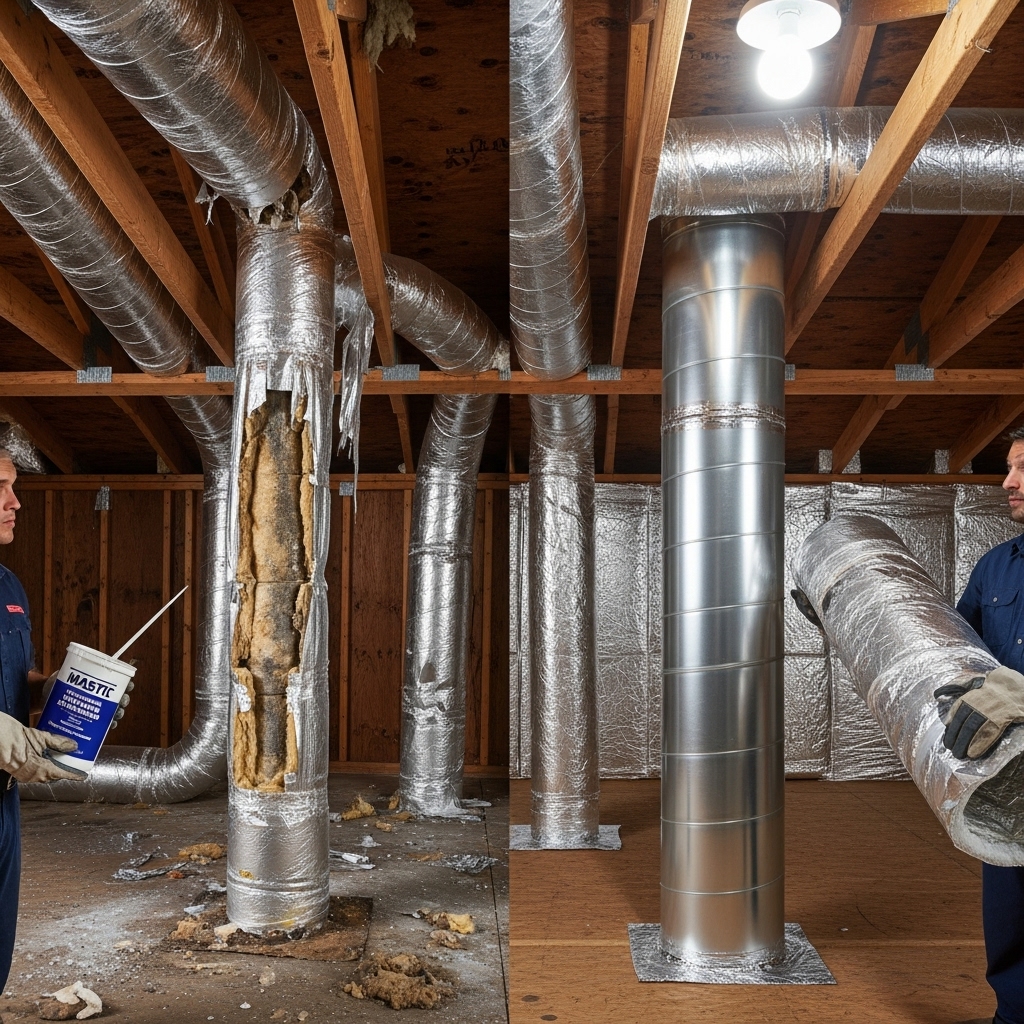
Choosing between replacement and repair
Deciding whether to repair or replace air ducts in a Los Angeles home is rarely a simple yes or no. It is a judgment that weighs condition, design, access, and how you live in your space. The city’s eclectic architecture—from airy mid-century homes to compact bungalows and hillside retreats—adds nuance to that decision. Understanding how professionals think through the choice helps you make an informed plan that respects your home’s character while elevating comfort and air quality.
Start by looking at the system’s health. If ducts are fundamentally sound—properly sized, with sensible routing and materials that remain intact—repair can be a powerful option. Sealing joints, reinforcing transitions, correcting supports, and addressing a few strategic reroutes can restore performance and extend the life of the system. In many Los Angeles homes that have seen minor remodels but still retain their original layout, this kind of targeted restoration delivers a noticeable improvement without the disruption of full replacement.
Replacement enters the conversation when failures are widespread or baked into the design. A labyrinth of long, undersized runs that struggle to deliver air to distant rooms, or materials that have deteriorated beyond reliable service, signal a change in approach. In some older homes, past add-ons created pathways better suited to improvisation than efficiency. When a system resists reasonable repair and balancing, redesigning and replacing ductwork can unlock comfort the existing network simply cannot provide.
Access and architecture shape the logistics of both paths. Low, hot attics in the Valley may make extensive replacement more challenging to stage, while raised foundation homes on the Westside might offer crawlspace access that favors repair. In hillside neighborhoods where chases are scarce and framing is complex, a hybrid approach—replacing problematic trunks while repairing branches that perform well—often makes sense. The goal is to match the method to the building so the work proceeds efficiently and leaves the home tidy and intact.
Comfort outcomes are central to the decision. Los Angeles homes face sunny exposures, evening cool-downs, and occasional dry winds. A robust system meets those conditions with even airflow, minimal noise, and clean returns that keep dust at bay. If your current ducts can be tuned to deliver that experience, repair is worthwhile. If they cannot, replacement may pay dividends in stability and peace. Evaluation techniques—pressure readings, temperature checks, and visual inspection—shed light on what is possible without guesswork.
Health considerations frequently tip the scales. Returns that draw attic air, poorly sealed joints that admit dust, and materials that no longer hold their shape affect indoor air quality. Repair addresses these vulnerabilities when they are isolated, but when contamination is widespread or materials fail repeatedly, replacement provides a fresh start. In older Los Angeles homes, part of this conversation includes identifying legacy materials and ensuring safe practices; experienced teams collaborate with specialists when needed to maintain a safe work environment.
A practical perspective includes timing. If you anticipate upgrading your equipment or renovating parts of the home, coordinating duct decisions with those projects creates synergy. New equipment often performs best with ducts tuned to its airflow characteristics, and remodels provide access that can make replacement more efficient. Conversely, if your timeline is tight and comfort issues are acute, a targeted repair focused on the worst offenders can bring relief now while keeping options open for future improvements.
Another factor is resilience. Well-sealed, well-supported ducts are more resilient to daily use and environmental stresses like attic heat and seasonal dust. If your current system lacks that resilience because of material age or layout, replacement can set a more durable baseline. But if the bones are good, investing in comprehensive repairs that include sealing, support upgrades, and minor reroutes can deliver the same resilience without a full rebuild.
As you compare recommendations, clarity matters. A repair-focused proposal should specify which joints, runs, and boots will be addressed, how surfaces will be prepared, and what verification will confirm success. A replacement proposal should describe routing, materials, support spacing, and how the new design balances rooms. Both should connect actions to outcomes so you can picture how the house will feel when the work is done.
In the middle of any project, reassessment keeps results aligned with goals. Early measurements establish a baseline. As work progresses, technicians confirm that sealing holds, supports stand up to tension, and reroutes deliver the pressure and flow they promised. If unexpected conditions arise—hidden chases, past repairs, or structural surprises—the plan adapts. For homeowners researching options, understanding what comprehensive air duct repair involves helps you compare it fairly against a full replacement strategy.
The lived experience after the work is the ultimate test. In homes that were candidates for repair, everyday comfort should smooth out, with fewer hot or cold pockets and a calmer soundtrack from the registers. In homes that required replacement, the change can feel transformative: rooms become consistent companions rather than temperamental outliers, and the system behaves like a single, coherent network.
Los Angeles itself offers lessons. In beach-adjacent neighborhoods, mild temperatures tempt windows open often, and systems run gently; here, repair frequently shines. In the Valley, summer attic heat is intense, testing both materials and seals; sometimes replacement sets a sturdier baseline. In the hills, access challenges and unique architecture often suggest hybrid plans that solve the most constrained segments while preserving sections that do their job well.
Ultimately, the right choice respects your home’s story and your priorities. If the ductwork is sound but untuned, repair brings performance back into focus. If the network fights you at every turn, replacement clears the path for consistent comfort. In both cases, the best outcomes come from careful evaluation, clear communication, and verification that ties the plan to measurable improvements.
Frequently asked questions
Q: How do I know if my ducts are candidates for repair? A: If the layout is sensible, materials remain intact, and airflow issues trace back to leaks or limited support problems, repair is often the efficient path forward. Evaluation will confirm whether those conditions exist.
Q: When does replacement make more sense? A: When failures are widespread, materials are degraded, or the original design cannot serve the home’s current use, replacement unlocks comfort that repairs alone cannot achieve.
Q: Will repair or replacement change system noise? A: Yes. Properly sealed, well-supported ducts quiet airflow and reduce hiss. Replacement with a redesigned layout can further reduce turbulence and harmonize sound across rooms.
Q: Can I mix repair and replacement? A: Many Los Angeles projects do. Hybrid plans target problem trunks or branches for replacement while restoring segments that still perform well, balancing results with practical constraints.
Q: How will I know the work succeeded? A: Look for measured improvements—static pressure within target ranges, steadier temperatures at registers—and, most importantly, day-to-day comfort that feels even and relaxed across the home.
Q: Should I coordinate duct decisions with other projects? A: Yes. Pairing duct work with equipment upgrades or remodels improves access and alignment, often producing better performance and a tidier result.
Get clarity and choose the right path
If you are weighing repair against replacement, start with a careful evaluation and a conversation that connects findings to how you live. Ask for a plan that explains not just what will be done, but why. When you are ready, schedule professional air duct repair or discuss a replacement strategy that fits your Los Angeles home, and move toward comfort that feels consistent every day.