
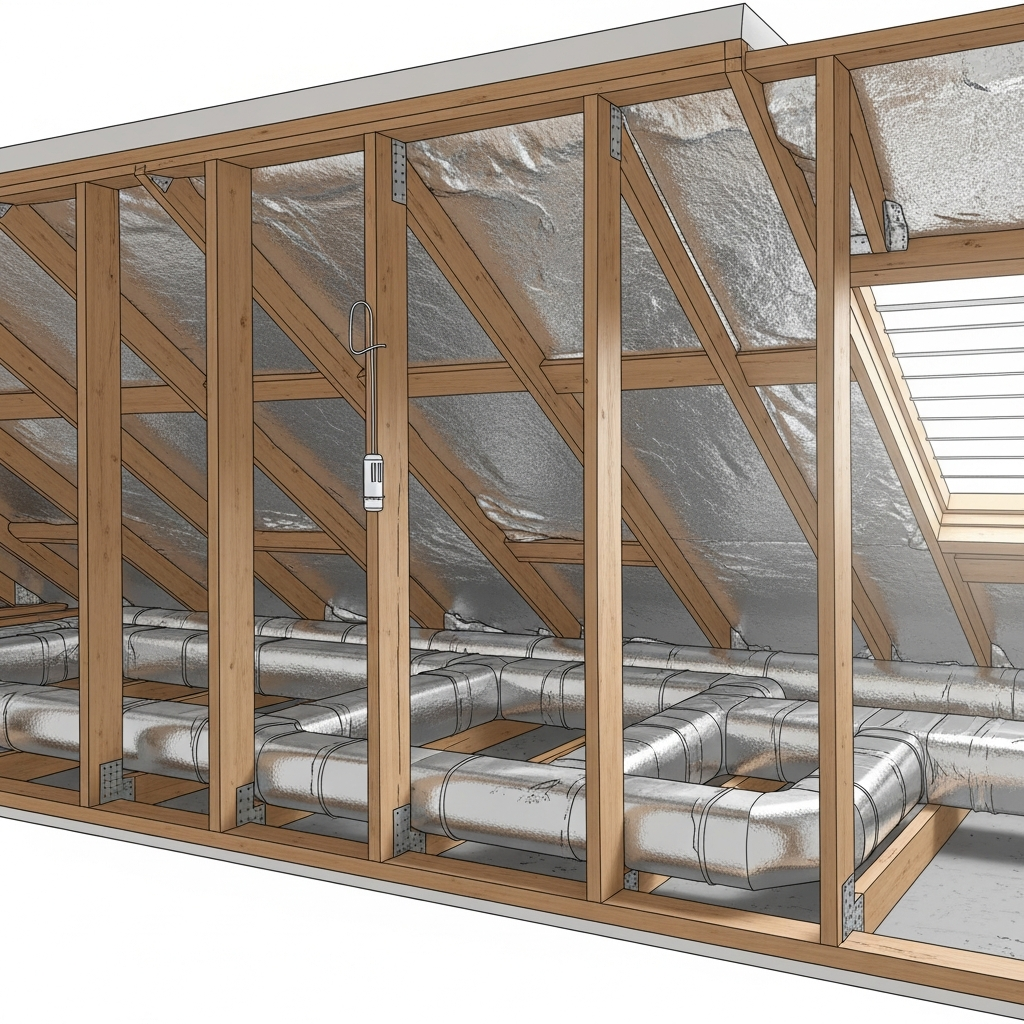
Los Angeles homes have a rhythm shaped by sunlit afternoons, cool evening breezes, and the distinctive microclimates that ripple from the coast to the Valley. In that rhythm, HVAC systems work quietly in the background—until they don’t. When energy use creeps higher or comfort feels elusive even on mild days, the culprit often isn’t the equipment itself but the network that carries its work: the ductwork. Focused air duct repair is one of the most effective, least disruptive ways to cut wasted energy in our region while making your home feel better every day.
We sometimes talk about energy in abstract terms—a bill at month’s end or a number on a thermostat. But energy is also a tactile experience. It’s the way a room cools quickly after you close the blinds. It’s the stillness of a living room that no longer needs the fan roaring to keep up. Repairing ducts translates those sensory wins into measurable reductions in runtime and wasted capacity.
Understanding where the energy goes
Unconditioned attics in Los Angeles can run far hotter than outdoor air during summer, while crawl spaces and garages host dust and humidity that you’d rather keep out of your system. Leaky supply ducts spill cooled air into those spaces, forcing equipment to run longer to meet the thermostat. Leaky returns pull hot, dusty attic air into the system, making the blower work harder and the coils less efficient. Each leak is a small tax on your comfort and your energy use.
When you seal those leaks and correct restrictions, the system delivers more of what it produces to the rooms you live in. Static pressure normalizes, turbulence drops, and the blower can operate at lower speeds more of the time. Those changes add up over every hour of every day the system runs.
Why Los Angeles makes duct repair uniquely impactful
Our climate rewards efficiency year-round. In summer, the Valley’s intense heat raises attic temperatures dramatically. Every unsealed joint becomes a pathway for cooled air to escape into a broiling void. In coastal zones, daily humidity cycles press moisture into unconditioned cavities where duct insulation lives; tight seals protect that insulation’s performance so it continues to resist heat gain. Across the basin, long shoulder seasons—spring and fall—should be easy on energy use, but duct leaks can erase those natural advantages. Repairing them lets you reap the benefits of our many mild days.
Beyond the weather, Los Angeles homes often carry a patchwork of updates: additions layered onto original structures, converted garages, enclosed porches. Duct runs stretch farther than ideal, squeeze through tight chases, or take sharp turns that add friction. Smoothing those pathways returns efficiency without the need to replace equipment or change the home’s architecture.
Supply and return: two sides of the same energy story
It’s tempting to focus only on supply ducts because that’s where cooled or heated air travels to the rooms. But return ducts have equal influence on energy use. An undersized or leaky return forces the blower to work harder to pull air back to the air handler. That effort increases electrical draw and reduces the system’s capacity to condition air. Repairing returns—sealing joints, enlarging grilles when appropriate, and straightening paths—often yields outsized energy savings compared to the time invested.
When both sides of the system are tuned, airflow becomes a smooth loop rather than a struggle. At that point, your thermostat settings begin to behave as you intended, and the system can meet demand with less effort.
Conduction and insulation: the silent energy thieves
Even perfectly sealed ducts lose energy through conduction if they lack proper insulation, especially in sun-baked attics. Insulation around ducts acts like a shade tree for your airflow, preserving the temperature of the air as it travels. During repair, technicians not only seal seams but also assess and improve insulation where necessary. In older homes where insulation has slumped or torn, restoring coverage stops heat gain that otherwise forces longer cycles.
Think of insulation as the quiet partner to sealing. One keeps air from escaping, the other keeps temperature from slipping away. Together, they shorten runtimes and reduce fan speeds needed to deliver comfort.
Friction and the cost of sharp turns
Every bend in a duct, every crimp or kink, adds resistance to airflow. The blower responds by pushing harder, which consumes more electricity. In homes with long runs to second-story rooms or additions over garages, you often find tight turns where ducts navigate joists and beams. Repair replaces crushed flex duct, smooths turns, and increases bend radii. The result is a gentler path that lets air glide rather than fight its way through, shaving watts from the fan’s workload and minutes off each cycle.
In many Los Angeles houses, a single corrected turn near the plenum can make a surprising difference across multiple rooms. Early repairs often target those high-leverage spots first.
Balancing and the end of overcooling
Unbalanced systems push homeowners into wasteful habits—overcooling the whole house to make one distant room bearable, or running the system longer to address a persistent hot spot. After repair and balancing, each room receives a fair share of airflow, so the thermostat reflects real comfort. That ends the routine of pushing setpoints lower than you want, a subtle but significant source of extra energy use.
Balance also matters across time. When rooms cool and warm at similar rates, the system can coast between cycles, avoiding short bursts that waste energy without delivering much comfort.
Data you can feel: runtime and cycling
Many modern thermostats display runtime. Homeowners who take note before and after duct repair often report striking changes. Instead of long, labored cycles and frequent restarts, the system settles into fewer, smoother runs. That’s the most direct measure of reduced energy use short of metering equipment—less time spent operating to achieve the same interior conditions.
The subjective version of this data is your daily experience. Quiet operation. A home that reaches and holds setpoints without drama. Fewer moments when you look up and think, “Why is it still running?”
The microclimate factor: coast to Valley
Los Angeles is a study in microclimates. A house in Mar Vista breezes gently most afternoons, while a home in Woodland Hills bakes in August. Duct repair respects those differences. On the coast, sealing combats salty air’s tendency to corrode and loosen connections, and insulation resists cool morning damp that undermines performance. In the Valley, the focus is on airtight systems that don’t bleed cool into furnaces disguised as attics and on insulation robust enough to hold temperature under blistering roofs. In the hills, where access is tight and runs are long, smoothing paths and securing supports pays extra dividends.
Across all these zones, the principle is the same: keep conditioned air on the conditioned side of the building boundary and let your equipment rest when it should.
Equipment health is an energy story too
Leaky ducts don’t just waste the air you paid to condition; they also drive dirt into equipment, which coats coils and reduces heat exchange efficiency. Fans work harder, bearings wear, and control boards run hotter. Once repaired and cleaned, the system regains composure. Coils stay clearer, and the fan achieves the same airflow at lower speeds. Those mechanical wins translate directly into less energy use. They also compound over time, because clean systems maintain their efficiency rather than degrading prematurely.
Think of it as a feedback loop in your favor. Repairs lead to cleaner equipment, which runs more efficiently, which stays cleaner longer, preserving the gains you just earned.
Case-style outcomes without breaking walls
One of the strengths of duct repair is how noninvasive it can be. Most work happens in attics, crawl spaces, and mechanical closets. That means you reap efficiency benefits without major demolition. In older homes cherished for their original finishes, this is the sustainable path: upgrade performance while leaving history intact.
Homeowners often assume that better energy performance demands new equipment or window replacements. While those may have their place, ducts are the bloodstream of HVAC, and improving their integrity is frequently the first, best move. If you haven’t explored professional air duct repair yet, consider it your lever for quick, reliable efficiency gains.
Behavior changes that amplify repair
Once your system breathes properly, small habits pay bigger dividends. Close blinds on sun-struck windows during peak heat. Use ceiling fans to let you raise the setpoint a degree or two without losing comfort. Avoid obstructing returns with furniture. These aren’t new ideas, but their impact grows when ducts deliver consistently to every room.
Another simple change is confidence. Many homeowners overcompensate because past performance taught them to. After repair, trust your thermostat. Set it where you want it and give the system time to work without constant nudges. You’ll witness a new steadiness that wastes less energy.
What you’ll notice on your utility profile
While every household is different, a common post-repair story is a home that keeps steady indoor temperatures with fewer kWh consumed during hot stretches. On milder days, some homeowners find they don’t need the system at all during peak afternoon if morning cooling holds. The variability of Los Angeles weather now works in your favor rather than exposing your system’s inefficiencies.
If you track usage, look for flatter peaks and smoother curves. The spikes tied to long, fruitless runs tend to disappear, replaced by measured operation aligned with your actual comfort needs.
Frequently asked questions
How do I know duct leaks are costing me energy?
Signs include rooms that never quite reach setpoint, long runtimes on mild days, dust streaks around registers, and visible gaps or crushed sections in accessible areas. A professional assessment can quantify leakage and show before-and-after changes.
Will repair help more than replacing my equipment?
Often, yes—especially if your existing equipment is in reasonable condition. New equipment connected to leaky or restricted ducts will still waste energy. Tight ducts let any equipment perform closer to its rated efficiency.
What about insulation around the ducts?
Insulation partners with sealing to protect the temperature of air in transit. During repair, technicians evaluate insulation and improve it where needed, reducing conduction losses that would otherwise extend runtimes.
Can balancing really cut energy use?
Absolutely. Balance prevents the habit of overcooling or overheating the entire house to fix one room. When each space gets its share, setpoints reflect real comfort, and the system doesn’t work overtime.
Is this relevant in coastal areas with milder weather?
Yes, because leakage steals comfort in all conditions. On mild days, a tight system may let you run the HVAC less or not at all. On damp mornings, better returns keep humidity and musty odors from entering the system.
Will I need ongoing testing?
Not necessarily. After repair, normal HVAC service with occasional checks on seals and static pressure is enough for most homes. If your usage pattern changes or an addition is built, a fresh look is smart.
In the end, energy efficiency is a story you live with day to day. It’s the feel of cool air arriving quietly, the absence of a fan straining late into the night, the ease with which your home settles into evening. Repairing the ductwork is the behind-the-scenes edit that lets your HVAC system deliver that story with clarity. If you’re ready to make comfort and efficiency allies rather than adversaries, start a conversation with a local team and ask for a focused plan. For homeowners who want a quick, proven path to lower energy use and calmer comfort, it’s hard to beat the gains from thoughtful air duct repair.