
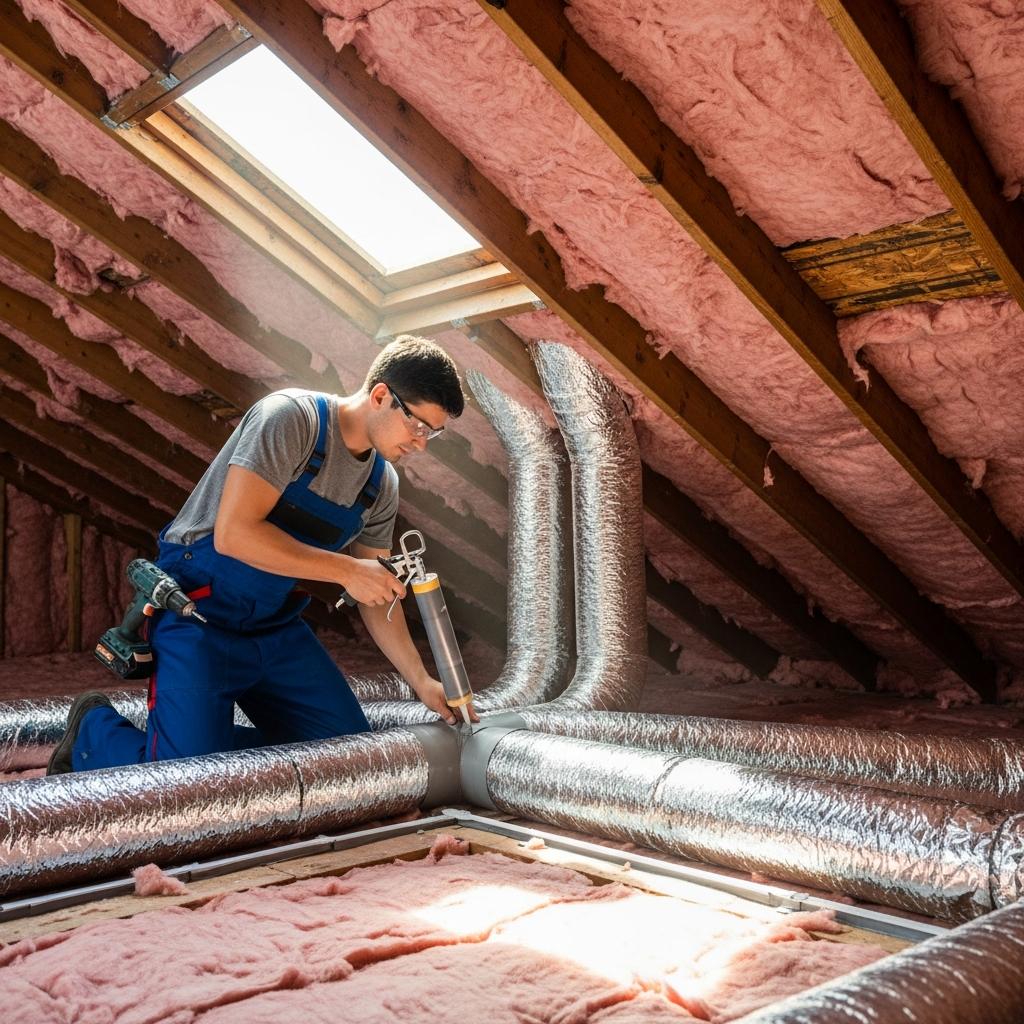
Living in Los Angeles means enjoying bright sunshine, ocean breezes, and long, dry summers punctuated by a few cool, damp weeks each winter. It also means our homes are asked to perform year-round, whether we are fighting off a Santa Ana wind event or sealing up the house during wildfire season to keep the smoke out. In that context, many homeowners are surprised to discover how big a role the ductwork plays in comfort, efficiency, and indoor air quality. While we often focus on the unit in the closet or on the roof, the network of ducts weaving through attics and crawlspaces is equally critical. If those passages are leaky, kinked, or poorly insulated, you can lose conditioned air, strain the system, and breathe dust you would rather not share with your family. That is why Los Angeles homeowners exploring air duct replacement often notice a dramatic difference after the work is done, from more even temperatures to quieter nights and fresher air.
Over years, ducts can degrade in ways that are easy to overlook. Attics in the Valley routinely hit triple digits, which gradually cooks flexible ducting and causes the outer jacket to become brittle. In coastal neighborhoods, salt-laden air combined with morning fog can promote corrosion on metal fittings and registers. Meanwhile, small rodents searching for warmth in the winter squeeze into insulation layers, compromising their integrity. The result is not a catastrophic failure but a slow decline, where airflow becomes uneven, rooms at the end of long runs lag several degrees behind the thermostat, and the system seems to need to run longer to do the same job. Replacing ducts interrupts that slide, restoring a clean, sealed path that better respects the design intent of your HVAC equipment.
One of the most immediate benefits people feel after a well-designed duct replacement is even comfort through the day and across the home. Los Angeles floor plans vary widely, from Spanish bungalows in Mid City to postwar ranches in the Valley and newer multi-story townhomes on the Westside. Each type creates challenges for distributing air. In older houses, add-on spaces often received makeshift duct extensions, which left them under-supplied. In multi-level homes, the upper floors accumulate heat, causing the classic complaint of a hot second story. Modern replacement work addresses these patterns with proper sizing, smarter routing, and improved balancing dampers, so conditioned air quietly reaches each room in the right amount.
Energy efficiency that you can actually feel day to day
Efficiency is not just an abstract number on an equipment label; it shows up as shorter run times, quieter cycles, and a more relaxed thermostat finger. When ducts are right-sized and well sealed, static pressure drops to where your blower can move air in its sweet spot. The motor draws less power, the coil sees the airflow it was designed for, and the refrigerant circuit behaves more predictably. In practice, that means the system avoids short-cycling on mild spring evenings and does not struggle during an August heat wave. The improvement is tangible on those bright afternoons when the marine layer burns off early, and your home still feels calm and consistent without you hovering over the controls.
Los Angeles building codes and energy standards have steadily tightened expectations around duct leakage and insulation. While homeowners do not need to be experts in code language, the spirit behind it is simple: keep as much conditioned air as possible inside the living space and prevent losses in unconditioned zones like attics and garages. When ducts are replaced, the opportunity to apply modern sealing methods and install higher R-value insulation is too important to miss. In attic pathways where solar gain is substantial, thicker jackets help preserve the temperature of air on its journey from the central unit to the far guest room. Over the course of a day, that marginal improvement compounds, resulting in fewer minutes of runtime and more stable room-by-room readings.
Cleaner air and a quieter home
Many Angelenos first think about indoor air quality during wildfire events, but even ordinary days bring dust from our freeways, pollen from hillside canyons, and coastal moisture that can carry allergens. Old, leaky ducts draw in unfiltered attic air through rips and seams, bypassing your return filter. That dust then drifts from supply registers into living spaces. When ducts are replaced and properly sealed, the system is less likely to become a conveyor of attic particulates. Pairing good ductwork with the right filter makes the whole setup behave as a single, deliberate pathway for air, rather than a patchwork of shortcuts.
A nice side effect of a well-executed replacement is a quieter sound profile. Rattling cans at the plenum, whistling at undersized boots, and register hissing from high velocity are all signs that the network is not happy. With better sizing, smoother transitions, and leak control, the background noise softens to a low, steady whoosh that fades into the living soundtrack of the home. Anyone who works from home or puts kids down for naps in the middle of the day appreciates what a difference that makes.
How Los Angeles climate shapes duct decisions
Our microclimates are one of the city’s charms. A home in Woodland Hills experiences a very different year than a place near the Marina. Hot inland summers push attic temperatures to extremes, while nights near the coast can be cool and damp. These swings test duct materials and joints. In high-heat attics, flexible duct that is tightly bent or compressed to snake around obstacles tends to degrade faster and restrict airflow. During replacement, thoughtful routing that respects minimum bend radii and avoids unnecessary length pays off for years. In marine-influenced zones, attention to metal connections and boots matters, with mastic sealing and durable tapes specified to hold up against moisture cycles.
Wildfire smoke has also changed the calculus for many neighborhoods bordering the foothills and canyons. Although ducts cannot solve every aspect of smoke intrusion, a tight supply network helps prevent infiltration from unconditioned spaces, and a well-balanced return path encourages proper filtration at the unit. Families who learned to close windows and rely on mechanical ventilation during smoke days immediately see the value of a duct system that does not leak at the seams.
The value of correct sizing and balancing
Too often, older ducts were installed with a one-size-fits-all approach: a big trunk line and a handful of branches, each with similar diameters regardless of run length or room load. Modern design begins with an understanding of each room’s needs and available pathways. Long runs to a back bedroom might need a larger diameter or a smoother routing to maintain velocity without creating noise. Kitchens and sunrooms with heavy afternoon solar gain demand a different supply strategy than shaded dens. During replacement, technicians can also include manual balancing dampers at strategic branches, which makes seasonal fine-tuning easy. For many homeowners, the benefit reveals itself on the first hot weekend of the year when every room stays surprisingly even without juggling vents and doors.
Correct sizing also protects your equipment. High static pressure caused by undersized ducts can force a blower to work harder than intended. Over time, that extra strain shows up as motor wear, early bearing noise, and nuisance trips. With replacement, airflow can be brought back in line with manufacturer specs, promoting longevity for everything downstream of the plenum.
Materials and installation details that matter
The conversation about ducts is not simply flexible versus rigid. In Los Angeles attics full of trusses, flexible runs are often the only feasible solution for weaving through obstructions, but the details of how they are installed separate average jobs from excellent ones. Gentle bends, full-length supports, and sealed connections at collars make a large difference. Where short, straight sections are possible—especially near the air handler—rigid duct or smooth interior fittings reduce turbulence and improve efficiency. Quality replacement also includes thoughtful boot sizing at the ceiling openings to prevent whistling, and careful register selection to throw air into the right part of the room.
Sealing is the quiet hero of any replacement. Mastic applied at all joints, collars mechanically fastened before sealing, and the right tape used as a complement, not as the only sealant, ensure durability. After installation, a leakage test verifies the work, not just for code compliance, but for the homeowner’s confidence that the system will keep doing its job when the attic is at its hottest.
Comfort in real Los Angeles homes
I often hear from homeowners in the Valley who describe a back bedroom that is always a step behind the rest of the house. After replacement, with a slightly larger branch run, a smoother path, and a balancing damper to favor that room on the hottest afternoons, the difference is palpable. Along the coast, clients describe a lingering sense of dampness and musty odors by morning. Proper sealing reduces attic air entrainment, and the system operates long enough to dehumidify lightly without overworking. In the hills, homes with split-level layouts benefit from smarter zoning strategies that the replacement prepares the home for, using dedicated returns and well-routed supplies so future upgrades are straightforward.
These changes are not about chasing a theoretical performance curve; they are about the lived experience between coffee and dinner, weekday and weekend. When you switch the thermostat and forget about it for hours, that is a sign the ducts are finally doing their job.
Planning the work with minimal disruption
People often picture duct replacement as a messy, days-long tear-out. In most Los Angeles single-family homes, the bulk of the work is contained in the attic and can be completed in a focused, well-organized schedule. Protection is laid down in living areas, registers are carefully removed and reinstalled, and the team moves room to room with Dust control in mind. Communication is critical: agreeing on register locations that respect your furniture and lighting, confirming access points, and walking the space at the end of each day so you know what has been completed. At the conclusion, a clean attic, labeled runs, and a quick tour of the balancing layout give you a roadmap for life with the new system.
In neighborhoods with smaller lot lines and tight driveways, staging materials takes a little extra coordination, but even there, experienced crews have a rhythm that keeps the home organized and functional during the process. For families with pets or young children, planning ahead for access and noise windows helps everyone feel at ease while the work proceeds above the ceiling.
Why professional design and testing pay off
A replacement is an ideal moment to bring your home’s air distribution up to modern expectations. That begins with measurements—room dimensions, return pathways, available attic routes—and ends with verification. A static pressure check and a duct leakage test are not just technicalities; they tell you the system is breathing freely and holding tight. For Los Angeles homeowners who plan to keep their homes for years, the peace of mind that comes from a documented, tested system is worth its weight in cool, even afternoons.
In the middle of the project, homeowners also see the benefit of clear communication about trade-offs. Sometimes a run can be shortened at the cost of a small soffit; other times, a longer but smoother route through the attic makes more sense. Having someone who can explain those options in plain language ensures that your new ducts are tailored to the way you live. When these conversations are grounded in the practical reality of our local housing stock, the results tend to feel effortless once the work is complete. If you are weighing whether now is the right moment, exploring a tailored plan for professional air duct replacement can clarify how much comfort potential is sitting inside your attic today.
Indoor air quality, filtration, and returns
Replacement time is also a chance to rethink filtration and return air. Many homes rely on a single, undersized return grille that leaves the system gasping, especially when doors are closed. Adding a second return or enlarging the existing pathway allows your filter to do its job without restricting airflow. That can be particularly important during wildfire season when higher-MERV filters are used. With better returns, the system can maintain target airflow even with more robust filtration media in place, and the fan does not have to work as hard to pull air across the filter.
Supply registers matter, too. Directing air toward hot glass surfaces in the afternoon or into the center of a large room reduces stratification and avoids cold drafts. With the right boot and register pairing, you can eliminate the sensation of a vent “blasting” in one corner and barely reaching the seating area. Small details like these accumulate into a sense that the home is quieter, calmer, and more predictable from room to room.
Longevity and peace of mind
A renewed duct system is a long-term asset. The materials and methods available today simply outclass what was typical a couple of decades ago. Between durable jackets, refined sealing techniques, and layout improvements, you are setting up the next decade of living for fewer surprises. People often notice that maintenance becomes more straightforward as well; filters load at a more predictable rate when leakage is controlled, and coils stay cleaner because less attic dust passes through the system. In short, everything downstream benefits when the upstream path is sound.
The proof tends to arrive in small moments: the upstairs bedroom you no longer avoid in August, the living room that does not have a mysterious cold spot by the patio door, the way the fan sound drops to a soft presence in the background. These are the advantages that do not need a meter to appreciate.
Frequently Asked Questions
How do I know my ducts are the real problem and not the equipment?
Uneven temperatures, persistent dust at registers, rooms that lag behind, and a system that seems noisier than it should be are classic symptoms of duct issues. A quick measurement of static pressure and a visual inspection in the attic can reveal kinks, compression, and leaky joints that point to the duct network as the main culprit.
Is duct replacement disruptive to daily life?
Most of the work happens in the attic or crawlspace, with minimal activity inside the living areas beyond removing and reinstalling registers. Clear scheduling, protection for floors and furnishings, and end-of-day walk-throughs keep the process comfortable. Many homeowners are surprised by how organized and contained a well-run replacement feels.
Will new ducts help during wildfire smoke events?
New, well-sealed ducts reduce infiltration of unfiltered attic air and help the system deliver air through the designed return and filtration path. While they are not a complete solution to smoke, they support better filtration performance and make it easier to keep indoor air cleaner when windows must stay closed.
Do I need to replace all the ducts or just sections?
That depends on the condition and layout. In many homes, replacing the full network ensures uniform sealing, consistent sizing, and insulation that works as a system. In others, targeted replacements paired with layout corrections can deliver major improvements. A thorough assessment will clarify the smartest scope for your home.
How long should a new duct system last?
With quality materials, proper support, and good sealing, modern duct systems can serve for many years. Longevity also depends on attic conditions, rodent exclusion, and periodic checks to ensure nothing has been disturbed during other work in the space.
Will I need to upgrade my registers or returns too?
Often, yes. Properly sized returns and thoughtfully selected registers help the new ducts perform to their potential. During a replacement, it is wise to evaluate these components so that the final system breathes easily and distributes air where it is needed.
What about cleaning ducts instead of replacing them?
Cleaning has its place, but if the ducts are leaking, undersized, or deteriorated, cleaning alone will not address the root issues. Replacement solves airflow and leakage problems, which in turn helps keep the entire system cleaner over time.
If you have been living with rooms that never quite feel right, or you are ready to make your home more resilient for heat waves and smoke days, this is the moment to bring your air distribution up to the standard you expect. Reach out to schedule your air duct replacement and feel the calm, even comfort that a well-designed system brings to Los Angeles living.