
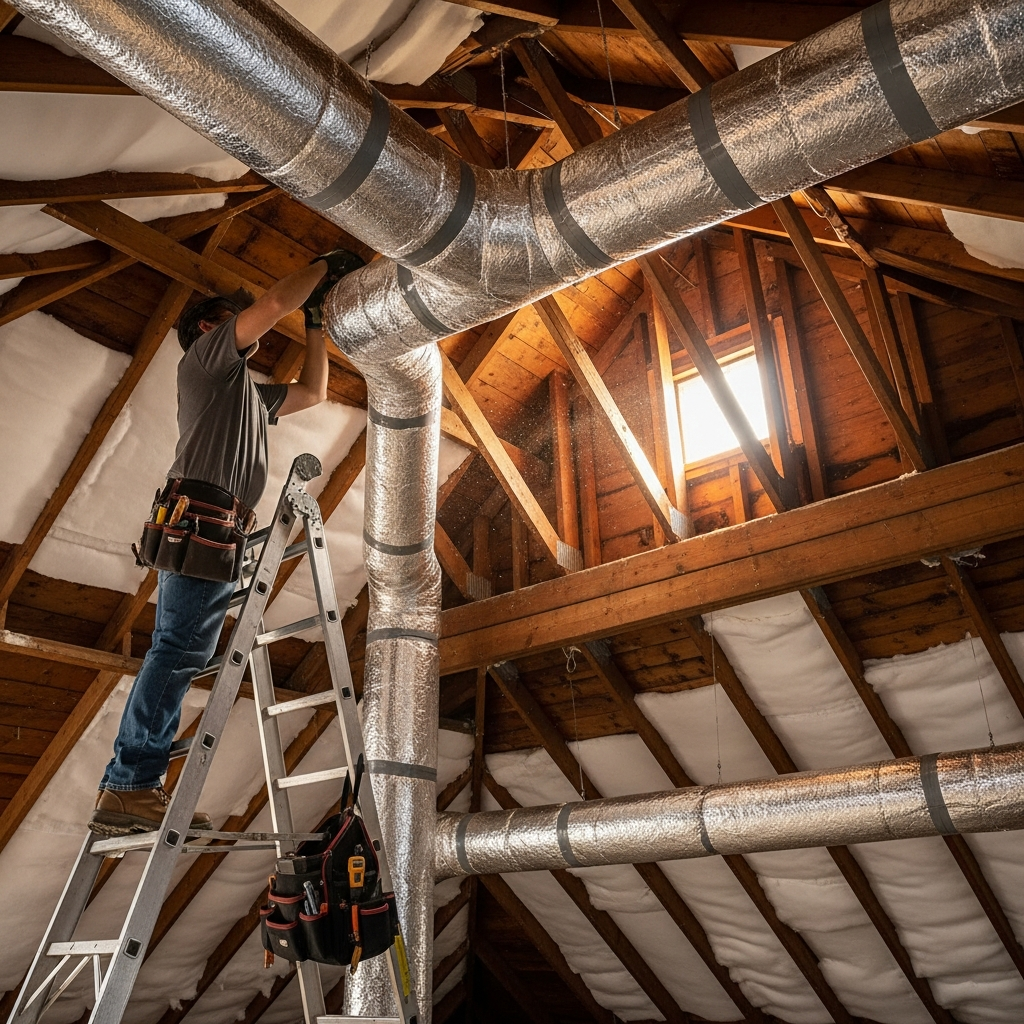
When you live in Los Angeles, you quickly learn that comfort inside your home depends on more than just setting the thermostat. Our climate swings from coastal fog to valley heat, and anyone who has spent a fall season with the Santa Ana winds knows how much dust and dryness they can push into a house. That is why so many homeowners start to notice uneven temperatures, a haze of allergens, or a persistent musty smell and wonder whether their ductwork is the silent culprit. For many homes across the city—from Spanish Revival bungalows in Highland Park to mid-century ranches in the Valley—the moment to consider air duct replacement arrives when comfort and air quality stop matching what you expect from your heating and cooling system.
Although ducts are mostly hidden in attics, crawlspaces, and behind walls, they shape the way every room feels. In Los Angeles, where energy-conscious upgrades and indoor air quality have become part of regular neighborhood conversations, new ductwork can be one of the most transformative improvements you can make. Homeowners are sometimes surprised by how strongly ducts influence noise, airflow, and the smell of indoor spaces. When ducts are properly designed, sealed, and insulated, your system does less work to deliver the same comfort. Over time, that can mean fewer hot spots near west-facing windows on summer afternoons, quieter nights in hillside houses where equipment noise tends to echo, and a fresher, cleaner feeling throughout every level of your home.
Why Los Angeles homes especially benefit from modern ductwork
Los Angeles is not one climate; it is dozens stitched together by freeways. Onshore breezes roll through Westchester and Playa del Rey, while the San Fernando Valley bakes under mid-summer highs. Homes perched in the Hollywood Hills and along Mulholland see big temperature differentials between sun and shade, and coastal communities face salty air and moisture that can age building materials faster than expected. Ducts that were sized for equipment from two decades ago, or routed through tight attics with minimal insulation, struggle to keep up with these microclimates. New ductwork, planned with current load calculations in mind, helps your system maintain steady temperatures even when the day swings from cool morning marine layers to early evening heat.
Another local factor is wildfire smoke and seasonal dust. While you may rely on your HVAC filters, the supply and return ducts themselves can either preserve filtration gains or undo them. Leaky or unsealed ducts pull in attic or crawlspace air that has never touched a filter, and push those particles directly into living rooms and bedrooms. Replacing compromised duct runs with sealed, mastic-jointed lines and properly fitted boots can dramatically cut the amount of unfiltered air entering your home. The feel is subtle but unmistakable: cleaner sunlight in the morning with less suspended dust, fewer stubborn odors that seem to return after every deep clean, and less sinus irritation after windy nights.
Comfort you can feel in every room
The first thing families notice after duct replacement is how rooms finally agree with the thermostat. In Los Angeles, many older houses evolved through additions: an enclosed porch turned den, a converted garage turned ADU, or a bedroom pushed into formerly exterior space. Original ductwork rarely accounted for these changes. New ducts, balanced for each space and installed with attention to static pressure, reduce temperature gaps between rooms that have long felt like a fact of life. If you have ever moved a portable fan from room to room on summer afternoons, or layered up in a back bedroom during winter, right-sized ductwork is the quiet fix that eliminates those workarounds.
Noise reduction is a less discussed, but deeply appreciated, benefit. Whistling supply grilles, whooshing at bends, and rumbling returns are often symptoms of undersized or poorly aligned ducts. Smooth, insulated runs, gradual transitions, and returns sized for the actual air volume lower sound without compromising airflow. The result is a home where your system fades into the background, so conversation or a late-night movie is not punctuated by sudden blasts of air.
Energy efficiency that fits California’s priorities
Californians care about efficiency, and for good reason. Our building codes evolve regularly, urging homes to get smarter about how they use energy. Duct replacement aligns with that mission. Leaky or uninsulated ducts turn conditioned air into waste. In a typical attic on a hot day in Sherman Oaks, the temperature can soar high enough that any uninsulated section becomes an energy sink, warming cooled air before it reaches your living room. Modern ducts with robust insulation keep air at the right temperature, allowing your equipment to cycle less often. Over a season, that steadier operation can extend equipment life, reduce temperature overshoot, and limit those moments when the system runs hard only to leave you feeling neither cool nor warm enough.
Another efficiency angle is ventilation strategy. Many Los Angeles homeowners have upgraded to high-efficiency heat pumps or variable-speed furnaces. These systems shine when paired with ductwork that preserves gentle, continuous airflow. If ducts are too restrictive or leaky, the equipment cannot demonstrate its quieter, lower-speed strengths. Replacing old lines with smoother, properly sized runs unlocks the technology you already invested in, so comfort changes are not just theoretical—they are something you experience day to day.
Indoor air quality and the way your home smells
Ask any longtime Angeleno about a house they walked into and immediately loved, and they will describe the light, the layout, and the smell. Musty notes are often blamed on old carpets or a neglected fridge, but they can come from dead-air pockets and dust accumulation inside decaying ducts. When ducts are replaced, particularly when returns are rethought and leaks sealed, your home begins to breathe differently. You will often notice that doors close more gently, because pressure imbalances diminish. Cooking odors dissipate more quickly, pet dander circulates toward filters instead of drifting into forgotten corners, and the simple act of opening a window starts complementing your system rather than fighting it. This is the kind of benefit that is hard to explain until you feel it, but it is why so many homeowners say the house seems newer after the ductwork is addressed.
Durability and materials that match our environment
Los Angeles builders confront two realities: heat and time. Attics heat up, crawlspaces gather moisture in the rare rainy weeks, and rodents hunt for warm hiding places year-round. New ductwork is not only about size and routing; it is also about materials chosen to handle these conditions. Today’s ducts, whether rigid metal or high-quality insulated flex, rely on UL-rated tapes and mastic that stay sealed even through our attic temperature swings. Supports are placed to prevent sag, elbows curve to maintain flow, and returns are treated as the heart of the system rather than an afterthought. The combination builds staying power so you are not revisiting the same problems a few years later.
Part of durability is also maintainability. Replacement offers the chance to create access points where a technician can inspect or clean key sections without invasive demolition. In practical terms, that means any future service is faster, cleaner, and less disruptive. If you have ever waited nervously while someone cuts into drywall to find a hidden duct leak, you will appreciate a replacement plan that anticipates your home’s realities.
Neighborhood stories that mirror your own
Because Los Angeles neighborhoods have their own personalities, duct benefits show up a little differently from place to place. In Mar Vista and Santa Monica, sea air can corrode older metal connections, so homeowners report a big change simply from getting rid of the faint metallic smell that used to ride their airflow. In Pasadena and Altadena, older homes often hide long duct runs squeezed around framing, so replacement is an opportunity to simplify routing and reduce the pressure that makes systems loud. In the Valley, where attics are punishingly hot, the improvement is unmistakable once insulation and sealing keep the cool where it belongs. And in the South Bay, where outdoor air is fresh but damp nights raise humidity, new returns and better filtration integration often deliver quieter, drier comfort without fuss.
What unites these stories is a sense of finally getting what you paid for when you bought your HVAC equipment. People expect comfort and clean air; ducts translate those expectations into everyday living. It is satisfying to set the thermostat and realize that the far bedroom matches the living room and that bedtime no longer brings a chorus of blower noise. Families also mention better sleep and fewer arguments about whose room is too hot or too cold, which may be the most underrated benefit of all.
Planning a replacement the right way
A thoughtful duct replacement starts with measurement rather than guesswork. A technician should assess the heating and cooling loads of your home’s spaces, the equipment you own, and the realities of where ducts travel. In Los Angeles, that often involves examining attic height, access hatches, and the condition of existing returns. Good planning also looks at filtration and fresh air. If allergies are a concern, or if wildfire season has made you wary of smoky days, it is smart to ensure your return sizing and filter cabinet support the filtration you want without creating too much resistance. During planning, it is also the right moment to talk about noise concerns and the rooms that have never felt right, so the final layout addresses them head-on.
As for the work itself, most replacements can be staged to minimize disruption. Many crews start early to beat the attic heat, protect floors and furnishings, and work in phases that restore service each evening. By the time the last registers are sealed, you will likely notice that supply grilles sit straighter and look cleaner, and that the return filter is easier to access and replace. Somewhere in the middle of your first week with the new ducts, you will also notice the quieter background sound of your system cruising rather than sprinting, which is how it should be. If you are browsing options or want to see what a modern scope looks like, exploring resources focused on air duct replacement can help you visualize the steps and language you will hear during an in-home assessment.
Health, safety, and peace of mind
Beyond comfort and efficiency, replacement offers subtle safety benefits. Older duct systems sometimes pass near appliances that vent combustion gases, or they run through wall cavities that can harbor dust and irritants. Fresh, sealed ducts reduce the chance of backdrafting and keep pollutants from infiltrating supply lines. In homes where occupants are sensitive to airborne triggers, that peace of mind matters. Even for families without particular sensitivities, the knowledge that your home’s invisible arteries are clean and tight makes everyday living feel calmer and lighter.
The value story for Los Angeles homeowners
While few buyers ask to see your ducts during an open house, they will feel the difference during a walkthrough. In a competitive market like ours, small signals matter: an HVAC system that starts quietly and cools evenly, return closets that are spotless and easy to access, and registers that deliver gentle, even airflow. These cues build confidence that a home has been cared for, which can make offers stronger and negotiations smoother. Even if you are not planning to move, maintaining a home that functions gracefully is its own reward. Maintenance becomes simpler, guests are more comfortable, and seasonal transitions stop bringing a new set of frustrations.
After replacement: living with your improved system
The first weeks after a duct upgrade are a chance to learn your home again. You may find that a thermostat schedule you built around old quirks no longer makes sense, because rooms now respond quickly and hold temperature longer. Pay attention to new, quieter cues: gentle airflow when the system ramps, a consistent scent after cooking, or how quickly a warm room settles on a hot day. Replace filters on the cadence recommended by your installer and note how clean they are when you swap them out. Over time, these small habits keep everything running the way it was designed.
Frequently asked questions
How do I know my home needs new ducts rather than just cleaning? Many Los Angeles homes benefit more from replacement than repetitive cleanings when symptoms include uneven temperatures, visible tape failures in the attic, crushed or kinked flex runs, or rooms that never seem to receive enough airflow even after registers are opened fully. A professional can measure static pressure, inspect with a camera, and perform leakage testing to determine whether your ducts are simply dirty or fundamentally compromised.
Will duct replacement disrupt my daily routine? A reputable crew will protect floors, isolate work zones, and schedule noisy or dusty tasks during daytime hours. Many replacements are completed over one to three days depending on home size and complexity. You will likely lose heating or cooling for parts of a day, but most teams plan phases to keep you comfortable overnight. Clear communication before work starts ensures you can plan around any short outages.
What materials are best for Los Angeles? Both rigid metal ducts and high-quality insulated flex can perform beautifully when designed and installed correctly. The choice often depends on access, the geometry of your home, and budget priorities. What matters most is proper sizing, sealing with mastic or UL-rated tape, adequate support to prevent sagging, and insulation levels that reflect attic or crawlspace conditions.
Can new ducts help during wildfire season? Yes. Properly sealed supply and return ducts reduce the unfiltered air that can infiltrate from attics and crawlspaces. When paired with a filter cabinet that supports higher-efficiency filters suited to your equipment, you can noticeably reduce the reach of outdoor smoke and ash inside your home. It is also wise to discuss fresh-air strategies with your installer so you can manage ventilation when outdoor air quality is poor.
Do I need to replace all ducts or just problem sections? Targeted replacements can work for isolated issues, like a crushed run to a single room. However, many older systems benefit from a comprehensive approach because leaks and undersizing often appear in multiple places. A whole-system plan also allows for balancing and return upgrades, which are key to delivering the even comfort homeowners want.
How long do new ducts last? With quality materials and professional installation, ducts can perform well for many years. Their longevity depends on environmental factors like attic temperatures, pest activity, and how often filters are changed. Regular inspections during HVAC tune-ups help catch small issues before they become larger concerns, extending the life of your investment.
Will I see lower utility bills? Many homeowners report reductions over time because their systems cycle less and move air more efficiently. The exact impact varies with your home’s size, occupancy, equipment, and habits. More immediate than bills, however, is the comfort shift: steadier temperatures, quieter operation, and cleaner air. Those daily wins are the most convincing proof that ducts matter.
What about older homes with limited attic space? Los Angeles has many charming older homes with tight attics or no crawlspace at all. Skilled installers work within these constraints by using compact fittings, strategic chases, or short, direct runs. The aim is always to preserve the character of your home while giving your system the smooth pathways it needs to perform.
Ready to feel the difference?
If you have been living with rooms that refuse to cooperate or air that never seems as fresh as it should, a thoughtful duct replacement can restore the comfort you imagined when you first turned on your system. Talk to a local expert about your goals, your neighborhood’s unique climate, and the rooms that need special attention. When you are ready to explore options or schedule an assessment, start with a trusted resource for Los Angeles air duct replacement and take the first step toward quieter, cleaner, more even comfort throughout your home.