
When you look for air duct replacement near you in Los Angeles, you’re not just picking a service—you’re choosing a team that understands the quirks of your neighborhood, the rhythm of coastal mornings and valley afternoons, and the way our housing stock layers old and new. I’ve climbed through attics in Venice bungalows, worked in crawlspaces under Highland Park Craftsman homes, and navigated the tight rooflines of Mount Washington. The best outcomes come from crews who treat your home like their own and who respect how your family lives day-to-day. Right from your first call, a good local partner will ask the right questions, explain the process without jargon, and set clear expectations for preparation, protection, and follow-up. If you’re at the beginning of that search, your first step is to get familiar with what quality air duct replacement actually looks like in your corner of LA.
Los Angeles is a patchwork of microclimates. The Westside and South Bay wake up to a marine layer that cools mornings; the San Fernando Valley often bakes by mid-afternoon; the foothills trade views for crawlspace access that can challenge even experienced installers. Local know-how matters because design decisions that make sense in Studio City might miss the mark in Redondo Beach. A good team adapts register placement, duct routing, and return strategies to the way heat and breeze move through your rooms over the course of a day. They’ll talk with you about the rooms you use most, the times you feel a lag in comfort, and the specific sounds you hear when your system runs.
What to expect from a nearby, hands-on crew
The first visit should feel conversational and grounded in observation. Expect the technician to measure, photograph, and sketch your current layout; to check for kinks, long runs, and starved returns; and to note any architectural constraints like vaulted ceilings, skylight chases, or low-slope roofs. They’ll ask about allergy concerns, dust, and hot or cool spots. They’ll also look at the path from street to attic or crawlspace, because staging is crucial in our busy, dense city. It’s an eye for logistics as much as for design that keeps your home clean and your project on schedule.
During planning, a local pro will help you balance performance goals with minimal disruption. If a long hall run is prone to noise, they may suggest a short section of rigid duct to smooth airflow before transitioning to quality flex. If your living room gains afternoon heat through a wall of glass, they might relocate or add a supply to wash that area. The point is not to sell more work—it’s to design a system that feels right when you sit down with a book at 4 p.m. and the sun is still high over the palms.
From preparation to protection: how nearby pros work
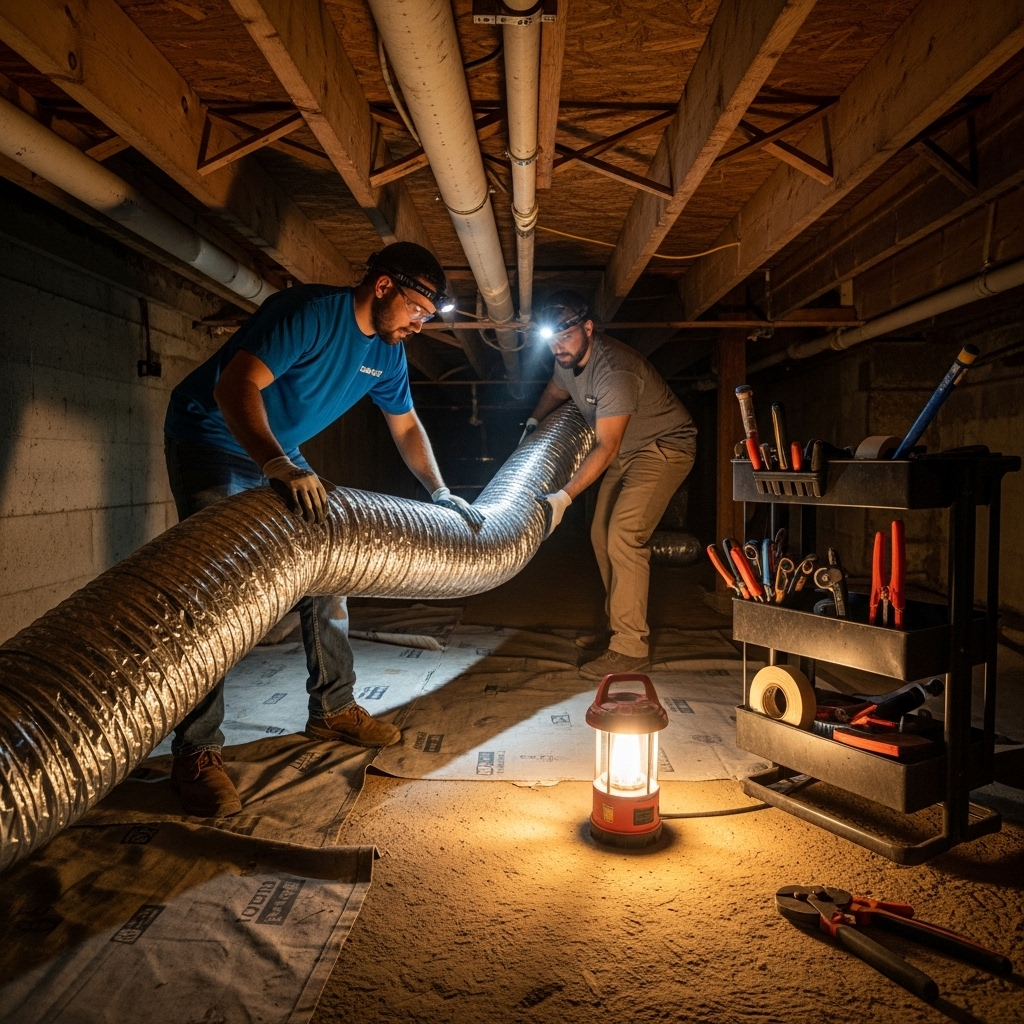
Crews who work close to home tend to slow down at the steps that matter: floor protection from the front door to the attic hatch, covering furniture near registers, and isolating the work zone so dust stays contained. They think about parking access on narrow streets and plan a path that doesn’t brush your hedges or scuff your walkway. Inside, they remove old ducting in a way that avoids scattering debris, and they bag and stage materials for quick, clean removal. Attention to these practical details is a hallmark of a team that respects where you live.
Support and sealing are next. A strong installation uses properly spaced hangers, stretch-and-secure techniques for flex, mechanically fastened connections, and mastic for long-term tightness. Good crews verify register alignment, check for noise at transitions, and mark balancing dampers for clear reference. The result is a system that not only tests well on paper but sounds and feels right when you run it.
Why near-you matters in Los Angeles
Being nearby isn’t just about convenience. It’s about accountability and familiarity. The same crew that installs your ducts is likely the one that returns for seasonal check-ins or fine-tuning. They know the way humidity rolls in from the ocean and the way Santa Ana winds can heat the city unexpectedly. They’ve seen which attic layouts are common in your neighborhood and where returns are often undersized. That lived experience cuts through guesswork and speeds solutions tailored to your home rather than generic fixes.
Local teams also build relationships with city inspectors and understand the hopscotch of permitting that can vary slightly by area. This makes the process smoother and reduces surprises. When a question comes up about a detail—say, support spacing or insulation transitions—they can speak the same language as the inspector and resolve it on the spot. The value of this fluency shows up in timely sign-offs and installations that stand up to scrutiny.
A day in the life of an installation
Picture the morning the crew arrives. They greet you, walk the plan, and begin protecting the path into the work area. Materials are staged, old ducts are removed in a controlled sequence, and new sections are cut to length and labeled by room. Flex is stretched, not bunched. Rigid sections are chosen for straight runs where noise and airflow benefit. Boots are secured to framing and sealed so there’s no whistle or dust pull at the edges. Each supply run is supported to eliminate future sag, and returns are checked for adequate size and quiet air movement.
Midday is when balancing begins. The team adjusts dampers to match the needs of each room, particularly those that take on afternoon sun. They listen for turbulence near transitions and tweak where needed. This kind of on-the-spot tuning is part art, part science, and it’s where local experience pays off. Somewhere in the middle of your research, you’ll likely skim online advice and feel overwhelmed by choices. When you reach that point, it helps to remember that the heart of excellent results is thoughtful, well-executed air duct replacement guided by your home’s realities.
Design choices you’ll feel every day
Ask about register styles and placement. A subtle change can quiet a room or improve how air washes down a wall of windows. Discuss return locations. A secondary return upstairs or a modest enlargement downstairs can lower noise and even out temperatures. Consider how your family uses each space: the home office that runs equipment all day, the nursery that needs gentle, stable comfort, the den that warms quickly when guests gather. Your installer should translate all of that into a layout that feels custom, not off-the-shelf.
Don’t forget maintenance and access. Filter access that’s easy to reach helps you keep the system breathing well. Clear pathways in the attic and labeled branches support future service. Good teams leave behind documentation—photos and simple diagrams—so you can understand the system and communicate clearly during future tune-ups or equipment upgrades.
Aftercare from a neighbor, not a stranger
Great local companies check in after your first hot spell or chilly morning to confirm the system is delivering comfort everywhere. If a room still drifts, they’ll return to adjust balancing dampers or tweak register angles. This commitment is what separates near-you professionals from one-and-done operators. They succeed when neighbors talk, and in Los Angeles, word-of-mouth still travels block to block faster than any ad.
Over the long term, keep returns clear, swap filters on schedule, and let your installer know if sounds change or comfort shifts. Small adjustments early keep your system quietly efficient and protect your investment. And when life evolves—an addition, a remodel, a new room use—your local partner can adapt the duct design to serve the way you actually live.
Frequently asked questions
How do I know I’m choosing the right near-me contractor?
Look for a team that listens first, explains clearly, and demonstrates local knowledge. Ask for references in your neighborhood and for examples of similar homes. You want a plan that addresses your rooms, not a generic template that could fit anywhere.
What should I do to prepare my home for installation day?
Clear the path to the attic hatch or crawlspace, move fragile items from beneath registers and returns, and set aside a quiet area for pets. A quick walk-through with the lead tech the day before helps align expectations and minimizes disruption.
Will duct replacement disrupt my routine?
Expect some noise and foot traffic, but careful crews contain dust, protect floors, and clean as they go. Most homeowners can remain in the house, stepping around the work path as needed. Communication is key; a thoughtful team will coordinate breaks to fit your schedule.
Can my home’s architecture limit what can be done?
Architecture sets the stage, but creative design often opens paths. Even low-clearance attics and tight crawlspaces can support excellent airflow with the right combination of rigid sections, stretched flex, and smart register placement. The goal is performance tailored to your structure.
How soon will I notice a difference?
Usually immediately. Quieter operation, more even temperatures, and less dust are common after a careful replacement and balancing. Give the system a few days across different weather patterns, then share any observations with your installer for fine-tuning.
Do I need permits for near-me duct work in LA?
Most projects benefit from permits and inspection. Reputable local teams include this step and coordinate directly with inspectors. Permits provide a record and confirmed compliance with energy and safety standards—good for you now and for future resale.
What about future service and maintenance?
Choose a near-you company that offers seasonal check-ins and keeps records of your layout. Familiarity speeds future service and ensures adjustments align with the original design intent, extending the life and comfort of your system.
Ready to work with a neighborly team that treats your home with care and delivers comfort that feels custom to your life in Los Angeles? Let’s talk about thoughtful, well-executed air duct replacement that’s planned around your rooms, your routine, and our city’s unique climate.