
In a city that reinvents itself every decade, even the spaces you never see are getting smarter. Los Angeles homeowners have become more attuned to how the attic influences indoor air quality, comfort, and resilience during hotter summers and longer wildfire seasons. As someone who works in attics from the beach cities to the foothills, I have watched a quiet shift: cleaning is no longer a one-off chore, but part of a holistic strategy that blends health, energy performance, and building durability. That mindset begins with meticulous attic cleaning and continues with innovations that are reshaping what we expect from the space above the ceiling.
The most defining trend is integration. Instead of treating cleaning, insulation, air sealing, and ventilation as separate projects, Los Angeles homeowners want a coordinated plan. That means starting with a debris-free, sanitized attic floor, then dialing in air sealing at penetrations, confirming clear airflow from soffits to ridge, and installing insulation that matches both climate and construction style. The goal is not just a cleaner attic, but a quieter, more stable indoor environment that stays comfortable across microclimates from Culver City to Chatsworth.
Health-First Methods and Materials
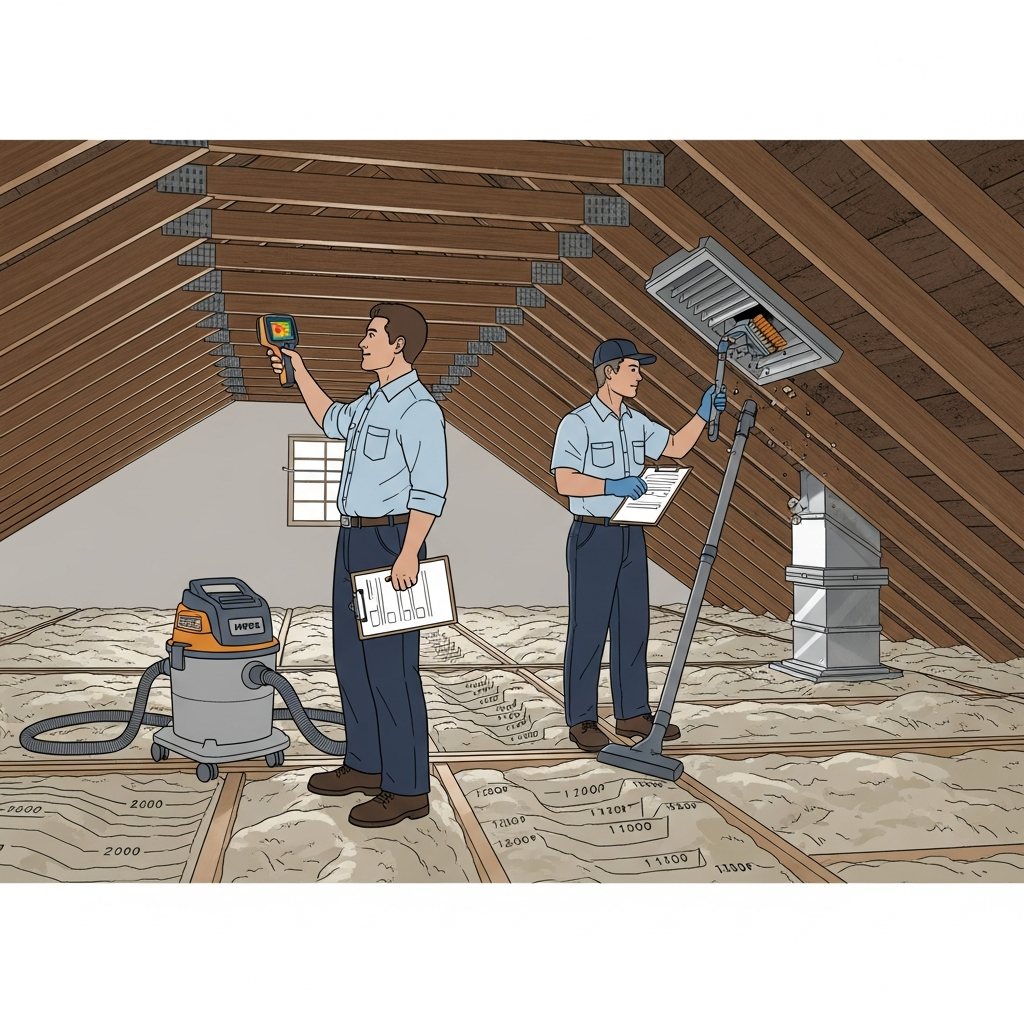
Air quality has moved to center stage, driven by seasons of smoke and a collective awareness of how buildings breathe. Crews now lean on HEPA-filtered extraction and containment practices borrowed from remediation work, even for routine cleanings. This protects the living areas during removal and prevents recontamination. Sanitizing products are selected for low odor and quick curing, and homeowners increasingly ask for documentation of what was used and why. A clean attic isn’t judged only by what you see left behind, but by what you don’t smell or feel drifting into your home later.
Another emerging practice is targeted source control. Instead of blanket-spraying or over-treating, professionals isolate the true offenders—rodent traffic lanes, damp eaves near bath fans, or patches of old, friable insulation—then address those areas with precision. That focus preserves materials where appropriate and reduces chemical loads while still neutralizing contaminants.
Data-Driven Air Sealing and Verification
We are also seeing more measurement. Blower door tests, once rare except in high-performance remodels, now appear in everyday jobs to quantify leakage between the attic and living spaces. Thermal cameras help locate bypasses at dropped soffits, chases, and can lights that are otherwise easy to miss. After cleaning, sealing these leakage points closes the loop, and some homeowners request a quick retest to confirm the improvement. The shift to data makes the work feel less like housekeeping and more like building science—which it is.
For Los Angeles properties with ductwork overhead, duct blaster testing and mastic sealing have become standard add-ons. A clean attic is an ideal environment to perform this work, and the impact is immediate: less dust drawn into returns, lower leakage to the attic, and more even distribution to tricky rooms. This combination trend—cleaning plus verification—has raised expectations for performance across the city.
Ventilation: Clearing the Path for Cooler Roofs
With hotter summers and a string of heat advisories each year, attic ventilation is getting a renaissance. During cleaning, crews are taking extra time to open soffits blocked by paint, debris, or outdated pest screening and to verify ridge vents are actually venting. In homes without ridge vents, gable strategies are balanced more carefully to avoid short-circuiting airflow. The result is lower peak attic temperatures and less thermal stress on roofing assemblies. In older bungalows, simply restoring ventilation and reestablishing baffle channels can transform how the home handles late-afternoon heat.
In coastal areas, moisture management pairs with ventilation. Post-cleaning inspections increasingly include confirming that bath fans and laundry exhausts actually terminate outside and that flex ducts are properly supported to prevent condensation pockets. The trend is away from “set it and forget it” and toward “verify and maintain,” an attitude that keeps the attic healthier long after the initial sweep.
Insulation Choices that Follow Cleaning
Once an attic is clean and sealed, insulation options expand. Homeowners ask for materials that balance performance, recycled content, and low irritants. Even distribution is prioritized over headline R-values, because gaps and voids do more damage than a marginally lower rating. The trend leans toward carefully blown-in solutions with depth markers, baffles protecting soffit airflow, and attention to clearances around heat-producing fixtures. In short, quality of installation now matters as much as the material itself.
On hillside and multi-level homes, we are also addressing complex transitions—knee walls, attic-to-crawl chases, and skylight wells. Cleaning exposes those weak points so we can insulate and seal them correctly. That attention to details pays dividends on gusty days when air tries to sneak through every seam.
Resilience Planning for Smoke and Storms
Los Angeles properties face two evolving risks: prolonged smoke from regional wildfires and episodic storms that test roofs and flashings. In response, post-event cleanings are now routine. After a smoky week, a light film of ash on attic framing and insulation is not just cosmetic; it is a reservoir that releases odor and fine particulates for months. Crews schedule targeted HEPA vacuuming and odor-neutralizing sanitizing so homes feel normal again. After big rains, the trend is to inspect promptly, clean any damp eaves, and correct minor leaks before they spawn larger problems.
Some homeowners have started keeping a simple “attic health log” after a deep clean, noting roof work dates, smoke events, and any noises or odors. This growing habit helps prioritize maintenance and catches issues early, turning the attic from a mystery space into a monitored system.
Real Estate and Renovation Expectations
Buyers and inspectors in Los Angeles have raised the bar. A clean, sealed, well-insulated attic is increasingly viewed as a sign of a cared-for property. During pre-listing preparations, we are asked to document before-and-after conditions, show photos of cleared soffits, and provide notes on air sealing. Investors and homeowners renovating older properties are building cleaning into their scopes because they know it prevents surprises during inspections and accelerates close timelines.
Midway through many jobs, I’m asked whether a simple refresh is enough. In truth, the biggest returns come from a sequence: start with comprehensive attic cleaning, verify and seal leaks, establish ventilation, then insulate with care. That playbook has become a citywide trend because it works across home styles and microclimates.
Technology, Training, and Transparency
Tools and techniques keep improving. Crews rely on lighter, more powerful HEPA vacuums, laser measures for quick takeoffs, and apps for detailed photo documentation. Training emphasizes safe movement to protect plaster ceilings in vintage homes and the nuance of sealing around recessed fixtures and chases without compromising fire safety. Transparency is also on the rise: homeowners receive annotated photo sets that show what changed and why, turning a hidden project into a clear record.
What This Means for Your Home
Trends become standards when they consistently improve comfort and peace of mind. The new norm in Los Angeles is an attic that contributes to calmer interiors, cleaner air, and roofs that last longer. After cleaning, homes feel less reactive to weather, and quirks like the “hot bedroom” or “dusty hallway” fade away. That is the quiet power of addressing the space overhead with the same care you give to kitchens and baths.
FAQs
What makes today’s attic cleaning different from a decade ago?
Modern projects integrate cleaning with air sealing, ventilation verification, and documentation. HEPA extraction, targeted sanitizing, and performance testing are common, turning a one-time chore into a building science upgrade.
How do I know if my attic needs attention after wildfire smoke?
If you notice lingering odors, fine gray dust on upper shelves, or more sneezing near ceiling fixtures, your attic may be holding ash. A targeted HEPA cleanup and sanitizing can restore air quality and comfort.
Will these trends help with hot rooms?
Yes. Clearing soffits, establishing continuous airflow, sealing leaks, and installing even insulation—even more than chasing high R-values—reduces temperature swings and improves comfort in previously stubborn rooms.
Is documentation really important?
Detailed photos and notes protect you during sales, speed up future contractor work, and help you track the attic’s health over time. Buyers now expect evidence that attics are clean, sealed, and properly insulated.
Can I phase the work?
Absolutely. Start with cleaning and sealing critical leaks, then address ventilation and insulation. Phasing still delivers benefits at each step while spreading work around other projects.
If you are ready to apply these trends to your own property, schedule professional attic cleaning with a local team that documents every step and aligns cleaning with sealing, ventilation, and insulation. Your attic will stop being an afterthought and start working for your home, season after season.