
When you live in Los Angeles, you quickly learn that our energy bills have their own rhythm. Cool, marine-layer mornings can give way to bright, warm afternoons, followed by breezy evenings that tempt you to open the windows and let the fresh air in. That daily swing—multiplied across seasons and the city’s distinct microclimates—creates a unique challenge for comfort and efficiency inside a home. The humble solution hiding just above your ceiling is attic insulation, and when it is thoughtfully installed and maintained, the benefits for both comfort and your utility bills can be substantial, day after day, year after year.
Why the Attic Dictates So Much of Your Energy Use
Most homeowners picture energy efficiency as a matter of conditioning the living space—better windows, a smarter thermostat, maybe a more efficient HVAC system. Those investments help, but the physics of heat transfer make the attic a priority zone. Heat naturally moves from hot to cold until temperatures balance, and in homes across Los Angeles, the attic is the primary pathway for that exchange. On warm days, your roof absorbs radiant heat and the attic air superheats, pressurizing the space above your ceiling. Any gap, crack, or thin spot in the thermal boundary can become a highway for that heat to migrate into your rooms. On cooler nights or overcast winter days, the flow reverses: your conditioned indoor warmth can effortlessly escape upward.
With a robust, continuous thermal layer in the attic, you slow that exchange dramatically. Think of insulation as a buffer that gives your HVAC equipment a fighting chance to maintain set temperatures with less frequent cycles. In practical terms, that means reduced runtime for your air conditioner during summer afternoons and gentler heat loss on cool winter mornings. Over time, that lower runtime is what shows up as noticeably more stable bills.
Microclimates and Real-World Impacts in Los Angeles
Los Angeles is a city of many climates. The beach neighborhoods live under a persistent marine layer part of the year; the basin warms quickly during the day; the valleys can swing from cool evenings to triple-digit afternoons; and foothill communities often face intense sun exposure, particularly during Santa Ana wind events. This diversity places varying demands on a home’s interior comfort. An attic with insufficient insulation allows the thermal rollercoaster outdoors to dictate your indoor conditions. By contrast, a well-insulated attic dampens those swings, so even when a heat wave follows a foggy morning, the temperature in your living room remains steadier without aggressive thermostat adjustments.
It is common for LA homes to have aging or patchy insulation, especially if remodeling or electrical work disturbed the original layer. In some houses, past owners installed segmented batts that do not cover irregular cavities, leaving thin spots that drive uneven room-to-room comfort. The benefits of restoring a continuous blanket over the attic floor—or pairing that with targeted air sealing—go beyond energy savings. You also get quieter rooms, fewer drafts, and less dust migration from the attic into living spaces.
Understanding R-Value and Practical Targets
R-value is the measure of thermal resistance; the higher the R-value, the better the material resists heat flow. In our region, aiming for an attic R-value around the upper 30s to 40s is a solid benchmark for performance and cost-effectiveness, especially in homes with plenty of roof exposure. How you reach that number matters less than ensuring coverage is uniform, edges are sealed, and transitions at interior walls and the attic access are treated with care. If your attic currently has a thin layer of old insulation, adding a top-up can be an efficient way to reach modern targets, provided the existing material is in good condition and free of contaminants.
How Insulation Lowers Cooling Loads
On warm afternoons, the temperature in an uninsulated or underinsulated attic can exceed the outdoor temperature by dozens of degrees. That heat does not just sit idle; it radiates and conducts downward into your living spaces, spiking your cooling load. With the right insulation depth and coverage, you reduce the attic floor’s conductive heat gain, which is the biggest factor homeowners can control. In many LA homes, the air conditioner’s longest cycles occur between mid-afternoon and early evening when roof decks are superheated. A better-insulated attic cuts those long cycles shorter and prevents the temperature rebound that often triggers late-day thermostat “nudges.” Over the course of a summer, those nudges add up to meaningful energy use, so cutting them is where many households see the first bill-side benefit.
Ventilation, Air Sealing, and the Holistic Picture
Insulation performs best when paired with proper attic ventilation and air sealing. Ventilation helps expel superheated air and moisture, protecting roof materials while stabilizing attic temperatures. Air sealing—closing gaps around light fixtures, plumbing penetrations, duct chases, and the attic hatch—prevents conditioned air from escaping and blocks attic air from infiltrating the home. Together, these measures turn a patchwork thermal boundary into a continuous, resilient shell. In practice, that translates into more comfort with fewer HVAC peaks, and a home that feels calmer even during the hottest days.
Los Angeles homes often feature recessed lighting, knee walls, and complex rooflines that require attentive detail work. Sealing and insulating around these features ensures you do not end up with a well-insulated field but leaky edges. The payoff is noticeable: rooms under tricky roof transitions and corners become more uniform in temperature, which is a common homeowner complaint in the hills and older neighborhoods with unique architectural details.
Types of Insulation and Choosing What Fits Your Home
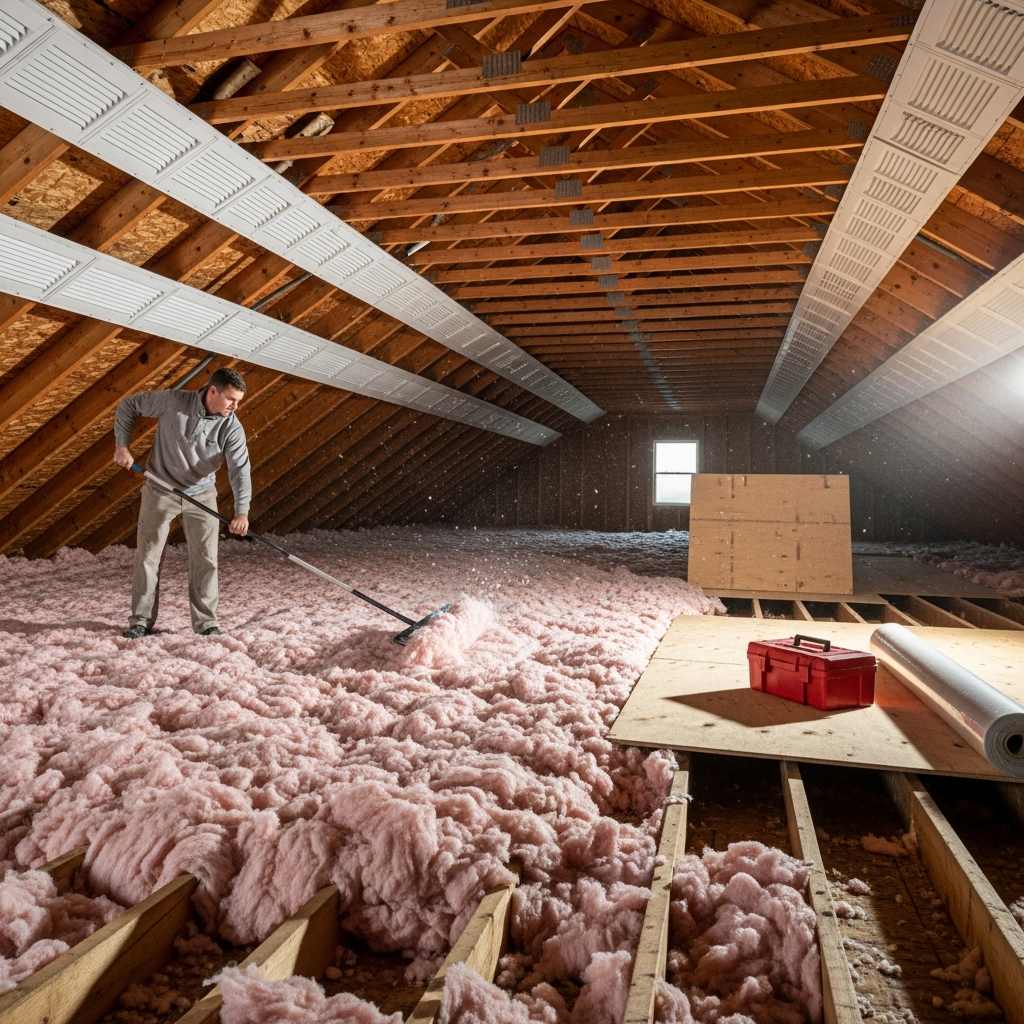
Most LA attics can be upgraded effectively using blown-in fiberglass or cellulose to create an even layer over the attic floor. In homes where access is limited or framing dimensions are irregular, blown-in products shine because they conform to voids and corners. Batt insulation can still be a good choice when cavities are straightforward and installers can ensure full contact without compression or gaps. In some retrofits, a hybrid approach is ideal, using batts for certain bays and blown-in for coverage over the broader field.
Homeowners sometimes ask about radiant barriers in our climate. These can reduce radiant heat gain from the roof, particularly in attics with limited ventilation and high sun exposure. However, radiant barriers are most effective when paired with a solid layer of thermal insulation at the attic floor. In short, the barrier works as a complement, not a substitute, because conductive heat flow remains a major player in overall attic heat gain.
Comfort You Can Feel, Savings You Can Track
There is a tactile quality to a well-insulated home that you notice after a few days: surfaces feel less warm to the touch in the afternoon, indoor air feels calmer, and the need to adjust the thermostat drops. If you monitor runtime or use a smart thermostat, you will often see a reduction in cooling cycles after an attic upgrade. On the bill side, improvements build over time because you are flattening those daily thermal spikes that tend to drive usage. This isn’t a quick flash of savings followed by a plateau; it is a steady, season-by-season benefit grounded in physics.
In many Los Angeles neighborhoods, energy savings pair with a better quality of life. Reduced temperature swings help households sleep more comfortably, make home offices feel bearable on hot days, and keep pets calm during heat events. That comfort dividend is often what homeowners value the most, especially in households juggling work-from-home schedules or caring for kids and older family members.
Resilience for Heat Waves and Power Events
Our region’s increasingly frequent heat waves and occasional grid stress events make passive energy strategies more important than ever. A well-insulated attic helps your home maintain livable temperatures longer when the air conditioner is cycling less often or, in rare cases, when you need to ride out an outage. That resilience has a real-world feel: rooms remain tolerable for longer, and your cooling system has a gentler climb back to setpoint when power returns or when you revert to normal operation after a conservation period.
The Midway Checkpoint: Are You Getting Full Value?
At this stage, it is worth pausing to consider whether your attic’s current condition is helping or hindering your home. If you find thin spots, dusty or disturbed areas, or inconsistent coverage, you are likely leaving comfort and efficiency on the table. This is where a professional assessment focused on attic insulation can clarify the best path forward—whether topping up depth, sealing specific penetrations, or reworking the entire layer for uniform, code-aligned performance. The right plan will marry science with the specific quirks of your roofline and microclimate.
Indoor Air Quality and a Cleaner Home
While the attic is not part of your living space, it influences indoor air quality. Gaps in the ceiling plane can allow attic air—laden with dust, insulation fibers, or rodent residue—to infiltrate. By sealing those pathways and ensuring insulation is installed without gaps, you lower the risk of attic contaminants mixing with indoor air. The result is not only cleaner air but also less household dust and a reduced workload for filters and vacuum cleaners. In a city like Los Angeles, where outdoor air quality can fluctuate due to traffic, seasonal fires, and coastal particulates, controlling the indoor environment becomes even more valuable.
Protecting Your Home’s Structure
Insulation is a comfort and efficiency measure, but it also supports the durability of your roof assembly. When paired with proper ventilation, insulation keeps attic temperatures and moisture levels more even, which is good for roof decking, framing, and fasteners. Excessive attic heat prematurely ages roofing materials and can drive up cooling loads at the same time. By taming attic temperatures, you slow that wear and tear. Balanced airflow from soffit to ridge, combined with an even insulation layer, is a quiet, ongoing form of home maintenance that pays back in multiple ways.
Planning an Upgrade: What a Good Job Looks Like
The most effective attic upgrades begin with a walk-through to identify air leaks, measure current insulation depth, and note details like recessed lights, bath fan ducts, or open chases. From there, a scope of work targets the biggest thermal bypasses first—sealing the attic hatch, boxing and sealing can lights when appropriate, and closing gaps around utility penetrations. Only after those are addressed is new insulation installed to the desired depth. The result is a continuous, predictable thermal boundary with fewer surprises when the first heat wave hits.
Homeowners often worry about disruption, but most attic projects can be completed with minimal impact to daily life. The mess stays in the attic, and the benefits are immediate. Within the first week, you should notice a calmer indoor environment and fewer abrupt temperature changes.
Environmental Benefits That Add Up
Using less energy to maintain comfort is a win for the grid and for the region’s broader sustainability goals. Attic insulation delivers a persistent reduction in energy demand without changing your routines. In effect, your home requires less mechanical intervention to stay comfortable. Spread that impact across a street, a neighborhood, or the city, and it becomes a meaningful contribution to community-level energy resilience, particularly during peak demand periods in late summer.
Frequently Asked Questions
How do I know if my attic insulation is sufficient for Los Angeles conditions?
Look for even coverage that reaches modern R-value targets across the entire attic floor. If you can see the tops of joists throughout, or if there are visible thin spots, you likely need additional depth. Hot-and-cold rooms beneath the attic, long afternoon cooling cycles, and dusty air leaking through light fixtures are also telltale signs.
Will better attic insulation make a difference if I already have a high-efficiency AC?
Yes. High-efficiency equipment still has to counteract heat gain from above. Reducing that load shortens run times, improves comfort, and helps your equipment last longer. Insulation and air sealing work synergistically with efficient HVAC for the best results.
Do I need to add a radiant barrier in Los Angeles?
A radiant barrier can help in attics with extreme sun exposure, but it is most effective when paired with a well-insulated attic floor. Thermal insulation remains the primary driver of reduced conductive heat flow. Many homes see excellent results with depth and coverage upgrades alone.
Is there a best season to insulate an attic in LA?
You can upgrade any time, but many homeowners schedule projects in spring or early summer to capture peak-season benefits. Fall is also popular, giving homes a comfort boost before holiday gatherings and cooler nights.
Will attic insulation help with noise?
Insulation provides a degree of sound dampening, softening rooftop noises and the hum of outdoor activity. While it is not a dedicated soundproofing system, many homeowners notice quieter rooms after an attic upgrade.
Ready to Make Your LA Home More Comfortable and Efficient?
If you are considering a project that will pay you back in steadier comfort and more predictable energy bills, start above the ceiling. A knowledgeable local team can assess your attic’s current condition, seal critical gaps, and install an even blanket of insulation that is tailored to your roofline and microclimate. To take the next step toward a calmer, more efficient home, schedule a conversation about attic insulation and discover how a focused upgrade can transform the way your home feels, summer through winter.