
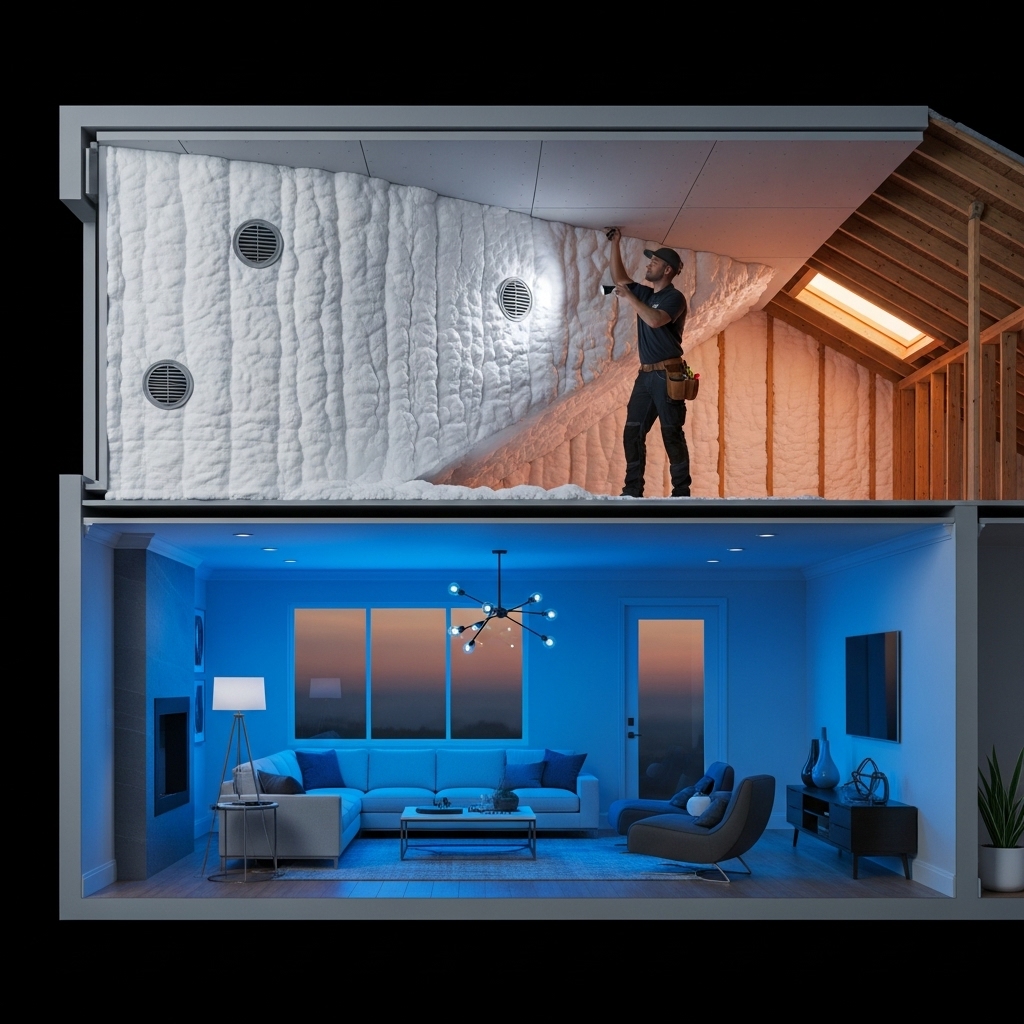
Los Angeles summers do not arrive all at once; they creep in over the late spring, ride on the back of dry winds, and then settle into our neighborhoods with a steady, sun-baked intensity. If you live on the Westside, you know the afternoon glare that bounces off stucco and lingers in the evening. If you make your home in the Valley, you understand the kind of heat that feels like it is being piped straight from the sky into your living room. In both cases, the story often begins overhead. Your roof absorbs sunlight, your attic stores that heat, and your home below tries to cope. That is where smart, well-installed attic insulation changes everything, not just in theory but in day-to-day comfort when the mercury climbs.
To appreciate the benefits, it helps to understand what happens in an uninsulated or underinsulated attic on a typical July afternoon. The roof surface can soar far above the outdoor air temperature. That heat radiates through the roof deck, warming the attic air and any ductwork or storage up there, and then conducts through the ceiling into living spaces. Without a strong thermal barrier, the top floor becomes a sponge for heat, and once it soaks in, it is slow to release. Insulation, combined thoughtfully with air sealing, interrupts that transfer. It turns your attic from a heat amplifier into a buffer, stretching out the temperature swings so your rooms remain steady and calm, even while the sun is relentless outside.
The comfort difference you feel by late afternoon
Homeowners often tell me the same story in different words: the house feels fine in the morning, then uncomfortably warm by 3 p.m., and by early evening the bedrooms are hot despite the air conditioner working hard. This is a classic sign of an attic that funnels heat downward. When your attic is properly insulated, that climb is blunted. Instead of heat pouring through the ceiling, it is slowed dramatically. The result is the kind of steady, even comfort that lets you cook dinner without breaking a sweat, put kids to bed without extra fans, and wind down without chasing cool spots from room to room. It is not magic; it is physics applied in the place where it matters most.
Comfort is not only about the thermometer number. It is about radiant sensation on your skin, the feel of a chair back that does not get warm, the way a home breathes and recovers after you open a door. Insulation helps maintain a consistent surface temperature on ceilings and walls. That means fewer hot spots, less stratification, and a more natural flow of air with fewer drafts. For anyone who has spent a sticky Valley evening feeling heat descend from the ceiling, the difference is immediate: your rooms hold their cool, and sleep comes easier.
Lower strain on your air conditioner and steadier performance
In Los Angeles, where many systems run for long stretches on summer afternoons, the strain on air conditioners can be tremendous. An attic that holds heat pushes your AC to cycle more often and work harder to counteract the influx. With a stronger thermal boundary overhead, your system faces a lighter load. It can run at gentler, longer cycles that remove humidity and stabilize temperatures rather than short bursts that leave some rooms clammy and others warm. Reducing that up-and-down demand is one of the quiet benefits of insulation: equipment runs closer to its sweet spot, and the comfort you notice is more even and lasting through the day and into the evening.
There is also the matter of ducts. In many Los Angeles homes, ducts snake through the attic. When the attic is scorching, those ducts absorb heat; by the time cool air reaches your rooms, it is warmer than intended. Insulating the attic helps keep the surrounding air cooler, which means supply air stays closer to its target temperature. Even without touching the ducts themselves, you can improve the effectiveness of the entire distribution system simply by improving the attic environment that surrounds it.
Healthier indoor air and quieter rooms
Good insulating practice goes hand in hand with air sealing, which reduces the uncontrolled movement of dusty, superheated attic air into your home. Many older Los Angeles houses have subtle gaps at chases, around light fixtures, and along the top plates of walls that open straight into the attic. On hot days, that air can be pulled downward, carrying particulates, odors, and sometimes outdoor pollutants that find their way into the attic through vents. By tightening these pathways and pairing them with the right insulation, you create a calmer, cleaner indoor environment. An added plus is sound attenuation: a well-insulated attic softens the rumble of aircraft on coastal flight paths or the hum of distant freeways, creating a more peaceful backdrop indoors.
For families managing allergies or sensitive to wildfire season, minimizing uncontrolled air pathways is not a luxury. While ventilation remains important for roof health, there is a difference between designed ventilation at the eaves and ridge, and random leaks into living space. Insulation and sealing keep that boundary clear, so your home air is conditioned intentionally rather than being a blend of attic and outdoors. You feel this as less stuffiness, fewer odd temperature swings near recessed lights or attic hatches, and a subtle improvement in how fresh your home smells after a long heat wave.
Protecting the roof and the building over time
Beyond comfort, a moderated attic helps protect the structure of your home. Extreme attic temperatures stress building materials, cook adhesives, and can make roofing components age prematurely. While proper ventilation is essential, insulation plays its part by tempering the heat load and keeping indoor moisture from drifting upward and condensing on cooler surfaces during shoulder seasons. In Los Angeles, where the late-night marine layer can meet a warm home interior, controlling that moisture migration is part of preventing mold and preserving the integrity of rafters and sheathing. Think of insulation as part of a system that helps your roof last as long as it should, while your interior finishes stay stable and free of seasonal cracking.
It is also a safety factor around lights and chases. When insulation is professionally installed, clearances around IC-rated recessed fixtures are respected, electrical penetrations are evaluated, and combustible sources are addressed. That kind of thoroughness is not only about meeting best practices; it is about preventing the small, unseen issues that can grow into larger headaches over time. A cooler, well-managed attic is kinder to every component housed there, from bath fan terminations to junction boxes, and it creates an environment where the entire system of your home can work as designed.
When properly planned and installed, attic insulation becomes one of those improvements you notice most when the weather turns extreme. On the hottest days, you stay comfortable with less effort. On the warm October nights that sneak up after a Santa Ana, your home does not trap that heat the way it used to. The benefits are steady and cumulative, and they touch every room you live in, not just the top floor or the one with the biggest window facing west.
Materials that make sense for Los Angeles homes
In our climate, blown-in fiberglass and cellulose are the workhorses, each with advantages that suit different houses. Cellulose, with its dense coverage, does a fine job filling around irregular framing, old plaster transitions, and the charming quirks of vintage bungalows. Fiberglass, especially modern blown-in formulations, offers excellent performance with low settling and is easy to top up later if you plan an incremental approach. Mineral wool has its place where elevated fire resistance is a priority. What matters more than the label is achieving the right R-value consistently across the attic floor, paying attention to eave baffles so insulation does not block ventilation, and tightening the air leaks that diminish performance on hot, windy days.
For many Los Angeles neighborhoods, a target R-value in the high 30s to the 40s on the attic floor aligns well with our peak cooling needs. Thickness is only part of the story. A careful installer will build dams around the attic hatch, protect the paths to equipment platforms, and ensure that insulation blankets the entire field without thin spots near the eaves. These details keep the thermal boundary continuous, which is why properly executed projects often deliver comfort that seems disproportionate to the simplicity of the work. It is not about overcomplicating the attic; it is about doing the basics exactly right.
Addressing common concerns and myths
One question I hear often is whether insulating the attic makes the house too tight or stifling. The truth is that your roof still breathes through its designated vents, and your home still exchanges air through the mechanical systems it should rely on. Insulation does not choke a house; it directs airflow so that outdoor air comes from the right places, not from dusty cavities or through overheated ceiling leaks. Another concern is whether an older home will be “too old” for insulation to make a difference. In fact, it is usually the opposite. The older and leakier the home, the more pronounced the improvement after sealing and insulating. The transformation can feel dramatic on the very first hot afternoon after the work is complete.
There is also the worry that insulation adds weight or invites pests. Installed correctly, modern materials add negligible load compared to the capacity of typical framing and actually help deter pests by closing off the pathways they prefer. Any reputable crew will address existing issues, clean and prepare the attic floor, and leave the space orderly so inspections and future service remain straightforward. The goal is a clean, even blanket of protection, not a cluttered or inaccessible attic.
From evaluation to results: what a good project looks like
A successful upgrade starts with a thoughtful look at your home. That means checking for signs of past moisture, confirming bath fans and kitchen vents terminate outdoors, examining duct condition, and mapping the air leaks that matter most. The work itself tends to be efficient: sealing penetrations, installing baffles at the eaves to preserve airflow, building retaining dams where needed, and then blowing in or laying insulation to the specified depth. Access is protected, debris is removed, and the attic hatch is weatherstripped so it becomes part of the thermal boundary rather than a weak link. By the time the crew departs, your attic looks calmer, and your home begins to feel that way too.
Afterward, the improvements show up in quiet ways. Rooms warm by sunlight in the morning but do not overheat by lunch. The top floor remains livable in August without an extra fan in every corner. The air conditioner hums along at lower speeds and cycles off for longer stretches, and your evenings become easier because the home recovers more quickly after you cook or entertain. These are not abstract benefits; they are the kinds of day-to-day changes that make living through a Los Angeles summer less about coping and more about enjoying your space.
Seasonal timing and staying ahead of the heat
While insulation is valuable any time of year, there is a strategic advantage to tackling it before the first big heat wave. Crews have easier access, your home is ready when temperatures rise, and you avoid the scramble that often accompanies the first triple-digit forecast in the Valley. If you are planning other work—roofing, HVAC, or electrical—there is coordination to consider so that attic pathways remain accessible and the sequencing serves the whole project. A local team that understands Los Angeles housing stock can help you plan the timing so everything fits together and you get the most from the upgrade.
It is also wise to consider small complementary steps like sealing around recessed lights, adding an insulated cover over the attic hatch, and confirming that soffit vents are open and clear. None of this is glamorous work, but each task adds up to a home that handles heat better and feels more composed under stress. In a region where sunny days are the norm, these quiet improvements pay you back in comfort over and over again.
FAQ
Q: Will insulation help if my AC already runs all day? A: Yes. Insulation reduces the heat entering from above, so your system does not have to fight an uphill battle. You will notice steadier temperatures, fewer hot spots, and longer, gentler cycles that feel more effective.
Q: What R-value makes sense in Los Angeles? A: Many homes perform well with attic floor insulation in the R-38 to R-49 range, installed evenly and paired with air sealing and proper ventilation. The exact target depends on your house, duct layout, and roof design.
Q: Do I need to remove old insulation first? A: Not always. If existing material is clean, dry, and evenly distributed, it can sometimes be supplemented. If it is contaminated, compacted, or patchy, removal and a fresh start often deliver better results.
Q: Will my house feel stuffy after insulating? A: Properly done, no. The goal is to stop hot attic air from leaking into living space while preserving roof ventilation and encouraging controlled, healthy indoor air through designed pathways.
Q: How long does the work take? A: Most attic projects in Los Angeles can be completed in a single day, depending on access, preparation needs, and the size of the home. More complex projects may take longer, but the disruption is usually minimal.
Q: Is insulation a fire risk around my recessed lights? A: Professional installers maintain safe clearances, use appropriate materials, and respect fixture ratings. This is part of why expertise matters—details keep the upgrade safe and durable.
Ready to enjoy a cooler Los Angeles summer?
If you are tired of rooms that overheat by afternoon, imagine your home holding its cool without constant AC battles. A careful assessment and a well-executed plan can turn your attic from a heat collector into a shield that works for you every day. Reach out to a local team that knows our neighborhoods, understands the nuances of Valley heat and coastal fog, and treats your home with care. The first step is simple: explore your options for attic insulation and set your home up for more comfortable summers, calmer evenings, and better sleep all season long.