
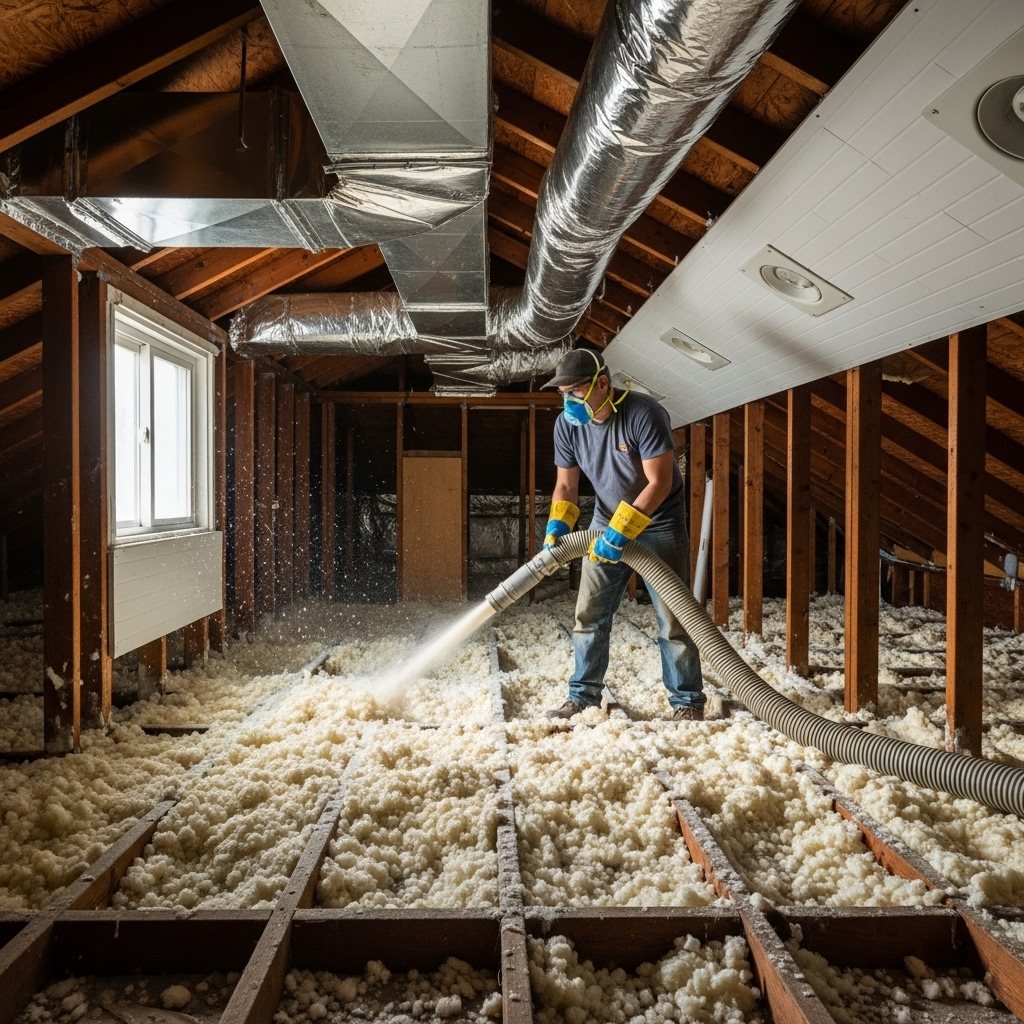
Step into almost any older home in Los Angeles and the first thing you notice is its character. From the sun-warmed stucco of 1920s Spanish Revival cottages in Mid City to the shingled bungalows tucked into Eagle Rock, the city’s architectural history is lovingly preserved. But take that same step up into the attic and you’ll often discover a very different story: sparse batting slumped between joists, gaps around light fixtures, and ducts that feel as hot as the Valley in August. It’s why well-planned attic insulation is one of the most transformative upgrades for older Los Angeles homes, delivering comfort, durability, and energy performance that respects the integrity of the architecture while solving very modern challenges.
Why older Los Angeles homes struggle with comfort
When you live in an older Los Angeles home, you get the charm of plaster walls, original hardwoods, and hand-built roof framing that has weathered decades of sun and Santa Ana winds. What you don’t always get is thermal performance. Many houses built before the 1980s have little to no attic insulation, and the materials that were used—thin batts or a sprinkling of loose fill—were installed with older standards in mind. Pair that with the local climate’s unique mix of cool coastal mornings, blazing afternoon sun, and seasonal heat waves, and a barely insulated attic can turn into a radiating heat source right above your head.
In practical terms, an underinsulated attic means rooms that overheat by mid-afternoon, air conditioners that cycle endlessly without catching up, and chilly mornings in winter when you can feel the draft through ceiling penetrations. In classic LA fashion, life happens on a microclimate map: a home in Westchester with ocean breezes has very different needs than a 1940s ranch in Woodland Hills, where attic temperatures routinely soar. The attic is where these differences converge, and the right solution makes the whole house feel like it was built for today’s climate.
The benefits you feel every day
When an older home’s attic is properly insulated and air sealed, the first benefit you notice is comfort. The bedrooms are more even in temperature, the hallway no longer feels like a heat tunnel, and the living room stays pleasant long after the sun slides behind the palms. Comfort is the headline, but what really wins homeowners over is the consistency—those small irritations you used to shrug off, like a stuffy guest room or a persistently cold corner, fade into the background.
Another benefit is the way a well-insulated attic protects your home from the intense solar load that Los Angeles roofs endure. By slowing heat flow into the living space, insulation reduces the strain on your cooling system and helps your interior finishes last longer. Paint doesn’t fade as fast, hardwoods aren’t constantly expanding and contracting, and your favorite armchair near that south-facing window is no longer a hot seat at 3 p.m.
Energy performance without sacrificing character
Owners of older homes often worry that improving performance means compromising original details, but attic work is largely invisible from the living areas. The prime opportunity lies above the ceiling plane, where modern techniques can be applied without touching the crown molding or the coved plaster that gives your home its identity. Air sealing around light fixtures, chases, and access hatches; installing baffles at the eaves to protect ventilation pathways; and blowing in high-quality loose-fill insulation are unobtrusive steps that pay big dividends.
In Los Angeles, code guidance and building best practices recommend higher attic R-values than older homes currently have, because higher levels of insulation provide better resistance to heat flow. The result is not just lower energy use but a house that feels inherently calmer and quieter. In a city with freeways threading through every neighborhood, the muffling impact of a deep, continuous blanket of insulation is a bonus many homeowners don’t anticipate but quickly appreciate.
What makes attic insulation uniquely important in LA
Los Angeles is defined by sunshine, but also by variety. A Craftsman near Griffith Park might see cool evening air pouring down the canyons, while a ranch in the Valley bakes all day under a high, open sky. Attics in these homes become the mediator between extremes, and insulation is the language they speak. When the sun hits a roof for hours, the roof deck radiates heat into the attic cavity, which then leaks through openings and thin insulation into your living space. The process is relentless, predictable, and solvable.
Equally important is how insulation works with air sealing. Older Los Angeles homes were built when air conditioning was a luxury, not a design assumption, so there are often gaps around plumbing penetrations, recessed lights, and wall top plates. By sealing those leaks before insulating, you dramatically slow the stack effect, where warm air rises and escapes at the top of the home, pulling in outside air from below. The payoff is indoor air that stays where you want it—cooler in summer, warmer in winter, and far less dusty.
Materials that make sense for historic and mid-century structures
Every house tells a story, and the right insulation respects that. Dense, borate-treated cellulose is a favorite for many older attics because it fills irregular spaces around rafters and wiring, provides excellent thermal resistance, and offers sound-dampening that harmonizes with the solid feeling of plaster walls. Modern blown fiberglass can also be a strong choice, providing high R-values with settled-stability and low dust when installed with attention to depth and coverage. Mineral wool is an option when higher fire resistance is a priority, particularly around flues and chimneys where clearances matter.
Spray foam is sometimes proposed for vaulted ceilings or complex rooflines, but it requires careful deliberation in older homes, especially where ventilation patterns are part of the roof assembly’s health. For most Los Angeles attics with accessible flat ceilings, a thoughtful combination of air sealing and deep loose-fill insulation delivers the best balance of performance, cost, and compatibility with aging structures.
Air sealing: the step that multiplies every benefit
I often tell homeowners that if insulation is the blanket, air sealing is the stitching. In older homes, we find electrical penetrations hidden under a thin skim of dust, the telltale sign of air movement. We see can lights without covers, attic hatches that act like open windows, and chases for old plumbing stacks that connect the attic to wall cavities. Sealing these with appropriate materials—fire-rated where needed—before adding insulation locks in gains. The home immediately feels less drafty, and the new insulation performs closer to its rated potential because it’s no longer short-circuited by air leaks.
In practice, that means identifying and prioritizing the big leaks first, then working down to the smaller ones. Around the eaves, baffles keep insulation out of soffits and preserve intake airflow. At the top of interior walls, a careful bead of sealant stops the invisible chimney of air that otherwise carries heat, dust, and in some cases attic odors into living areas. The ceiling becomes a continuous barrier, and the house begins acting like a unified system rather than a collection of rooms battling the weather.
Ventilation, ducts, and the attic ecosystem
Once you upgrade insulation in an older Los Angeles home, the attic often becomes a more stable environment, and that’s good for everything inside it. Ducts running through the attic, common in mid-century and later houses, suffer less temperature gain before the air reaches your vents. If the ducts are leaky—a frequent discovery in decades-old systems—sealing them while you’re in the attic multiplies the comfort gains. Balanced attic ventilation, with clear soffit intakes and a reliable ridge or off-ridge exhaust, helps keep roof decks dry and temperatures moderated without drawing conditioned air out of your home.
Radiant barriers sometimes enter the conversation in sunny climates. They can be useful in certain roof assemblies, but in most older LA attics with abundant roof penetrations and existing venting, a robust layer of insulation paired with air sealing is the workhorse. The barrier to heat transfer comes primarily from the insulation’s depth and continuity, with ventilation playing a supporting role.
Neighborhood nuance: from coastal fog to Valley heat
What works in Venice or Mar Vista, where marine layers roll in and afternoon winds cool the roof, won’t always match what’s needed in Sherman Oaks or Burbank. The attic strategy adapts by accounting for each home’s microclimate and construction era. In the coastal zone, attention to wind-driven air leakage and salt-tolerant materials helps preserve performance. Inland, the focus leans toward higher R-values and ensuring ducts are insulated and tight. In the hills, where access can be tight and rooflines complex, creative approaches to reach every nook pay off with even temperatures across split-level floor plans.
In all cases, the results align: a home that feels more serene, a cooling system that works smarter, and a building envelope that better defends against a changing climate. It’s not about making an older home behave like a brand-new build; it’s about unlocking the best version of what your home already is.
Health, cleanliness, and the quiet factor
Another benefit homeowners in Los Angeles notice is a change in indoor air quality. When we air seal and insulate, we often reduce the pathways for attic dust, insulation fibers from past installs, and outdoor pollutants to migrate into the house. The shift is subtle but meaningful: fewer sneezes in the morning, less dust settling on surfaces, and a welcome quiet as the insulation dampens exterior noise. Homes near busy corridors like the 405 or 101 appreciate this acoustic bonus, which adds to the feeling of sanctuary.
For families working from home, studying, or just enjoying a weekend movie, the quieter, more stable interior environment becomes an everyday luxury. It’s a kind of comfort you measure not only in degrees but in the ease with which you move through your day.
Protecting the building and its story
While comfort is what you feel, durability is what your house feels. A well-insulated and properly vented attic helps keep the roof deck within a healthier temperature range and reduces condensation risk at the ceiling plane during the cooler months. That matters in older homes with original framing and roof sheathing, where we want to retain as much of the existing structure as possible. Insulation also shields plaster and paint from constant thermal cycling, minimizing cracking and the tiny fissures that lead to more air leakage over time.
For homes with vintage details—exposed beams, intricate ceilings, or unique attic access points—the work can be tailored to preserve these features. Insulation depth can be adjusted, baffles custom-fitted, and hatches weatherstripped in ways that blend with the home’s style. The process is craftsmanship as much as it is building science.
Planning the project in a lived-in home
One of the reasons homeowners delay is concern about disruption. The good news is that attic insulation projects, especially in older Los Angeles homes with simple access points, are among the least invasive improvements you can make. With careful preparation—covering access routes, sealing the work area, and scheduling any duct or electrical prep—the process is tidy and swift. Most of the work happens above the ceiling, and by the end of the day you feel a difference when you walk into the hallway under the attic hatch.
In the middle of the project, we often pause to show homeowners the visible changes: sealed can lights, foam blocks closing off forgotten chases, and a uniform blanket of material at the specified depth. It’s a confidence-building moment that connects the idea of performance to the tangible reality of better attic insulation.
What to expect from an assessment
A thorough attic assessment for an older Los Angeles home starts with listening. Where do you feel discomfort? Which rooms run hot? Do you notice dust or odors when the air conditioner kicks on? A visual inspection follows, noting insulation depth and condition, ventilation pathways, duct layout, and any signs of rodents, moisture, or historical wiring that needs special handling. Safety comes first—clearances around chimneys, recessed fixtures, and any knob-and-tube remnants are checked, and plans are made to maintain required separations.
Next comes the building science piece: understanding how your house moves air. We look for the big connections between the attic and living space that explain persistent hot and cold spots. It’s a detective story written in caulk lines and light shafts, and the clues are usually obvious once you know where to look. From there, we develop a plan that prioritizes air sealing, defines insulation levels, and sequences any duct or ventilation work to maximize impact.
Seasonal performance and resilience
As heat waves become more frequent and nights stay warmer, a well-insulated attic helps your house ride out extremes. It slows the rate at which heat penetrates your living space, keeping late-afternoon temperatures in check and giving your cooling system a chance to keep up. During cooler months, that same resistance keeps warmth from slipping away, making mornings more pleasant without cranking the thermostat. The result is a home that’s better aligned with the rhythm of Los Angeles weather, including the hot, dry winds that can push temperatures into uncomfortable territory.
Resilience isn’t only about temperature. It’s also about how your home handles smoke, dust, and power interruptions. By tightening the attic boundary, you reduce infiltration of outdoor particulates during wildfire events, and the house maintains more stable temperatures during short outages because it loses or gains heat more slowly. These are quiet forms of preparedness that matter in our region.
Return on comfort and daily life
While spreadsheets can estimate energy savings, the value homeowners rave about is everyday comfort. Older Los Angeles houses become easier to live in, with fewer compromises about which rooms are usable at which times. Guests sleep better in that back bedroom that used to bake in summer. Home offices stay steady, so you don’t end the workday with a migraine from chasing the thermostat. This qualitative improvement is real, and it’s why so many people say, “We should have done this years ago.”
What’s more, the work supports the long-term stewardship of a home you love. You keep the history, the street presence, and the craftsmanship, while quietly upgrading the performance to meet today’s needs. It’s a respectful renovation that gives back every day.
Frequently asked questions
Q: Will insulating the attic make my older home feel stuffy? A: Not when it’s done correctly. Air sealing the ceiling plane reduces unwanted drafts, and ventilation above the insulation maintains healthy airflow in the attic. The living space actually feels fresher because temperatures stabilize and dust pathways are reduced.
Q: Can I add insulation over old material I already have? A: Often yes, as long as the existing insulation is dry, free of contaminants, and not concealing safety hazards. During an assessment, we determine whether to top it up or remove and replace. Removing is recommended if there are rodent issues, moisture damage, or incompatible materials.
Q: How do I know if my ducts need attention too? A: If your ducts run through the attic, it’s smart to evaluate them at the same time. Leaky or poorly insulated ducts undermine attic upgrades. Sealing and insulating ducts in tandem with new attic insulation amplifies comfort and reduces hot and cold spots.
Q: What R-value should I target in Los Angeles? A: For most older homes with accessible attics, a high R-value appropriate for our climate delivers noticeable comfort improvements. The exact target depends on your roof assembly, microclimate, and HVAC setup; a local assessment tailors the recommendation to your house.
Q: Will insulation help with noise from streets and neighbors? A: Yes. A deeper, continuous layer of insulation softens exterior noise, especially the mid- to high-frequency sounds common in urban environments. It won’t soundproof a home, but most homeowners perceive a quieter, calmer interior.
Q: Is it safe to insulate around old wiring or chimneys? A: Safety clearances are part of any professional plan. We identify older wiring types, create appropriate buffers around heat sources, and use materials rated for the conditions. The goal is performance with peace of mind.
Q: How long does an attic upgrade take? A: Many projects in older Los Angeles homes are completed in a day or two, depending on access, prep work, and whether duct sealing or minor repairs are included. The improvement in comfort is often immediate.
Ready to make your older Los Angeles home feel new again?
If you’ve been living with hot bedrooms, uneven temperatures, or an air conditioner that never seems to rest, your attic is asking for attention. A thoughtful plan respects your home’s architecture while transforming how it feels, functions, and endures. Start with a conversation and a careful evaluation, and discover how much calmer your home can be with upgraded attic insulation. Your next perfect evening at home might be just an attic away.