
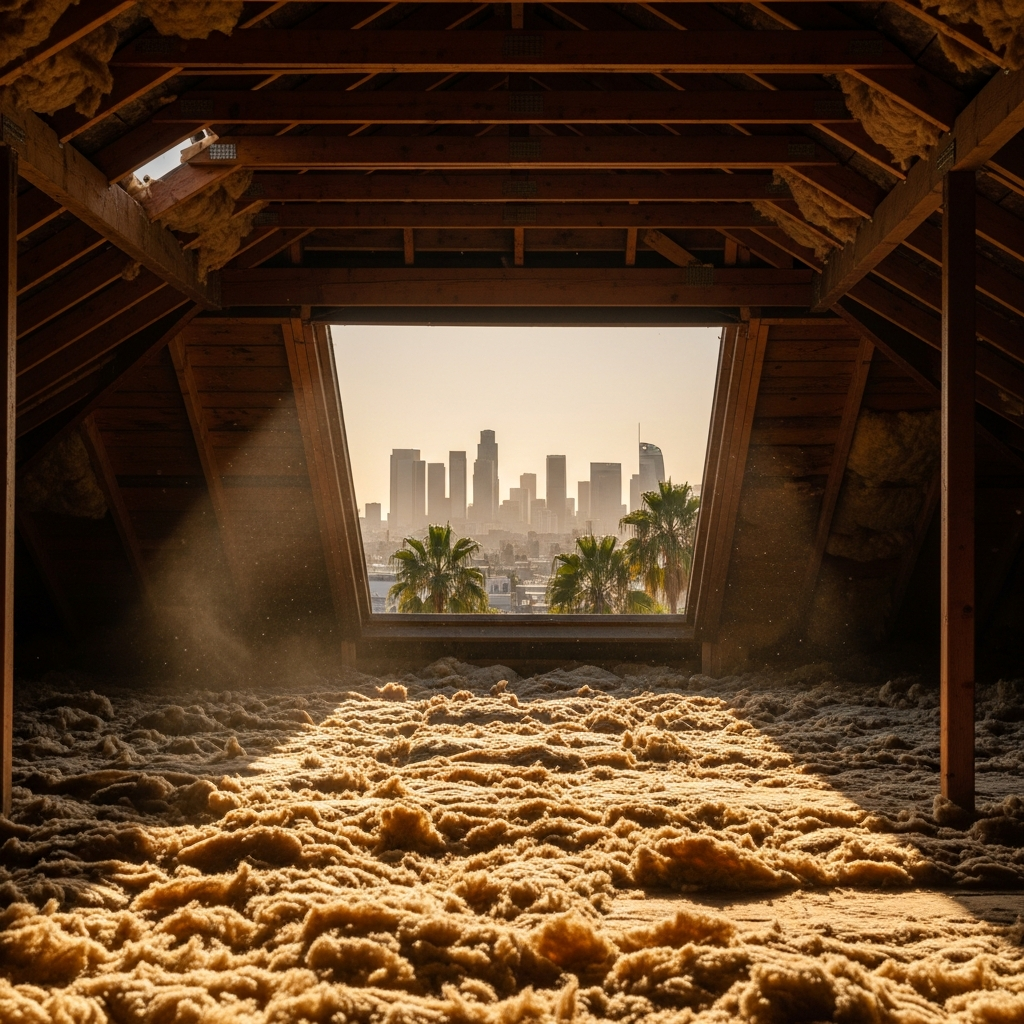
On hot Los Angeles afternoons, when sunlight floods rooftop after rooftop and the air carries that familiar shimmer over concrete and asphalt, each home becomes part of a larger energy story. Air conditioners hum, the grid strains, and the choices we make about our buildings ripple outward to the city and the region. Among those choices, few are as quietly influential as what happens above the ceiling. Attic insulation, which most of us rarely see, has a profound environmental impact—not only on how much energy a single home uses on a July evening, but on the cumulative demand that shapes emissions, air quality, and resilience for all of us.
I have walked the rafters of houses from Pacific Palisades to Pico-Union and seen how small changes in attic assemblies translate into big differences in comfort and consumption. The environmental case for better attic insulation in Los Angeles is both simple and layered. It is simple because reducing heat gain in summer cuts the run time of air conditioners, producing immediate, measurable drops in electricity use during the very hours when our grid is under the most stress. It is layered because the materials we choose, the way we install them, and how we care for them across their lifespan influence embodied carbon, indoor air quality, and long-term durability.
To appreciate the full picture, it helps to understand both the physics in your own home and the broader patterns of energy use in Southern California. When sunlight beats down on a roof, the attic becomes a buffer between that radiant energy and your living spaces. If that buffer is thin, patchy, or leaky, heat pours into the home and your cooling system responds with long, power-hungry cycles. If the buffer is robust and airtight, the home rides more gently through the afternoon peak. Multiply that effect by thousands of homes across the basin and you begin to see why attic insulation is not just a household efficiency upgrade—it is an urban sustainability strategy.
As a first step, many homeowners research the fundamentals of attic insulation so they can make material and design choices with an eye toward both comfort and climate. That shared foundation makes it easier to compare environmental tradeoffs, ask better questions, and shape a plan that fits your house and your values.
Energy demand, peak hours, and cleaner air
Los Angeles experiences long summer days with evening peaks in electricity use as people return home and cool their spaces. Insulation in the attic reduces the rate of heat transfer through the ceiling, which means your air conditioner can cycle less and still maintain a steady indoor temperature. This reduction is most valuable in the late afternoon and early evening, exactly when the grid is most stressed and the marginal power plant called upon to meet demand is often the least efficient. Every avoided cycle is fewer pounds of CO2 and fewer precursors to smog-forming pollutants released into the basin’s air.
At a neighborhood scale, the effect compounds. When many homes shed a fraction of their cooling load, local transformers and distribution lines run cooler and more reliably. That improved stability matters during heat waves, when rolling outages are a risk and vulnerable residents depend on their homes to remain habitable. A well-insulated attic is a passive ally during such events, buying time and comfort even if mechanical systems are idled.
Embodied carbon and material choices
Environmental impact begins before installation, with the sourcing and manufacture of insulation itself. Cellulose insulation often leads the conversation on embodied carbon because it is primarily recycled paper treated with mineral fire retardants; its production can represent a comparatively low-carbon pathway. Fiberglass has improved substantially, with many products incorporating high recycled glass content and cleaner binders than in decades past. Mineral wool is produced from abundant basalt or recycled slag and offers robustness and fire resistance, though its manufacturing energy intensity varies by plant and process. Spray polyurethane foam can deliver high R-values per inch, but the chemistry of its blowing agents and isocyanates, along with installation requirements, place a premium on careful specification and skilled application.
Choosing among these materials is not a matter of picking a winner in the abstract. It is about matching the product to your home’s needs while considering both embodied and operational impacts. An insulation that is easy to install uniformly, resists settling, and maintains performance for decades without replacement may have a stronger lifetime environmental profile than a product with slightly lower manufacturing impacts that performs poorly in your specific assembly. Installation quality—coverage, air barrier alignment, and protection of ventilation paths—often determines whether the theoretical efficiency of a product turns into real-world energy savings.
Durability, maintenance, and waste avoidance
One of the greenest features of a building component is longevity. Insulation that remains dry, clean, and undisturbed can serve for decades. In Los Angeles, keeping attics free from roof leaks, pest intrusions, and contractor disturbances goes a long way toward preserving performance and avoiding the environmental cost of removal and replacement. This is where small details pay off: solid baffles at eaves to maintain ventilation and block wind-washing, rigid air barriers around chases, protected recessed lights, and raised storage platforms that do not compress the thermal layer.
When removal is necessary—after significant contamination, remodeling, or roof leaks—plan for responsible handling. Some materials can be reclaimed or recycled in limited streams, especially if clean and free of contaminants, while others must be disposed of as construction waste. The least wasteful project is the one that avoided premature replacement because the original installation was conscientious and the attic was maintained with periodic check-ins.
Indoor environmental quality
Environmental impact is not only about energy and carbon; it is also about the air your family breathes. A well-sealed and insulated attic reduces the migration of dust, roofing particles, and outdoor pollutants into your living spaces. This matters on hot, smoggy days when opening windows is not always desirable. The thermal calm that insulation provides is paired with quieter rooms, as fibrous insulation muffles street noise and the ever-present hum of city life. Over time, a cleaner, quieter home supports health and well-being—benefits that do not show up on a utility bill but are central to sustainable living.
Resilience in a warming climate
Climate projections for Southern California point to more frequent and longer heat waves. Homes with robust attic insulation ride out these events with less distress. Even when power interruptions occur, the rate at which indoor temperatures climb is slower in a well-insulated and well-sealed house. That buffer can be crucial for older residents, young children, and anyone sensitive to heat. Think of attic insulation as part of a home’s resilience toolkit, alongside shading, strategic window operation, and high-efficiency mechanical systems.
Radiant heat and the physics above the ceiling
Roofs in Los Angeles drink in sunlight. Much of that energy becomes radiant heat on the underside of the roof deck. Insulation across the attic floor resists the conductive flow into your home, but there are other dynamics to manage. Proper ventilation lets the attic purge hot air before it accumulates excessively. Thoughtful detailing at eaves and around penetrations prevents wind-washing that strips heat from the insulation’s surface and lowers its effective R-value. The environmental benefit of insulation depends on this holistic approach; a small breach or a poorly detailed vent can weaken the performance of an otherwise excellent installation.
Equity, comfort, and neighborhood-scale benefits
Los Angeles is a patchwork of microclimates and housing stock. In neighborhoods where older buildings predominate and incomes are stretched, the environmental gains from upgrades can also be gains in equity. Lower cooling demand reduces utility burdens, and better indoor conditions improve daily life. From a citywide perspective, clusters of upgraded attics can ease pressure on local infrastructure and reduce the need to dispatch the dirtiest peaker plants on the hottest evenings. Cleaner local air and fewer outages benefit everyone, not just individual homeowners.
Designing for both performance and planet
When planning an upgrade, take the time to align your choices with environmental goals. Consider whether your project should target higher R-values within practical limits, how air sealing can be maximized without complicating future maintenance, and what materials suit your roof geometry and venting strategy. Document the work with photos and labeled placards so that future owners or contractors understand what is in place and how to care for it. The more readable your attic is, the less likely someone will unknowingly disturb it in a way that wastes energy and materials.
Mid-course check: are we meeting our goals?
Halfway through any project, I like to pause and ask whether the plan still matches the home’s needs and the owner’s environmental priorities. Are baffles installed at every eave bay? Are top plates, chases, and penetrations fully sealed? Is the insulation depth on track to meet the target evenly, not just in the center of the field? This is also a good moment to revisit the basics of attic insulation and verify that material selection still makes sense in light of any discovered conditions. A simple check-in prevents rework and ensures the environmental benefits we expect will show up on the other side.
Beyond the attic: synergies that amplify impact
Insulation’s environmental punch grows when combined with other measures. Shading the south and west facades with vegetation or exterior screens lowers the solar load before it ever reaches the roof or walls. Air sealing at the attic dovetails with careful sealing elsewhere, making the whole envelope tighter and more predictable. Efficient, right-sized mechanical systems run less and cycle more gracefully in a well-insulated home. Smart thermostats can shift limited cooling to earlier, cleaner hours, relying on the attic’s thermal resistance to carry comfort into the evening.
Community perspective and long-term outcomes
As more Los Angeles homeowners invest in their attics, we accumulate benefits that extend far beyond individual meters. Reduced peak demand smooths the duck curve, enabling higher penetration of renewable energy while limiting reliance on fossil-fueled backup. Buildings that hold their cool are kinder to occupants and neighborhoods during emergencies. Over years, these choices reshape how we experience heat in the city, helping Los Angeles adapt to a climate that is changing even as we work to mitigate that change.
Frequently Asked Questions
Q: Which insulation has the lowest environmental impact?
A: It depends on how you weigh embodied carbon, recycled content, and lifetime performance. Cellulose often scores well on embodied carbon, while fiberglass and mineral wool offer durability and recycled content. The best choice is the one that performs reliably in your specific attic assembly with minimal waste.
Q: How much energy can attic insulation save during summer?
A: Savings vary by house, but attics are typically the largest source of heat gain in single-family homes. Reducing that gain substantially lowers AC run time, especially during peak hours. The exact number depends on your starting point and installation quality.
Q: Does adding insulation improve indoor air quality?
A: When paired with air sealing, yes. It reduces the movement of attic dust and outdoor pollutants into living spaces, and it stabilizes temperatures so your mechanical systems operate more efficiently.
Q: What if my attic has limited height near the eaves?
A: Careful detailing—tapered insulation, rigid dams, and baffles—protects ventilation while maximizing coverage. Evenness matters more than one deep spot in the center.
Q: Is radiant barrier a greener choice?
A: Radiant barriers can complement insulation in sunny climates by reflecting radiant heat. Their environmental merit depends on how they are integrated. They should not replace sufficient insulation and air sealing.
Q: How often should I check my attic for issues?
A: Twice a year is a good rhythm—before peak summer and before winter rains—plus after any roof work or major wind events. Quick inspections help you catch small problems before they turn into wasteful replacements.
When you are ready to make an upgrade that serves your comfort and the city we share, start where it counts most: the quiet space above your ceiling. Thoughtful planning, careful installation, and a small habit of seasonal attention will deliver cooler afternoons, cleaner air, and a smaller footprint. Begin by exploring options for better attic insulation, and let your home become part of a cooler, cleaner Los Angeles—one roof at a time.