
Energy efficiency in Los Angeles has moved from a niche interest to a neighborhood conversation. Between hotter summers, longer cooling seasons, and a growing push toward electrification, homeowners from West Adams to Studio City are rethinking how their houses keep cool and stay comfortable. At the center of that rethink is the attic. The latest trends in attic insulation aren’t just about adding more material; they’re about smarter assemblies, better air control, and designs that respect the character of LA’s eclectic housing stock while delivering modern performance.
The shift from insulation-only to building envelope strategy
One of the clearest trends is treating the attic not as an isolated project but as part of the home’s continuous envelope. That means pairing insulation with targeted air sealing, duct improvements, and attention to ventilation paths. The goal is a continuous boundary that resists heat and controls airflow. In older bungalows with irregular framing and in mid-century homes with wide spans, the envelope approach delivers more consistent results than simply piling on inches.
Los Angeles homeowners are also embracing performance diagnostics. Blower door testing and thermal imaging, once reserved for deep retrofits, are increasingly used for even modest attic upgrades. The data shows where air is moving, where insulation is thin, and where small fixes deliver outsized gains. It’s a sign of maturity in the market: decisions driven by evidence, not guesswork.
Higher R-values and the importance of coverage
Another trend is a push for higher attic R-values that reflect our long cooling season and intense solar exposure. But along with more depth comes a renewed focus on uniform coverage. We’re seeing careful attention to recessed lights, top plates, and transitions that historically lost insulation during hurried installs. The result is fewer weak spots and a ceiling plane that performs more like a continuous shield.
This attention to coverage extends to attic hatches and pull-down stairs, which have long been notorious for heat leakage. Insulated, gasketed covers are becoming standard in quality projects, ensuring the weakest link is strengthened rather than ignored. Homeowners feel the difference at the exact place they used to feel the draft: the hallway under the hatch.
Material evolution: cellulose, fiberglass, and mineral wool refined
The materials themselves are evolving. Modern cellulose offers improved settling stability and low-dust formulations while retaining its high recycled content and excellent sound attenuation. Blown fiberglass has seen advances in fiber technology that allow higher R-values per inch with better coverage and fewer voids. Mineral wool, prized for fire resistance and thermal stability, is used strategically where clearances and safety are paramount.
Rather than arguing for one material to rule them all, the trend is toward matching material to the attic’s needs and the home’s goals. A hillside Spanish with a complex roof may benefit from cellulose’s ability to flow around irregularities; a mid-century with ducts crisscrossing the attic might leverage fiberglass for depth and ease of service; a home near brush interfaces may choose mineral wool in key areas for added resilience. Flexibility is the new standard.
Smart air sealing: from guesswork to guided precision
Air sealing has gone from a set of rules of thumb to a practiced craft informed by testing. Crews now use targeted sealants and fire-rated materials to close gaps at the top plate and around chases, then verify with pressure diagnostics. The approach is meticulous but efficient: close the largest pathways first, then work down to the smaller ones that collectively add up.
Special attention is paid to recessed lighting. Older cans, common in Los Angeles kitchens and living rooms, are replaced or boxed appropriately so insulation can cover them safely. The ceiling becomes quieter and less leaky, and the attic insulation performs to its potential instead of being held back by clearance gaps that act like thermal potholes.
Ducts, ventilation, and integrated performance
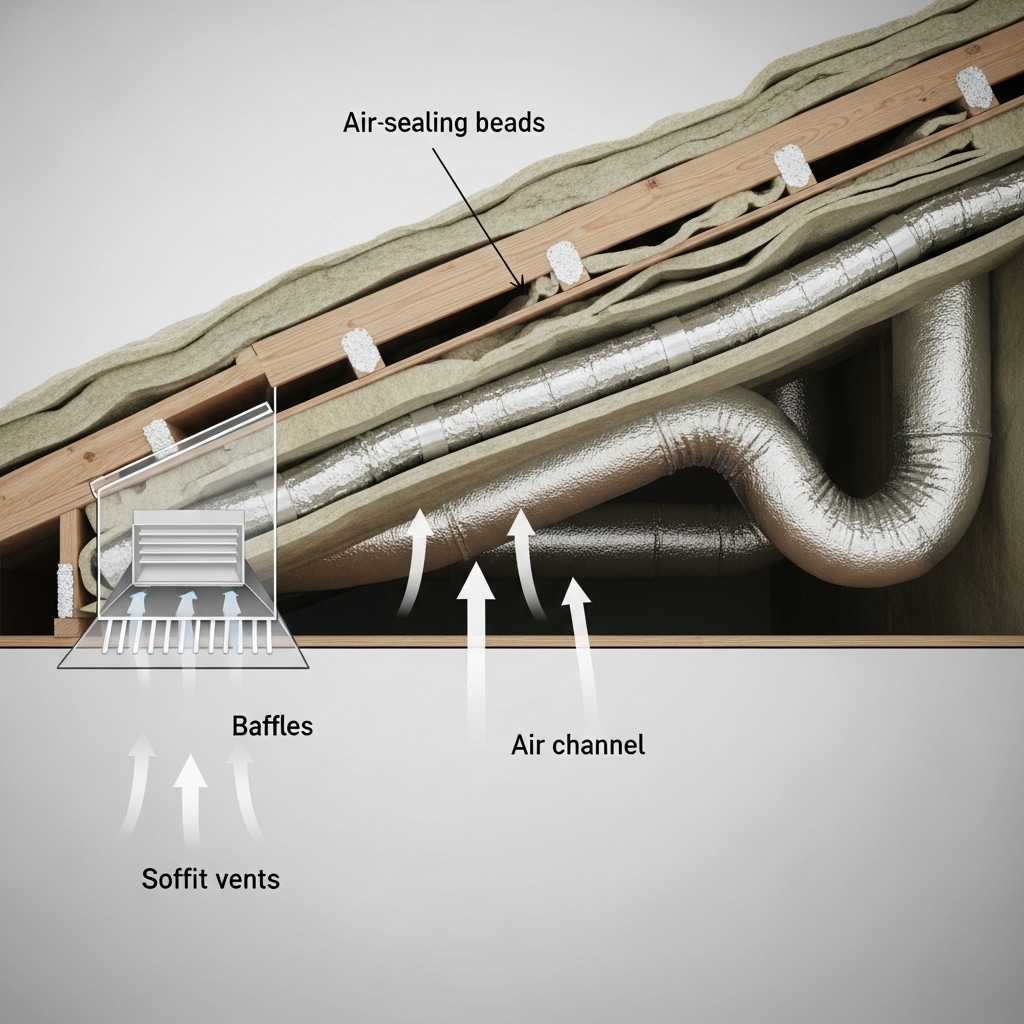
Because so many Los Angeles homes route ducts through the attic, duct sealing and reconfiguration are now standard companions to insulation projects. Burying ducts in insulation—after they’re sealed and wrapped to the correct level—has gained traction as a practical way to reduce heat gain before air reaches your rooms. The strategy works especially well in the Valley and inland neighborhoods where attics run hotter for longer.
On the ventilation side, we’re seeing a move away from gadgets and toward reliable passive designs: clear soffit intakes, continuous ridge or high-mounted exhaust, and baffles that prevent wind-washing of insulation. The emphasis is on assemblies that maintain roof health without disrupting the pressure balance of the living space below.
Electrification and load reduction
As more homeowners consider heat pumps and induction cooking, the conversation about attic insulation shifts to load reduction. The better your envelope, the smaller the equipment you may need and the more comfortably it will operate. That’s a trend with practical benefits: quieter systems, smoother temperature control, and homes that are primed for clean energy without sacrificing comfort during LA’s hottest weeks.
Load reduction also improves resilience. In rolling peak demand periods, a home that gains heat slowly is far easier to keep comfortable. It’s a quiet form of preparedness that’s become more relevant as our summers evolve.
Aesthetic and historic sensitivity
Los Angeles is justly proud of its historic neighborhoods. Insulation trends reflect a commitment to preserving these homes’ visual and cultural value. Projects emphasize minimally invasive methods—working from the attic down, avoiding alterations to plaster, and selecting materials that complement the home’s acoustics and feel. When vintage venting details or unique roof structures are present, solutions are tailored rather than forced, maintaining the home’s identity.
Homeowners appreciate that they can achieve high performance without erasing the features that drew them to the house in the first place. The nostalgia remains; the discomfort doesn’t.
Data-driven commissioning and post-upgrade verification
A growing number of projects include before-and-after measurements—blower door tests, infrared scans, and simple temperature logging in key rooms. Verification satisfies curiosity, validates investment, and sometimes reveals small tweaks that can perfect the outcome, such as adding a touch more insulation at an oddly framed soffit or tightening a leaky attic access. The process turns insulation from a one-and-done task into a refined improvement with documented results.
For homeowners, the takeaway is clarity. You can see the thermal images where cold or hot spots used to be, and you can feel the difference in rooms that no longer misbehave in the afternoon. It’s performance you can measure and live with.
Attention to indoor air quality
As insulation and air sealing improve, indoor air quality becomes part of the conversation. The trend is to pair tighter homes with sensible ventilation strategies inside the living space while keeping the attic well-vented above the insulation. By controlling air pathways, we reduce the dust and attic odors that used to drift into homes through unsealed penetrations. The result is cleaner, quieter interiors that feel better day and night.
This is especially welcome for homes near busy corridors, flight paths, or nightlife zones. A calmer acoustic environment feels like a luxury upgrade, even though it’s simply a byproduct of improved insulation depth and continuity.
Education and homeowner involvement
Another trend is inviting homeowners into the process. During installs, we often pause to show progress: properly sealed can lights, straight baffles at the eaves, and a uniform blanket of insulation at the target depth. Informed homeowners are empowered homeowners—they maintain access hatches, keep soffit vents clear, and call for help when they see signs of rodents or roof leaks that could degrade the improvement.
That partnership pays dividends over years, not just the week after installation. It turns an attic upgrade into part of a home stewardship plan, aligned with roof maintenance, gutter care, and HVAC service.
Embodied carbon and material stewardship
Los Angeles homeowners are increasingly asking not just “How well does it perform?” but “What is it made of?” Recycled content, fire resistance without persistent chemicals, and materials that age gracefully have entered the decision-making matrix. Cellulose’s recycled paper content and borate-only treatments appeal to many; fiberglass manufacturers have improved recycled glass content; mineral wool’s fire resistance speaks for itself in hillside and wildland interface neighborhoods.
The city’s sustainability ethos is pushing the market toward materials and methods that deliver both performance and responsibility. You can feel good about how your home performs and what’s hiding above the ceiling.
Where LA homes are heading next
Looking ahead, expect more integration. Insulation will continue to pair with air sealing, duct optimization, and smart controls to deliver comfort with less energy. We’ll see ongoing refinements in material science and installation methods that target tricky areas like knee walls and split-level transitions common in hillside construction. And we’ll keep tailoring solutions to microclimates, because a bungalow in Venice will never live exactly like a ranch in Encino—and that’s part of what makes our work here so interesting.
In the middle of this evolution is a simple truth: better attic insulation remains the foundation of an efficient Los Angeles home. Whether you’re electrifying, adding solar, or just trying to tame summer afternoons, the attic is where you get your fastest, most reliable wins.
Frequently asked questions
Q: Do I need testing for a basic attic insulation project? A: Testing isn’t mandatory, but blower door and infrared scans often reveal opportunities you can’t see, making the upgrade more effective and targeted. Many homeowners appreciate the clarity it brings.
Q: Which insulation material is best right now? A: The “best” depends on your attic and goals. Cellulose excels at filling irregular spaces and reducing noise, fiberglass delivers high R-values with stable coverage, and mineral wool shines near heat sources or where fire resistance is a priority.
Q: Will higher R-values make a noticeable difference in LA? A: Yes. Given our long cooling season and strong sun, additional attic R-value provides tangible comfort improvements, particularly in late afternoon and early evening.
Q: Can I pair an attic upgrade with duct improvements? A: Absolutely. Sealing and insulating ducts during an attic project often produces the biggest real-world gains, especially in homes with older systems routed through the attic.
Q: How do these trends affect historic homes? A: Trends favor minimally invasive methods that respect original architecture. Most work happens in the attic, preserving plaster, molding, and other defining interior features.
Q: What about radiant barriers—trend or necessity? A: They have a place in specific assemblies, but the core trends prioritize air sealing and deep, continuous insulation. Radiant barriers can complement, not replace, a robust thermal blanket.
Make today’s trends work in your home
If you’re planning upgrades this year, start where the payoff is immediate and lasting: the attic. A modern approach aligns materials, air control, and duct strategy with the unique story your home tells. Explore your options for smarter, deeper attic insulation, and set your Los Angeles home up for quieter days, cooler nights, and a future ready for whatever the weather brings.