
In Los Angeles, warm days arrive early, stay late, and push homes to prove how well they are built. Over the last decade, building standards have steadily elevated expectations for how a roof, an attic, and the rooms below should perform. Title 24—the California Energy Code—sits at the center of that shift, guiding both new construction and many types of alterations toward better thermal envelopes and smarter systems. For homeowners planning updates or exploring ways to make a house more resilient in hot weather, understanding how modern attic insulation strategies align with Title 24 is the key to choosing upgrades that are not only comfortable but also compliant and future-ready.
“Trends” in insulation are rarely about fads; they are about doing fundamentals better. Across Los Angeles, what we see is a deepening focus on quality of installation, on continuity of the thermal boundary, and on the interaction between the attic, the ducts that often live there, and the ventilation that keeps roofs healthy. Each piece plays into the energy code, which aims to reduce heat flow through the building shell and ensure that equipment does not have to fight preventable losses. The result is homes that feel cooler with less effort on the hottest afternoons and that keep their composure into the evening when stored heat usually becomes the enemy of sleep.
Prescriptive R-values and practical targets
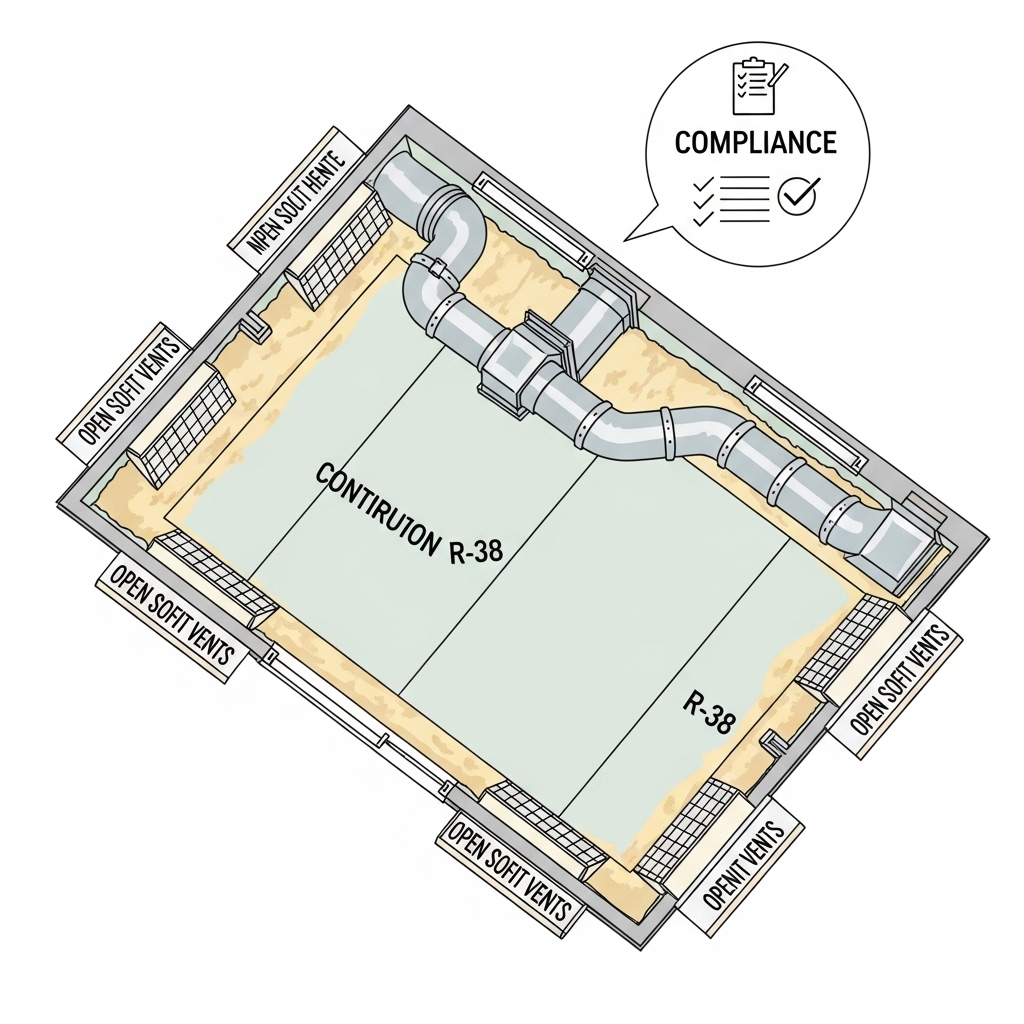
In the Los Angeles area’s climate zones, the prescriptive path under Title 24 typically points to attic floor insulation around R-38 for conventional ventilated attics. That is a practical, field-proven target for our mix of long sunny seasons and cooler nights. Many projects choose to meet or exceed that number, especially where ducts run through the attic and benefit from a milder environment. What matters most is uniform coverage without thin spots, paired with air sealing at the ceiling plane so the R-value on paper translates into performance you can actually feel.
Uniform coverage is not just a neatness goal. The code’s spirit is about reducing heat transfer everywhere, not just in the easy sections. At eaves, baffles prevent insulation from blocking soffit vents while allowing full depth to the perimeter. Around hatches and pull-down ladders, insulated covers and dams maintain continuity. Title 24 does not award points for beautiful fluff; it rewards performance, and that starts with a thermal boundary that behaves like a single, intact layer.
Quality Insulation Installation and verification
One important trend is the growing emphasis on Quality Insulation Installation practices. In practical terms, that means crews are paying attention to density, fit, and air sealing in ways that go beyond simply hitting inches. Sealing top plates, capping chases, and addressing recessed lights ensures the insulation is not bypassed by airflow. These steps align with the intent of Title 24 and can support verification processes on projects that require it. When done well, the difference shows up indoors as steadier temperatures and fewer drafts, especially during the peak afternoon hours when Los Angeles homes are most stressed.
Verification can vary by project type, but homeowners benefit from the same thoroughness regardless of paperwork. The attic that wins an inspector’s nod for continuity and attention to detail is the same attic that makes your home feel new during a September heat wave. The message is simple: performance comes from details, and details are what Title 24 is trying to standardize across the market.
Ventilated attics, sealed attics, and duct strategy
Most Los Angeles homes use ventilated attics with insulation at the attic floor. This approach is reliable and cost-effective, and it keeps the thermal boundary at the ceiling plane. In some projects, particularly where rooflines are complex or ducts are difficult to insulate and seal in a hot attic, a sealed attic strategy can make sense. That option moves the thermal boundary to the roof deck and brings the attic into the conditioned space. It is a different path with different details, but the guiding principle is familiar: keep the envelope continuous, control airflow, and ensure the ventilation strategy suits the design.
For houses with ducts in the attic, more attention than ever is being paid to duct sealing, insulation, and layout. Title 24’s goals are not served if cool air warms up before it reaches a bedroom. Whether you keep the attic ventilated and insulate the floor or pursue a sealed approach depends on the home’s geometry and your project scope. In both cases, an attic that is thermally calm helps the distribution system hit its targets and reduces runtime for HVAC equipment when the sun peaks over Los Angeles neighborhoods.
Materials evolving with performance in mind
Material choices in our region have converged on a few reliable options for attic floors: blown-in fiberglass, blown-in cellulose, and batt systems where access demands it. The trend is less about novelty and more about getting consistent results. Blown-in products excel at reaching irregular spaces and covering around obstacles. Dense coverage minimizes voids, and installers can measure and verify depth throughout the attic. Batts can work where pathways are narrow, but they demand careful cutting and fitting to avoid gaps and compression. The common thread is professional technique that converts rated R-values into real-world comfort under Los Angeles summer sun.
Homeowners are also paying more attention to the connection between insulation and indoor air quality. Though Title 24 is not an IAQ standard, sealing the ceiling plane reduces dusty air movement from the attic into living spaces. That pairs naturally with a ventilation strategy for the home itself, ensuring fresh air is supplied on purpose rather than sneaking in from the hottest, dustiest part of the house. You feel that as cleaner air and less late-day stuffiness when outdoor temperatures remain high.
When a project calls for it, attic insulation can be combined with radiant barriers or cool roof materials during re-roofing to further reduce heat gain. Those measures reduce the roof deck’s temperature and lighten the load on the insulation below. Title 24 recognizes cool roof strategies in certain applications, and homeowners see the benefit most clearly on the hottest afternoons when the roof would otherwise soak up and re-radiate heat into the attic.
Integration with whole-home strategies
Title 24 treats homes as systems, and so should we. Insulation works best alongside duct sealing, proper attic ventilation, well-fitted attic hatches, and verified airflow for mechanical systems. The current trend is integration: bundling envelope work with HVAC right-sizing and control improvements so that equipment runs at comfortable, steady outputs rather than chasing heat that slips through ceiling gaps. In practice, that might look like sealing and insulating the attic floor, testing ducts, and ensuring supply and return balances make sense for an older home that has grown through additions.
In hot Los Angeles summers, thermostats tend to get set and left. With better envelopes, you can allow gentler setpoints because the home drifts less when doors open or the afternoon sun leans in. Some owners also pair envelope upgrades with filtration improvements, which is felt most in wildfire season when indoor air clarity becomes a daily concern. None of this requires reinventing the house; it is a matter of tuning a familiar space so it behaves like a much newer one.
Permitting, inspections, and the homeowner’s experience
Even when Title 24 documentation is not required for a simple insulation top-up, working to that standard is a useful benchmark. Crews that think in those terms deliver predictable results: they protect access, respect electrical clearances, verify ventilation pathways, and document depth and coverage. If your project is tied to a permitted scope—such as a re-roof or HVAC replacement—you may see inspection steps that look for continuity of insulation and evidence that attic ventilation remains open at the eaves. These checks align incentives with your comfort and peace of mind.
From the homeowner’s perspective, the process is straightforward. An assessment identifies opportunities and constraints, any contaminated or compacted material is removed if needed, air leaks at the ceiling plane are sealed, and new insulation is installed to even, verifiable depths. The difference can be felt the same day, particularly on top floors or rooms beneath sunlit roof sections. The most common reaction is a quiet one: the home simply feels less restless under heat stress.
Why these trends matter in Los Angeles
Our city’s climate patterns reward homes that can resist the daily build-up of heat in the attic and then release it slowly after sunset. That is precisely what modern insulation strategies aim to achieve. When you combine continuity at the ceiling plane, careful air sealing, clear eave ventilation, and targeted duct improvements, the result is a home that handles August like a pro and glides through the shoulder seasons without drama. You run the AC less aggressively and still enjoy the same—or better—comfort because the building itself is doing more of the work.
Another Los Angeles reality is growth by addition. Many houses carry roof geometry that tells the story of decades of change. The trend toward attention to detail means those seams are recognized and addressed rather than glossed over. Knee walls get proper backs, odd voids are closed, and old chaseways are sealed. The thermal boundary becomes continuous across old and new sections alike, which is exactly how Title 24 imagines an effective envelope performing.
Looking ahead without overcomplicating the plan
As codes evolve, the fundamentals remain. Create a continuous envelope, control air where it moves, insulate to practical targets, and verify that reality matches drawings. Los Angeles homeowners do not need to chase exotic solutions to meet Title 24 expectations. A clean, well-executed attic project delivers the lion’s share of comfort improvement for the least disruption, and it positions the home to integrate future upgrades—whether that is a high-efficiency heat pump, a re-roof with cool materials, or balanced ventilation that keeps indoor air fresh on hot, hazy days.
The trend that matters most is the simplest: doing the basics better, every time, with an eye for the details that turn R-value into results you can feel and enjoy in the rooms where you live. When that happens, the code box gets checked almost as a side effect of a home that is quieter, cooler, and calmer through the long Los Angeles summer.
FAQ
Q: What attic R-value should I aim for in Los Angeles to align with Title 24? A: A practical prescriptive target for conventional ventilated attics is around R-38, installed uniformly and paired with air sealing. Some projects go higher depending on roof geometry and duct location.
Q: Does Title 24 require me to change my attic ventilation? A: The code expects adequate ventilation for roof health, but the specifics depend on your roof design. During insulation work, baffles at the eaves keep airflow open while allowing full-depth coverage at the perimeter.
Q: Do I need special inspections for attic insulation? A: If your project is part of a permitted scope that triggers energy compliance, inspections may verify coverage and continuity. Even when not required, working to that standard ensures the performance you are after.
Q: Are sealed attics better than ventilated attics? A: Each has its place. Ventilated attics with insulation at the floor are simple and effective. Sealed attics can make sense where ducts and geometry make the roof deck a better boundary. The right choice depends on your home and goals.
Q: Can I keep my existing insulation and just add more? A: If existing material is clean, dry, and evenly distributed, it can often be supplemented. Contaminated or severely compacted material is usually best removed to ensure uniform coverage and reliable performance.
Plan a code-smart upgrade for a cooler home
If you are weighing options before summer or coordinating work with other projects, the path forward can be straightforward. Focus on continuity, proper depth, and the air sealing that brings the numbers to life, and you will feel the difference the first hot week that rolls through the basin. Start with a conversation about attic insulation that treats Title 24 as a guide and your comfort as the goal, and step into a season of cooler afternoons and easier evenings at home.