
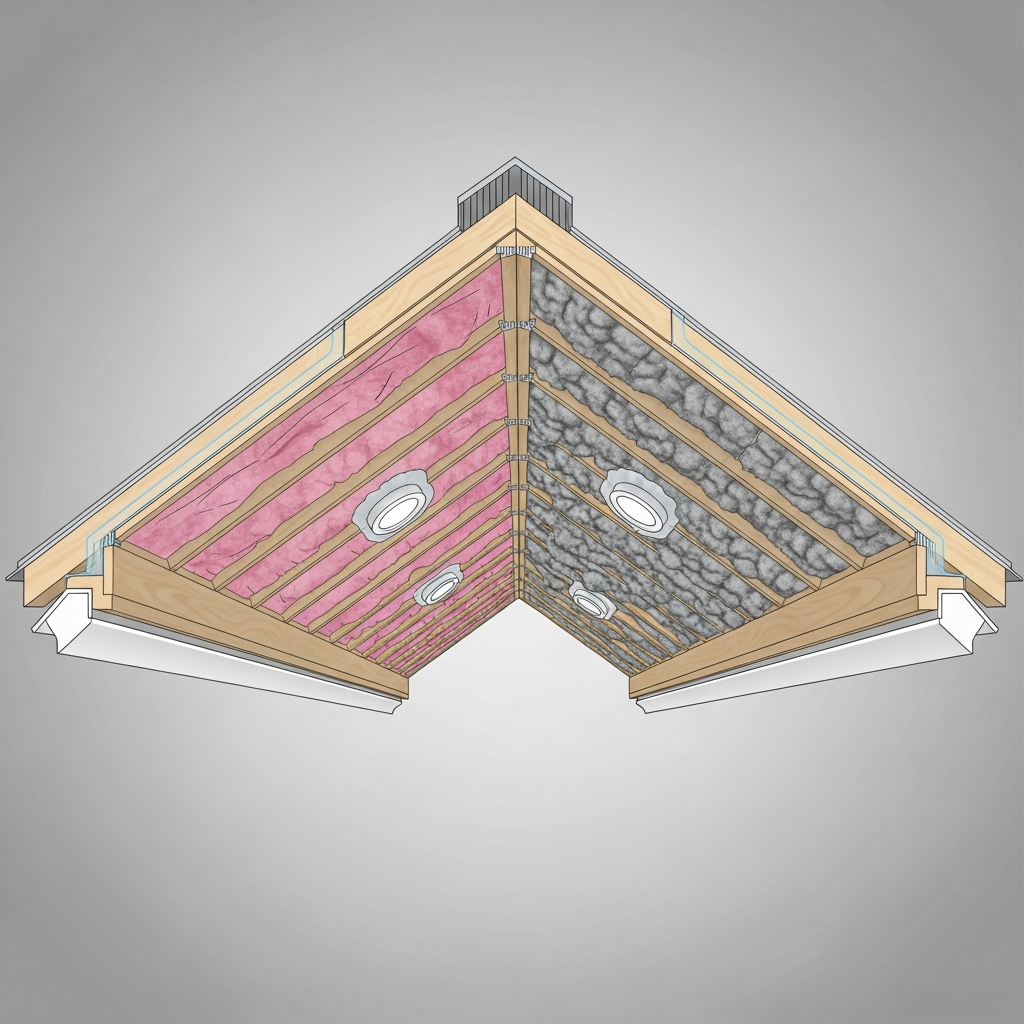
Ask a handful of Los Angeles neighbors what R-value they chose for their attic, and you’ll hear a range of answers colored by where they live and how their homes are built. A craftsman near the beach might prioritize controlling the damp chill of morning marine layers, while a family in the Valley aims squarely at long afternoons of heat. R-value—the measure of resistance to heat flow—is the number we use to translate those lived experiences into a practical target. In LA, the sweet spot usually falls between robust levels that steady the home without overcomplicating the attic assembly. Getting it right means pairing the number with diligent air sealing, sound ventilation, and an approach that respects your home’s architecture.
Before we put numbers on the table, it’s worth remembering that R-value is only one piece of a performance triangle that includes air sealing and moisture management. If the ceiling plane leaks, heat and conditioned air bypass the insulation regardless of how deep it is. Proper air sealing around recessed lights, top plates, chases, and flues is what allows insulation to deliver the comfort it promises. That is why professionals in LA rarely talk about insulation as a standalone—what we call attic insulation is really a system designed to control both heat and air movement.
Why R-38 to R-49 Fits Los Angeles
In our climate, R-38 to R-49 in the attic typically balances comfort, durability, and practicality. These levels provide meaningful resistance to the heat that builds under a sun-struck roof in the afternoon and to the cool that drops in after dark. At these targets, the house feels steadier: bedrooms don’t swing wildly between warm and cool, upstairs stays more in step with downstairs, and the HVAC system cycles less aggressively. Think of R-38 to R-49 as the foundation; it’s substantial enough to matter, yet straightforward to achieve with materials that perform well in vented attics.
R-value alone won’t overcome poor air sealing. Even at R-49, if can lights leak or a chase opens into the attic, the boundary is compromised. That’s why a thorough project plan includes baffles at the eaves to maintain airflow, sealed penetrations, and consistent coverage so you’re not insulating around voids or compressions. Continuous, even insulation brings the rated performance to life, and that’s where the work pays off day after day.
Coast, Valley, and Hillside: Microclimates Matter
Los Angeles is a city of microclimates. Along the coast, mornings are cool and damp, afternoons are mild, and evenings can turn breezy. In these areas, the goal is to keep the home from absorbing that morning chill and to hold evening warmth indoors. In the San Fernando and San Gabriel Valleys, afternoons radiate heat into the attic long after the sun sets, so the assembly must blunt that wave and release it gracefully overnight. Hillside and canyon homes add wind and orientation to the mix; a west-facing slope may take on substantial late-day sun that warms the roof just when families gather for dinner. Across all of these settings, R-38 to R-49 paired with careful air sealing and ventilation produces a stable, forgiving interior.
Roofing material and color are part of the story. A lighter, reflective roof reduces heat absorption, while darker roofs hold more warmth. Radiant barriers can help in certain assemblies, especially when combined with generous insulation levels, but they are not a substitute for R-value. In older homes with board sheathing and original vents, we take extra care to ensure that insulation does not block airflow at the eaves and that the attic can exhale moisture as temperatures change.
Layering, Topping, or Starting Fresh
Many LA homes already have some insulation. The question becomes whether to top off or to remove and restart. If the existing layer is clean, dry, and even, adding depth to reach R-38 or higher can be efficient. If it is patchy, dirty, or compressed, removal makes air sealing easier and yields a uniform final layer. In smaller bungalows where framing is tight, removal often leads to better coverage and fewer voids. In larger homes with easier access, topping off can make sense when the base is in good condition. Either path should include sealing penetrations, protecting ventilation at the eaves, and verifying that coverage is consistent across the attic.
Material choice—fiberglass or cellulose for most vented attics—should follow performance and practical considerations. Both can achieve high R-values reliably when installed with care. Cellulose excels at filling irregular cavities and can reduce air movement within the insulation layer; fiberglass offers predictable performance and remains a popular, durable option. Spray foam at the roofline is a different conversation, often used when the attic becomes a semi-conditioned space, but many Los Angeles homes achieve excellent comfort with a well-executed, vented attic at the ceiling plane.
Diminishing Returns and Real-World Comfort
Homeowners sometimes ask whether pushing beyond R-49 is worthwhile. In our climate, returns tend to taper once you reach the upper end of that range, especially if the attic is already tight and well-ventilated. The incremental thickness adds resistance, but the lived experience inside the home may not change dramatically compared to the effort required. That’s why we prioritize sealing, even coverage, and attic health first. When those fundamentals are in place, the recommended R-values deliver the quiet, steady comfort people notice immediately.
There are exceptions: if your home has unusually high solar gain, limited shading, or a layout that makes the upper floor especially vulnerable to heat, aiming toward the top of the range is sensible. Conversely, in a small coastal cottage with reliable cross-ventilation and a reflective roof, R-38 with excellent air sealing can feel generous and complete. The art is matching the number to the house rather than chasing a theoretical maximum.
Ducts in the Attic: A Deciding Factor
Whether ducts run through the attic is one of the most important factors in choosing an R-value target. If ducts are up there, the attic environment matters more, and pushing insulation toward R-49 can make a noticeable difference in how the system performs. Sealing the ducts themselves is equally important. A well-insulated attic with leaky ducts still wastes energy and blurs the boundary between conditioned space and the attic. When we plan an attic upgrade, we often include duct sealing and protection so the whole system works as intended.
In homes without ducts overhead—some mid-century moderns and renovated bungalows qualify—the attic becomes simpler. With fewer penetrations and less equipment to protect, continuous insulation at R-38 to R-49 delivers excellent results, and the attic stays cleaner over time. The absence of ductwork also reduces hot spots around platforms and service areas, which simplifies both installation and future maintenance.
Ventilation: The Silent Partner to R-Value
No attic can perform well without balanced ventilation. Soffit intakes paired with ridge or other continuous exhaust keep air moving gently above the insulation and prevent moisture buildup. In Los Angeles, where temperatures can drop quickly after sunset, ventilation helps the attic shed heat and moisture predictably. During upgrades, we install baffles at the eaves to preserve airflow and prevent wind-washing that can degrade insulation performance near the perimeter. Good ventilation protects the roof deck and supports the indoor stability you feel day and night.
It’s tempting to think more ventilation is always better, but balance matters. Too much exhaust without adequate intake can draw conditioned air out of the living space, undermining the gains from insulation. The best setups maintain a gentle, consistent pathway that complements the insulated boundary rather than fighting it.
Title 24 and Practical Targets
California’s energy standards encourage robust attic performance, but field conditions ultimately guide decisions. In an older home with charming but irregular framing, achieving uniform coverage may carry more value than chasing the highest R-value. In a newer home with deep joist bays, reaching R-49 is straightforward and aligns well with code expectations. Either way, the focus remains on installing a continuous, well-sealed blanket that stabilizes the home without creating moisture traps or blocking critical ventilation paths.
For many LA families, the most immediate proof of success is how the home feels at the edges of the day: mornings are less chilly, afternoons don’t creep warm by dinnertime, and nighttime temperatures settle in without big swings. That steadiness is the hallmark of an attic that hits the right R-value and is assembled with care.
What a Site Visit Reveals
Every attic tells a story during the initial walkthrough. We look for signs like dust trails that indicate air leaks, discoloration around vents that hints at past moisture movement, and uneven insulation that suggests gaps in coverage. Photographs help homeowners visualize why certain areas matter—over the kitchen where recessed lights cluster, above bathrooms where fans terminate, or near chimneys that require careful clearances. With that picture in hand, it becomes easier to choose a target R-value confidently and to plan the steps that make it real.
During this visit, we also confirm access and safety concerns. A narrow hatch changes how materials enter the attic; a full staircase speeds everything along. We identify any need to protect wiring or upgrade fixture covers, ensuring the finished attic supports your home for years. These details may seem small, but they’re the scaffolding that holds your chosen R-value in place.
Middle-of-the-Road That Feels Anything But
Some homeowners worry that choosing a common R-value target will yield a generic result. In practice, the opposite is true. When the attic is sealed, ventilated, and insulated consistently to a well-chosen level, the home feels uniquely calm because the assembly fits the building. That fit is more important than any single number. In the middle of the process, as baffles go in and penetrations are sealed, you can see the transformation from drafty boundary to crisp plane—and that’s when the phrase attic insulation takes on its full meaning as a whole-home upgrade.
FAQ
What R-value should most Los Angeles homes aim for in the attic?
R-38 to R-49 is a reliable target for our climate, delivering steady comfort across cool mornings and warm afternoons. The exact choice depends on your home’s layout, microclimate, and whether ducts run through the attic.
Is going above R-49 worth it in LA?
Returns typically diminish beyond R-49 for vented attics here, especially if air sealing and ventilation are already excellent. In homes with exceptional solar exposure or challenging layouts, leaning toward the top of the range can still pay off.
Does material choice affect the R-value target?
The target doesn’t change, but material choice influences how you get there. Fiberglass and cellulose both reach high R-values in vented attics when installed properly. Spray foam at the roofline is a different strategy used when the attic becomes part of the conditioned envelope.
How important is air sealing compared to R-value?
They are partners. Without air sealing, insulation underperforms. Sealing penetrations, protecting ventilation with baffles, and ensuring continuous coverage make your chosen R-value deliver the comfort you expect.
Will better attic R-value help with upstairs/downstairs temperature differences?
Yes. Increasing attic R-value, combined with air sealing, reduces heat transfer through the top of the house, which often helps bring upstairs temperatures in line with downstairs. The result is fewer hot or cold spots and a more even, pleasant home.
Ready to choose an R-value that matches your home rather than a hypothetical average? Let’s look at your attic together, review your microclimate, and set a target that balances comfort and practicality. For guidance and a careful, craft-first approach to attic insulation in Los Angeles, get in touch and start the process with confidence.