
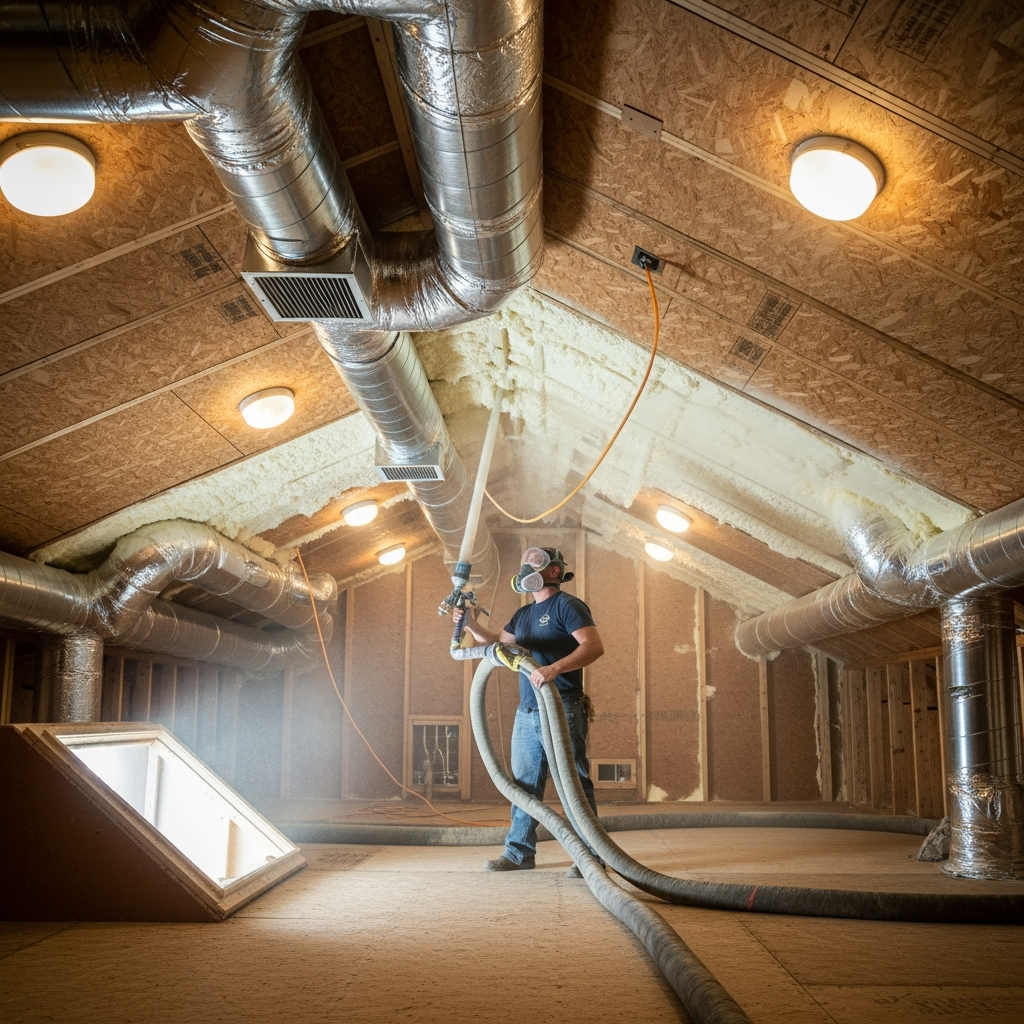
When Los Angeles homeowners ask about spray foam for the attic, they’re often weighing two ideas at once: the promise of exceptional air sealing and the reality that our homes and climate are diverse. From coastal neighborhoods that wake up under a marine layer to inland pockets where roof decks radiate heat until long after sunset, the best attic strategy is the one matched to the house, its systems, and the way your family lives. Spray foam is a powerful tool, especially when a project involves turning the attic into a semi-conditioned space at the roofline, but its value depends on design, installation, and how it fits within the broader building envelope.
It helps to begin with the basics of what a great attic upgrade includes in our region. No matter the insulation material, Los Angeles homes benefit from air sealing at the ceiling plane, proper ventilation where applicable, safe clearances for can lights and flues, and thoughtful protection for ducts. That is why professionals here talk about attic work as a system. In the first steps of planning, we discuss whether a vented attic with robust insulation at the floor or an unvented, foam-insulated roofline makes more sense. Those choices impact the feel of rooms, the maintenance access to equipment, and even how your roof handles heat. Because decisions are so interconnected, the phrase attic insulation really means much more than R-value alone.
Open-Cell vs. Closed-Cell Foam
Open-cell foam is lighter and more vapor-permeable, providing excellent air sealing with a softer feel. Closed-cell foam is denser, has a higher R-value per inch, and adds rigidity. In Los Angeles, either can be appropriate depending on the assembly. If you’re considering a roofline encapsulation, we look closely at venting details, roof materials, and how the foam will interact with existing conditions. Condensation risk in our climate is generally lower than in cold regions, but we still map the assembly to move moisture safely. The goal is always to deliver a quiet, stable interior without trapping moisture where it doesn’t belong.
One reason homeowners are drawn to spray foam is its ability to tame tricky geometry. Complex rooflines, vaulted sections, and knee walls can frustrate traditional insulation methods, but foam flows into those spaces, creating a continuous thermal and air barrier. For homes with ducts and air handlers in the attic, especially, a roofline approach can bring equipment into a more temperate environment. That change alone can make daily life feel different, transforming rooms that used to drift hot in the afternoon into spaces that hold steady from lunch to bedtime.
Vented Attic vs. Roofline Encapsulation
Los Angeles has long succeeded with well-insulated, vented attics at the ceiling plane. It’s a simple, effective approach: air seal the penetrations, install baffles, and bring insulation up to modern levels. Roofline encapsulation with spray foam shifts the thermal boundary upward, turning the attic into a semi-conditioned space. If your home has numerous recessed lights, complex chases, and extensive ductwork in the attic, bringing the boundary to the roof can make sense. On the other hand, if your attic is straightforward and ducts are minimal or well-sealed, a traditional vented attic remains a dependable, lower-complexity solution that performs beautifully in our climate.
There’s also the matter of serviceability. If technicians need to access equipment seasonally, the comfort of a roofline-insulated attic can be a real advantage. Conversely, in homes without significant equipment upstairs, the ceiling-plane approach keeps the attic simple and familiar. In either case, we’re not just installing material—we’re aligning the thermal boundary with how the house is used. That alignment is where value emerges.
Installation Quality: The Heart of Performance
Spray foam’s performance is directly tied to the skill and discipline of the crew. The substrate must be clean and at the right temperature, thickness must be uniform, and transitions to walls and gable ends need to be continuous. Attention to details like skylight wells and chimney chases is critical. With foam at the roofline, we also verify that ventilation paths are addressed properly—either eliminated as part of the unvented approach or left in good shape if transitioning only certain sections. In Los Angeles, our varied microclimates mean morning humidity, afternoon heat, and nighttime cool can all occur in the same day, and installers must respect those conditions to achieve a stable cure and consistent finished product.
In many homes, spray foam is paired with targeted measures at the ceiling level. For example, even when encapsulating the roofline, we sometimes seal specific penetrations from below to keep the house tight and control air movement between floors. Crew discipline in masking, staging, and ventilation during application protects indoor air and finishes. With any attic project, we aim for a clean workspace, thoughtful sequencing, and thorough communication so you understand how the attic is transforming step by step.
How Spray Foam Influences Everyday Comfort
Angelenos often make decisions based on lived experience: a bedroom that never cools after sunset, a home office that runs warm by afternoon, or a downstairs that stays chilly while upstairs bakes. Spray foam’s great strength is reducing those swings by eliminating drafts and thermal gaps. When ducts are brought into a milder attic, they operate closer to room temperature, and that steadiness translates directly to comfort. In older homes where rooms were added piece by piece, foam can reconcile past alterations, smoothing out temperature differences without a heavy remodel.
Noise is another place where foam surprises homeowners. While not a dedicated acoustic solution, a continuous foam layer softens street sound and wind noise, especially in homes near busy boulevards or flight paths. The effect is subtle but noticeable: mornings feel calmer, and evening chatter outdoors is less intrusive indoors. In hillside neighborhoods where winds can shift fast at dusk, sealing the roofline can also reduce whistling through vents and fascia details.
Energy and Grid Realities in LA
We all ride the same energy curve in Los Angeles: long afternoons of demand in summer, then cooler mornings in winter that nudge heaters on. Attic strategies that stabilize the interior reduce the strain on HVAC equipment and help keep indoor conditions comfortable when the grid is under stress. Whether you choose foam at the roofline or robust insulation at the attic floor, the value is a home that drifts less and responds more gracefully to temperature changes. For many owners, that steadiness is the main return they feel every day, regardless of season.
Because climate events are increasingly unpredictable, resilience matters more than ever. An attic that holds its temperature gives you a buffer during outages or peak demand events. That buffer is modest, but meaningful—a few degrees of stability that make evenings more pleasant and mornings gentler even when systems cycle less often. This is one reason we place so much emphasis on air sealing in any approach: tightening the boundary is the foundation of resilience.
Cost Drivers Without the Numbers
Without citing prices, we can still talk plainly about what shapes project scope when foam is on the table. Home size is obvious—more area means more material. Complexity matters just as much: skylight wells, intersecting rooflines, and deep eaves all take careful detailing. Access also plays a role; a narrow hatch slows staging and cleanup. If existing insulation must be removed for cleanliness or to expose the roof deck, that adds time. Equipment in the attic changes the picture, too: if we’re creating a semi-conditioned attic, we plan for safe walking paths and service platforms.
Material choice affects the plan. Closed-cell foam reaches higher R-values per inch but demands more precision and can be heavier on the assembly. Open-cell foam expands quickly to fill cavities and excels at air sealing in complex shapes. The right choice for your home also depends on the roof covering and how the assembly will dry through the seasons. We take that seriously because a great result is one that performs quietly for years without calling attention to itself.
Finally, consider coordination with other work. If a reroof is on the horizon, we sequence the attic project accordingly. If you’re replacing HVAC or moving ducts, roofline encapsulation may be perfectly timed. These alignments can make a big difference in how the attic is put together and how quickly the crew completes the job. It’s one more reason that conversations at the beginning pay dividends by the end.
Where Foam Fits—and Where It Doesn’t
Not every attic calls for foam. A vented attic with excellent air sealing and high R-values at the floor is still a champion in Los Angeles. Homes with straightforward layouts, minimal penetrations, and ducts out of the attic often perform exceptionally well without roofline encapsulation. Foam shines when geometry is complex, ducts must live under the roof, or when homeowners want a more forgiving environment for storage or service access. The decision is not about a single “best” material, but about matching assembly to goals.
For homeowners seeking to improve comfort immediately without other changes, dense insulation at the attic floor combined with rigorous air sealing can feel transformative. As part of a holistic plan, we may also recommend addressing leaky can lights, sealing top plates, and verifying that eave vents are protected with baffles. In the middle of that process, it becomes clear that the phrase attic insulation is shorthand for controlling the movement of heat and air—done right, everything else in the home becomes easier to manage.
What to Expect During a Project
Communication and containment are the themes. We protect walkways, cover furnishings as needed, and stage tools to minimize trips through living spaces. For foam applications, we manage ventilation during curing and confirm even application at the roof deck, around skylights, and at gable ends. If existing insulation needs to be removed, we vacuum and bag it with care, keeping the rest of your home clean. Throughout, we provide updates and photos so you can see progress without climbing a ladder.
Once the spray work is complete, we inspect for continuity—no gaps, no thin spots—and confirm that the thermal boundary connects cleanly to walls. Where the attic remains partially vented by design, we detail transitions carefully. Before wrapping up, we walk through the space, check that platforms and clearances meet service needs, and make sure you know what changed and why. That understanding helps you get the most out of your home on the first hot afternoon and the first cool morning thereafter.
FAQ
Is spray foam always better than traditional insulation for LA attics?
Not always. Foam is ideal when the roofline becomes the thermal boundary or when complex geometry defeats traditional methods. For many Los Angeles homes, a well-sealed, well-insulated vented attic at the ceiling plane performs beautifully. The best choice depends on your house’s layout, duct locations, and comfort goals.
Will roofline foam make my roof hotter?
Roofline encapsulation changes how heat is managed, and the roof deck may run warmer. We evaluate roof materials, ventilation strategy, and assembly drying to ensure durability. In our climate, carefully designed assemblies perform reliably without compromising roof life.
Can spray foam help with indoor air quality?
Foam is a strong air barrier, which reduces infiltration of dust, pollen, and outdoor pollutants. Combined with targeted air sealing and attention to ventilation, this often results in a calmer, cleaner indoor environment.
What about storage and service access after roofline encapsulation?
We plan for safe platforms and clearances around equipment so maintenance remains straightforward. One benefit of roofline insulation is a milder attic, which makes service work and occasional storage more comfortable.
How do I decide between open-cell and closed-cell foam?
Choice depends on assembly goals, roof materials, and moisture management. Open-cell offers excellent expansion and air sealing; closed-cell provides higher R per inch and rigidity. We select based on your roof, microclimate, and performance priorities.
If you’re ready to explore whether a traditional vented attic or a roofline approach will serve your home best, let’s look at your layout, discuss your day-to-day comfort goals, and map a clear plan. For Los Angeles homeowners seeking expert guidance and reliable results in attic insulation, reach out to start a conversation tailored to your house and your routine.