
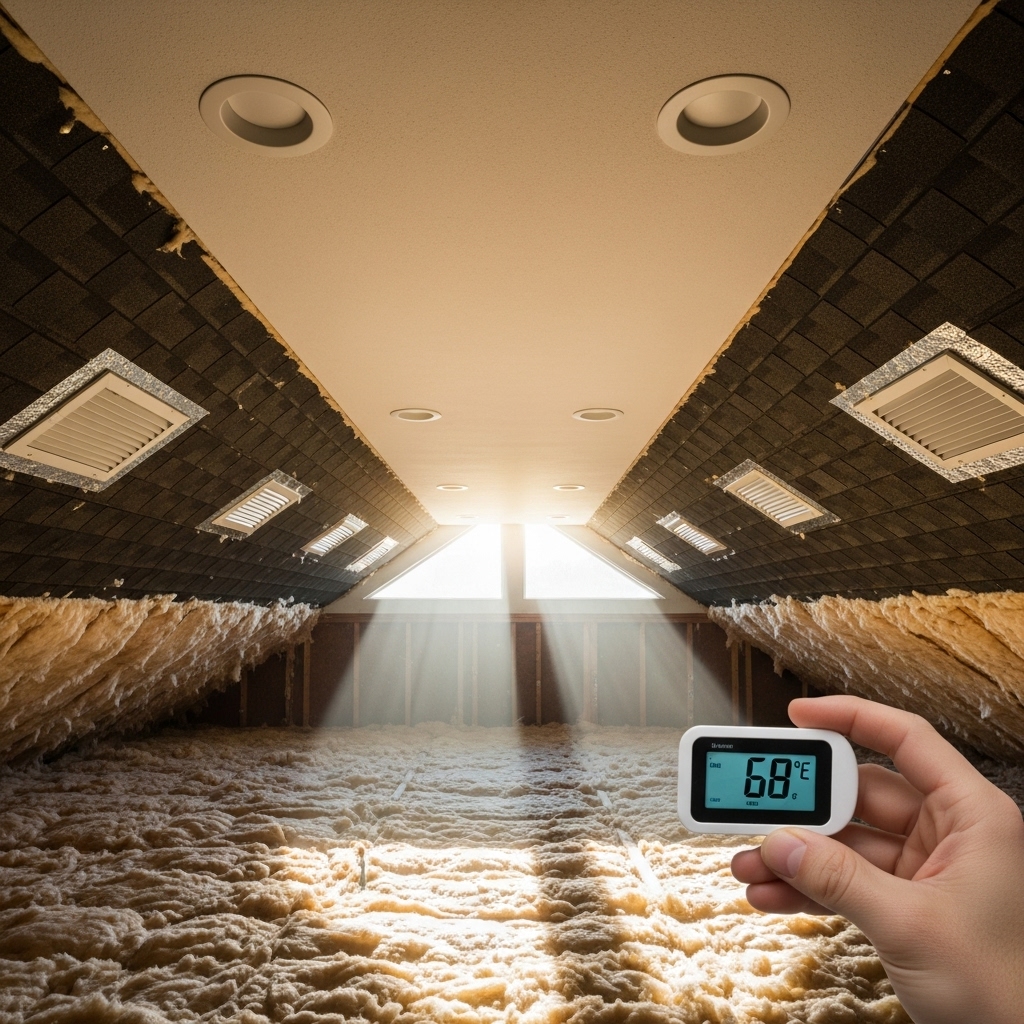
Anyone who has lived through a Los Angeles heat wave knows the feeling: by mid-afternoon, the sun is relentless, asphalt shimmers, and the air itself seems to vibrate. Even neighborhoods kissed by ocean breezes eventually give way to warm nights that come too slowly. For homes across the city—in the flats of Mid City, the hills of Glassell Park, and the wide streets of the San Fernando Valley—the battleground is above your ceiling. Thoughtfully planned attic insulation becomes the difference between a house that surrenders to the heat and one that stays poised, calm, and comfortable until the marine layer returns.
What a heat wave does to your attic
During a heat wave, roof temperatures can soar, and the attic transforms into a heat reservoir. Sunlight raises the roof deck temperature for hours, and the attic air follows, storing energy that radiates into the home well after dusk. It’s why bedrooms feel hottest just when you’re ready to sleep. The energy physics are simple and unforgiving: heat moves from hot to cool, and without a robust thermal barrier, the ceiling becomes a highway for that heat to stream into your living spaces.
In Los Angeles microclimates, this effect varies but never disappears. In Woodland Hills or Canoga Park, the attic can turn into an oven; in Santa Monica or El Segundo, it’s less extreme but still persistent, especially during multi-day heat events. The key is slowing that heat flow so your air conditioner isn’t running a marathon it can never win.
Insulation as your home’s thermal shield
Proper insulation in the attic slows the transfer of heat, reducing the amount that reaches your living space during peak hours. The result is more manageable indoor temperatures and lighter demand on your cooling system. In practice, that means the house doesn’t spike uncomfortably at 4 p.m., and by 8 p.m., you’re not still battling the day’s heat. Air sealing compounds the benefit by stopping hot attic air from slipping through recessed lights, chases, and gaps around fixtures and vents.
Think of it as rhythm control. Insulation dampens the daily temperature swing, so your home moves through heat waves with smoother, slower changes. That’s a gift to your HVAC equipment and to everyone trying to work, rest, or study indoors while the heat bears down outside.
Why older and mid-century homes feel the heat first
Los Angeles has a deep stock of homes built before modern energy standards. Many have minimal attic insulation, and what’s there is often uneven, compressed, or missing in critical areas like over hallways and soffits. Ducts run through these attics, absorbing heat before the air ever reaches your vents. Unsealed can lights act like dozens of little chimneys. In a heat wave, all of these small inefficiencies collide to magnify discomfort.
When we upgrade an attic in a 1940s ranch in Valley Village or a 1920s bungalow in Highland Park, the change is dramatic. The whole house feels steadier. Rooms that used to be off-limits in the afternoon become usable again, and sleeping upstairs no longer feels like a compromise. The upgrade doesn’t erase Los Angeles weather; it reshapes how your home responds to it.
Air sealing and ventilation: the companions to insulation
Insulation performs best when paired with air sealing. During a heat wave, hot attic air wants to push into your home through every penetration. Sealing the top plate of walls, the backs of soffits, and the edges of electrical boxes stops this movement. At the same time, preserving a clean ventilation pathway—clear soffits feeding a ridge or off-ridge exhaust—keeps the roof assembly healthy and temperatures in the attic more moderate.
Homeowners sometimes ask about attic fans during heat waves. In many Los Angeles homes, a focus on sealing and insulating is more effective because powered fans can depressurize the house and pull conditioned air out. Passive ventilation, combined with robust insulation and top-tier air sealing, delivers consistent results without unintended side effects.
Materials that make sense in our climate
Loose-fill cellulose and modern blown fiberglass are strong performers in Los Angeles attics. They provide deep, consistent coverage around irregular framing and fill gaps left by older batts. Mineral wool can be valuable where fire resistance is a priority, such as around chimney chases or in hillside neighborhoods with unique fire considerations. The choice of material often comes down to the attic’s condition, access, and long-term goals, but the principle remains the same: build a continuous, generous layer of insulation over a tightly sealed ceiling.
When ducts share the attic, it’s wise to evaluate and seal them during the insulation upgrade. Ducts that leak even a little undermine the effort by dumping cooled air into the attic and drawing in hot air from the surrounding space. In a heat wave, that mismatch is costly in comfort terms, turning what should be a steady stream of cool into a lukewarm trickle.
The urban heat island and microclimates
Los Angeles is a city of gradients. The Valley bakes, the Westside breathes, the foothills catch shifting winds. During a heat wave, the urban heat island effect keeps evening temperatures elevated, meaning your home gets less overnight relief. A well-insulated attic helps break that cycle. By limiting the heat that enters during the day, there’s less heat to bleed out at night, so the interior doesn’t feel like it’s chasing yesterday until noon.
Even within neighborhoods, conditions vary. A house with a dark, low-slope roof will take on more solar load than a neighboring home with a lighter, reflective roof. Trees, neighboring buildings, and orientation matter. Insulation is the one improvement that performs regardless of these variables, because it addresses the fundamental physics of heat flow.
Resilience and health during extreme events
Heat waves are not just uncomfortable; they can be dangerous, particularly for older adults, infants, and anyone with health conditions. Insulation contributes to resilience by slowing indoor heat gain and giving your household more margin before indoor temperatures reach stressful levels. If the power flickers or cycles during peak demand, a well-insulated home holds on to comfort longer, reducing the risk of sudden spikes.
Air sealing adds another protective layer by reducing the infiltration of outdoor pollutants that can accompany heat events, such as smog and wildfire smoke. While no single measure can eliminate these concerns, controlling the ceiling plane is a powerful step toward healthier indoor air when the outside world is at its harshest.
The experience inside a well-insulated home
Homeowners are often surprised by how different the day feels after an attic upgrade. Mornings begin calmer because the home preserved its cool overnight, afternoons remain bearable without constant thermostat tinkering, and bedtime is genuinely restful. The change is noticeable in small ways too: fewer hot drafts along hallways, quieter rooms, and even a reduction in the faint attic odors that sometimes drift through old ceiling penetrations.
For families with remote work or kids home during summer, this stability is more than a comfort; it’s a daily productivity boost. You don’t build your schedule around the sun anymore. The house finally cooperates with how you live.
What a professional assessment looks for before a heat wave retrofit
Before adding insulation, a careful look at the attic identifies the opportunities and the boundaries. We note existing insulation depth, the condition of wiring, the presence of recessed lights, and any signs of rodents or moisture. We verify that ventilation pathways can stay open and check clearances around flues and chimneys. If ducts are present, we test for leakage and review the routing to avoid compressing insulation over them or burying issues we should address first.
The plan that emerges focuses on air sealing, choosing the right insulation to achieve the desired R-value, and integrating duct sealing or minor repairs. The goal is a unified system that works together when the heat wave hits, not a patchwork of improvements that miss the main problem.
The psychology of comfort during hot spells
Comfort is partly physics and partly perception. In Los Angeles heat waves, people adapt in creative ways—closing blinds, running fans, and cooking later. Those strategies help, but insulation changes the baseline so every tactic becomes more effective. The house stays cooler with the same habits, and you regain a sense of control. That feeling matters, because it turns coping into comfort and makes summer living feel less like a chore.
It’s also freeing. You can host dinner without worrying whether the kitchen will tip the house over the edge. Kids can sleep in their own rooms. Work calls don’t coincide with the noisiest window unit rattling at full blast. The investment pays you back in ease as much as in energy.
Myths about insulation and heat
Some homeowners worry that more insulation will trap heat in winter or cause moisture issues. In our dry-summer coastal climate, those concerns are addressed with proper ventilation above the insulation and sensible air sealing at the ceiling. Another myth is that insulation only matters for winter. In Los Angeles, the opposite is often true—insulation’s biggest daily impact is in summer, taming the afternoon surge and balancing nighttime comfort.
There’s also the idea that one dramatic fix—like a powered attic fan—can solve heat wave discomfort on its own. While fans have limited roles, the cornerstone of performance is always a continuous, generous layer of insulation over a well-sealed ceiling. That’s the reliable, repeatable solution across house styles and microclimates.
Where the gains show up first
After an attic retrofit, you’ll likely notice the coolest change in rooms under the most roof exposure: front bedrooms under low-slope roofs, converted dens at the back of mid-century homes, and upper stories in hillside houses. Hallways that used to funnel heat calm down. The kitchen, with its recessed lights and soffits, becomes more cooperative. And the HVAC system takes on a steadier cadence, which adds to longevity as it avoids extreme cycling during long hot spells.
In the middle of summer, you’ll also feel the benefit later in the evening. A house that absorbed less heat in the day releases less at night, so the inside doesn’t feel like it’s glowing after sunset. The result is a quieter, simpler nightly routine.
Frequently asked questions
Q: How much insulation do I need for LA heat waves? A: The right level depends on your roof assembly, duct layout, and microclimate, but higher attic R-values typical for our region provide a noticeable buffer during extreme heat. A local assessment tailors the specification to your home.
Q: Will insulation help if my AC is undersized? A: Yes. By reducing the home’s heat gain, insulation can make an existing system feel more capable, often reducing run times and improving comfort during peak hours. It doesn’t fix sizing issues, but it eases the load.
Q: Do I need radiant barriers? A: Sometimes, but not always. In many LA attics, robust insulation and air sealing deliver the largest benefits. Radiant barriers can complement the plan in specific roof assemblies, but they’re not a substitute for insulation depth.
Q: What about attic ventilation during heat waves? A: Keep passive ventilation pathways clear and continuous. Well-designed intake and exhaust help keep the roof deck healthier and can modestly lower attic temperatures without pulling conditioned air from the house.
Q: Can I insulate without removing my existing batts? A: If the existing material is clean, dry, and not concealing hazards, topping it with loose-fill insulation is often appropriate. If there are signs of rodents, moisture, or damaged wiring, removal and remediation come first.
Q: Will insulation make my home quieter too? A: Yes. A deeper attic blanket reduces outside noise and mechanical echoes, adding to the calm you feel indoors during stressful weather.
Take back your summer comfort
When the forecast calls for a heat wave, you shouldn’t have to choose between a noisy AC and a sleepless night. With the right plan, your attic becomes a shield, your rooms stay usable, and your home feels ready for whatever the sun brings. Start by exploring your options for improved attic insulation, and step into a Los Angeles summer that feels cooler, quieter, and more in your control.