
Keeping Hot Los Angeles Homes Comfortable Starts in the Attic
If you have ever stepped into your Los Angeles attic on a summer afternoon, you know the kind of heat that can collect above the ceiling—air so hot it seems to press downward into your living spaces. Many households assume the fix is to keep cranking the air conditioning, but the real solution often begins above your head with properly designed and installed attic insulation. In our warm, sun-drenched climate, the roof absorbs relentless solar energy and the attic becomes a radiating heat source. A thoughtful approach to attic insulation installation interrupts that heat flow, allowing your home to stay cooler for longer while easing the load on your AC. It is not just about piling in more material—it’s about sealing air leaks, choosing the right product for your roof and framing, and installing it to professional standards that align with local building practices. When homeowners are ready to explore options, they often begin by researching insulation installation and what works best in the context of Los Angeles heat, smog, and microclimates that swing from coastal breezes to valley scorchers.
Why Attic Heat Feels Different in Los Angeles
Southern California’s sunshine is as iconic as our palm-lined boulevards, but heat gain through the roof can be more aggressive here than in many other places. Long daylight hours, a high sun angle, and streaks of cloudless afternoons load energy into roofing materials. In neighborhoods from the San Fernando Valley to the foothills east of downtown, the attic often becomes the thermal crossroads of the whole home. Hot attics radiate downward, heat ducts running through them can pick up additional warmth, and any gaps around recessed lights, attic hatches, or top-plate seams turn into tiny chimneys. Insulation that is installed with care—paired with targeted air sealing—slows conduction and convection at the same time. That’s why even if you already have some insulation, the right upgrade can transform the feel of your home on peak-heat days without changing a single thermostat setting.
Start With a Careful Attic Assessment
Every successful project begins with a methodical assessment of the attic space. That includes mapping ventilation paths from eave to ridge or gable vents, identifying air leaks around chases, plumbing penetrations, and light cans, and noting any signs of previous roofing issues or pest intrusion. In Los Angeles, many homes have been modified over decades, and it’s not unusual to find a mix of insulation types, settled areas, or bare spots where previous work displaced material. A good installer will examine the depth and uniformity of existing insulation, evaluate any radiant barrier or roof deck sheathing already in place, and check the condition of baffles to protect soffit vents. The goal is not simply to add more, but to create an even, code-appropriate blanket that works with ventilation rather than against it.
Choosing Materials That Match Your Home and Lifestyle
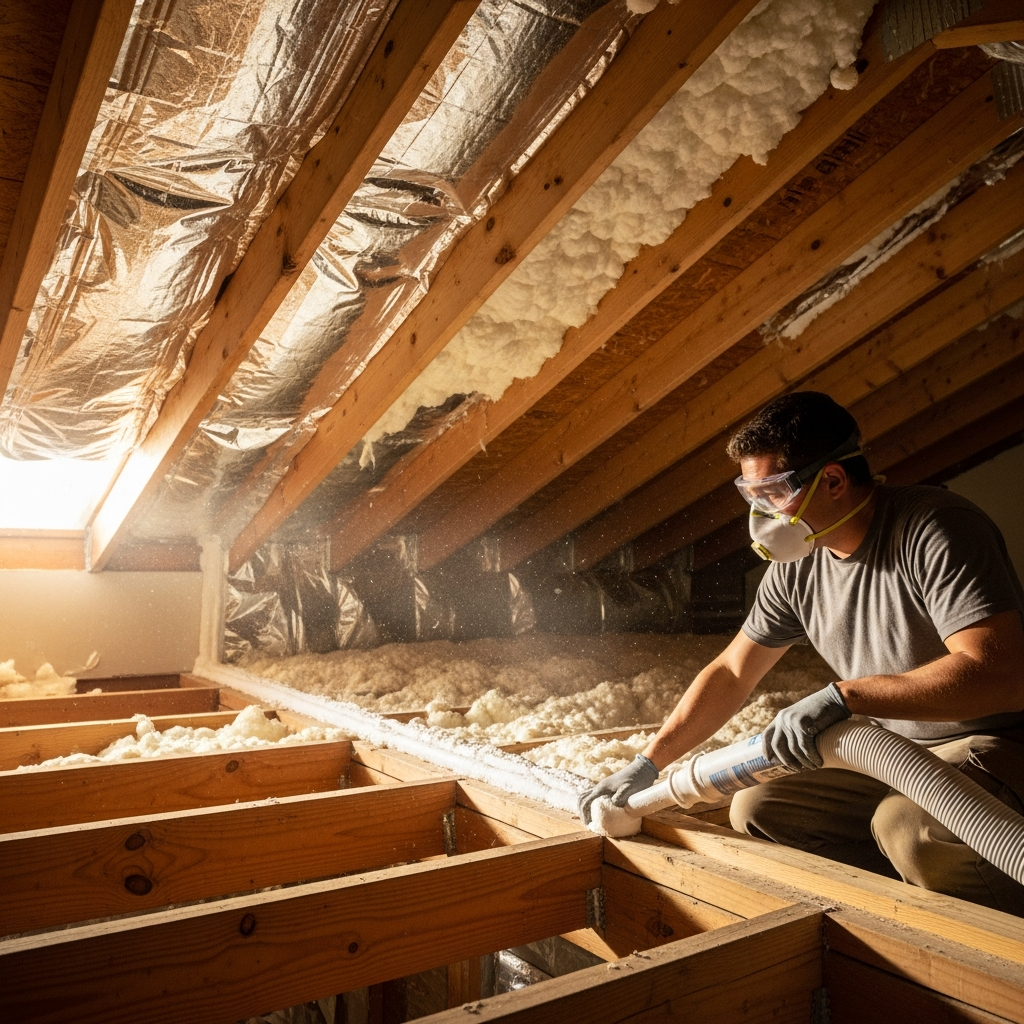
Loose-fill fiberglass, cellulose, and fiberglass batts are the most common materials used in our region for attic floors. Each has pros that can be matched to the way your home is used. Loose-fill fiberglass is light, fire-resistant, and easy to install uniformly around irregular framing. Cellulose, often made from treated recycled paper, offers excellent coverage and can reduce air movement through the insulation layer because of its density. Batts can be a good choice in open, accessible sections or for insulating knee walls and vertical surfaces, especially when paired with meticulous air sealing. The specific R-value target depends on the home’s design, attic height, ventilation pattern, and what already exists. The real art is pairing the right material with thoughtful detailing so the entire system performs, not just the insulation itself.
Air Sealing: The Invisible Difference-Maker
In hot-climate attics, air sealing is just as important as the insulation that follows it. Leaks at the attic hatch, gaps around top plates, and penetrations for wiring or plumbing allow superheated attic air to infiltrate conditioned rooms. During installation, we focus on sealing those gaps with appropriate foam or caulk, boxing in and gasketting recessed lights rated for insulation contact, and treating large chases where mechanicals pass between floors. This step keeps your ceiling acting as a true thermal and air boundary, which amplifies the benefit of whatever insulation depth you choose. Homeowners often tell us that after a proper sealing pass followed by a uniform insulation layer, the home’s temperature swings feel gentler and the AC cycle becomes less frantic on the hottest afternoons.
Ventilation That Complements Insulation
Attic ventilation is not a cure-all for heat, but it works hand in hand with a well-installed insulation system. Good airflow helps flush out heat that builds under the roof deck and keeps humidity from lingering. We often find soffit vents painted shut or covered by insulation, which starves the attic of air intake. Baffles or chutes at the eaves protect this intake as insulation is added, maintaining a clear pathway up to ridge or gable vents. In Los Angeles’ dry summers and mild winters, this balanced approach means the attic stays drier and cooler, which protects roof framing and helps the insulation maintain its performance over the long term.
Detailing Around Ducts and Mechanical Equipment
In many LA homes, HVAC ductwork runs through the attic. If ducts are leaky or under-insulated, they collect radiant heat and deliver it straight into your supply air, which undermines comfort and efficiency. During an attic project, we evaluate duct insulation and sealing, paying close attention to connections and junctions that may bleed precious cooled air. Some homeowners choose to encapsulate or deeply bury ducts within the new insulation layer as long as it is compatible with code and equipment clearances. The result is a quieter system that delivers cooler air without fighting the attic’s climate.
Sound, Air Quality, and Everyday Living
Better attic insulation does more than moderate temperature. It quiets the home by absorbing exterior noise—especially helpful for homes near busy boulevards or flight paths. It also contributes to better indoor air quality by reducing the paths for dusty attic air to sneak into living spaces. When combined with careful air sealing and attention to combustion safety for gas appliances, the overall environment feels calmer, cleaner, and more consistent in every room. Homeowners often notice that bedrooms stay more comfortable into the evening and that the home holds coolness longer after the AC cycles off.
Working Within Local Codes and Best Practices
Los Angeles has its own permitting culture and building standards that reflect earthquake, fire, and energy considerations. A professional installation team will understand how to protect fire blocking, maintain clearances around flues and heat sources, and respect access pathways for serviceable equipment. We also consider how insulation interacts with existing radiant barriers or cool roofing. While not every home has those features, awareness of the entire roof assembly ensures the finished result meets local expectations and performs safely.
The Installation Day Experience
On installation day, preparation is everything. Crews protect entry paths, stage materials to minimize dust, and start by air sealing before blowing or placing insulation. They use depth markers to confirm consistent coverage and focus on tricky transitions such as over partition walls or at the edges of low-slope roofs. Good communication throughout the day—letting you know when sealing is complete, where baffles were added, and how ducts checked out—turns what could be a mysterious process into a clear, confidence-building upgrade. By sundown, you feel the difference: rooms cool quicker, and that late-day heat pulse that used to creep down from the ceiling is cut off at the source.
What Makes an Installation “Los Angeles Smart”
A Los Angeles–smart attic insulation installation blends materials, air sealing, and ventilation with a sensitivity to our climate’s rhythms. It respects coastal fog mornings, dry inland afternoons, and those weeks when the mercury leaps above normal. It anticipates wildfire season by keeping soffits clear and vents protected while never compromising ventilation pathways. It considers future upgrades, such as adding a radiant barrier beneath the roof deck or updating ductwork, leaving the attic neat and navigable. And it treats your home as a whole system, not an isolated project overhead. If you are weighing options, a great starting point is exploring local expertise in insulation installation and how an integrated approach maximizes your comfort with minimal disruption.
Aftercare and Long-Term Performance
Insulation should be out of sight and out of mind, yet there are simple habits that maintain its effectiveness. Check the attic hatch periodically to ensure weatherstripping stays intact. If tradespeople access the attic, remind them to stay on walkboards and avoid disturbing the coverage, especially near the eaves. Keep an eye on roof conditions and gutters; water intrusion is insulation’s greatest enemy. With these basics and a professionally installed system, you can expect consistent comfort through heatwaves and the kind of gentle indoor temperatures that make movie nights, sleep, and everyday living more pleasant.
Real-World Results You Can Feel
Homeowners routinely report that previously hot back bedrooms become usable again in late afternoon, that AC runtimes shrink, and that the home holds its cool overnight. In older bungalows and postwar tract homes, the ceiling often represents the largest break in the building envelope; fortifying it pays immediate dividends. Even in homes with modern windows and updated HVAC, an underinsulated attic can be the bottleneck. When that bottleneck is removed, the whole system hums: quieter rooms, fewer hot spots, and a calmer indoor climate that resists the day’s heat.
Planning Your Project Timeline
Most attic installations in Los Angeles can be completed in a single day, though larger homes or complex rooflines can extend the schedule. Permitting and scheduling are straightforward when handled by a local team familiar with neighborhood access, parking, and utility clearances. Spring and early summer are popular times to upgrade, but the work can be performed year-round, and many homeowners appreciate having it done before the first serious heatwaves arrive. A brief consultation, a thorough attic assessment, and a well-orchestrated installation day create a smooth path from hot, uncomfortable spaces to a home that stays cool naturally.
Common Misconceptions, Clarified
One widespread misconception is that attic fans alone will solve heat problems. While they can help under certain conditions, they are no substitute for a continuous, code-compliant insulation layer and rigorous air sealing. Another is that you can never have too much insulation. In reality, overstuffing eaves, compressing batts, or burying equipment clearances can undermine performance or violate safety guidelines. Finally, some believe that radiant barriers make insulation unnecessary. While radiant barriers can complement an attic strategy by reflecting radiant heat, they do not replace the need to resist conductive and convective heat flow through the ceiling plane. The best outcomes come from combining the right elements in the right places.
Mid-Project Discoveries and How Pros Respond
Attics often tell stories: an abandoned knob-and-tube run, an improvised bath fan exhaust, or a forgotten junction box. Experienced installers expect surprises and have a plan to address them. That may mean capping and sealing odd chases, rerouting an exhaust to the exterior, or adding fire-safe enclosures around fixtures. These details matter because every gap or pathway is an invitation for hot attic air to pressurize living spaces. By tidying up the attic’s loose ends as part of the installation, you safeguard the gains you are investing in.
Comfort You Can Count On
When summer leans in hard on the city, a well-insulated attic becomes the quiet hero of the home. The ceiling remains cool to the touch, the interior stays calmer between AC cycles, and the family can enjoy evenings without the lingering heat that used to pour down after sunset. This comfort is not fleeting; it is structural, built into the home in a way that requires no day-to-day thought once the work is complete. For many homeowners, that is the appeal: a one-time improvement that pays back with steadier temperatures and spaces that simply feel better.
How to Choose the Right Partner
Look for a team that treats your attic as a system. Ask how they approach air sealing, how they protect soffit vents, and how they handle ductwork in the thermal boundary. Inquire about material options and why one might be better for your home’s framing, usage patterns, and even acoustic concerns. The right partner will explain their process, offer clear documentation, and walk you through post-installation care so you know how to preserve the results. When those pieces are in place, the investment translates directly into day-to-day comfort and peace of mind.
Frequently Asked Questions
How do I know if my attic insulation is the main reason my home feels hot?
Start with the symptoms. If your ceilings feel warm to the touch on hot afternoons, if upper rooms are consistently several degrees hotter than lower ones, or if your AC runs hard but struggles to keep up late in the day, the attic is a prime suspect. A visual inspection can reveal thin or uneven insulation, exposed framing, or disrupted coverage near eaves and around light fixtures. A professional assessment using thermal imaging can pinpoint hot spots and confirm whether air leaks and insufficient depth are driving the problem.
Which insulation type is best for Los Angeles attics?
Loose-fill fiberglass and cellulose both perform well when installed to the correct depth and with solid air sealing. The choice depends on your attic’s layout, existing materials, and specific goals like sound attenuation or ease of future access. Batts are handy for knee walls and vertical surfaces but require careful fitting to avoid gaps. The bigger driver of comfort is the overall system: consistent coverage, protected ventilation paths, and a sealed ceiling plane.
Will insulation help even if I already have a powerful air conditioner?
Yes. Insulation reduces the heat load your AC must fight. When the attic stops radiating heat into living spaces, the AC cycles less frequently and maintains setpoints with less effort. This means steadier comfort, less wear on equipment, and rooms that feel uniformly cool rather than swingy and uneven.
Do I need to replace old insulation, or can new material go on top?
In many cases, adding to existing insulation is effective as long as the underlying material is dry, clean, and evenly distributed. If there’s evidence of moisture damage, pest activity, or contamination, removal and cleanup come first. During an inspection, we determine whether topping off makes sense or whether a reset is the safer, more durable path.
How long does an attic insulation installation take?
Most Los Angeles projects finish in a single day. Larger homes, extensive air sealing, or complex rooflines may extend the timeline. Good preparation, access, and clear communication help keep the day smooth and predictable from start to finish.
Will insulation make my home quieter?
Yes. A dense, continuous insulation layer absorbs a surprising amount of exterior noise, from traffic hum to aircraft and neighborhood activity. For many homeowners, the quieter interior is one of the most pleasant, unexpected benefits of the project.
Is a radiant barrier necessary in addition to insulation?
Not necessary, but often helpful in hot, sunny climates. Radiant barriers reflect a portion of the sun’s heat before it warms the attic air and framing. When combined with proper insulation and ventilation, they can further reduce peak attic temperatures, especially under dark, sun-exposed roofs.
If your ceiling has felt like a griddle on a July afternoon, there is a straightforward path to relief. Start with a conversation, a careful assessment, and a plan that respects your home’s structure and Los Angeles’ unique climate. When you are ready to take the first step, explore local expertise in insulation installation, schedule a visit, and enjoy the lasting calm that comes from an attic that finally works with you, not against you.