
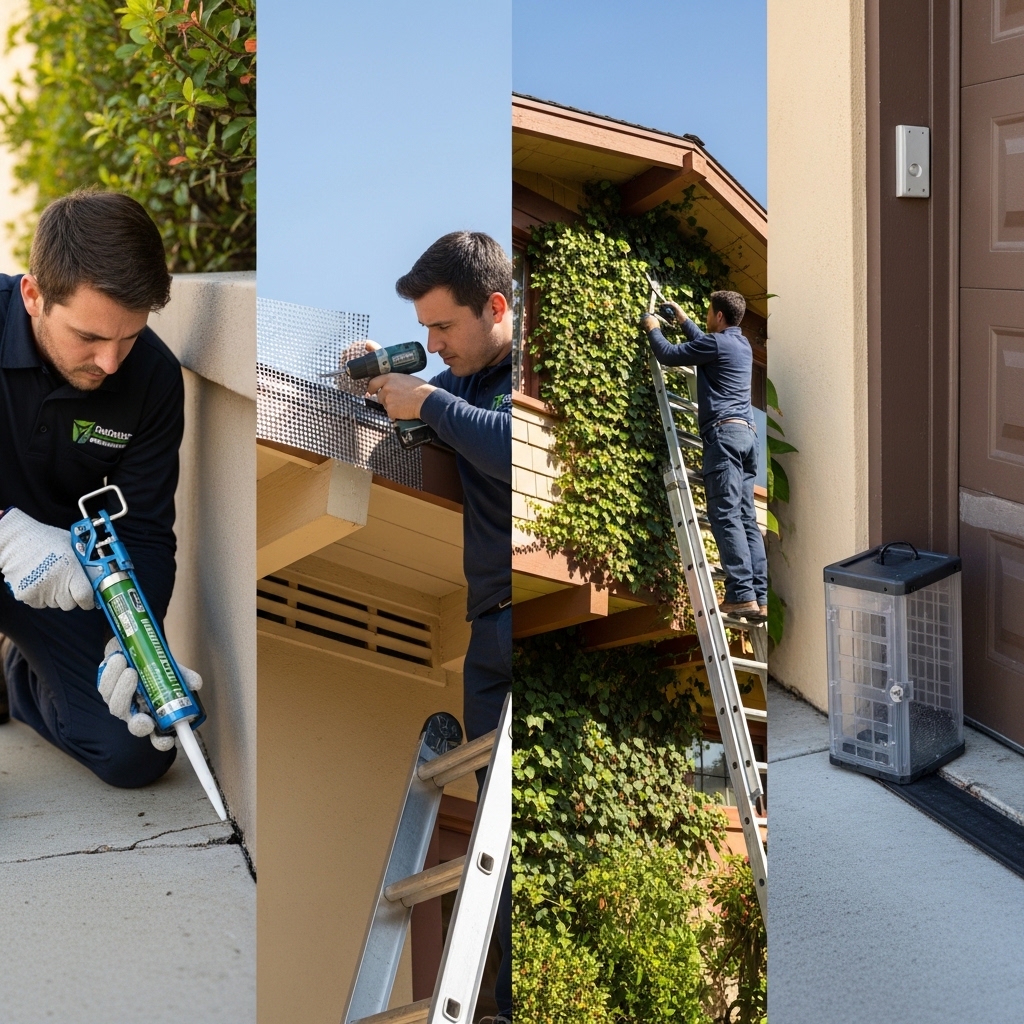
Ask a dozen Angelenos how they’ve dealt with rodents and you’ll get a dozen stories: the attic that came alive just after sunset, the garage where dog food vanished cup by cup, the citrus tree that quietly fed nocturnal visitors. Over the years, certain methods prove themselves again and again in Los Angeles homes, not because they sound clever but because they stand up to our climate, our construction styles, and the way neighborhoods are stitched together. The heart of the approach is exclusion—closing the building envelope so visitors can’t enter in the first place. When neighbors ask what works, I point them to proven, practical rodent proofing steps that respect the home’s design, preserve ventilation, and survive heat, moisture, and time.
Before any tools come out, the first method is careful thinking. We map exterior routes, trace utility lines, and look for the faint rub marks that betray repeated traffic. Rooflines and eaves get special attention in Los Angeles because so many houses invite vertical travel through vines, trellises, and trees. Inside, we read the attic like a map: trails in insulation point to access points at the edges, and concentrated droppings suggest staging areas near warmth or water. This detective work guides the next steps so that each repair lands exactly where it’s needed.
Method 1: Seal the Obvious, Then the Invisible
Effective exclusion starts with the obvious gaps: daylight under doors, missing or damaged vent screens, and open utility penetrations around cable, plumbing, and HVAC lines. Once those are secured, attention turns to the invisible seams—hairline joints at sill plates, trim boards where sun and rain open micro-gaps, and the meeting points of dissimilar materials like stucco and wood. The goal is to deny access at every size scale. Materials matter: corrosion-resistant mesh that holds its shape, flexible sealants that tolerate expansion and contraction, and proper fasteners that anchor securely without cracking finishes. The work should look unobtrusive and feel permanent.
In Los Angeles, the invisible often hides in plain sight. Decorative vents on gable ends may have attractive patterns that are larger than they seem once you account for rodent capability. Retrofitted can lights and bath fans sometimes leave unsealed pathways in the attic, and soffit intakes can be loose or compromised. By approaching these areas with a methodical, room-by-room and roofline-by-roofline evaluation, we learn where to place screens, where to add flashing, and where to apply sealant for enduring results.
Method 2: Respect Ventilation While Blocking Entry
Ventilation is essential for roof health and indoor comfort, so blocking vents is never the answer. The correct method is screening: using appropriately gauged mesh that resists gnawing without choking airflow. For attic gable vents, this means tight-fitting frames that sit flush and fasteners that don’t loosen under heat cycles. For crawl spaces, screens should prevent entry without limiting the ventilation needed to avoid moisture issues. When done right, the home breathes properly while denying rodents the access they seek.
Ridge vents, dormer vents, and soffit intakes benefit from guards or screens designed for their specific profiles. It’s tempting to improvise, but purpose-built solutions last longer and look cleaner. They also facilitate maintenance: roofers and HVAC technicians can work around clearly installed guards without damaging them or creating new openings during their own projects.
Method 3: Fortify Doors and Thresholds
Doors are an everyday convenience for us and a prime opportunity for rodents. Garage doors often show daylight, and that’s the first target. Properly adjusted tracks, high-quality bottom seals, and edge guards turn a loose barrier into a firm one. Side doors, sliders, and patio entries need similar attention: weatherstripping that actually touches, thresholds without proud edges, and frames without chewable gaps. The result is a daily-use experience that feels tighter and quieter—a bonus you notice every time you come and go.
In older Los Angeles homes, settling can tilt frames slightly out of square. Rather than forcing a fit with excessive sealant, the method is gentle carpentry: realigning strikes, resetting thresholds, and then sealing the small remaining gaps. This keeps operation smooth while preventing the thin paths that lure a determined rodent to test the same corner night after night.
Method 4: Control the Landscape Interface
Rodent proofing doesn’t stop at the wall. Vines that climb eaves, hedges that brush siding, and trees that overhang roofs are all ladders. The practical method is to introduce space and visibility. By trimming vegetation away from the structure and keeping soil lines at or below grade, we reduce shade-hugging corridors and make inspection easy. Citrus and other fruiting trees deserve special attention; regular gleaning denies rodents the buffet that keeps them coming back. Secure waste storage and tidy outdoor feeding habits for pets group with these landscape steps to cut down incentive and opportunity.
Drainage is another landscape factor. Constantly damp soil near the foundation—often the result of drip lines set too generously—creates cool, attractive conditions for rodents. Adjusting irrigation schedules and fixing minor leaks change the microclimate just enough to reduce pressure. It’s a quiet intervention that complements structural exclusion beautifully.
Method 5: Trapping After Sealing
Trapping is most effective after the home is sealed; otherwise, it can feel like bailing a boat with a hole still open. Once the envelope is secure, a limited trapping phase ensures that any animals inside are removed quickly and humanely. Enclosed snap traps placed at strategic points, checked on a regular schedule, deliver reliable confirmation. Non-toxic monitoring blocks can be added as a quiet sentinel that shows whether activity persists without drawing animals into the living space. This combination allows homeowners to move from uncertainty to confidence.
In practice, trapping is a brief act in a longer story. The narrative is about a home regaining equilibrium. Once interior signs stop and monitors stay quiet, the traps can be removed and the structure left to its sealed, steady state. A follow-up check a few weeks later reinforces the outcome and offers a chance to address any new vulnerabilities that might have emerged after heavy weather or other property work.
Method 6: Clean, Sanitize, and Reset the Space
Rodents leave scent markers and debris that can invite returns. After exclusion and trapping, targeted cleanup breaks those signals. In attics, this might include removing heavily soiled insulation and vacuuming droppings safely. In garages and crawl spaces, a careful sweep and wipe-down of affected areas remove pheromone trails. The environment resets, and future visitors don’t find the cues that say, “This is home.” In Los Angeles, where open-air living and indoor-outdoor transitions are daily features, that reset is especially important.
Cleanup is also a chance to inspect for incidental damage. Chewed wiring, gnawed plastic piping, or compromised weatherstripping gets spotted and addressed. The result is not just a rodent-free space but a safer, better-functioning home that holds temperature, manages moisture, and stays quieter throughout the day and night.
Method 7: Monitor and Maintain
Even the best work benefits from a light touch of ongoing attention. Seasonal checks—peeking at vent screens after windstorms, confirming garage door seals after track maintenance, and scanning for new rub marks along common paths—keep the envelope resilient. The method here is simple and empowering: a short checklist shared between homeowner and professional team. Because Los Angeles homes live in an active environment—earth movement, strong sun, occasional heavy rains—this rhythm of monitoring prevents small gaps from becoming open doors.
Midway through a project, homeowners often ask which step offers the biggest improvement. The answer is always exclusion, done neatly and durably. It’s the foundation that lets every other tactic succeed. If you’re choosing where to begin, prioritize the sealing of structural openings and the installation of long-lasting screens and guards designed for your roof and vent systems. That’s the center of gravity for effective rodent proofing in Los Angeles.
Why Local Knowledge Matters
Local knowledge refines every method. Knowing that a particular neighborhood has prevalent clay sewer laterals suggests paying extra attention to drain line penetrations. Recognizing that certain architectural styles hide voids behind decorative elements prompts targeted inspection along those lines. Even understanding how contractors have historically run cable or HVAC expansions in different eras helps predict where unsealed chases might hide. This experience compresses the learning curve and lets a team get straight to the repairs that matter most.
Local knowledge also reduces friction. Teams accustomed to navigating tight hillside driveways, coordinating in busy streets, and protecting delicate finishes in older homes build trust quickly. Homeowners feel the difference when technicians arrive with the right fasteners, paint-matched flashing, and screens sized to classic vent formats. The work proceeds cleanly, and the home ends up feeling the way it should: calm, tight, and unbothered by the nightly city soundtrack.
Living Comfortably After the Work
Perhaps the most underrated method is simply enjoying the results. A sealed home changes daily life in small, satisfying ways. You stop hearing scurrying in the ceiling. Pet food stays in the bowl. The garage becomes a place for projects again, not a source of mystery sounds. This comfort is the sum of thoughtful steps executed with care. It’s also durable: a well-sealed envelope can ride through seasons and minor neighborhood changes with quiet confidence.
When you look back after a year and realize you’ve slept through a rainy night without a single scratch or scuffle overhead, you understand what the methods were for. They extend beyond pest control and into home quality—better insulation performance, fewer drafts, and a general sense of order where there once was disorder. A calm home invites you to notice what you love about living in Los Angeles instead of what’s testing your patience.
FAQ
Q: Do I need to vacate during the work? A: Generally, no. Exclusion and monitoring are unobtrusive. Brief limits on access to certain areas may be requested during sealing or while materials set, but your daily routine can continue with minimal interruption.
Q: Are poisons used? A: No, not for proofing. The focus is on structural exclusion. If trapping is needed to remove interior animals after sealing, enclosed snap traps are used because they are predictable, fast, and allow precise monitoring without introducing toxins.
Q: How long does the process take? A: It varies with property size and complexity, but the typical rhythm includes an initial inspection, sealing priority points, a brief trapping phase if necessary, and a follow-up check to verify silence and stability.
Q: Will screens restrict airflow? A: Properly selected and installed screens are designed to maintain ventilation while resisting gnawing. They are matched to vent types and sized to protect without impeding necessary airflow.
Q: What about older or historic homes? A: The same principles apply, but materials and techniques are matched to the architecture. The work is done as cleanly and invisibly as possible to respect original finishes and details while delivering modern protection.
Q: How do I keep it effective long term? A: Maintain good exterior habits—manage vegetation, secure waste, and keep door seals in good condition—and schedule occasional checks. Small touch-ups after storms or repairs keep the envelope tight.
If you’re ready to put these methods to work and enjoy a home that feels quieter and more secure day and night, connect with a local team that leads with exclusion and follows through with monitoring. Start with professional rodent proofing and give your Los Angeles home the calm, durable protection it deserves.