
From Mar Vista to Mount Washington, attics across Los Angeles tell the story of how our homes breathe, age, and adapt. They’re also the front line in the city’s ongoing dance with rodents. Over the past few years, I’ve watched a handful of clear trends redefine how homeowners and pros approach these spaces. If you haven’t peeked above your ceiling lately, you might be surprised at the innovations and best practices that now shape a clean, quiet attic. Early in any attic conversation, I point neighbors to reputable local resources and remind them that solid rodent proofing is as much about the right details as it is about big ideas.
Attics used to be afterthoughts—hot, dusty zones we opened only to stash holiday boxes. Today, they’re strategic. Angelenos are investing in tighter building envelopes, updated insulation, and balanced ventilation. The shift has elevated the stakes: an attic that’s sealed against rodents not only stays cleaner but allows the rest of the home to perform as designed. That means quieter nights, fewer odors, and HVAC systems that aren’t fighting contamination or leaks.
Exclusion-first, humane strategies
A defining trend is the “exclusion-first” mindset. Rather than leading with baits, pros in LA prioritize physical barriers, precise sealing, and sanitation. It’s safer for families and pets, and it respects the broader urban ecosystem we live in, from red-tailed hawks circling above the Arroyo to owls nesting in canyon oaks. Exclusion-first also delivers lasting results; once you close the path, you break the habit cycle that keeps rodents returning.
Material upgrades for coastal air and valley heat
Los Angeles attics face two primary stressors: salt air near the coast and intense sun in the valleys. In response, materials have evolved. Galvanized or stainless hardware cloth is now standard for reinforcing vents, with tight weaves that block entry yet preserve airflow. High-temp, UV-stable sealants handle the heat radiating from tile roofs in Woodland Hills. In coastal zones like Playa del Rey, corrosion-resistant fasteners and mesh extend the life of the work. These upgrades reflect a simple truth: your attic is a microclimate, and materials should match it.
Smarter inspections with thermal and airflow tools
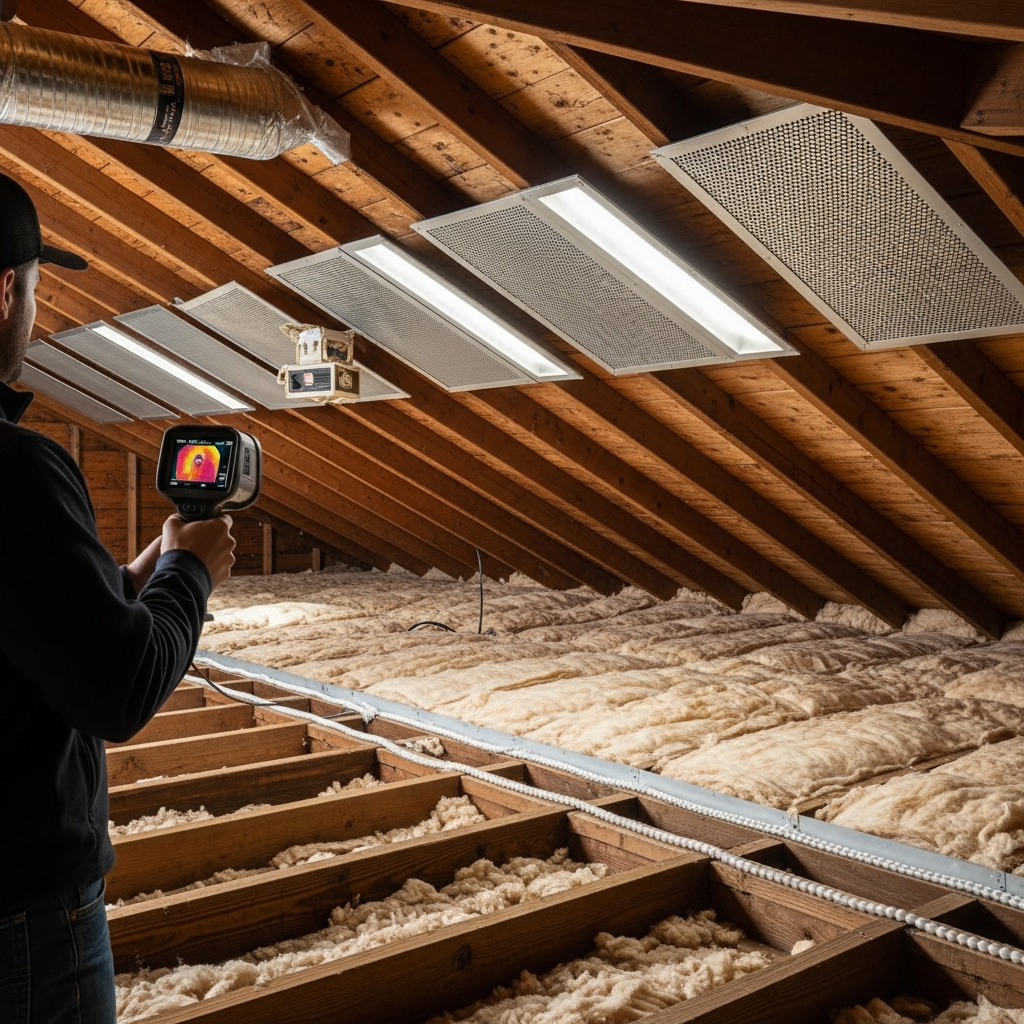
Another trend is the use of diagnostic tools. Infrared cameras pick up temperature anomalies that point to gaps or missing insulation. Airflow meters help evaluate whether ventilation is balanced after screens are reinforced. While none of this replaces a sharp eye and a flashlight, it does speed up troubleshooting and ensures the final system breathes as intended. Homeowners benefit because the attic becomes a tuned system, not just a patched cavity.
Integration with insulation upgrades
Attic projects now commonly pair exclusion with insulation work. Once nests and contamination are removed, homeowners often choose to reset the space with fresh batts or blown-in insulation. The trend is toward higher R-values aligned with state energy codes and toward insulation products that resist settling. Importantly, sealing comes first so that clean insulation stays clean. The outcome is an attic that both resists rodents and supports comfort below.
Airtight lighting and mechanical penetrations
Open penetrations around recessed lights, bath fans, and HVAC lines used to be afterthoughts. Now they’re focal points. Pros install airtight trim kits on can lights rated for insulation contact, box out larger gaps with rigid materials where needed, and apply sealants rated for temperature exposure. The difference is immediate: fewer odor pathways, fewer drafts, and a harder target for any animal seeking a foothold. In LA’s open-plan homes where every air pathway connects quickly to living spaces, this attention pays dividends.
Custom vent solutions for architectural styles
Los Angeles architecture demands nuance. Spanish Revival gables, modern parapets, and classic ranch eaves each call for specific vent strategies. The current trend is to integrate reinforcement invisibly. Mesh sits behind existing grilles; color-matched vent covers blend with stucco or siding; and soffit screens are secured with fasteners that won’t back out under seasonal expansion. The result is an attic that looks untouched from the street yet is far better defended from within.
Sanitation that respects indoor air
Once entry points are sealed, thorough sanitation is in order. The trend here is targeted and measured: remove contaminated materials, HEPA-vacuum the remaining dust, and apply sanitizers judiciously to neutralize odor sources. In LA’s dry climate, odors can linger stubbornly unless you address both the source and the fibers that hold it. Homeowners report that, after proper cleanup, the characteristic “attic smell” disappears and doesn’t return with the next heat wave.
Monitoring and maintenance as a culture
Perhaps the most important trend is the normalization of light, regular check-ins. Homeowners schedule quick attic peeks with the seasons—before the first fall winds, after a heavy rain, and at the start of summer. This rhythm catches small issues before they grow and keeps the exclusion work pristine. It’s not heavy maintenance; it’s attention, and it pays off.
Mid-project coordination with other trades
With so much remodeling and ADU building in Los Angeles, attic exclusion often intersects with electricians, HVAC techs, and roofers. A growing best practice is simple communication. Before new lines are run or a roof is replaced, pros confirm that penetrations will be tight and screens reinstalled. This coordination prevents the all-too-common scenario where beautiful work is undercut by one unsealed hole near a flue or a forgotten gable vent left open during construction.
Hillside homes and seismic considerations
Hillside construction introduces unique attic pathways: stepped rooflines, exposed rafters, and transitions where framing meets terraced walls. Additionally, the subtle shifts homes experience over years of seismic activity can open hairline gaps. The trend is to anticipate these realities with flexible sealants at critical joints and with reinforcement that allows for minor movement without tearing. It’s a small but essential adaptation for LA’s geology.
ADUs and low-profile attics
Garage conversions and new ADUs often end up with shallow, low-profile attics—or none at all—yet still have chases and soffits where rodents can roam. Current practice is to treat these tight spaces with the same rigor: screen every vent, seal every seam, and document the work with photos so future trades respect the barriers. Homeowners appreciate the transparency and the confidence it builds.
Neighborhood education and shared success
The final trend worth noting is community-oriented. Blocks that trade notes about fruit harvests, green bin habits, and ivy trimming tend to stay ahead of rodent pressure. When neighbors align on simple routines, individual attics stay quieter. This is Los Angeles at its best—small acts of coordination that improve daily life for everyone.
What a well-executed attic project feels like
Clients often remark that a sealed, cleaned attic changes the emotional tone of a home. There’s a new stillness at night, fewer mystery drafts, and a confidence that storage isn’t a gamble. They’ll mention how the AC seems to cycle more calmly during heat waves, or how a once-musty hallway now smells like nothing at all. These sensory shifts signal that the system is working and that the investment has landed where it matters most—daily comfort.
Choosing the right partner
The best attic outcomes come from teams who treat the space like a system rather than a problem corner. Look for pros who photograph their findings, explain material choices for your microclimate, and coordinate with roofers and electricians when needed. Midway through planning, don’t hesitate to revisit your goals and confirm that exclusion, insulation, and ventilation are aligned. If you’re searching for a clear path and want to see what modern best practices look like, make time to explore local guidance on rodent proofing in Los Angeles and how it applies to your attic type.
FAQ
Do modern vent reinforcements reduce airflow?
Not when designed correctly. Tight-weave hardware cloth paired with adequate net free area maintains ventilation while blocking entry. Pros verify airflow with simple calculations or meters after installation.
Should I replace or clean my insulation after an infestation?
It depends on contamination. Local practice favors targeted removal for light activity and full replacement when tunneling and soiling are widespread. The priority is to seal first so any new or cleaned insulation stays pristine.
Are baits still used?
Exclusion-first strategies minimize reliance on baits. Traps may be used temporarily during transition, but the long-term solution remains physical barriers and sanitation. This approach is safer for pets and urban wildlife.
How do recessed lights factor into rodent proofing?
Recessed cans can leave gaps that serve as odor and air pathways, and sometimes a foothold for nesting nearby. Airtight trims, fire-rated covers where appropriate, and careful sealing around fixtures help close the loop.
Will reinforcement be visible from the street?
With thoughtful detailing, most upgrades are invisible. Mesh sits behind grilles, covers are color-matched, and fasteners are selected to blend. Homeowners are typically surprised by how natural the results look.
How often should I check the attic after sealing?
A seasonal glance is plenty for most homes—before windy weeks in fall, after a strong rain, and ahead of summer heat. The goal is to catch small issues while they’re small, which keeps the space calm long term.
If your attic has been an afterthought or a source of mystery noises, this is the moment to reset. Take a careful look, note what you see and smell, and partner with local pros who understand LA’s microclimates, materials, and architectural quirks. For a deeper dive into methods and to line up the help you need, schedule an assessment and consider professional rodent proofing so your attic becomes the quiet, clean, well-performing space it ought to be.