
Walk any Los Angeles block lined with mid-century courtyard apartments, 1920s fourplexes, and newly built mixed-use towers, and you can feel how diverse the city’s multifamily housing is. That variety is part of LA’s charm—and its challenge when it comes to rodents and the sanitation work that follows any infestation. Property managers, HOAs, and building engineers are adopting a new generation of practices that go beyond cleanup checklists to emphasize data, communication, and occupant health. In this landscape, effective rodent sanitation has evolved into a building-wide discipline, one that supports tenant satisfaction and long-term asset performance.
For those of us who spend our days in mechanical rooms, on roof decks, and in laundry corridors from Koreatown to Sherman Oaks, trends come into focus not as buzzwords but as practical responses to real-world constraints: limited access windows, tight budgets, and the need to keep residents comfortable through every step of a project. The most consequential changes blend technology with old-fashioned thoroughness, recognizing that sanitation is both a health measure and a communications opportunity.
Trend 1: From unit-by-unit to stack-by-stack strategies
Multifamily buildings share risers, chases, and structural cavities. Rodents exploit those highways, turning a single unit issue into a vertical stack problem. The trend now is to scope sanitation by stacks and zones rather than by isolated apartments. That means coordinated access to a line of units, controlled containment in corridors, and synchronized work on attic or interstitial spaces that tie them together. The payoff is fewer callbacks and a cleaner, healthier baseline across the building.
This approach requires careful scheduling and clear communication. Property managers who map out access blocks and give residents realistic timeframes for odors, noise, and ventilation changes see better cooperation. It also creates an opportunity to share education about food storage, pet feeding, and balcony housekeeping—practices that reduce recontamination once sanitation is complete.
Trend 2: Documentation as a resident amenity
Ten years ago, sanitation reports were mostly internal. Today, managers share curated summaries with residents and ownership, including before-and-after photos of attics above affected stacks, itemized removal of contaminated materials, and proof of HEPA filtration during work. The documentation reassures residents, supports risk management, and helps new leasing conversations by demonstrating a commitment to health. In a competitive rental market, that transparency functions as an amenity no less than a gym or a package room.
Trend 3: Smart monitoring informs smarter sanitation
While sanitation is the cleanup phase, it is increasingly guided by data from monitoring devices used during exclusion and control. Remote counters, activity sensors, and digital logs reveal where activity spiked, helping sanitation crews focus on the most contaminated cavities, soffits, or utility penetrations. In a building with multiple roof levels and varied architecture, that guidance saves time and reduces resident disruption.
Importantly, the data loop continues after sanitation. Baseline particulate readings in hallways and return air plenums taken before, during, and after cleanup show how effectively airborne contaminants were contained. Over time, those readings help teams refine methods, from the number of air scrubbers to the sequence of unit access, moving from best practice to building-specific practice.
Trend 4: Health-first product selection
Multifamily sanitation must consider sensitive populations—newborns, elders, and residents with respiratory conditions. Managers are specifying low-odor, low-residue products that meet efficacy requirements while keeping units habitable. Combined with negative air and timed ventilation purges, this approach allows for same-day reoccupation of common spaces and rapid return to normalcy for tenants. Because Los Angeles buildings often share HVAC zones, product selection and air management are coordinated with building engineers to minimize cross-unit impact.
Trend 5: Integrating sanitation with capital planning
Sanitation findings are now feeding into capital plans. When an attic’s insulation is saturated or when crawlspace contamination points to drainage issues, those observations become line items for upcoming budget cycles. In LA’s dry-wet seasonal pattern, roof and site drainage upgrades often pair with sanitation to prevent future problems. The trend is to treat sanitation not as a one-off emergency response but as the discovery phase for practical, bite-sized improvements that protect structures and resident health.
Trend 6: Resident education that actually sticks
Flyers get tossed. What works are short, building-specific messages delivered at the right moments. Leasing packets now include one-page, photo-rich notes on trash chutes, pet policies, and balcony housekeeping. After a sanitation project, managers send a quick follow-up explaining what was done and what residents can do to preserve the results. When residents understand that open balcony birdseed or overripe fruit invites problems that end up in their vents, behavior shifts. That behavior, more than any product, is what makes a building-wide cleanup last.
How a modern sanitation project flows
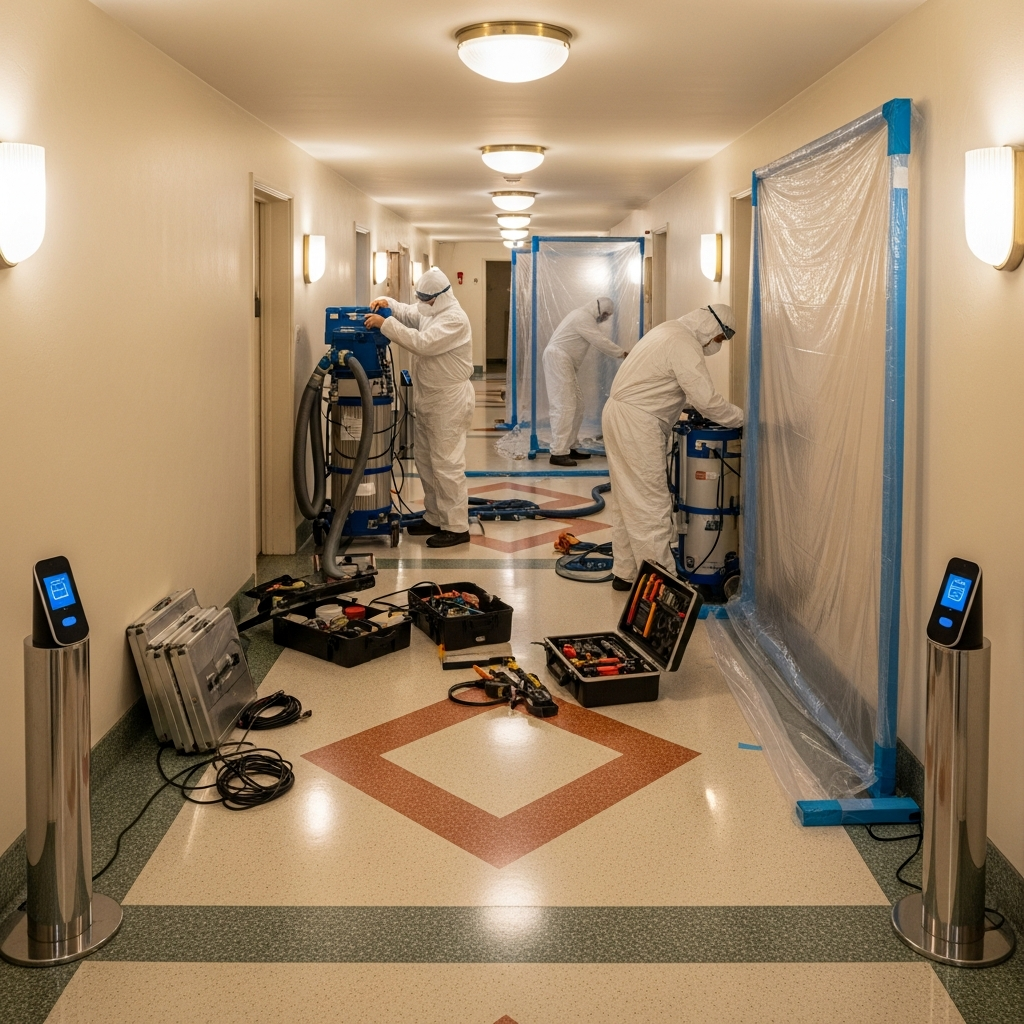
It starts with a wide-angle assessment: stack mapping, roof access points, interstitial pathways, and common room hotspots like laundry, storage, and trash areas. Containment comes next—zippered barriers where needed, negative air machines to capture particulates, and thorough protection of carpets and surfaces. Removal is deliberate: bagging of contaminated insulation or nesting, careful HEPA vacuuming of cavities, and methodical treatment of surfaces to neutralize residues. Team leads document as they go, marking where penetrations or construction quirks created trap points for debris.
Mid-project, communication becomes the linchpin. Residents are reminded of access windows, odors are explained before they are perceived, and progress photos go to ownership so they can see the return on investment in cleaner, healthier common spaces. Crews aim to leave each accessed unit in a condition that feels better than when they arrived—dust contained, air neutral, and surfaces wiped where appropriate. That attention to detail shifts tenant sentiment from disruption to appreciation.
The payoff: fewer complaints, easier maintenance, healthier air
Post-sanitation, buildings experience a measurable drop in odor complaints, pest sightings, and hallway dust. Engineers report fewer surprises when accessing mechanical spaces because clutter and contamination have been cleared, improving safety and efficiency. Most importantly, residents breathe easier. In a city where wildfire smoke can keep windows closed for days, cleaner indoor air becomes a true quality-of-life asset.
Mid-project insights that shape long-term habits
During the heart of a cleanup, patterns appear: a recurring soffit gap above a stack, a laundry chute landing that traps lint and food dust, a garage level where wind eddies push debris into a corner. These insights shape maintenance routes and inform small but powerful changes—bristle seals at doors, scheduled chute cleanings, improved storage rules. The result is a building that stays cleaner longer and a team that moves from reactive to proactive. When sanitation highlights are shared with residents, they recognize the building’s investment in health, and participation improves. This is where building-wide rodent sanitation earns its reputation as both a hygiene practice and a community builder.
Working with heritage buildings and new construction
Los Angeles has rent-stabilized treasures with delicate plaster and original vents alongside glass-and-steel newcomers with complex mechanicals. Heritage buildings demand gentle methods and a respect for materials; new buildings require coordination with building automation systems and fire life safety protocols. The trend is to tailor sanitation strategies to the structure—quiet equipment during evening quiet hours, daytime work in high-traffic amenities, and special handling for any material that might release dust if disturbed. With the right plan, both old and new can reach the same endpoint: clean, healthy spaces that feel neutral and calm.
Making it stick: policy, training, and follow-up
Policies are only as good as the team implementing them. The best-performing properties invest in maintenance training, teaching staff to recognize early signs of contamination and to coordinate quick, contained cleanups before issues spread. Follow-up inspections a few weeks after major sanitation projects catch any residue and confirm that access points remained sealed. Over time, these rhythms become part of the building’s operating system, as familiar as trash collection or elevator service.
Frequently asked questions
How do you schedule sanitation without disrupting residents?
By clustering access windows, communicating early and often, and using containment to keep noise and dust to a minimum. Many teams target mid-mornings and early afternoons, avoiding school runs and evening routines, and they keep residents updated in real time when timelines shift.
What products are safest for sensitive residents?
Low-odor, low-residue disinfectants selected for efficacy and material compatibility, applied with attention to ventilation and contact time. Air scrubbers with HEPA filters help keep shared corridors and adjacent units comfortable during work.
Can sanitation reduce pest issues building-wide?
Yes. By removing contaminated materials and food residues, sanitation reduces attractants and helps exclusion measures hold. When paired with resident education and routine maintenance, building-wide complaints typically decline.
Is documentation really worth the effort?
Absolutely. Photos and clear descriptions build resident trust, support insurance and risk management, and help leasing teams demonstrate a health-forward approach to building care.
What is the ideal follow-up after a major sanitation project?
A short inspection cycle—often two to four weeks later—to confirm conditions, verify that access points are holding, and reinforce resident habits that preserve the results. That cadence turns a one-time cleanup into a durable improvement.
If your multifamily property is due for a reset, choose partners who treat sanitation as a building system, not just a cleanup. With coordinated access, documented results, and a health-first mindset, modern rodent sanitation can help your Los Angeles community breathe easier, live cleaner, and feel prouder of the place they call home.