
Signs Your Camarillo Home Needs Attic Insulation Removal
Attic insulation typically lasts 15 to 30 years, but conditions in Camarillo’s coastal-influenced climate can shorten that lifespan considerably. Ventura County homeowners deal with a specific mix of marine layer humidity, warm inland temperature swings, and older housing stock that makes compromised insulation more common than many expect. If your attic insulation is failing, knowing the signs early can prevent costlier structural and air-quality problems down the road.
What does contaminated attic insulation actually look like?
Contaminated insulation rarely announces itself with an obvious single symptom. More often, you notice a cluster of small signals: a faint musty or ammonia-like odor in upper rooms, visible dark staining or clumping when you peek into the attic hatch, or insulation that has compacted into a thin, matted layer rather than maintaining its original loft. Rodent droppings, nesting debris, and chewed batt edges are also reliable visual cues. Any of these signs suggests the material has lost both its thermal value and its hygiene integrity, making removal the appropriate first step rather than simply adding more insulation on top.
How do I know if rodents have damaged my attic insulation in Camarillo?
Rodent activity is one of the most common reasons Camarillo homeowners need full insulation removal. Roof rats and mice are active throughout Ventura County, and once they establish nesting routes through the attic, they burrow into batt or blown-in insulation to create warm tunnels. Warning signs include scratching sounds at night, small dark droppings scattered across the insulation surface, greasy rub marks along rafters or framing, and shredded material gathered into dense nesting piles. Because rodent urine and feces saturate the insulation fibers, the contamination cannot be spot-cleaned. The entire affected section typically needs to be removed, the attic sanitized, and entry points sealed before new insulation is installed. LA Attic Pro’s rodent proofing and rodent sanitation services address both the exclusion and the cleanup side of this problem.
Can coastal moisture from the Camarillo marine layer damage attic insulation?
If you want it handled correctly the first time, consider professional attic insulation in Malibu.
This is the locale-specific question Camarillo homeowners ask more than almost anywhere else in Southern California. The city sits at the edge of the Oxnard Plain, close enough to the Pacific that marine layer fog rolls in regularly, especially from late spring through early summer. That persistent coastal humidity can work its way into attics through soffit vents, ridge vents, or small gaps in the roof deck. Fiberglass batts exposed to repeated moisture cycles lose R-value as the glass fibers compress and the facing deteriorates. Blown cellulose is particularly vulnerable because it absorbs moisture readily and, once wet, can become a substrate for mold growth. If you notice insulation that feels damp to the touch, see dark staining on the underside of roof sheathing, or find that your home’s upper floor stays stuffy even after mild weather, coastal moisture infiltration may have already compromised your attic insulation. Addressing ventilation alongside removal is important; the article attic ventilation vs. insulation in Camarillo explains how the two systems interact in this climate.
What are the energy bill signs that my insulation needs to be replaced?
Insulation that has settled, compacted, or been damaged does not fail all at once, which means energy bills tend to creep upward gradually rather than spike overnight. If your heating or cooling costs have risen noticeably over the past couple of years without a change in usage habits, degraded attic insulation is a logical place to investigate. Other energy-related signals include rooms on the top floor that are noticeably warmer in summer or harder to heat in winter compared to lower floors, HVAC equipment that runs longer cycles than it used to, and temperature differences of more than a few degrees between the ceiling and the floor of the same room. These patterns suggest thermal bypass, meaning conditioned air is escaping through an attic that no longer provides adequate resistance. Understanding what drives those efficiency losses is covered in more depth at what affects attic insulation costs in Camarillo.
Is old insulation a health concern, and when does it become one?
Age alone does not automatically make insulation hazardous, but several conditions can change that. Homes built in Camarillo before the late 1970s may contain vermiculite or older loose-fill materials that warrant professional testing before any disturbance. More commonly, the concern is biological: mold growth within wet insulation, or allergen-carrying particulates from rodent contamination that recirculate into living spaces through ceiling penetrations and recessed lights. If household members notice increased dust, persistent musty odors, or respiratory irritation that improves when windows are open, a professional attic inspection is a reasonable next step. It is worth emphasizing that these are environmental comfort concerns, not medical diagnoses, and a licensed professional should assess the attic before any removal work begins. Never attempt to remove potentially contaminated insulation yourself without proper protective equipment and containment.
Many Malibu homeowners rely on expert attic insulation in Malibu for exactly this.
Does my attic insulation need to be removed before I can add more?
Not always, but in several situations adding new insulation on top of old is the wrong approach. If the existing material is contaminated by rodents, mold, or moisture, layering new insulation over it traps the problem rather than solving it. Similarly, if the current insulation has settled to a point where it is touching the roof deck in areas or blocking soffit airflow, removal and a fresh installation gives you the opportunity to correct those issues. If the existing insulation is dry, uncontaminated, and simply thin, a professional may recommend adding to it rather than replacing it entirely. The distinction matters because removal adds labor and disposal time to the project scope. A qualified attic insulation contractor in Camarillo should inspect the existing material before recommending a path forward.
What happens during a professional attic insulation removal?
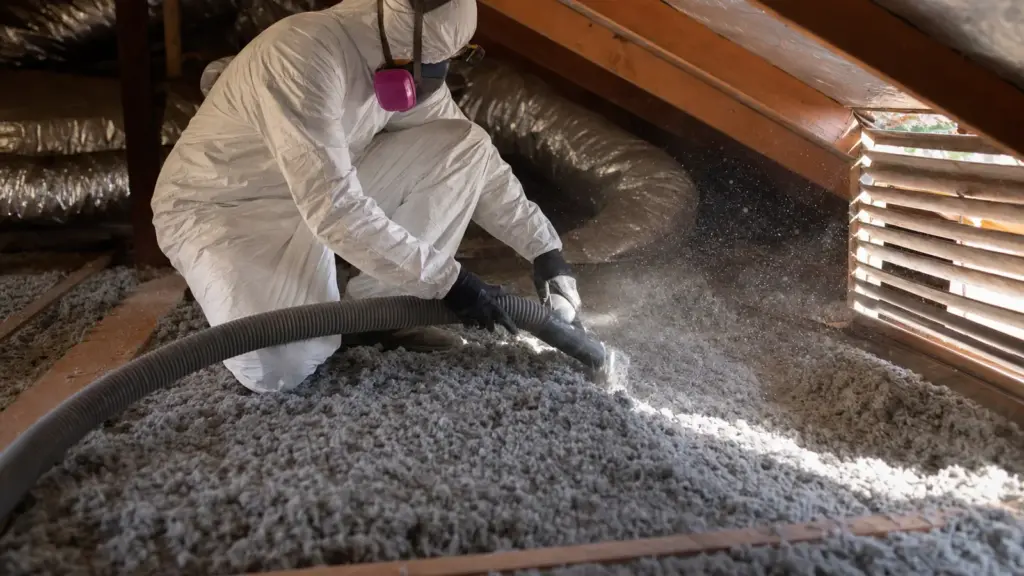
The process begins with a thorough inspection to document the type of insulation present, the extent of contamination, and any underlying issues such as air leaks, damaged sheathing, or pest entry points. Technicians use industrial vacuum equipment with HEPA-rated filtration to extract blown-in material without spreading particulates into living spaces. Batt insulation is carefully bagged and removed by hand. Once the attic floor is cleared, the space is typically cleaned and sanitized before any new insulation is installed. This is also the right moment to seal air bypasses around recessed lights, plumbing penetrations, and top plates, work that significantly improves the performance of whatever new insulation goes in. The full scope of what good installation looks like is outlined at choosing the right insulation materials for Camarillo.
Ready for the next step? Learn how attic insulation services in Malibu can help and reach out to the team.
How do I evaluate whether a contractor is qualified to do attic insulation removal?
Removal involves more than pulling out old material. A qualified contractor should carry a current California contractor’s license (C-2 or C-20 classifications are relevant for insulation work), general liability insurance, and workers’ compensation coverage. Ask specifically how contaminated material is bagged, transported, and disposed of, and whether the crew uses respirators and protective suits rated for particulate exposure. A contractor who offers to simply blow new insulation over existing material without inspecting it first, or who cannot explain their containment process, is worth approaching with caution. Questions to ask during the evaluation process are covered in detail at what to ask insulation contractors in Camarillo. Getting multiple written assessments before committing to a scope of work is always a reasonable approach.
When is the right time of year to schedule attic insulation removal in Camarillo?
Camarillo’s relatively mild climate means removal can be scheduled year-round without the extreme temperature constraints that affect attic work in hotter inland regions. That said, late summer and early fall tend to be the busiest periods for insulation contractors across Ventura County, as homeowners prepare for cooler months. Scheduling in late winter or spring often means greater contractor availability and faster project turnaround. If rodent activity or moisture damage is already confirmed, waiting for a convenient season is not advisable, because ongoing contamination can spread to adjacent framing and sheathing. Address known problems promptly and plan the replacement phase at a time that works for your household.
Recognizing these warning signs early gives Camarillo homeowners a meaningful advantage. Contaminated or degraded insulation does not improve on its own, and the longer it remains in place, the more it can affect comfort, energy efficiency, and the condition of surrounding attic structures. If several of the signs above match what you are seeing or experiencing in your home, the next step is a professional inspection to confirm the extent of the problem and determine the right removal and replacement approach. To move from assessment to action, connect with a trusted attic insulation service in Camarillo that can evaluate both your removal needs and your options for what goes back in.