
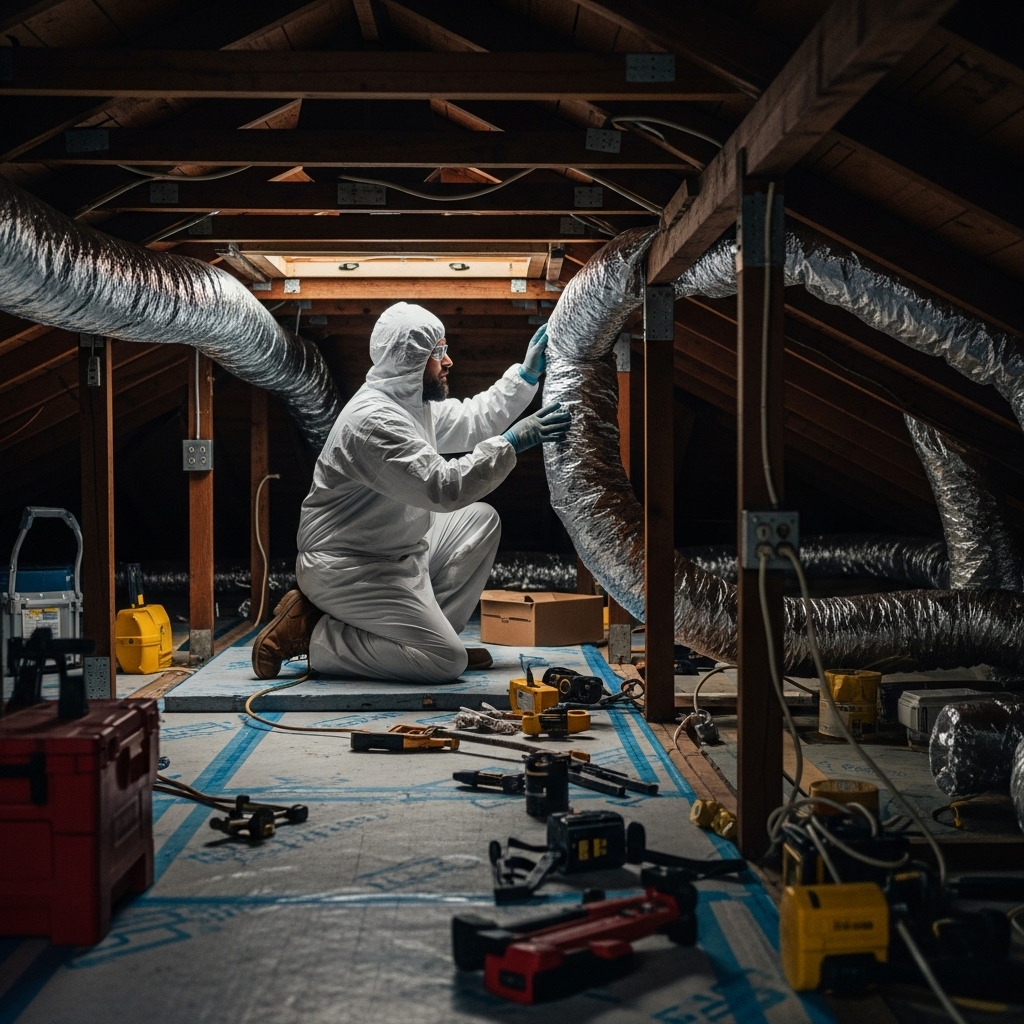
Ask ten Los Angeles homeowners what the “average” air duct replacement cost looks like and you’ll get ten different answers, each shaped by home type, neighborhood, and the particulars of our coastal-meets-desert climate. That’s because Los Angeles is a city of hillside bungalows, mid-century ranches, Spanish revivals, loft conversions, and modern infill—all with unique attic, crawlspace, and mechanical layouts. As a local who has walked countless attics from Eagle Rock to El Segundo, I can tell you that understanding averages begins with understanding context. Before you can compare options or plan your budget, it helps to know what drives the work, how crews actually move through a LA home, and why investing in quality materials and workmanship pays back in comfort, efficiency, and peace of mind. If you’re just starting your research, you’ll hear the phrase air duct replacement a lot, but the best decisions come from grasping the details built into that simple term.
Two identical houses on paper rarely look identical in the attic. The differences show up in insulation depth, roof pitch, stored belongings, existing duct path, and the state of the plenums and return boxes. Even nuances like the height of the collar ties or the presence of knob-and-tube relics can affect how cleanly new ducts can be routed. That’s why averages gloss over what really matters in Los Angeles: access. Easier access means less time contorting through trusses and more time making precise connections, sealing, and supporting each run for optimal airflow. Tight access, on the other hand, demands more setup, safety measures, and careful staging so the crew can work methodically without damaging finishes or the building envelope.
What “average” really covers in Los Angeles
When people ask about the average, they’re usually thinking strictly about ducts. In practice, a thorough scope touches a broader set of components: supply runs that feed each room, properly sized and located returns, sealed plenums, hangers that support the duct to prevent kinks, dampers for balancing, boots and registers that fit the aesthetics of the space, and transitions that respect the equipment’s airflow requirements. An “average” home in the Valley may need longer supply runs due to sprawling single-story layouts, while a compact Silver Lake home might ask for short, split-level runs with tricky drops through walls. The conditions of existing framing and mechanical chases will dictate whether a straight swap is feasible or if reconfiguration will improve performance and noise control.
Los Angeles building codes emphasize energy performance, air sealing, and safety, and inspectors here expect clean work. That means the quality of sealing, insulation integrity around the duct, and the correctness of airflow balance are not optional extras. Meeting those expectations is part of what homeowners often underestimate when they think about an “average.” A conscientious team documents the system, pressure-tests where appropriate, and verifies that returns are adequate, because undersized returns are a common cause of noise, reduced efficiency, and premature equipment wear.
How the home’s architecture shapes the work
In neighborhoods with older housing stock—think Craftsman and Spanish styles—attic headroom can vary by the bay. Access hatches are sometimes barely big enough to pass a cooler, let alone modern insulated ducts. In hillside homes, the crawlspace might be the main pathway, which changes how crews plan supports, protect the vapor barrier, and stage materials. A stucco exterior adds complexity when additions were made over the decades; those layers of history can leave dead-end runs or starved returns that deserve redesign, not merely replacement. It’s the thoughtful redesign—guided by a room-by-room understanding of how you live, where you feel drafts, and which rooms lag behind on hot afternoons—that elevates a project above the mythical average.
Many LA homeowners love open living rooms and vaulted ceilings. These airy volumes look fantastic but can challenge duct routing and register placement. Sometimes it’s smarter to move a supply register to wash a wall of glass or to quiet a register over a sofa with a better boot style. When you think about the “average,” include these small, performance-driven decisions; they’re the difference between a house that technically works and a home that feels even, quiet, and comfortable from day one.
Materials, insulation, and sealing standards
Los Angeles heat can be sneaky. Even coastal areas that enjoy marine layer mornings will roast ducts in the afternoon if they’re under a dark roof. Proper insulation around the ducts and meticulous sealing at every joint is non-negotiable if you want to protect airflow and temperature. You’ll also hear pros talk about rigid versus flex duct. Each has its place. Rigid sections are excellent for straight runs and noise control, while quality flex—installed with stretched cores, smooth transitions, and correct supports—can navigate tight spaces. The “average” shouldn’t default to one or the other; it should specify what goes where and why.
Sealing is where craftsmanship shows. A professional crew uses mechanical fasteners, mastic, and tapes rated for duct applications. They secure boots to framing, apply gasket material where registers meet finished surfaces, and confirm that any penetrations are fire-safe and code compliant. These steps aren’t glamorous, but they’re the backbone of an install that holds up over time, resists dust intrusion, and keeps conditioned air going exactly where it belongs.
Permits, inspections, and why they matter
Yes, permits are part of a well-managed Los Angeles project. They can feel like one more hoop, but they protect you by setting expectations for safety and performance. A permitted project invites oversight that helps ensure your home’s duct system isn’t a hidden weak link. Inspectors will check for support spacing, sealed joints, insulation condition, and that the system matches the equipment’s capacity plan. When you compare one “average” to another, ask whether the scope includes permits and final sign-off. It’s not just paperwork—it’s an assurance that the installation meets city and state standards.
Equally important is post-install verification. A conscientious team will confirm proper airflow to each room, adjust balancing dampers, and respond to any hot or cool spots with tweaks before calling it complete. This commissioning mindset is what turns a good install into a great one, and it separates contractors who build long-term relationships from those who simply move to the next job.
Neighborhood realities across a sprawling city
The realities in a Westchester ranch near the ocean differ from those in a Woodland Hills property that bakes all afternoon. Thus, an “average” figure rarely sticks across Los Angeles zip codes. Coastal salt air can subtly affect exposed metal, valley heat tests insulation, and hillsides bring structural quirks and sharp turns that stress flex duct if it’s not properly stretched and supported. Any conversation of averages should acknowledge these neighborhood trends and the experience required to navigate them gracefully. Local familiarity with typical attic layouts and framing details reduces surprises and leads to smoother installs.
On older homes, it’s common to find returns that were never generous enough. When a return is starved, the system gets louder and less efficient. Improving the return path—whether by enlarging a central return, adding a second return, or optimizing grills and filter access—can transform the way your home feels. If someone quotes an “average” that ignores return air, keep looking. Comfortable homes breathe well in both directions: delivering and pulling back air in balance.
What the process looks like, start to finish
It begins with listening. A walkthrough pairs your lived experience—rooms that lag, areas that get dusty, times of day when comfort fades—with a visual inspection of the duct layout. The pro notes the equipment brand and capacity, checks the plenum and coil clearances, studies how ducts are supported, and evaluates attic and crawlspace access. Photographs document constraints and opportunities. From there, a scope is drafted that spells out which runs are being replaced or resized, how the return will be handled, what register styles will be used, and how balancing will be achieved.
On installation day, crews protect floors and furnishings, stage materials, and move deliberately through the spaces. Old ducts are removed cleanly, new ducts are cut to length with minimal slack to prevent sagging, and connections are secured and sealed. Registers are aligned with the room design, and the return is fitted and sealed for quiet operation. Before wrapping up, the team cycles the system, listens for turbulence, and adjusts dampers to even out temperatures. Somewhere in the middle of your research you’ll likely compare brands and materials and wonder how much of the final comfort is brand versus installation. The truth is, the largest comfort gains come from the design and the craftsmanship behind your air duct replacement.
Common misconceptions about the “average”
One misconception is that all supply runs are interchangeable; they aren’t. Length, bends, and diameter dramatically affect airflow and noise. Another misconception is that bigger ducts always mean better performance. Oversizing can reduce throw and lead to drafts that feel wrong in a room. Finally, some assume that a quiet system is just about the equipment. In reality, a well-supported duct with gentle transitions and balanced returns makes the system naturally quieter, regardless of the brand of the air handler.
Homeowners also sometimes believe that replacing ducts alone will solve every comfort issue. Duct work is a major lever, but envelope details—door undercuts, attic insulation, and window performance—play supporting roles. A good contractor frames this truth clearly so you know what ducts can do and where other improvements may make sense in the future.
How to weigh value beyond the headline
Instead of chasing a citywide average, weigh the completeness of the scope, the quality of materials, the transparency of the plan, and the contractor’s track record. Ask how they’ll protect your home, how they’ll balance rooms after installation, and what kind of follow-up you’ll receive if a room still runs a degree cool on a Santa Ana afternoon. Those details make a bigger difference to day-to-day living than any simplistic average ever could.
Ask also about documentation. Photos of the old and new layouts, notes on changes, and a clear as-built diagram help you maintain the system and support future upgrades. If the team cares enough to document, they care enough to get the small things right, and you’ll feel that care every time your home settles into an even, quiet comfort on a hot day.
Maintaining results over time
After replacement, it pays to adopt simple maintenance habits. Keep returns and registers free of obstructions, change filters on schedule, and give the system room to breathe. Peek into the attic once or twice a year to be sure nothing has shifted and that storage hasn’t encroached on the duct runs. If you hear a rattle or notice a room drifting from the rest, call the installer while the changes are small; great companies welcome the chance to fine-tune and keep you delighted.
In Los Angeles, we use our systems long into the fall, then again when winter mornings surprise us. A well-executed duct system keeps those seasonal swings from dictating how you live. It also protects your equipment by making airflow predictable and gentle, which helps extend the useful life of everything else connected to it.
Frequently asked questions
How long does air duct replacement typically take in a Los Angeles home?
Most projects for single-family homes wrap up within a short window measured in days rather than weeks, but the real determiner is access and complexity. A straightforward attic swap goes faster than a hillside crawlspace with mid-century additions and tight turns. Reconfiguration, return upgrades, and register relocations add time, but they also add comfort and quiet that you’ll notice immediately.
Will new ducts make my home noticeably quieter?
Yes, a thoughtful design with smooth transitions, proper sizing, and solid support reduces turbulence and vibration. Many homeowners report a calmer sound profile after replacement, especially when returns are right-sized and supply runs are shortened or simplified. Quiet is a performance metric worth asking your contractor about specifically.
Do I need permits for duct replacement in Los Angeles?
Permits are typically required, and for good reason: they ensure the work meets safety and energy standards. A reputable company will guide you through the process, schedule inspections, and incorporate inspector feedback into the final commissioning. Consider permitting part of the value, not an optional extra.
Can duct replacement improve indoor air quality?
It can. Leaky, poorly sealed ducts can draw dust from attics or crawlspaces and distribute it into living spaces. New, sealed ducts paired with a good filtration strategy can reduce dust and help manage allergens. While filtration happens at the equipment, ducts carry the air; keeping them tight and clean supports a healthier home.
What if my home has very little attic space?
Low-clearance attics are common here. Pros adapt with carefully routed flex, short rigid sections, creative returns, and strategic register placement. Sometimes, minor drywall or carpentry work paves the way for cleaner routing. The goal is a system that performs, even if the ceiling above is tight.
Is it worth rethinking the return location during replacement?
Often, yes. A well-placed return helps with even temperatures and quieter operation. If your current return is undersized or poorly located, adjusting it during replacement maximizes the value of the project and complements the new supply design.
How should I prepare my home before the crew arrives?
Clear access to the attic hatch and pathways the crew will use, cover or move delicate items near registers or returns, and plan to keep pets safe and comfortable in a quieter part of the home. Good preparation helps the team work efficiently and respectfully in your space.
If you’re weighing options and want clarity tailored to your specific home, neighborhood, and comfort goals, it’s smart to talk with a local team that lives and works in the same conditions you do. When you’re ready to explore a solution that respects the realities behind any “average” you’ve heard, reach out for expert air duct replacement guidance and service that puts performance first.