
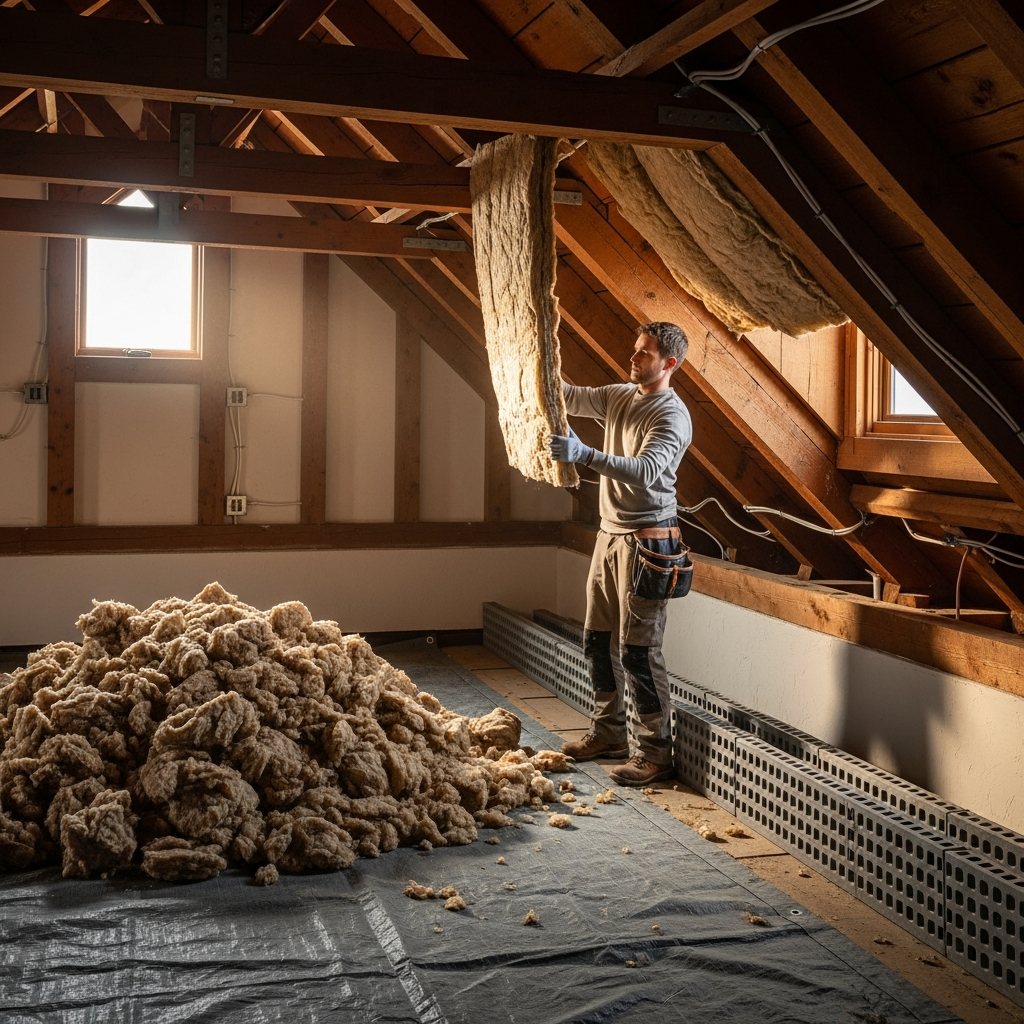
There is a special charm to older Los Angeles homes: the handcrafted trim in a 1920s Spanish revival, the sunlight that pours through the original casement windows in a Hollywood bungalow, the vaulted, timbered ceilings in hillside cottages. Those details give character, but they can also conceal energy challenges that did not matter as much when the city was smaller and the climate felt steadier. Above many of these homes is an attic that was never designed with modern comfort and efficiency in mind. Updating that space with carefully planned attic insulation is one of the most effective ways to bring an older residence into the present—preserving its spirit while dramatically improving how it lives day to day.
Why Many Older LA Homes Struggle With Comfort
Before energy codes matured, builders focused on structure and style, not thermal performance. In many pre-1980 homes in Los Angeles, the attic’s insulation—if any—was minimal and patchy. Over the decades, remodeling projects, wiring upgrades, and roof repairs often disturbed what little coverage existed. The result is a ceiling plane riddled with gaps around light fixtures and chases, thin spots over hallways and closets, and a flimsy thermal boundary that lets heat move freely in both directions. Add the city’s daily temperature swings and strong sun exposure in many neighborhoods, and comfort becomes a moving target.
Older homes may also feature architectural elements that complicate insulation: knee walls behind charming dormers, low-slope roof transitions, and vaulted ceilings where traditional attic floor coverage is not possible. These details demand a nuanced approach to maintain aesthetics while establishing a continuous thermal barrier. When that barrier is restored, the home immediately feels more balanced, as if the mechanical systems finally have a reliable partner in the building shell.
Respecting Historic Fabric While Upgrading Performance
Owners of older homes rightfully want to protect original features. The good news is that thoughtful attic insulation work is largely invisible and reversible, leaving intact the character-defining elements below. The priority is to seal air leaks at the ceiling plane—over bath fans, around chimneys where allowed by code, at plumbing and electrical penetrations—before establishing consistent insulation depth. Where knee walls exist, dense coverage on the attic side, combined with sturdy backing to prevent wind-washing, helps preserve the temperature of rooms that back up to those short walls.
In some vintage homes, knob-and-tube wiring or limited access requires extra care. A professional who understands older construction can identify safe pathways, respect clearance requirements, and recommend insulation types that will not compromise electrical safety or roof ventilation. That balance between performance and preservation is the hallmark of a successful upgrade in Los Angeles’s historic neighborhoods.
Addressing Settling, Gaps, and Compressed Batts
It is common to find old batts that have slumped between joists or been compressed by storage boards, losing much of their labeled R-value. Gaps between batts and framing produce thermal bypasses that lead to cold corners and warm ceilings. A corrective strategy typically includes removing damaged or contaminated materials, sealing the ceiling plane, and blowing in a continuous layer of insulation to a target depth that meets modern expectations. In some cases, rigid backing is added behind knee walls or to isolate odd cavities that connect to soffits, preventing wind-driven air from eroding performance.
Older attics may also harbor outdated or compromised ventilation. Checking soffit vents for blockage, confirming ridge or gable vent function, and ensuring bath and kitchen vents discharge outdoors—not into the attic—are part of the job. Good ventilation supports the longevity of the roof assembly and stabilizes temperatures in the attic, which in turn helps the new insulation deliver the comfort and efficiency gains you are seeking.
Los Angeles Microclimates and Vintage Rooflines
From breezy coastal bungalows to sun-soaked valley ranches, older LA homes encounter different thermal pressures. In the hills, steep roof pitches and smaller attic volumes can intensify heat gain and make detailing crucial around transitions. In the basin, broad roof surfaces and low-slope sections demand consistent coverage and airflow management to avoid hot spots. The right plan respects these microclimatic realities, ensuring that the insulation layer is unbroken across the attic floor and that edges and penetrations are sealed with care.
Owners of historic properties often report that after an attic upgrade, the character of the home feels more present because comfort is no longer a distraction. You can appreciate the original windows and millwork without worrying about afternoon overheating or chilly winter mornings. That is the power of a performance-first approach that honors the home’s identity.
The Right Materials for Older Structures
Blown-in fiberglass and cellulose are versatile choices for older attics because they conform to irregular cavities and can be installed to precise depths. Where batt insulation makes sense—perhaps in accessible bays with consistent dimensions—careful fitting is essential to avoid gaps. For vaulted sections that lack an attic floor, a different strategy may be required, such as dense-packing rafter cavities where ventilation and code requirements allow. The guiding principle is continuity: whatever materials are chosen should create an unbroken thermal blanket over and around the living space.
Many homeowners also ask about radiant barriers in older homes. These can be effective in certain scenarios with intense sun exposure, but they complement rather than replace the foundational role of insulation at the attic floor. In practice, the largest comfort and bill improvements come from establishing the correct R-value with uniform coverage and strong air sealing.
Health, Cleanliness, and Peace of Mind
Attics in older homes sometimes contain rodent residue, dust, or debris from past construction. During an upgrade, removing contaminated materials and sealing ceiling penetrations dramatically reduces the chance of attic air mixing with your indoor air. The payoff is a cleaner home with less dust settling on surfaces and a lower likelihood of odors or allergens drifting down from above. For households sensitive to air quality, this benefit is just as meaningful as the energy savings.
Story from the Field
Consider a 1930s cottage in the Eastside hills with a charming, irregular roofline. Before the upgrade, summer afternoons were uncomfortable in the front rooms, and the small back bedroom under a short gable stayed chilly on winter mornings. The attic had a thin layer of old batts and visible gaps around multiple light fixtures. After targeted air sealing, the installation of proper baffles, and a new blanket of blown-in insulation, the home’s temperature evened out. The thermostat stopped the late-day tug-of-war, and mornings felt pleasant without cranking the heat. The homeowners described the change as if someone turned down the city’s thermal volume knob.
Mid-Project Check: Are You Covering the Details?
In older homes, the devil is in the details: attic hatches, chimney chases, recessed lights, and knee wall transitions. These are the spots where performance can quietly leak away. A mid-project review focused on attic insulation quality—verifying air sealing, baffle placement, and uniform depth—ensures the finished work lives up to expectations. Taking the time to get these details right pays off in year-round comfort that matches the home’s visual warmth with physical ease.
Longevity and the Value of Quiet Efficiency
When insulation helps your HVAC equipment avoid marathon cycles, the entire system benefits. Components experience less wear, filters capture less dust stirred up by attic infiltration, and indoor spaces feel calmer. That is the kind of quiet, enduring upgrade that respects the rhythms of an older home. It is not flashy, but you sense it in the way rooms hold steady and in the simple pleasure of not thinking about the thermostat all the time.
Frequently Asked Questions
Will upgrading attic insulation change the look of my historic home?
No. The work happens above the ceiling in the attic. Your home’s architectural details remain untouched, and the finished look inside is preserved. What changes is how consistently comfortable the rooms feel.
What if my attic has old wiring or limited access?
Professionals familiar with older homes can work safely around legacy wiring and tight spaces, following clearance and ventilation requirements. The assessment phase identifies any constraints so that the plan fits the home’s realities.
Is it worth insulating if I plan larger renovations later?
Yes. Attic upgrades deliver immediate comfort and efficiency benefits, and the work is compatible with future projects. In fact, a better-insulated shell can make later mechanical upgrades more effective.
Can insulation help reduce dust and allergens in older homes?
Sealing gaps in the ceiling plane and removing contaminated attic materials significantly reduce dust migration. Many homeowners notice cleaner surfaces and fewer allergy triggers after an upgrade.
How long until I notice the difference?
Most households feel the improvement within days. Afternoon heat is gentler, mornings are less chilly, and thermostat adjustments become less frequent. The benefits continue to build with seasonal changes.
Ready to Bring Your Classic LA Home Up to Modern Comfort?
If your beloved home could use a performance boost that respects its history, focus first on the space above the ceiling. With careful planning, precise air sealing, and the right materials, older Los Angeles homes can feel effortless again. To explore the best path for your property, start the conversation about attic insulation and discover how a thoughtful upgrade can honor your home’s character while transforming daily comfort.